SEO for Plastic Surgery Practices:
A patient researching a facelift spends weeks reading, comparing surgeons and scrolling galleries before anyone picks up a phone. They search the procedure first and the surgeon second, and by the time they call they have already ruled out most of your competitors.









Why Plastic Surgery Practices Need SEO
The American Society of Plastic Surgeons puts an average rhinoplasty at $7,637. Nobody commits that on the first name they see, and increasingly the shortlist is drafted by an AI assistant.
Practice sites are built around the surgeon: a homepage, a bio, and an awards wall. Patients type rhinoplasty, mommy makeover, gynecomastia surgery, buccal fat removal. Every procedure you fold into a single Body or Face overview page is a search you never enter, and a consultation that books somewhere else instead.
Type plastic surgeon near me anywhere in the US and the American Society of Plastic Surgeons finder usually sits above every practice in the organic results. RealSelf owns the procedure and cost queries underneath it. Both aggregate thousands of surgeons, so you compete inside their listing, ranked by their criteria.
Google Ads on breast augmentation and rhinoplasty terms runs into four figures every month, before you add influencer partnerships and a print page in a glossy nobody keeps. Specialist SEO agencies quote $1,200 to $5,000 on top. Stop paying and the consult calendar empties in 2 weeks, because none of it left an asset.
How SEO Works for Plastic Surgery Practices
Search Engine Optimization projects are long-term investments for plastic surgeons, where each task supplements the others and creates compound results over time.
01
Keywords, page structure, and the signals Google reads directly
Nothing about on-page work here resembles a normal local business, for 2 reasons that pull against each other. Google files cosmetic surgery under YMYL and will not rank an unattributed procedure page, so every claim has to sit under a named, board-certified surgeon. At the same time the FTC governs how you present results, and state medical boards govern what you may call yourself, so the copy that ranks and the copy that is legal are not automatically the same document. The pages that carry the weight are your individual procedure pages, your surgeon bios, and your before-and-after gallery, not the blog.
Procedure pages hold their value for years. What a tummy tuck really costs, how long the drains stay in, why a mommy makeover gets staged across 2 operations: the answers barely move, and neither does the anxiety behind the question. The material that decays is anything pegged to a launch, a season or an anniversary. New device announcements, spring injectable specials and open-house recaps run dry within weeks, yet they end up outnumbering the procedure pages by a factor most owners would not believe if you showed them the sitemap. The correction is dull: fewer posts, more operations documented properly, and a price review every January.
1
Break the Face and Body overview pages into one URL per operation: rhinoplasty, blepharoplasty, gynecomastia surgery, each named with the term patients actually type.
2
Unpublish last season’s injectable specials and retired device pages in Search Console, and 301 each one into the procedure page that replaced it.
3
Mark each bio with Physician schema carrying the ABPS credential and each procedure page with MedicalProcedure, then confirm both render in the Rich Results Test.
4
Publish a recovery timeline and a real price range for every operation you perform, because both pull steady traffic and filter out the merely curious.
02
Map Pack visibility, citations, and proximity signals
Most cosmetic demand is local, and the rest is a small out-of-town minority worth planning for separately. Patients will cross a whole metro for the right surgeon, so the 3-result map pack sits above the association directories and everything else on the page. It is the one slot a solo practice can take off a national aggregator, and it turns on how close you are, how complete the listing is, and how many reviews sit behind it. Only the first of those is fixed.
Your primary category should read Plastic Surgeon, not Surgeon and not Medical Spa, and every operation you perform belongs in the services list with its own written description. Upload real operating room, recovery suite and consultation room photos instead of stock. State genuine consultation hours and whether the first consult is charged. Then use the Q&A to settle what actually decides a booking: financing, whether the surgeon or an injector performs the treatment, and where the surgery happens.
Aesthetics has a verification layer that generic citation advice misses. The ASPS surgeon finder, The Aesthetic Society’s directory, AAFPRS for facial work and the ABMS Certification Matters lookup all carry weight precisely because they check board status. RealSelf, Healthgrades and Vitals sit alongside them, and your state medical board licensee record underpins the lot. All of them have to spell the practice name, the suite and the phone exactly one way, because one stale variant quietly splits the entity Google is assembling.
1
Pick Plastic Surgeon over Medical Spa for the primary category, enter each operation as a discrete service, and load real operating room and recovery photos.
2
Every consult office gets its own profile and page, and the surgery center address never appears on a listing that receives patient calls.
3
Audit the ASPS finder, The Aesthetic Society, RealSelf and Healthgrades through BrightLocal or Yext, then kill every abbreviated suite and tracking number.
4
Post one consented case update or procedure explainer to the profile weekly; a listing that goes quiet for a month slides down the pack.
03
Topic authority, inbound links, and content that earns traffic
Cosmetic research runs on 3 unspoken questions: what will it cost, how much time off work, and will it look obvious. A prospect reads for weeks before contacting anyone, and the practice that answers those plainly, including the risks and the revision rate, is the one still on the list at the end. Content written to rank rather than to reassure gets skimmed and closed. Nobody books from a page that dodges the number.
Someone who has already chosen the operation is now choosing the hands. They want cases that resemble their own anatomy and age, not the practice’s best 3 results. They want the surgeon’s board certification spelled out, the hospital privileges, the annual volume of that specific procedure, and who handles complications at 2am. Publish that on the procedure page itself. Practices lose these prospects at the moment the page refuses to name a price.
Links in aesthetics come from the medical record rather than outreach. Society membership pages, meeting speaker listings and Aesthetic Surgery Journal author credits all link out. Hospital and surgery center staff directories list privileges. Device makers publish trainer and faculty pages for the platforms you actually use. Local newsrooms need a surgeon on deadline when a procedure trends, and regional top-doctor features run every year with a link attached. Referring dermatologists and ENTs should be linking back too.
1
Publish head-to-head guides patients actually search: mini facelift versus deep plane, implants versus fat transfer, updated with your own outcome data annually.
2
Give every procedure a page for each area you draw patients from, with that office’s details, travel notes and cases from that catchment.
3
Cluster every cost question into one hub covering CareCredit, Alphaeon, PatientFi, cash pricing, and what insurance will and will not cover for reconstruction.
4
Build a dedicated page for every platform you own, such as Renuvion, Morpheus8 or VASER, since patients search device names long before surgeon names.
04
Site speed, crawlability, Core Web Vitals, and mobile health
The failure unique to this industry is the before-and-after gallery. Clinical photography goes up straight off the camera at 8 megabytes an image, 4 angles per case, hundreds of cases, inside a JavaScript viewer that mints a separate URL per patient with no text on it. Google indexes thousands of near-identical thin pages and ranks none. Worse, most galleries hide behind a graphic-content consent modal, so the practice’s single strongest proof never appears in the rendered HTML at all.
The moment that matters happens on a phone, late, in private, with someone comparing 3 galleries in a row. They are not tolerant and they are not committed. A gallery page that ships 30 megabytes before the first image resolves loses them to the practice whose page loaded. Test on a 3-year-old handset on cellular data, never on the office connection, and keep the consultation button reachable without scrolling past a chat widget.
1
Point Screaming Frog at the site in JavaScript rendering mode; if gallery case URLs come back under 100 words, noindex them and keep the hub.
2
Put your busiest before-and-after page through PageSpeed Insights; a gallery hub failing Core Web Vitals on mobile costs consultations every day.
3
Export case photos to AVIF or WebP at display width, lazy-load below the fold, and write alt text naming the procedure and view.
4
Keep procedure and location URLs in a sitemap separate from gallery cases, and resubmit through Search Console whenever pricing or a surgeon changes.
05
Star ratings, review volume, and response strategy that builds trust
Reviews decide this category more than any ranking factor, because a patient is about to be anaesthetised and permanently altered by someone they have met once. They are also brutally hard to gather. Many people will not have their name attached to a cosmetic procedure at all. HIPAA stops you confirming anyone was ever a patient, even in your own defence. And the happiest reviewer is 6 months post-op, long after the relief has faded into normal.
The right moment is the post-op visit where swelling has settled and the patient sees the result for the first time, usually somewhere between weeks 6 and 12. Not discharge day. Build the request into the practice management system so it fires on that appointment status, signed by the surgeon rather than the front desk. Offer an initials-only or anonymous option upfront, because the patient who will not use their name will often still write 200 words.
1
Wire Nextech, PatientNow or Symplast to fire the review link when the 6-week post-op visit closes, sent under the surgeon’s name.
2
Reply inside 24 hours offering an offline call, and never confirm the reviewer was treated; HIPAA binds you even when they disclose everything.
3
Place reviews naming a procedure directly under that procedure’s gallery row, so the written proof sits beside the visual one.
4
Ask at every injectable and laser appointment too, since the medspa side sees the same patient 4 times a year and surgery does not.
Google is No Longer the Only Place Your patients are Searching
Patients are using AI to find answers, and they trust what it tells them. Invest in GEO to get recommended in those answers.
1 Billion
Questions ChatGPT receives every single day
38%
Your #1 top ranking page on Google would be cited by AI
14%
of plastic surgeons optimise for GEO. The rest are invisible in AI answers


You can rank #1 for “plastic surgeon near me” and still not exist in ChatGPT’s answer. Run a free GEO audit to see where your brand actually stands.
GEO vs SEO: Same Goal, Different Methods
GEO is wider than SEO. AI recommends the brands that show up across the sources it reads, so your presence in forums, social platforms and aesthetic blogs decides your odds. AIclicks measures the three metrics below so you know which to work on first.
AI Assistant
Which surgeon should I trust with a facelift?
Your Aesthetic Practice
Citation Rate
Shows how many AI answers about plastic surgery practices name your brand, out of every 100. Models pull from the same trusted pages over and over, so citations compound: once you are in, staying in gets easier. Find the competitor pages AI cites most, then publish your own version of each.
Your Aesthetic Practice
82% positive
Competitor A
54% positive
Competitor B
38% positive
Brand Sentiment
Shows how AI describes you when your brand comes up: positive, neutral or negative. Tone is what separates being mentioned from being recommended, and models repeat whatever framing they find. Track the negative mentions back to the reviews and threads behind them, then publish content that answers those directly.
Others 52%
You 24%
— 24%
Your Aesthetic Practice
AI mention share of voice — aesthetic category
Competitors
Not Cited
Share of Voice in AI
Shows how much of the aesthetic conversation belongs to you rather than your competitors. This is the metric that matters most, the GEO version of a Google ranking. With only 1–5 brands named per answer, the market is winner-takes-more and every point is taken from someone.
The Dashboard Your Dedicated AI Search Team Works In
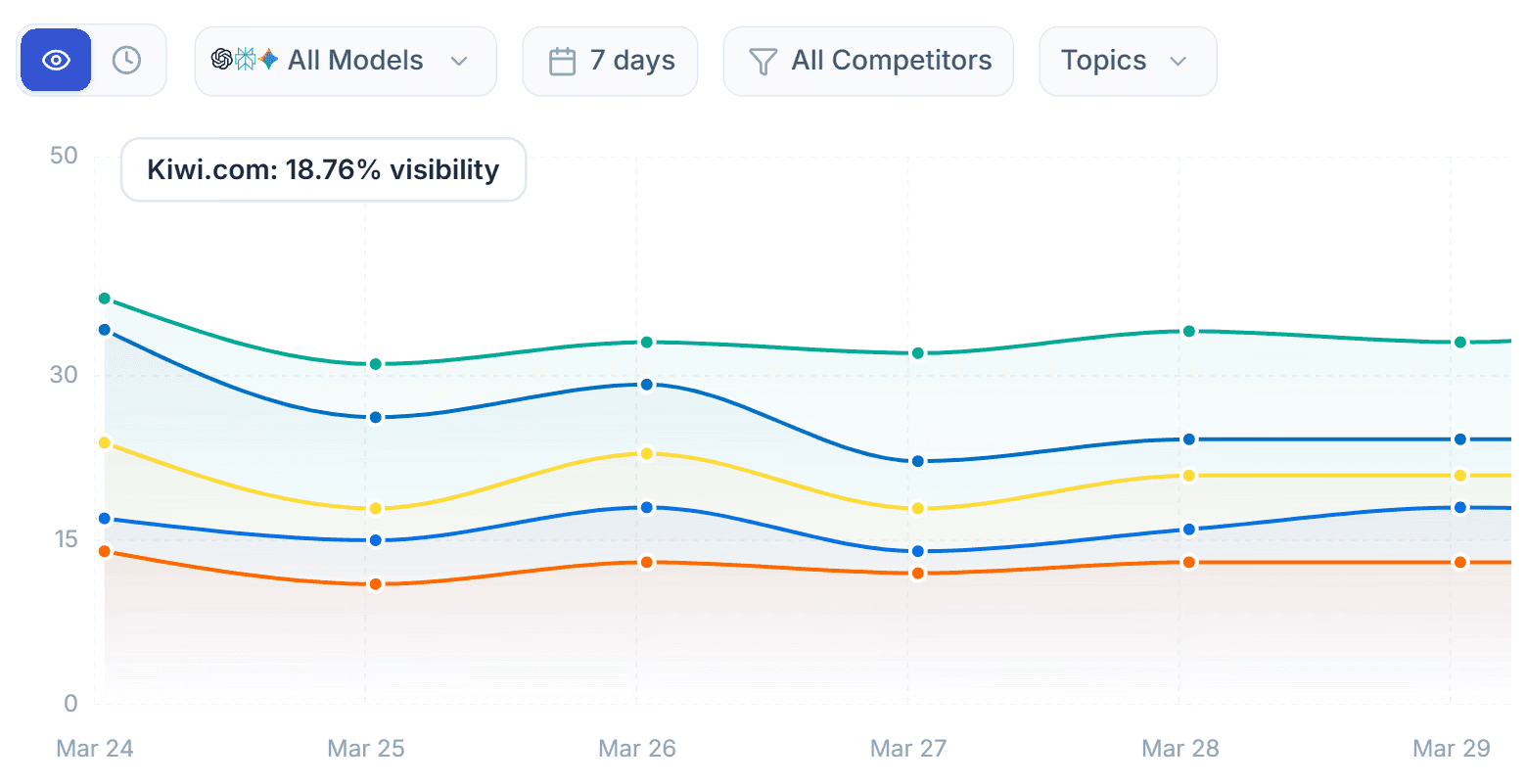
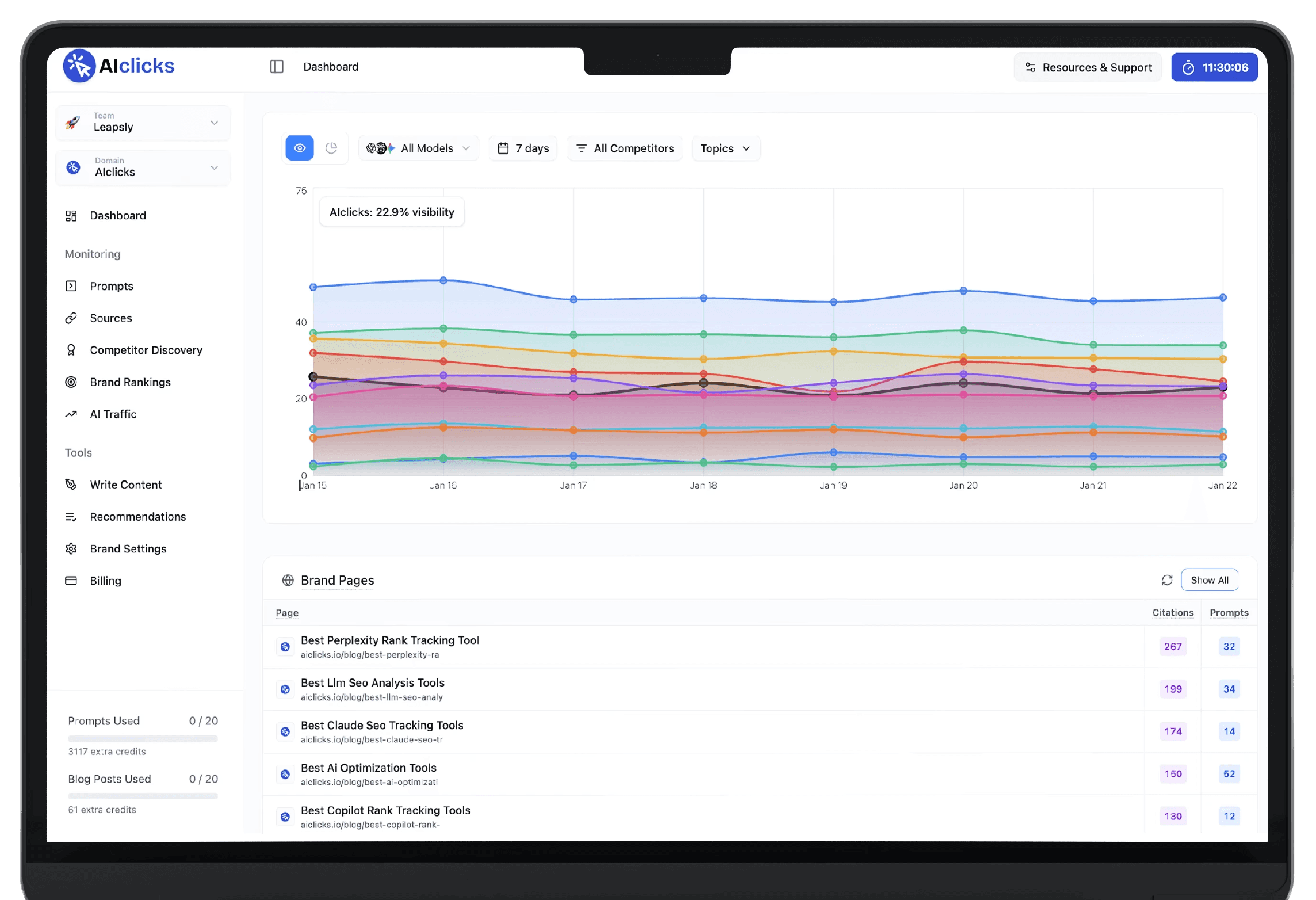
AIclicks gives you a live dashboard with daily ChatGPT mention rate, citation rate, sentiment, and share-of-voice across your tracked prompts, plus GA4 referral attribution for the traffic ChatGPT does send back.
Choose Your Plan
Flexible pricing that grows with your team. Upgrade or downgrade at any time.
Monthly
Yearly
-20%
Starter
Perfect for individuals & small teams
$49
/ month
Billed annually — you save $142
Choose 3 from:
Daily
" height="16px" id="fvSweaOBo" transform="translate(1 0)" width="14px"/></svg>)
" width="14px"><path d="M 13.864 5.629 L 13.3 5.629 L 13.3 5.6 L 7 5.6 L 7 8.4 L 10.956 8.4 C 10.379 10.03 8.828 11.2 7 11.2 C 4.681 11.2 2.8 9.319 2.8 7 C 2.8 4.681 4.681 2.8 7 2.8 C 8.071 2.8 9.045 3.204 9.786 3.864 L 11.766 1.884 C 10.516 0.719 8.844 0 7 0 C 3.134 0 0 3.134 0 7 C 0 10.866 3.134 14 7 14 C 10.866 14 14 10.866 14 7 C 14 6.531 13.952 6.073 13.864 5.629 Z" fill="rgb(255, 193, 7)" height="14px" id="H_YjfTNpn" width="14px"/><path d="M 0 3.742 L 2.3 5.429 C 2.922 3.888 4.429 2.8 6.193 2.8 C 7.264 2.8 8.238 3.204 8.979 3.864 L 10.959 1.884 C 9.709 0.719 8.037 0 6.193 0 C 3.504 0 1.172 1.518 0 3.742 Z" fill="rgb(255, 61, 0)" height="5.428500000000002px" id="PlkthQDhg" transform="translate(0.875 0)" width="10.959199999999996px"/><path d="M 6.232 5.581 C 8.04 5.581 9.683 4.889 10.925 3.764 L 8.758 1.931 C 8.032 2.483 7.144 2.782 6.232 2.781 C 4.411 2.781 2.865 1.62 2.283 0 L 0 1.759 C 1.159 4.026 3.511 5.581 6.232 5.581 Z" fill="rgb(76, 175, 80)" height="5.581099999999999px" id="WlnJ5gngE" transform="translate(0.7 8.4)" width="10.924899999999994px"/><path d="M 6.864 0.029 L 6.3 0.029 L 6.3 0 L 0 0 L 0 2.8 L 3.956 2.8 C 3.68 3.576 3.183 4.254 2.526 4.75 L 2.527 4.749 L 4.693 6.582 C 4.54 6.722 7 4.9 7 1.4 C 7 0.931 6.952 0.473 6.864 0.029 Z" fill="rgb(25, 118, 210)" height="6.589883930775992px" id="x_rSW275p" transform="translate(7 5.6)" width="7px"/></g></svg>)
" height="16px" id="hHS98fTxZ" width="16px"/></svg>)
 scale(1 1) translate(-1.861736945942159, -1.1170155383302638)" id="P20NzAvj0-699428820-radial-gradient" r="0.9935228066204626"><stop offset="0" stop-color="rgb(0, 174, 255)"/><stop offset="1" stop-color="rgb(7, 54, 196)"/></radialGradient><radialGradient cx="0.48250042504016705" cy="1.8366934653567062" gradient-transform="translate(0.48250042504016705, 1.8366934653567062) scale(1 1) translate(-0.48250042504016705, -1.8366934653567062)" id="UEWZqVjij-699428820-radial-gradient" r="0.9176890228114506"><stop offset="0" stop-color="rgb(255, 182, 87)"/><stop offset="1" stop-color="rgb(192, 43, 60)"/></radialGradient><linearGradient id="jyMN3TmKx-699428820-linear-gradient" x1="0.4594862532842614" x2="0.5405137467157386" y1="0" y2="1"><stop offset="0" stop-color="rgb(13, 145, 225)"/><stop offset="1" stop-color="rgb(255, 200, 0)"/></linearGradient><linearGradient id="xhMNwDFG0-699428820-linear-gradient" x1="0.4784828731548295" x2="0.5215171268451705" y1="5.551115123125783e-17" y2="1"><stop offset="0" stop-color="rgb(61, 203, 255)"/><stop offset="1" stop-color="rgba(5, 136, 247, 0)"/></linearGradient><radialGradient cx="1.4305090871482182" cy="0.34866158048251783" gradient-transform="translate(1.4305090871482182, 0.34866158048251783) scale(1 1) translate(-1.4305090871482182, -0.34866158048251783)" id="i79kAqaS4-699428820-radial-gradient" r="1.3362743412697924"><stop offset="0" stop-color="rgb(140, 72, 255)"/><stop offset="1" stop-color="rgb(255, 177, 82)"/></radialGradient><linearGradient id="mcxvno3tX-699428820-linear-gradient" x1="0.49844355920154226" x2="0.5015564407984577" y1="0" y2="1"><stop offset="0" stop-color="rgb(248, 173, 250)"/><stop offset="1" stop-color="rgba(168, 110, 221, 0)"/></linearGradient></defs><g d="M 11.605 1.219 C 11.397 0.499 10.739 0.002 9.989 0 L 9.498 0 C 8.682 0.002 7.985 0.588 7.842 1.391 L 7 6.016 L 7.209 5.296 C 7.416 4.574 8.075 4.076 8.825 4.074 L 11.681 4.074 L 12.879 4.545 L 14.033 4.074 L 13.697 4.074 C 12.947 4.072 12.289 3.575 12.081 2.855 Z M 4.413 13.387 C 4.618 14.111 5.278 14.611 6.031 14.613 L 7.075 14.613 C 7.988 14.613 8.735 13.88 8.758 12.96 L 8.871 8.5 L 8.633 9.319 C 8.426 10.039 7.768 10.537 7.018 10.539 L 4.138 10.539 L 3.111 9.977 L 2 10.539 L 2.331 10.539 C 3.084 10.542 3.743 11.042 3.949 11.766 L 4.413 13.387 Z M 9.999 0 L 4.167 0 C 2.501 0 1.501 2.221 0.834 4.441 C 0.045 7.073 -0.989 10.591 2.001 10.591 L 4.519 10.591 C 5.273 10.591 5.933 10.089 6.139 9.36 C 6.577 7.815 7.345 5.121 7.948 3.069 C 8.255 2.027 8.509 1.132 8.901 0.575 C 9.148 0.212 9.56 -0.004 9.999 0 M 9.999 0 L 4.167 0 C 2.501 0 1.501 2.221 0.834 4.441 C 0.045 7.073 -0.989 10.591 2.001 10.591 L 4.519 10.591 C 5.273 10.591 5.933 10.089 6.139 9.36 C 6.577 7.815 7.345 5.121 7.948 3.069 C 8.255 2.027 8.509 1.132 8.901 0.575 C 9.148 0.212 9.56 -0.004 9.999 0 M 6 14.593 L 11.833 14.593 C 13.499 14.593 14.499 12.372 15.166 10.151 C 15.955 7.519 16.989 4 13.999 4 L 11.48 4 C 10.725 4.002 10.063 4.505 9.86 5.232 C 9.266 7.332 8.663 9.429 8.051 11.523 C 7.745 12.566 7.49 13.461 7.098 14.019 C 6.851 14.382 6.439 14.597 6 14.593 M 6 14.593 L 11.833 14.593 C 13.499 14.593 14.499 12.372 15.166 10.151 C 15.955 7.519 16.989 4 13.999 4 L 11.48 4 C 10.725 4.002 10.063 4.505 9.86 5.232 C 9.266 7.332 8.663 9.429 8.051 11.523 C 7.745 12.566 7.49 13.461 7.098 14.019 C 6.851 14.382 6.439 14.597 6 14.593" fill="transparent" height="14.613333333333333px" id="QzkBy4Ibc" transform="translate(0 1)" width="16.00011071294081px"><path d="M 4.605 1.219 C 4.397 0.499 3.739 0.002 2.989 0 L 2.498 0 C 1.682 0.002 0.985 0.588 0.842 1.391 L 0 6.016 L 0.209 5.296 C 0.416 4.574 1.075 4.076 1.825 4.074 L 4.681 4.074 L 5.879 4.545 L 7.033 4.074 L 6.697 4.074 C 5.947 4.072 5.289 3.575 5.081 2.855 Z" fill="url(%23P20NzAvj0-699428820-radial-gradient)" height="6.016px" id="P20NzAvj0" transform="translate(7 0)" width="7.0333333333333385px"/><path d="M 2.413 4.887 C 2.618 5.611 3.278 6.111 4.031 6.113 L 5.075 6.113 C 5.988 6.113 6.735 5.38 6.758 4.46 L 6.871 0 L 6.633 0.819 C 6.426 1.539 5.768 2.037 5.018 2.039 L 2.138 2.039 L 1.111 1.477 L 0 2.039 L 0.331 2.039 C 1.084 2.042 1.743 2.542 1.949 3.266 L 2.413 4.887 Z" fill="url(%23UEWZqVjij-699428820-radial-gradient)" height="6.113333333333333px" id="UEWZqVjij" transform="translate(2 8.5)" width="6.871333333333332px"/><path d="M 9.999 0 L 4.167 0 C 2.501 0 1.501 2.221 0.834 4.441 C 0.045 7.073 -0.989 10.591 2.001 10.591 L 4.519 10.591 C 5.273 10.591 5.933 10.089 6.139 9.36 C 6.577 7.815 7.345 5.121 7.948 3.069 C 8.255 2.027 8.509 1.132 8.901 0.575 C 9.148 0.212 9.56 -0.004 9.999 0" fill="url(%23jyMN3TmKx-699428820-linear-gradient)" height="10.591388755215167px" id="jyMN3TmKx" width="9.999444046274142px"/><path d="M 9.999 0 L 4.167 0 C 2.501 0 1.501 2.221 0.834 4.441 C 0.045 7.073 -0.989 10.591 2.001 10.591 L 4.519 10.591 C 5.273 10.591 5.933 10.089 6.139 9.36 C 6.577 7.815 7.345 5.121 7.948 3.069 C 8.255 2.027 8.509 1.132 8.901 0.575 C 9.148 0.212 9.56 -0.004 9.999 0" fill="url(%23xhMNwDFG0-699428820-linear-gradient)" height="10.591388755215167px" id="xhMNwDFG0" width="9.999444046274142px"/><path d="M 0 10.593 L 5.833 10.593 C 7.499 10.593 8.499 8.372 9.166 6.151 C 9.955 3.519 10.989 0 7.999 0 L 5.48 0 C 4.725 0.002 4.063 0.505 3.86 1.232 C 3.266 3.332 2.663 5.429 2.051 7.523 C 1.745 8.566 1.49 9.461 1.098 10.019 C 0.851 10.382 0.439 10.597 0 10.593" fill="url(%23i79kAqaS4-699428820-radial-gradient)" height="10.593388755215164px" id="i79kAqaS4" transform="translate(6 4)" width="10.000110712940803px"/><path d="M 0 10.593 L 5.833 10.593 C 7.499 10.593 8.499 8.372 9.166 6.151 C 9.955 3.519 10.989 0 7.999 0 L 5.48 0 C 4.725 0.002 4.063 0.505 3.86 1.232 C 3.266 3.332 2.663 5.429 2.051 7.523 C 1.745 8.566 1.49 9.461 1.098 10.019 C 0.851 10.382 0.439 10.597 0 10.593" fill="url(%23mcxvno3tX-699428820-linear-gradient)" height="10.593388755215164px" id="mcxvno3tX" transform="translate(6 4)" width="10.000110712940803px"/></g></svg>)
" height="15.360666565427872px" id="HZPvvPBv7" transform="translate(0 0.5)" width="16px"/></svg>)
Tracked prompts
30
Websites you can add
3
LLMs you can track
3
Countries per project
1
LLM responses / mo
4,650
AI-optimized articles per month
10
Integrations
-
Support
Pro
For growing teams for more power
$140
/ month
Billed annually — you save $454
Choose 4 from:
Daily
Tracked prompts
150
Websites you can add
Unlimited
LLMs you can track
4
Countries per project
Unlimited
LLM responses / mo
18,600
AI-optimized articles per month
20
Integrations
Google Analytics
Support
BUSINESS
Best for medium-sized organizations
$357
/ month
Billed annually — you save $1198
Choose 6 from:
Daily
Tracked prompts
300
Websites you can add
Unlimited
LLMs you can track
6
Countries per project
Unlimited
LLM responses / mo
55,800
AI-optimized articles per month
30
Integrations
Google Analytics, API
Support
Dedicated account specialist
Become the #1 Answer in AI
Succeed in GEO yourself, or let us do all the work.
Do it yourself
Use AIclicks to see exactly where you appear across 10+ AI platforms, spot the gaps competitors are filling, and act on clear weekly recommendations.
From $59/month · Cancel anytime
Done for you
We Do All the Work for You
Our team manages your complete search presence: traditional SEO and GEO strategy, content, implementation, and reporting. You focus on patients.
Custom pricing · Minimum 3-month engagement
The AI SEO agency trusted by 1,000+ brands worldwide
From solo founders to multi-client agencies, AIclicks runs the full AI SEO agency program for organizations of every shape and size that want to be cited across every AI surface.
4.9/5 stars on G2



FAQ
How long before plastic surgery SEO brings in consultations?
Plan on 6 months before it shows in the consult calendar. Map pack and review work move first, often inside 3 to 4 months, since profile and review signals compound fast. Procedure keywords in a crowded metro run 9 to 18 months in practice, because you first have to build the credential and authority signals Google demands of YMYL health content. Watch Search Console impressions on procedure terms; they rise before positions do.
Do we need to worry about ChatGPT recommending surgeons?
Yes, and aesthetics is more exposed than most trades. Ahrefs analysed 863,000 keywords and found only 38% of pages cited in AI Overviews also ranked in the top 10, down from 76% a year earlier. Worse, your strongest proof is photographic, and no model can read a gallery. What gets quoted is text: your credential lines, cost pages, association profiles and review prose. Practices with none of that written down are simply absent from the answer.
Why can't we just use standard local SEO advice?
Three things. Patients search the procedure before the surgeon, so brand-led sites built around a name capture almost nothing. Google treats cosmetic surgery as YMYL and will not rank claims that no credentialed person stands behind. And the FTC, HIPAA and your state medical board all govern what you may publish about results, testimonials and board certification. Hire a generalist and you get copy your malpractice carrier asks you to pull.
What should a small plastic surgery clinic budget?
Published rates cluster at $1,200 to $3,500 a month with a specialist aesthetics agency, $3,000 to $5,500 for a single location doing real content work, and $5,500 to $10,000 to compete properly in a crowded metro. Consultants bill $100 to $300 an hour. Judge it against a single case: a rhinoplasty or facelift is typically worth $8,000 to $15,000, so 1 additional surgery a month clears most retainers.
Where does SEO sit next to the ads we run?
They cover different ends of the same funnel. Paid search and Meta ads fill next month’s consult slots and stop dead when you pause them. Organic wins the long research phase, where a patient reads for weeks and never clicks an ad. Most practices run both and use ad data to sequence content: the procedure keywords that genuinely convert into booked surgery earn a full page first. Measure both on cost per booked case.
What should a plastic surgery practice build first?
The Google Business Profile comes first; it costs nothing and it outranks every organic result on the page. Next come your 3 highest-revenue procedure pages, each carrying a real price range, a recovery timeline and the operating surgeon’s name. Then the surgeon bio with board certification, fellowship training and case volume, because that is the text AI assistants quote back. Then a crawlable gallery. Area pages follow. Blog posts are optional and go last.
How do we tell if any of this is working?
Count consultations booked from organic, not rankings. Dynamic call tracking has to be running, because most aesthetic enquiries still arrive by phone and vanish from analytics otherwise. Label every form submission with the landing page it came from, so you can see which procedure page produced it. Google Business Profile actions and Search Console impressions move first. Then reconcile against the practice management system: consults attended and surgeries booked are the figures that pay for the operating room.
Should we hire an agency or keep this in-house?
Split it by who holds the knowledge. Consented photography, review requests, profile updates and honest answers to patient questions belong inside the practice; nobody outside knows your consent process or your outcomes. Technical work, schema, gallery architecture, site speed and digital PR belong with a specialist. When you outsource, hire someone who can discuss FTC advertising rules and HIPAA fluently. Ask any agency to show a plastic surgery site they made crawlable, not just a traffic chart.
Further Reading
Go deeper on GEO, AI search, and visibility tracking.