" width="14px"><path d="M 13.864 5.629 L 13.3 5.629 L 13.3 5.6 L 7 5.6 L 7 8.4 L 10.956 8.4 C 10.379 10.03 8.828 11.2 7 11.2 C 4.681 11.2 2.8 9.319 2.8 7 C 2.8 4.681 4.681 2.8 7 2.8 C 8.071 2.8 9.045 3.204 9.786 3.864 L 11.766 1.884 C 10.516 0.719 8.844 0 7 0 C 3.134 0 0 3.134 0 7 C 0 10.866 3.134 14 7 14 C 10.866 14 14 10.866 14 7 C 14 6.531 13.952 6.073 13.864 5.629 Z" fill="rgb(255, 193, 7)" height="14px" id="H_YjfTNpn" width="14px"/><path d="M 0 3.742 L 2.3 5.429 C 2.922 3.888 4.429 2.8 6.193 2.8 C 7.264 2.8 8.238 3.204 8.979 3.864 L 10.959 1.884 C 9.709 0.719 8.037 0 6.193 0 C 3.504 0 1.172 1.518 0 3.742 Z" fill="rgb(255, 61, 0)" height="5.428500000000002px" id="PlkthQDhg" transform="translate(0.875 0)" width="10.959199999999996px"/><path d="M 6.232 5.581 C 8.04 5.581 9.683 4.889 10.925 3.764 L 8.758 1.931 C 8.032 2.483 7.144 2.782 6.232 2.781 C 4.411 2.781 2.865 1.62 2.283 0 L 0 1.759 C 1.159 4.026 3.511 5.581 6.232 5.581 Z" fill="rgb(76, 175, 80)" height="5.581099999999999px" id="WlnJ5gngE" transform="translate(0.7 8.4)" width="10.924899999999994px"/><path d="M 6.864 0.029 L 6.3 0.029 L 6.3 0 L 0 0 L 0 2.8 L 3.956 2.8 C 3.68 3.576 3.183 4.254 2.526 4.75 L 2.527 4.749 L 4.693 6.582 C 4.54 6.722 7 4.9 7 1.4 C 7 0.931 6.952 0.473 6.864 0.029 Z" fill="rgb(25, 118, 210)" height="6.589883930775992px" id="x_rSW275p" transform="translate(7 5.6)" width="7px"/></g></svg>)



Reviewed by:
Matas Kibildis

Head of Growth @ aiclicks.io
Last updated:
Expert Verified

If you’ve asked a question in ChatGPT or Gemini lately, you’ve seen it: brands now appear directly in the answer, not just as links. This is the core of LLM visibility, the frequency and prominence with which your brand is cited and recommended within AI-generated responses.
As the founder of AIclicks.io, I’ve seen that traditional SEO isn't enough in 2026. To stay relevant, you need a way to measure your "share of voice" inside the actual conversation. The best LLM SEO tools focus on tracking these AI-generated citations and prompt recommendations.
In this guide, I’ll walk through the top tools for analyzing your LLM visibility and sharing practical tips to help your brand win more citations in the new world of search.
6 Best LLM SEO Analysis Tools in 2026
AIclicks - Best for comprehensive LLM SEO analysis and citation auditing.
Profound - Best for enterprise-level sentiment and perception analysis.
Eldil AI - Best for prompt diagnostics and source frequency mapping.
Rank Prompt - Best for technical AEO tracking and schema analysis.
Peec AI - Best for SMBs needing affordable multi-model monitoring.
Semrush One - Best for integrating AI visibility into traditional SEO workflows.
Best LLM SEO Checking Tools in 2026 - Practical Review
Below you will find my simplified practical review of the top LLM SEO analysis tools in 2026.
1. AIclicks: Best Tool for LLM SEO Analysis
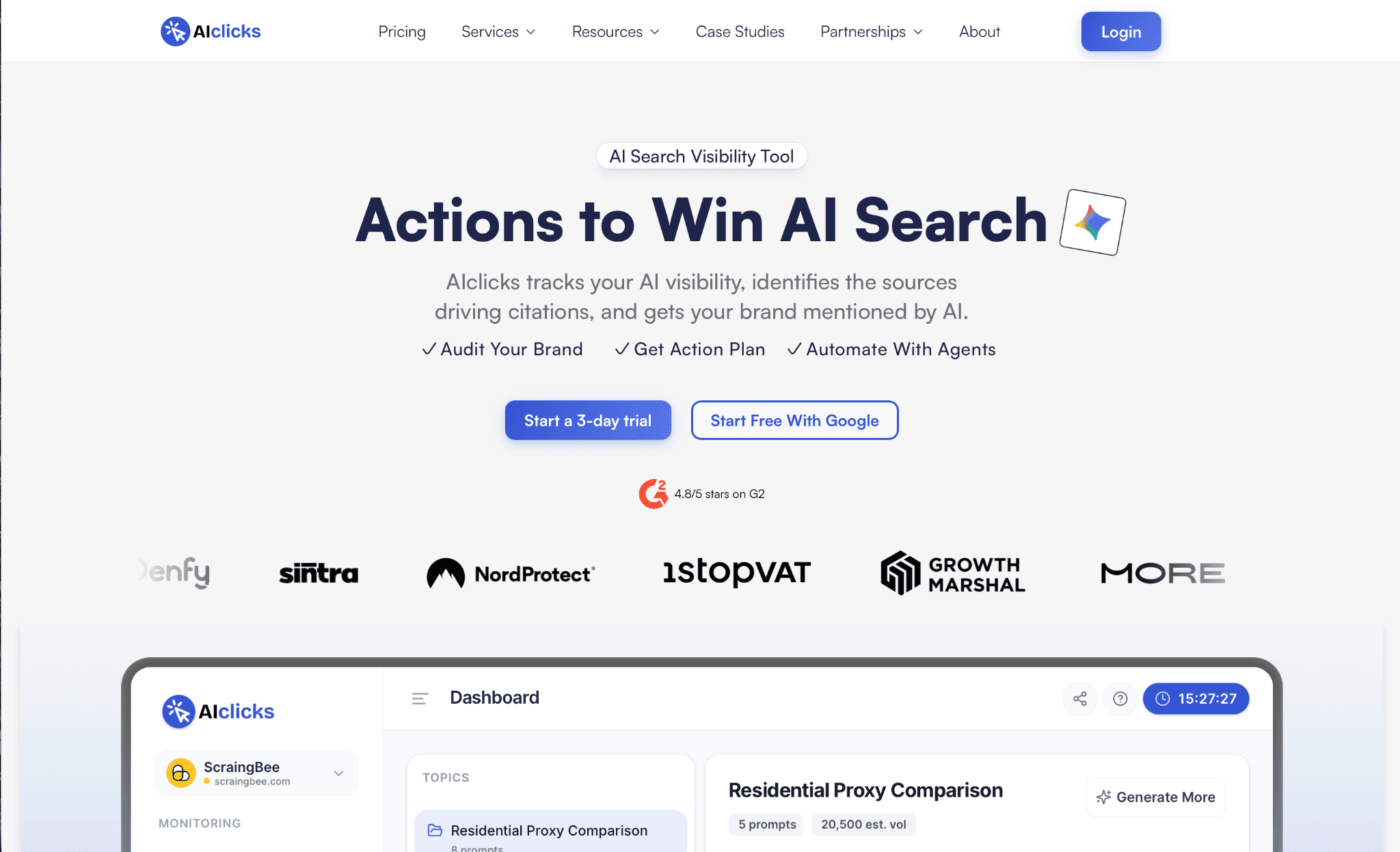
AIclicks is the top LLM SEO tool for teams that want to understand exactly how their brand appears inside AI-generated answers. Where most traditional SEO tools stop at keyword rankings, AIclicks is built specifically for checking and analyzing LLM visibility, covering how often your brand is cited, which sources language models rely on, and where your content is being picked up (or ignored) across ChatGPT, Perplexity, Gemini, and others.
For LLM SEO checking, the Citation & Source Tracking feature is particularly useful. It surfaces which URLs and domains LLMs reference most often for your target prompts, so you can identify exactly why certain sources get cited over yours. The Prompt-Level Analytics layer lets you audit visibility per prompt cluster, which is closer to a diagnostic tool than a simple dashboard. Combined with the Geo & LLM Audit, you can check how your brand's AI presence varies by region, language, and model.
Key features:
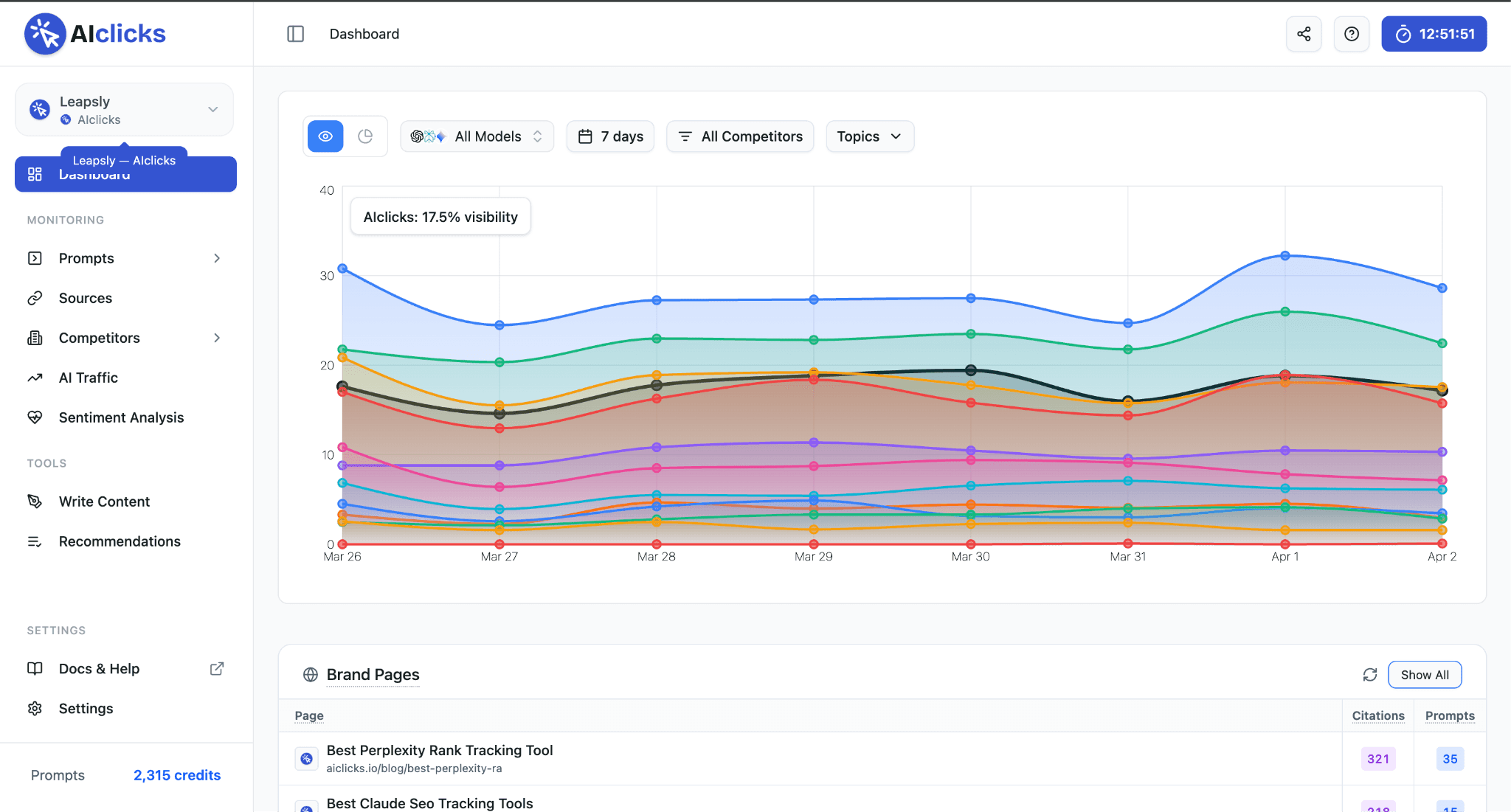
AI Visibility Dashboard: See at a glance how often your brand is mentioned inside top AI-generated answers for your most valuable prompts, across models and AI search engines, so you can protect your brand presence.
Geo & LLM Audit: Run audits to check visibility in ChatGPT, Perplexity, Google’s AI experiences, and others. Compare by region or language and see which major AI search engines prefer your content.
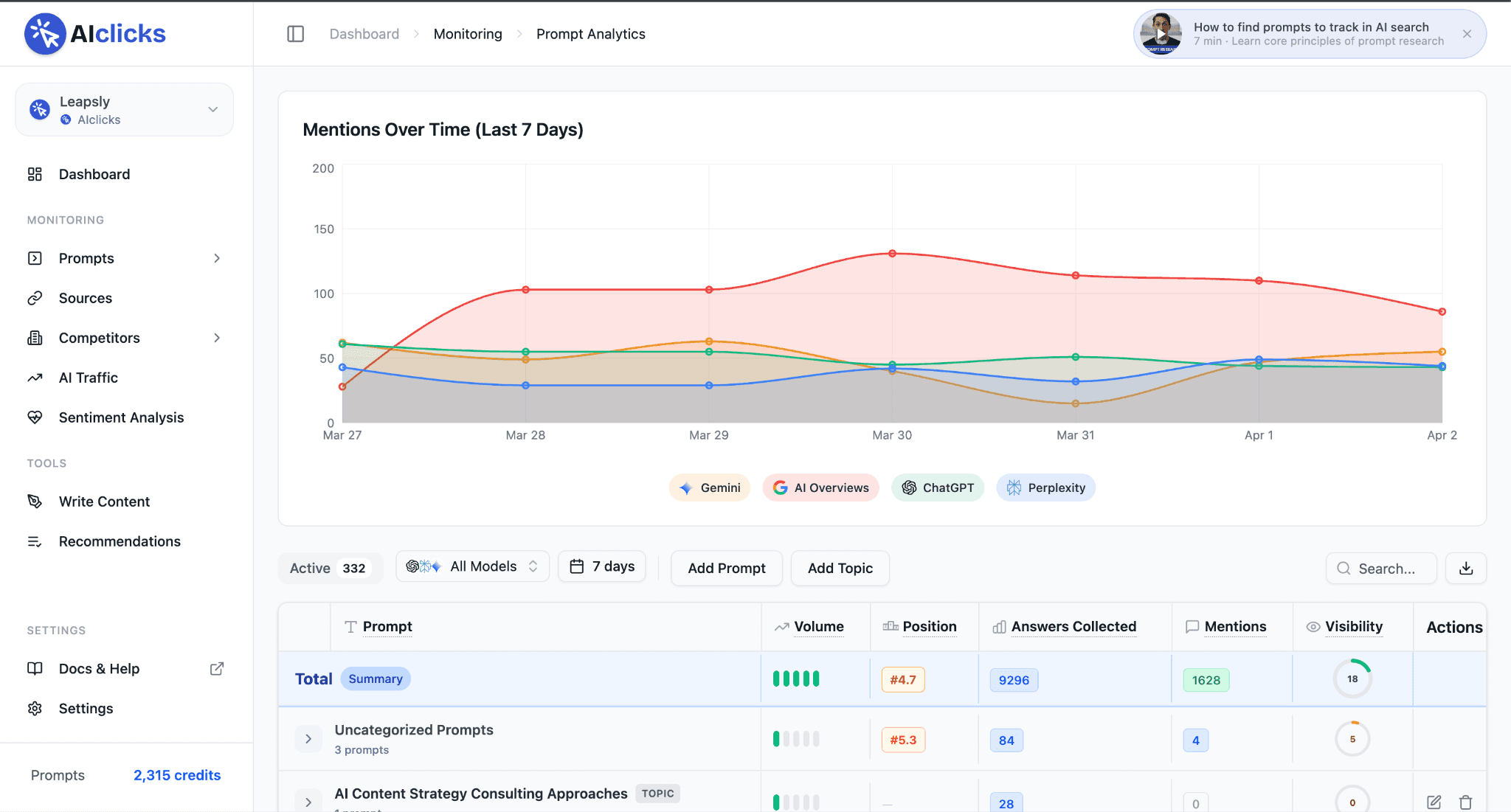
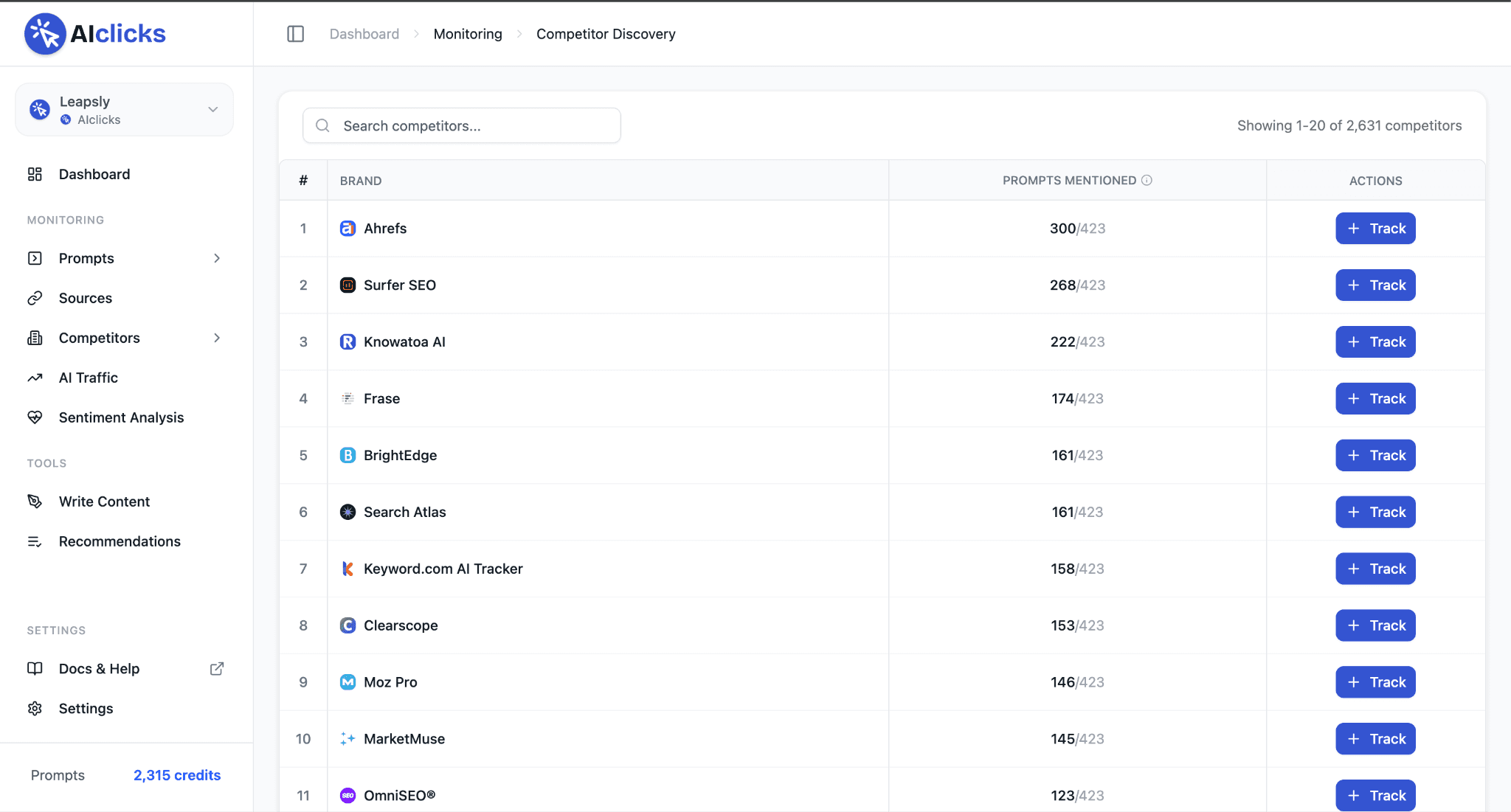
Prompt-Level Analytics: Build clusters around real commercial topics, then track visibility, mentions, and citations per prompt for laser-focused improvement, almost like an AI search performance panel.
Citation & Source Tracking: Uncover which URLs and sources language models reference most often, pinpoint your competition or spot partners to win citations from, and use that to track brand mentions over time.
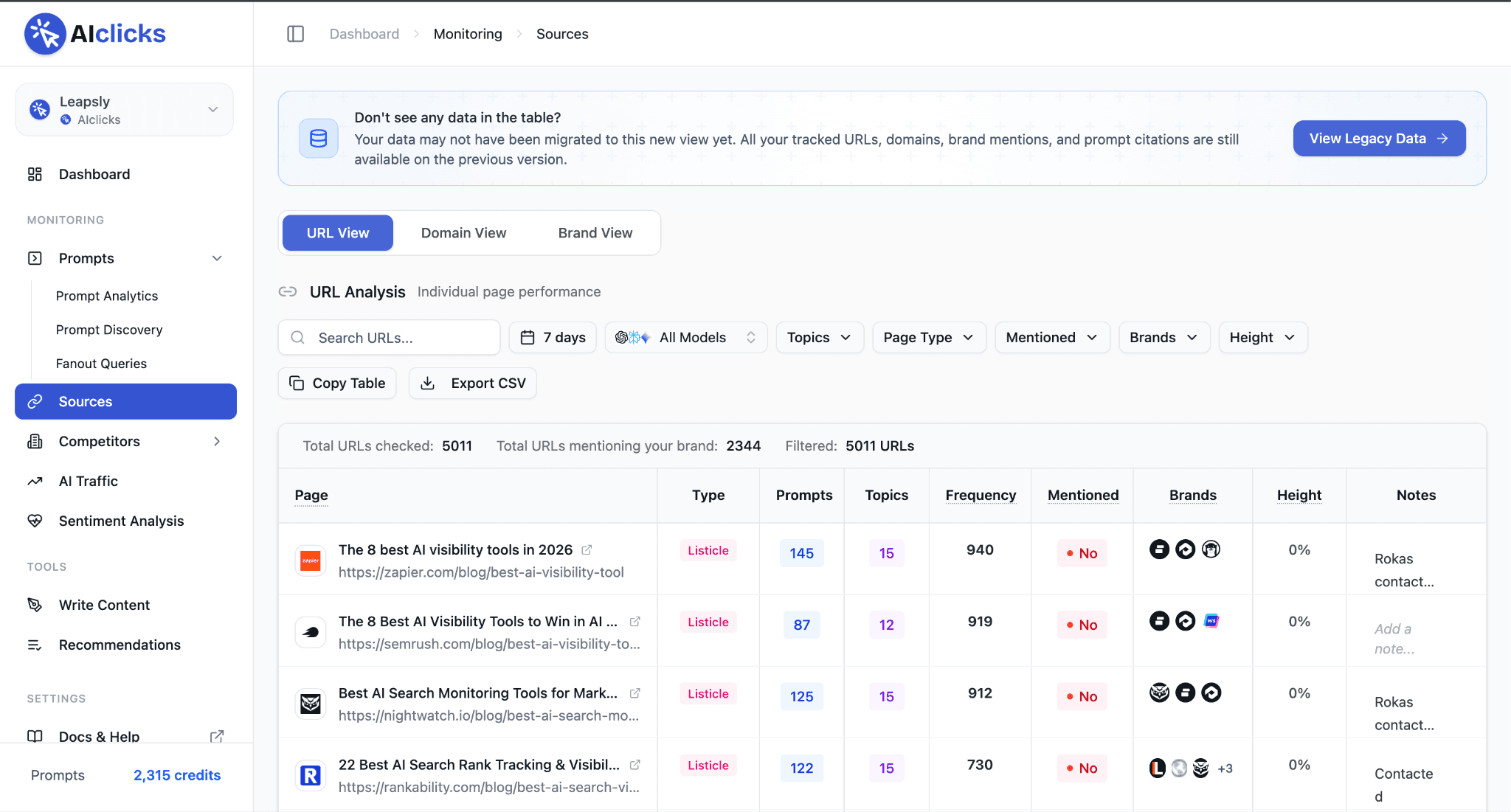
Competitor Benchmarking: Ranking isn’t just about where you stand, but who’s ahead, track competitor mentions and citations to inform your strategy and monitor share of voice inside AI-generated responses.
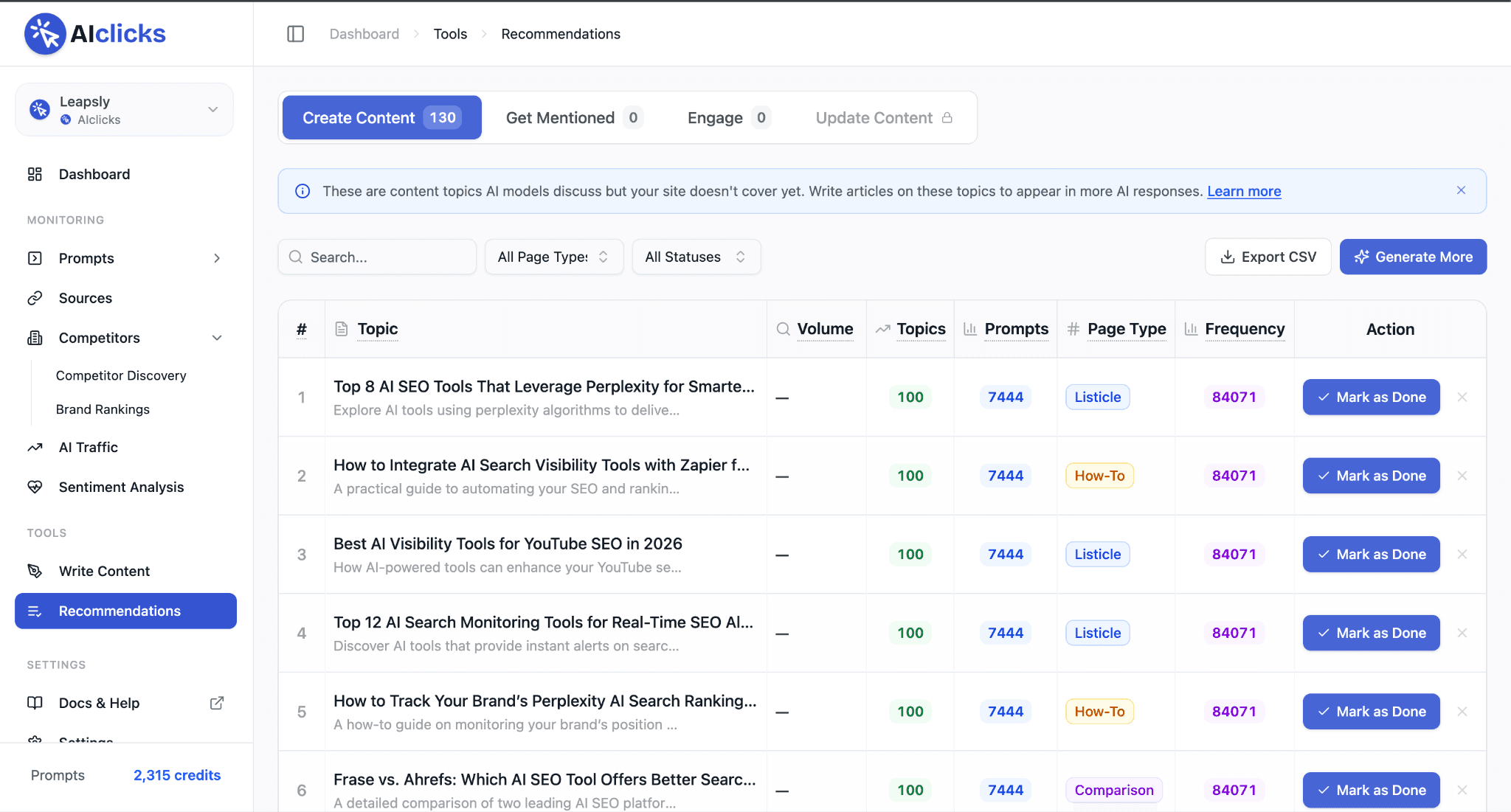
Actionable Recommendations: From “add an LLMs.txt file” to “create a simple FAQ hub,” the platform tells you what to fix next, with impact tags and clear key features that matter in AI-driven search.
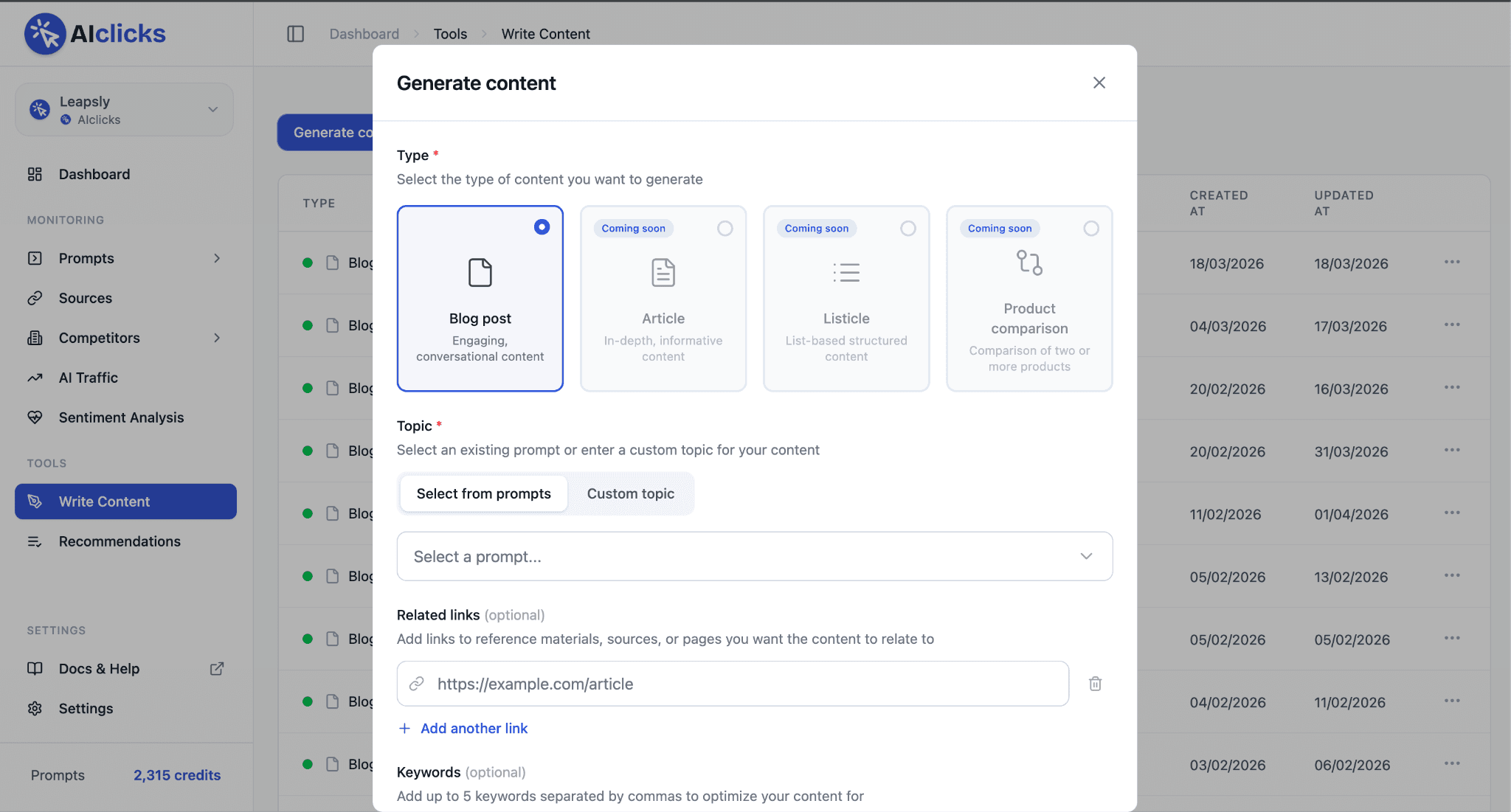
AI-Optimized Content Creation: Use built-in workflows or an AI writer to generate answer-friendly drafts, guides, and blog posts in your brand tone, complete with headings, lists, and suggestions to create optimized content that LLMs can easily lift.
Strengths:
Comprehensive citation and source analysis.
Deep technical audits specifically for AI crawler accessibility.
The most user-friendly interface for best LLM visibility tracker needs.
Considerations:
Best suited for teams focused on AI search visibility rather than classic keyword ranking alone.
Suitable Use Cases:
Brands wanting to monitor and improve citations in ChatGPT and Perplexity.
Agencies managing multiple clients’ AI search presence.
Pricing:
AIclicks offers tiered monthly pricing starting at $59/month for Starter with 30 tracked prompts, scaling to $189 Pro and $499 Business for more prompts, multiple LLMs, and agency features.
2. Profound
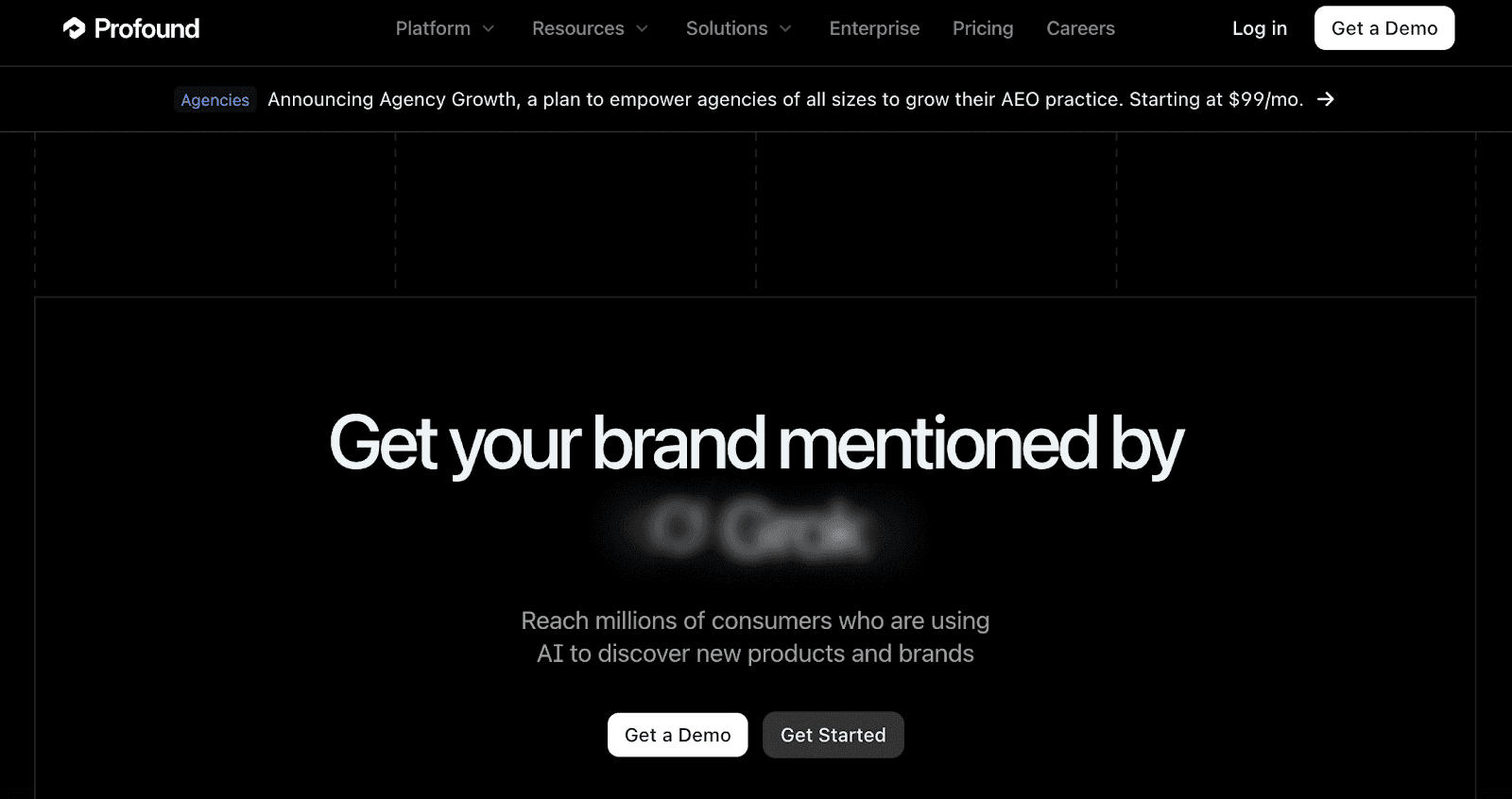
A specialist for large brands and national campaigns, Profound focuses on perception rather than just rank, showing how your brand is interpreted by multiple LLMs at scale. It is an excellent tool for best LLM visibility optimization tools research because it highlights sentiment gaps.
Strengths:
Deep sentiment analysis across AI search engines
Enterprise-grade customization and implementation
Strong focus on brand perception rather than just rankings
Considerations:
Less focused on content creation or prompt-level optimization
Suitable Use Cases:
CMOs and strategy leads needing AI-driven brand perception insights
Large brands running national or global campaigns
Pricing:
Profound AI pricing starts at $99/month for Starter (ChatGPT tracking only, 50 prompts, email support), $399/month for Growth (3 answer engines, 100 prompts, 6 optimized articles/month), and custom Enterprise (10 engines, multiple companies, tailored prompts, dedicated Slack/SSO/SOC2).
3. Eldil AI
For agencies that want to audit how prompts and citations flow inside LLMs. Eldil AI digs into prompt structure and source frequency, offering diagnostics on why certain sources are favored over others. It is a niche but powerful best LLM SEO tools option for those doing deep research.
Strengths:
In-depth prompt and citation diagnostics
Useful for competitive research and AI prompt experiments
Considerations:
Requires complementary SEO tools for content fixes and execution
Not designed for content creation or broad AI visibility tracking
Suitable Use Cases:
Agencies focused on prompt engineering and citation analysis
Teams experimenting with generative AI optimization
Pricing:
Eldil AI's Brand plan costs $349/month for tracking 1 brand with 50 queries, unlimited seats, AI visibility audits, competitor watch, and actionable recommendations across models like Claude. Agency plans scale to $500/month (150 queries, 1-5 clients) and $1500/month (250+ queries, multiple brands) with full implementation options and 14-day trials.
4. Rank Prompt
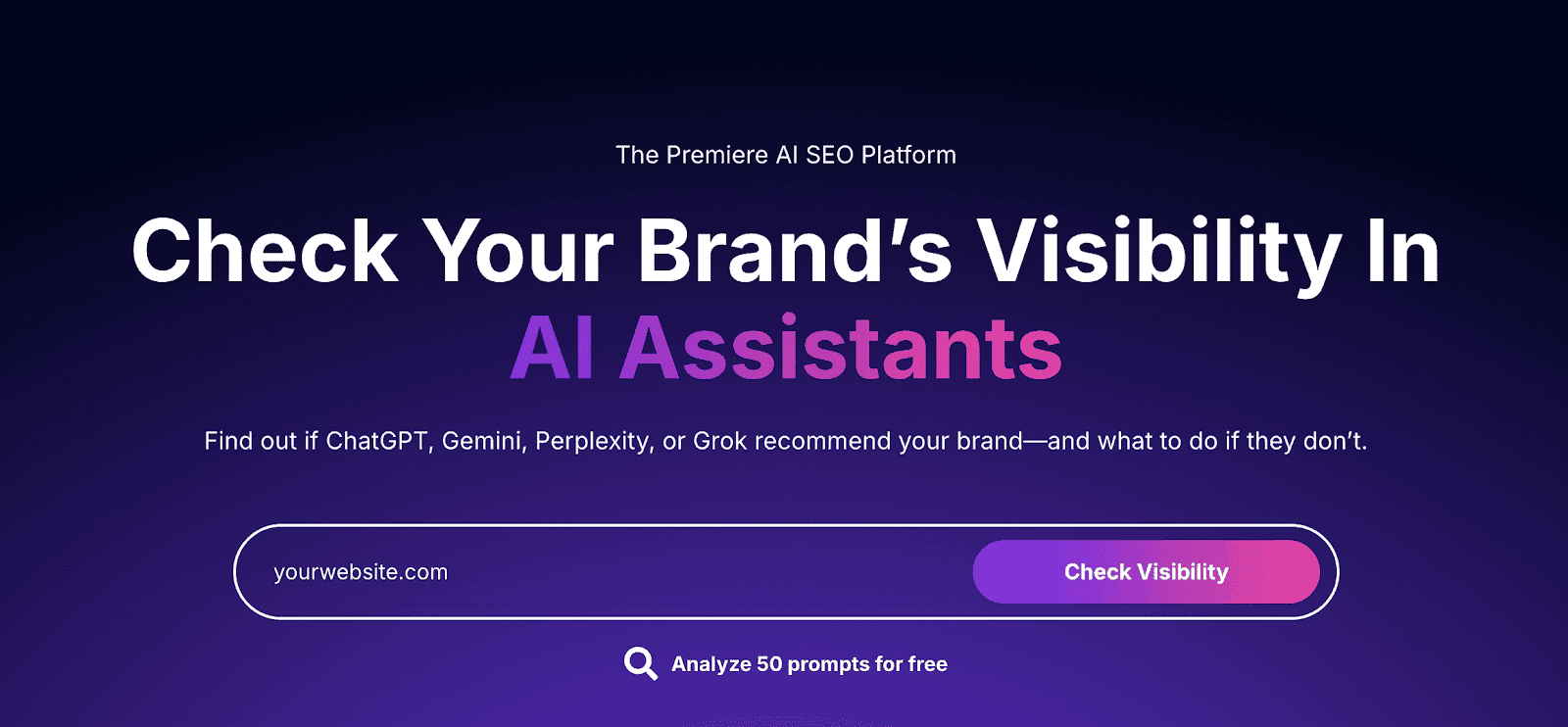
Rank Prompt is built for power users who want granular, prompt-level control over their LLM SEO analysis. For checking purposes, its strongest feature is prompt cluster mapping, letting you audit how different prompt variations and structures affect whether and how your brand appears in AI answers. Schema analysis is also built in, which is useful for diagnosing technical gaps in how LLMs read and interpret your content.
Strengths:
Advanced prompt management and optimization toolkit
Enables direct interaction with AI prompt structures
Considerations:
Best for power users with deep AI search expertise
Less suited for teams wanting automated insights or content creation
Suitable Use Cases:
SEO professionals managing prompt strategies
Teams wanting fine-grained control over AI search signals
Pricing:
Rank Prompt offers a Starter plan at $39/month (150 credits for 5-6 AI reports across 150 prompts on ChatGPT, Gemini, Perplexity), Pro at $71/month (500 credits for 17-20 reports), and Agency at $119/month (1000 credits for 35-40 reports with multi-brand support).
5. Peec AI
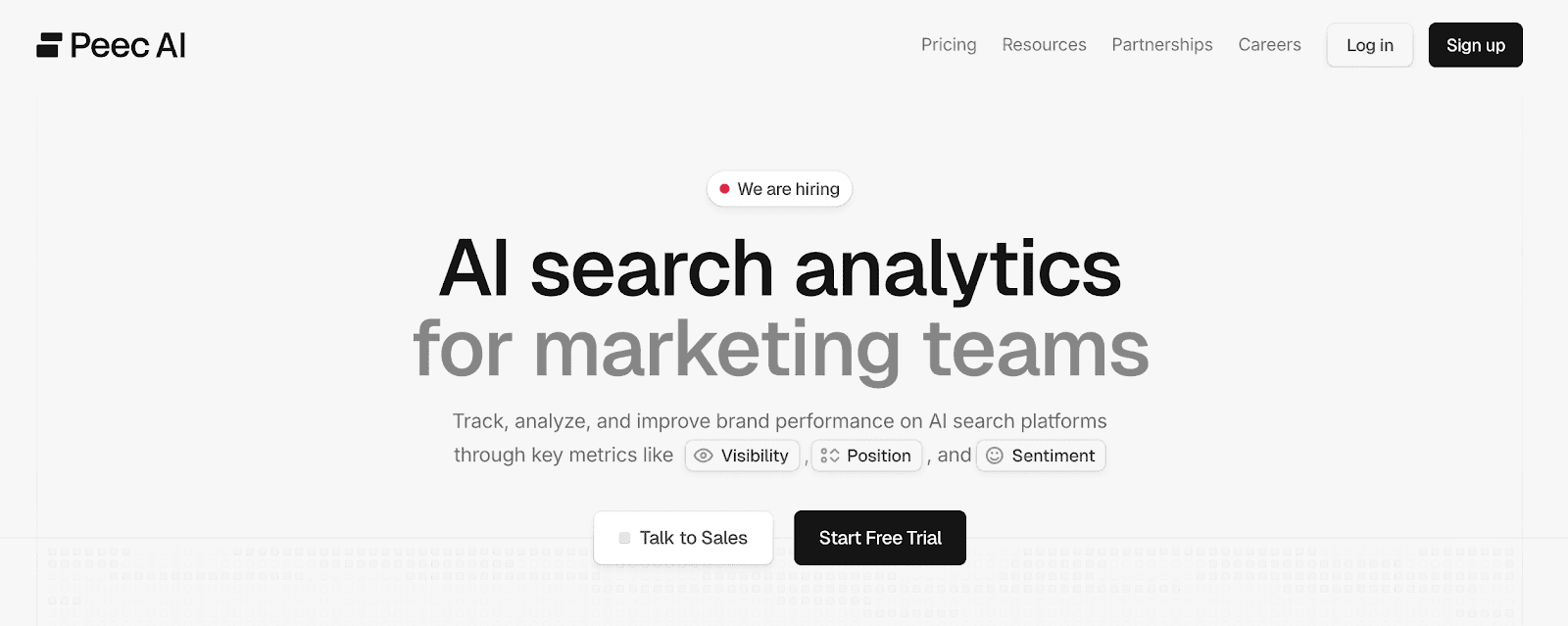
Peec AI is a cost-effective option for SMBs that want to get started with LLM SEO checking without a heavy investment. Its visual dashboards make it easy to audit brand visibility across ChatGPT, Perplexity, and AI Overviews, and the source citation analysis gives you a basic view of which domains LLMs are pulling from for your target prompts. It's less diagnostic than tools like Eldil AI or AIclicks, but for teams new to LLM SEO analysis, it's a practical starting point.
Strengths:
Cost-effective for SMBs
Basic AI monitoring and source citation analysis
User-friendly dashboards
Considerations:
Limited advanced features compared to enterprise tools
Focused more on monitoring than content optimization
Suitable Use Cases:
SMBs starting AI SEO tracking
Teams needing quick alerts on AI ranking shifts
Pricing:
Peec AI pricing starts at $95/month for Starter (25 prompts, 2250 AI answers across ChatGPT/Perplexity/AIO, unlimited seats), $245/mont for Pro (100 prompts), and $495/month for Advanced (300+ prompts).
6. Semrush One
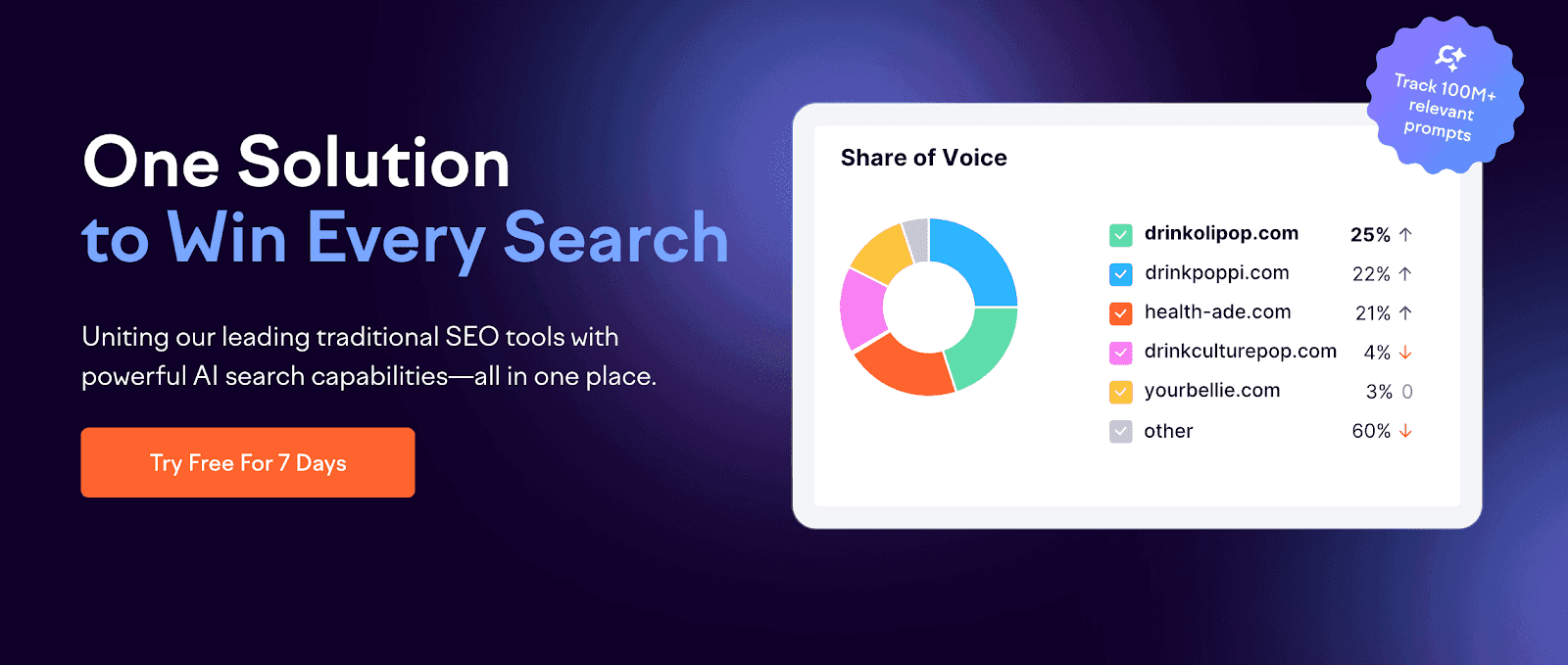
Semrush One is the most practical option for teams that already live inside the Semrush ecosystem and want to add LLM SEO checking without switching platforms. Its AI visibility features let you check how your brand and content appear in AI-generated results alongside your traditional SEO data, useful for teams that want a single view rather than managing separate tools.
Strengths:
Comprehensive traditional SEO features with AI enhancements
AI model tracking integrated into familiar workflows
Strong backlink and keyword research tools
Considerations:
AI features are add-ons rather than the core focus
May not provide deep LLM-specific visibility or citation tracking
Suitable Use Cases:
Teams wanting a combined traditional SEO and AI model tracking tool
Users familiar with Semrush’s ecosystem looking to extend into AI SEO
Pricing:
Semrush pricing starts at $139.95/month for Pro (500 keywords tracked), $249.95/month for Guru (1,500 keywords), and $499.95/month for Business (5,000 keywords), with 17% annual discounts; AI tracking tools like Content Toolkit add $99+/month extra, depending on the plan.
Compare LLM SEO Analysis Tools
Tool | Best For | Key Features | Price Range |
AIclicks | Brands, agencies, SaaS | AI visibility dashboard, geo audit, competitor benchmarking, citation/source tracking, AI-optimized content, recommendations | From $59/mo (Free trial available) |
Profound | Enterprise-scale LLM analytics | Multi-engine tracking, national visibility, perception data | From $99/mo |
Eldil AI | LLM prompt diagnostics | Prompt/citation mapping, source analysis | From $349/mo |
Rank Prompt | Prompt-level AEO, schema support | Prompt cluster analytics, injection optimization | From $39/mo |
Peec AI | Mid-size LLM tracking | Multi-model, benchmarking, visual dashboards | From $95/mo |
Semrush One | Unified SEO + AI search | SEO audit, content optimization, AI visibility | From $139.95/mo + $99+/mo for AI tracking tools |
Why LLM SEO Analysis Is Changing The Game
Picture this: A person asks ChatGPT, “Where can I buy comfortable running shoes?” The answer doesn’t just list sites; it may pull quotes from brand blogs, mention trusted review directories, or link straight to a product page. In other words, AI-generated search results are increasingly acting like a new type of search results page, and your brand’s AI presence in those answers directly impacts conversions.
The traditional rules, such as chasing keyword ranks, fiddling with meta tags, and tweaking technical SEO once a quarter, aren’t enough. Now, prompt optimization and AI visibility tracking matter just as much, if not more, than small on-page SEO tweaks inside your usual SEO toolkit.
Newer engines raise the stakes further: if your buyers ask questions in xAI's chatbot, you need a way to track brand mentions in Grok alongside ChatGPT and Perplexity.
So, what makes LLM SEO unique? A few things:
Prompt-Driven Results: LLM answers are built on user prompts, not just keyword searches, so you’re optimizing for how people express search intent in natural language.
Citation-Based Trust: AI models cite sites they trust more often. If you’re missing from their “source list,” you’re invisible, even if your Google rankings look healthy in traditional SEO tools.
Dynamic Mention Tracking: Winning a spot inside the answer means tracking brand mentions, citations, and prompt-level performance, week by week, across multiple AI platforms.
Answer Engine Optimization (AEO): It’s not enough to optimize for the “10 blue links.” Now, you have to structure content and landing pages to be easy for AI to “lift” and include inside its answer. For a deep dive, check our guide on AEO vs SEO: Key Differences and Proven Optimization, and how it relates to generative engine optimization in practice.
How LLM SEO Tools Work: Workflow in Practice
Mapping prompts to revenue is where these platforms shine. Instead of just one-off “keywords,” you’ll want to group related prompts (“best CRM,” “top small business CRM,” “CRM for freelancers”) by topic clusters that match commercial goals. Then, track not just your overall visibility but visibility per cluster, so you know where wins are repeatable and where search intent is still poorly served.
Key workflow steps:
Instrument your site: Maintain AI referrer segments in GA4 and Google Analytics (see our post on how to track AI traffic in Google Analytics (GA4), and use dashboards to see prompt-level, brand-position, and citation trends. Tie this into Google Search Console, so you keep sight of classic search results at the same time.
Fix access: Allow AI crawlers, confirm server-side rendering so models can fetch real content, not just snippets. This affects both AI-generated answers and AI-generated search results.
Build the right IA: Pair transactional pages (your “money” pages) with deep informational guides and collections. Funnel internal links for authority and stronger brand presence in AI responses.
Engineer “liftable” content: Use answer-first intros, bullet points, clean sectional headings, and tables, because LLMs prefer structured, easy-to-digest info. That structure also helps traditional search engines and supports rank tracking across Google search.
Win in external coverage: Stay active in reviews, directories, listicles, and real forum conversations (especially Reddit), as these get cited often by AI; they boost your brand’s AI presence and brand's AI presence beyond your own domain.
Monitor weekly: Scan dashboards, check brand positions, review new citations, and ship quick fixes; this is where in-house marketing teams and SEO agencies can use AI monitoring to stay ahead.
For more tactics and strategies, check out this video:
Key LLM SEO Tools Features to Prioritize in 2026
To stay ahead, look for SEO software with:
Multi-engine visibility: Track ChatGPT and Perplexity prompts, Claude, Gemini, Meta AI, Bing, Google AI Overviews, and other AI overviews in the same place.
Real-time citation intelligence: See which sources LLMs cite, and how often, to inform outreach and content quality improvements.
Prompt cluster analytics: Focus on winning whole topics, not just micro-keywords, to maximize search visibility and AI search performance.
Actionable gaps: Find spots where you’re missing from answers, and get advice for plugging the gaps, whether via new AI content or classic on-page SEO work.
Technical accessibility checks: The platform should scan for SSR, bot access, schema, XML sitemaps, and crawlable content as part of a technical SEO checklist.
True benchmarking: Know who your real competitors are in each engine, track share of voice and adjust quickly.
Product-led integrations: Connect with your content ops, split monitoring by team or product, and export reports on demand, so AI search results become a regular part of your reporting rhythm.
Product-Led SEO & Liftable Content
You need content that LLMs want to “lift” into their answers. This means:
Start with direct, answer-first intros (2–3 sentences answering the main query).
Use one idea per section, with clean H2 or H3 headings.
Build tables and lists for "best X" queries, they’re lifted more in AI answers and AI-generated responses.
Use a schema where it adds info clarity. Avoid spam.
Place reference blocks or citations high on the page.
Share authentic reviews and take part in third-party roundups (directories, forums).
These steps matter. In our own tests at AIclicks, content using these patterns saw higher “inclusion rates” inside AI-generated content from Perplexity and ChatGPT, compared to regular blog posts, and helped create optimized content that also performed well in Google rankings.
Choosing Your Best-Fit LLM SEO Tool
Here’s how to decide:
Agency or brand size: Most platforms scale by number of tracked prompts or sites, but some (like Profound) focus on enterprise use. AIclicks and Rank Prompt fit SMBs, agencies, or SaaS teams, while large enterprises might also consider Profound or Semrush One as part of their paid plan stack.
Workflow needs: If you want classic SEO tools plus LLM features, look at Semrush, Surfer, Se Ranking, or Scrunch AI. If pure AI visibility tracking is the goal, try AIclicks, Rank Prompt, or Peec AI as your main AI visibility toolkit.
Pricing vs. features: Watch for pro features like geo audits, citation lists, and real-time dashboards before committing; check how each platform handles custom pricing and extra seats.
Integration: Your best tool should plug into GA4, your reporting dashboards, and your content pipeline so SEO agencies and internal teams aren’t copy-pasting between tools.
Tools, Trends & Next Steps
LLM SEO analysis is now essential for anyone serious about brand or campaign visibility. The stakes have jumped: instead of competing for traffic in Google’s link lists, you’re competing for attention in the answers themselves, across chat experiences, AI overviews, and conversational interfaces.
Microsoft Copilot belongs in that competition too, and a dedicated Copilot visibility tracker will show you whether your brand actually makes it into its answers.
The best tools in 2026 will help you:
Track AI visibility and brand mentions across top engines and multiple AI platforms.
Optimize content and technical signals for “liftability” in AI answers and AI-generated search results.
Benchmark competitors and spot actionable gaps weekly.
Pair measurement and execution for product-led growth and higher content quality overall.
Don’t wait until your competitors already dominate conversational search. Choose a solution that fits your size and workflow, map prompts to revenue, and adopt measurement plus content updates as weekly habits.
We built AIclicks.io, an AI search visibility tool, because brands need to be seen where the real answers happen, in AI models and chat environments. If you want your site, product, or service to be included when users ask, start with an answer-first structure and prompt-level tracking. AI search isn’t the future; it’s already here.
FAQs
How can I analyze my competitors' visibility in LLMs?
Most dedicated LLM SEO analysis tools include competitor benchmarking as a core feature. AIclicks, for example, lets you track competitor citations and share of voice across ChatGPT, Perplexity, Gemini, and others, showing you which prompts trigger their brand instead of yours and which sources LLMs rely on when recommending them. This gives you a clear diagnostic picture of where you're losing ground and why.
Are there any tools that give detailed analytics on how often different LLMs cite my company across various answer engines?
Yes, this is precisely what tools like AIclicks and Eldil AI are built for. AIclicks tracks citation frequency per prompt, per model, and per answer engine, showing you not just whether you're mentioned but which external domains LLMs cite alongside your brand. Eldil AI goes deeper on source frequency mapping, diagnosing why certain domains get cited more consistently than others across different models.
How to monitor LLM SEO performance?
Start by setting up prompt clusters around your core commercial topics, then use a dedicated LLM SEO tool to track brand mentions, citation sources, and share of voice across your target engines on a weekly basis. Connect GA4 to capture AI referral traffic so you can tie visibility changes to actual site behavior. The goal is a repeatable monitoring rhythm, not a one-time audit.
How to show up in LLM search?
Showing up in LLM search comes down to two things: being cited by sources LLMs already trust, and structuring your own content so it's easy for AI to lift into answers. Practically, this means getting listed on authoritative directories, review platforms, and relevant Reddit threads, while ensuring your on-site content uses answer-first intros, clean headings, and structured data that LLMs can parse easily.
And if you'd rather not manage all of this in-house, an LLM SEO agency can run the citation-building and content work for you.
Find out what AI says about your brand
AIclicks tracks the prompts your buyers ask, shows which brands get named, and tells you which pages the answers were pulled from.



Any questions left?
Book a call here: