" width="14px"><path d="M 13.864 5.629 L 13.3 5.629 L 13.3 5.6 L 7 5.6 L 7 8.4 L 10.956 8.4 C 10.379 10.03 8.828 11.2 7 11.2 C 4.681 11.2 2.8 9.319 2.8 7 C 2.8 4.681 4.681 2.8 7 2.8 C 8.071 2.8 9.045 3.204 9.786 3.864 L 11.766 1.884 C 10.516 0.719 8.844 0 7 0 C 3.134 0 0 3.134 0 7 C 0 10.866 3.134 14 7 14 C 10.866 14 14 10.866 14 7 C 14 6.531 13.952 6.073 13.864 5.629 Z" fill="rgb(255, 193, 7)" height="14px" id="H_YjfTNpn" width="14px"/><path d="M 0 3.742 L 2.3 5.429 C 2.922 3.888 4.429 2.8 6.193 2.8 C 7.264 2.8 8.238 3.204 8.979 3.864 L 10.959 1.884 C 9.709 0.719 8.037 0 6.193 0 C 3.504 0 1.172 1.518 0 3.742 Z" fill="rgb(255, 61, 0)" height="5.428500000000002px" id="PlkthQDhg" transform="translate(0.875 0)" width="10.959199999999996px"/><path d="M 6.232 5.581 C 8.04 5.581 9.683 4.889 10.925 3.764 L 8.758 1.931 C 8.032 2.483 7.144 2.782 6.232 2.781 C 4.411 2.781 2.865 1.62 2.283 0 L 0 1.759 C 1.159 4.026 3.511 5.581 6.232 5.581 Z" fill="rgb(76, 175, 80)" height="5.581099999999999px" id="WlnJ5gngE" transform="translate(0.7 8.4)" width="10.924899999999994px"/><path d="M 6.864 0.029 L 6.3 0.029 L 6.3 0 L 0 0 L 0 2.8 L 3.956 2.8 C 3.68 3.576 3.183 4.254 2.526 4.75 L 2.527 4.749 L 4.693 6.582 C 4.54 6.722 7 4.9 7 1.4 C 7 0.931 6.952 0.473 6.864 0.029 Z" fill="rgb(25, 118, 210)" height="6.589883930775992px" id="x_rSW275p" transform="translate(7 5.6)" width="7px"/></g></svg>)


Reviewed by:
Rokas Stankevicius

Founder @ aiclicks.io
Last updated:
Expert Verified

My journey as the founder of AIclicks.io started with a simple question: "Who will win the next wave of SEO?" In 2026, the best AI Overviews SEO rank tracking isn't just a nice-to-have. It's how you protect your brand in a world where users jump between classic Google results and Google's AI Overviews in a single buying journey.
It's not just websites racing for Google's top 10 anymore. Now, we're competing first to appear in AI Overviews and, secondarily, in AI-generated answers from tools like ChatGPT, Copilot, and Perplexity. The game has changed. And it's moving fast.
Not long ago, tracking SEO meant watching a list of keywords climb (or fall) in Google Search. That's still important. But today, when AI systems create summaries and answers directly, for millions of users, being visible in those AI-generated responses (especially in Google AI Overviews) is just as vital. It's like passing the ball to a new referee: the search engine is no longer the only one making calls. AI engines and their recommendations matter just as much.
This article provides a comprehensive list of the best AI Overviews trackers in 2026. I will break down the top-performing platforms designed to monitor, analyze, and optimize your brand's visibility within Google's AI-generated summary panels.
The numbers explain why this matters right now. AI Overviews are no longer a fringe SERP feature:
BrightEdge's tracking through February 2026 put appearance at roughly 48% of tracked queries
Advanced Web Ranking's own live 8,000-keyword tracker measured 75.24% of personalized U.S. results and 64.99% of non-personalized results showing an AI Overview as of August 31, 2026. That's a long way from the low-double-digit numbers AI Overviews started at in 2024.
Ahrefs' most recent large-scale study, covering 300,000 keywords, found position-1 organic CTR falls 58% when an AI Overview appears,
Seer Interactive's tracking of AIO-triggering queries across 42 organizations found organic CTR overall drops 61% on those queries, while brands that do get cited inside the AI Overview earn 35% more organic clicks than uncited competitors on the same query.
Google Search Console only began surfacing dedicated AI Overview data in a limited, impressions-only rollout starting June 2026, and it's still not available everywhere or broken down by clicks, CTR, or query, which is exactly why third-party tracking exists.
8 Best Google AI Overviews Tracking tools 2026
Tool | Best For | Coverage | Key Features | Refresh Cadence | Free Trial | Starting Price |
AIclicks | Agencies, e-commerce, SaaS, B2B | Google AI Overviews, ChatGPT, Perplexity, Grok, AI Mode, Copilot, Gemini, Claude, Meta, DeepSeek | Prompt-level visibility, AI Overviews mentions, competitor benchmarking, citation intelligence, content recommendations | Daily prompt refresh | Yes, 3-day trial on Starter and Pro (no card required) | From $59/mo (Free trial available) |
Semrush AI SEO Toolkit | Large agencies, brands | ChatGPT, Google AI Overviews, Gemini, and Perplexity | AI Visibility Index, backlink & traffic integration | Daily (25 tracked prompts refreshed daily) | 7-day trial on the Semrush One bundle | From $99/mo |
Surfer SEO | Content teams | AI Overviews, AI Mode, ChatGPT, Gemini, and Perplexity | Prompt-level insights, content optimization suggestions | Weekly on lower tiers, daily on Pro | 7-day trial (Pro plan) | From $158/mo |
Rank Prompt | Enterprises | AI Overviews, ChatGPT, AI Mode, Gemini, Grok, Claude, Perplexity | Granular prompt-level tracking | Not publicly specified | Yes, 7-day trial (card required) | From $39.17/mo |
xSeek | Senior marketing leads at B2B SaaS | AI Overviews, ChatGPT, Claude, Gemini, Perplexity, xAI, DeepSeek | Weekly prioritized action plan, native Claude integration, Content Studio, dedicated specialist | Daily | No self-serve trial (sales-assisted onboarding) | From $249.99/mo |
Scrunch AI | Agencies | ChatGPT, Claude, Perplexity, Gemini, Meta AI,AI Mode, AI Overviews, Copilot, Grok | Trend scoring, cross-platform AI Overviews tracking | Not publicly specified | Not publicly specified | From $250/mo |
SE Ranking | Small to mid SEO teams | AI Overviews, AI Mode, ChatGPT, Gemini, Perplexity | Reliable AI mention tracking | Daily (100-250 AI prompt checks/day, tier-dependent) | Yes, 14-day free trial | From $129/mo |
Thruuu | Small businesses | Google AI Overviews | Brand mention monitoring | Not publicly specified | Free tier available (AI Overviews only) | $99/mo |
Best AI Overviews Rank Tracker Tools - Practical Review
In today's search engine optimization, AI-powered tools are becoming essential for tracking search visibility and search engine rankings in the new AI search ecosystem.
For SEO teams looking to leverage AI SEO software that goes beyond traditional metrics, here's my listicle of the best AI Overviews SEO rank trackers in 2026, ranked from best to least optimal.
1. AIclicks: Best Google AI Overviews Reviews Tracker
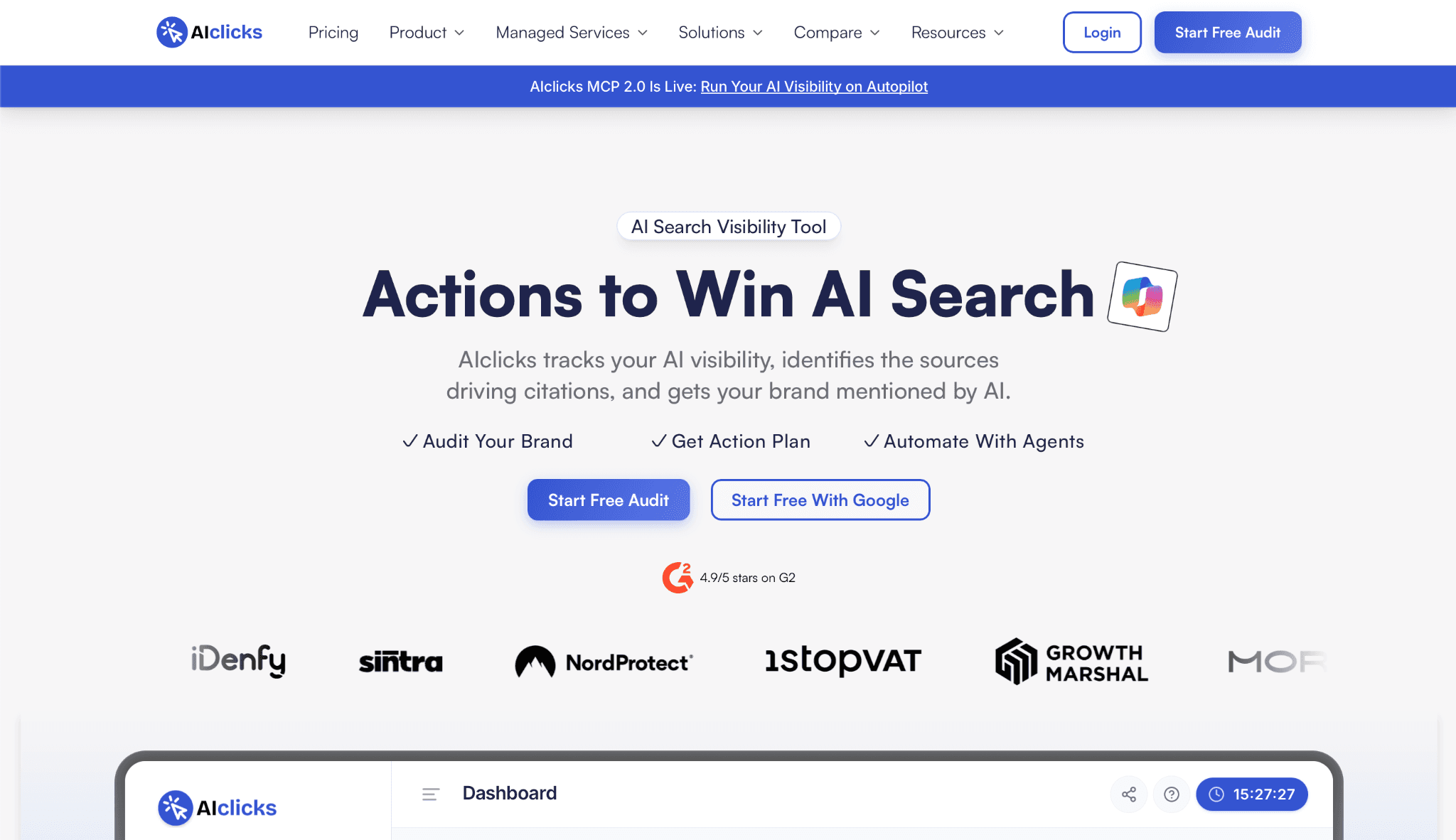
AIclicks is the best Google AI Overviews tracker because it was designed specifically for the transition from keyword rank to "Share of Model." We built this platform to give marketers an execution layer, not just a dashboard. In 2026, AIclicks leads the market by discovering the actual prompts your audience uses to trigger Google's summaries. Our platform monitors your brand's citation frequency within these overviews and maps those mentions back to your revenue pipeline using a proprietary GA4 integration.
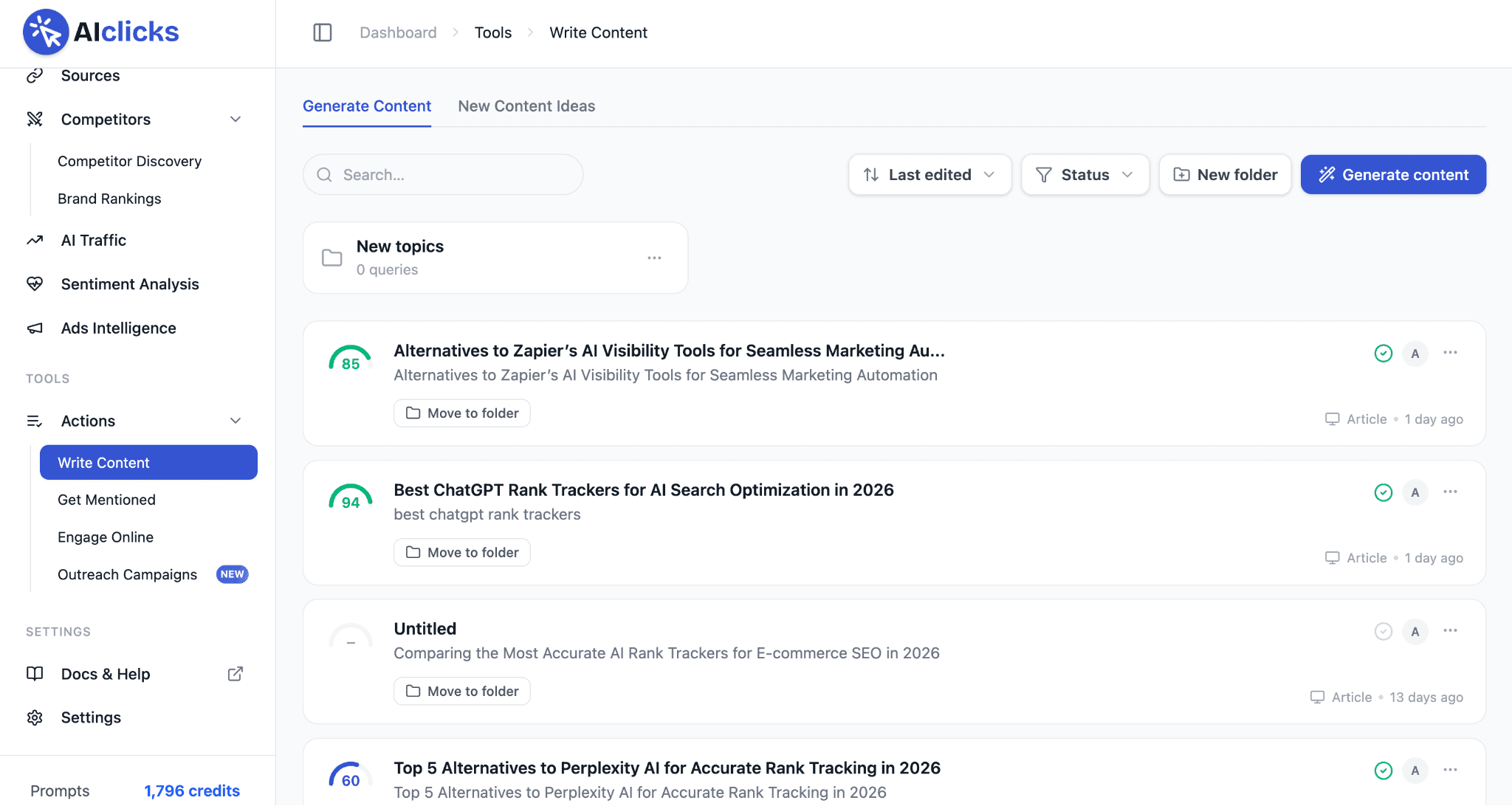
The optimization module in AIclicks is its strongest asset. It doesn't just tell you that you are missing; it audits the top-cited sources in AI Overviews and generates specific content briefs to help you "lift" your brand into that panel. By analyzing "citation-worthiness" signals, like the placement of atomic answers and the presence of structured data, AIclicks tells your team exactly which H2 tags to rewrite to win the primary citation.
Pros
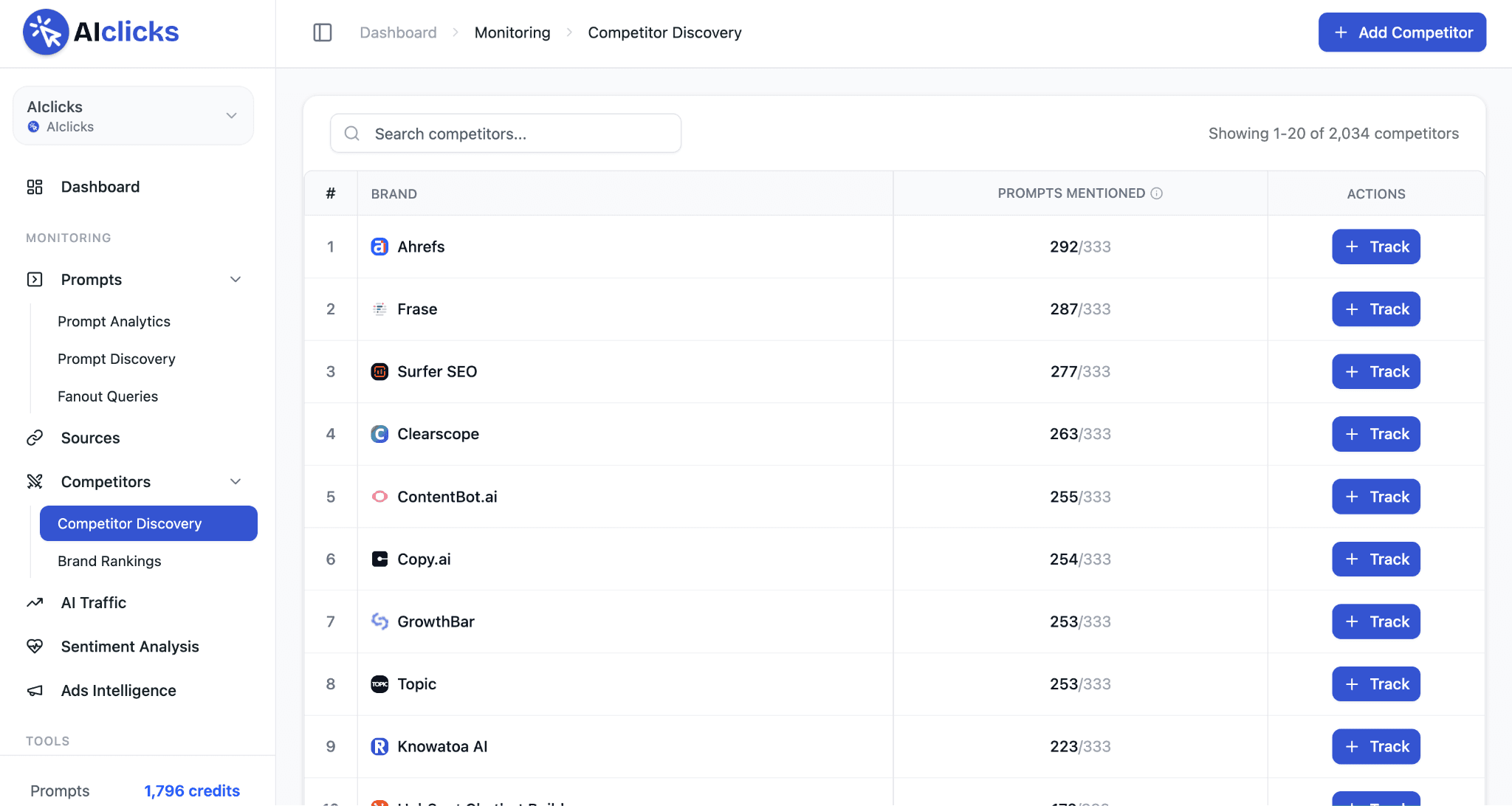
Tracks prompt-level visibility to see which user prompts trigger AI Overviews mentioning your site.
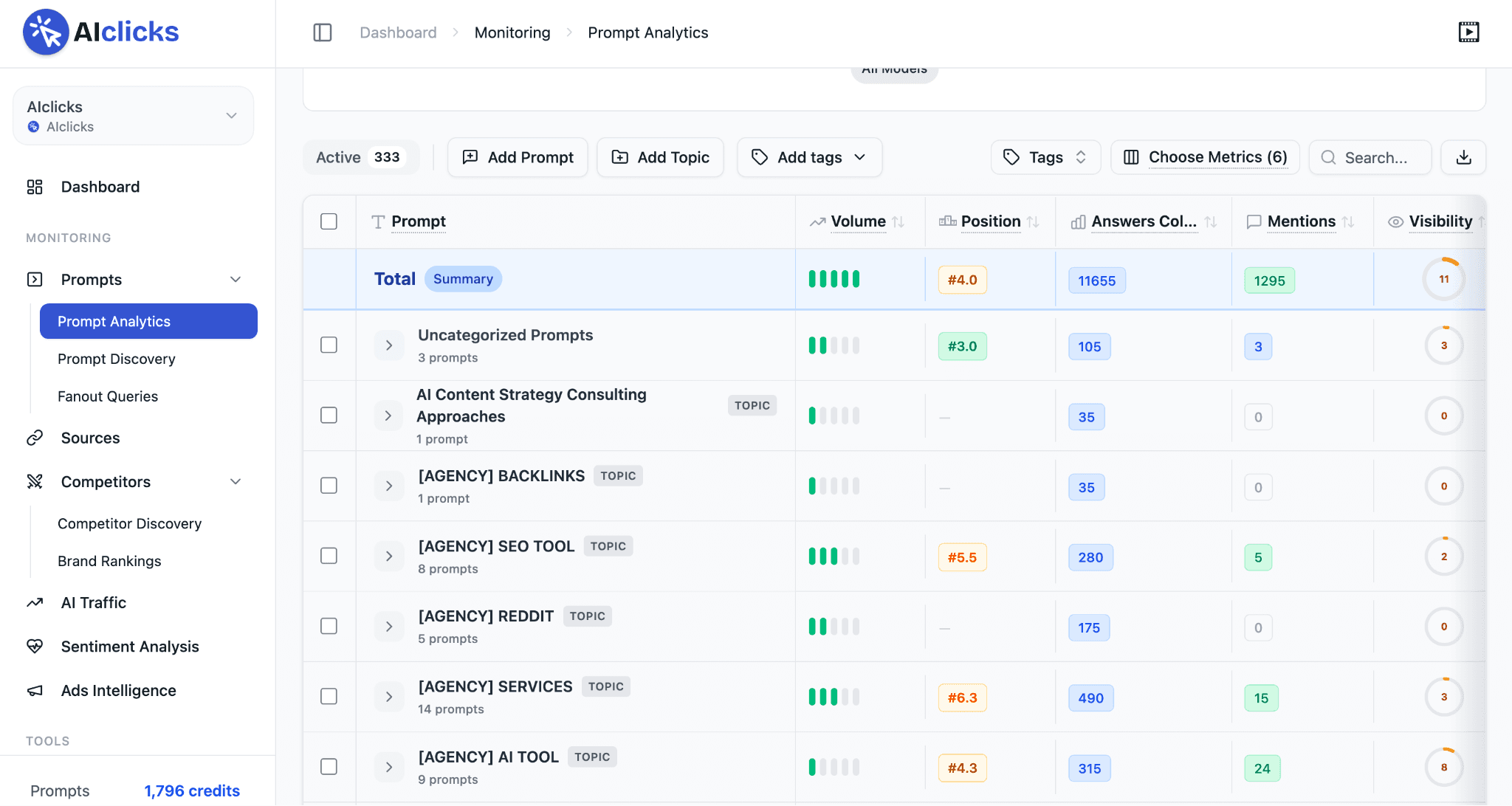
Supports geo & model audits across multiple AI search engines like AI Overviews, ChatGPT, Perplexity and more.
Provides competitor benchmarking and citation intelligence to identify sources AI Overviews use.
Offers actionable content and on-page optimization recommendations to improve AI Overviews presence.
Cons
The platform's depth requires a learning curve for teams used to traditional rank trackers.
Suitable Use Cases
Agencies reporting AI-driven wins invisible to traditional SEO tools.
E-commerce sites mapping AI prompts to revenue impact.
SaaS brands tracking AI Overviews presence alongside classic SEO rankings.
Pricing AIclicks offers tiered monthly pricing starting at $59/month, scaling to $189 Pro and $499 Business for more prompts, LLMs, unlimited seats, and agency features.
2. Semrush AI SEO Toolkit
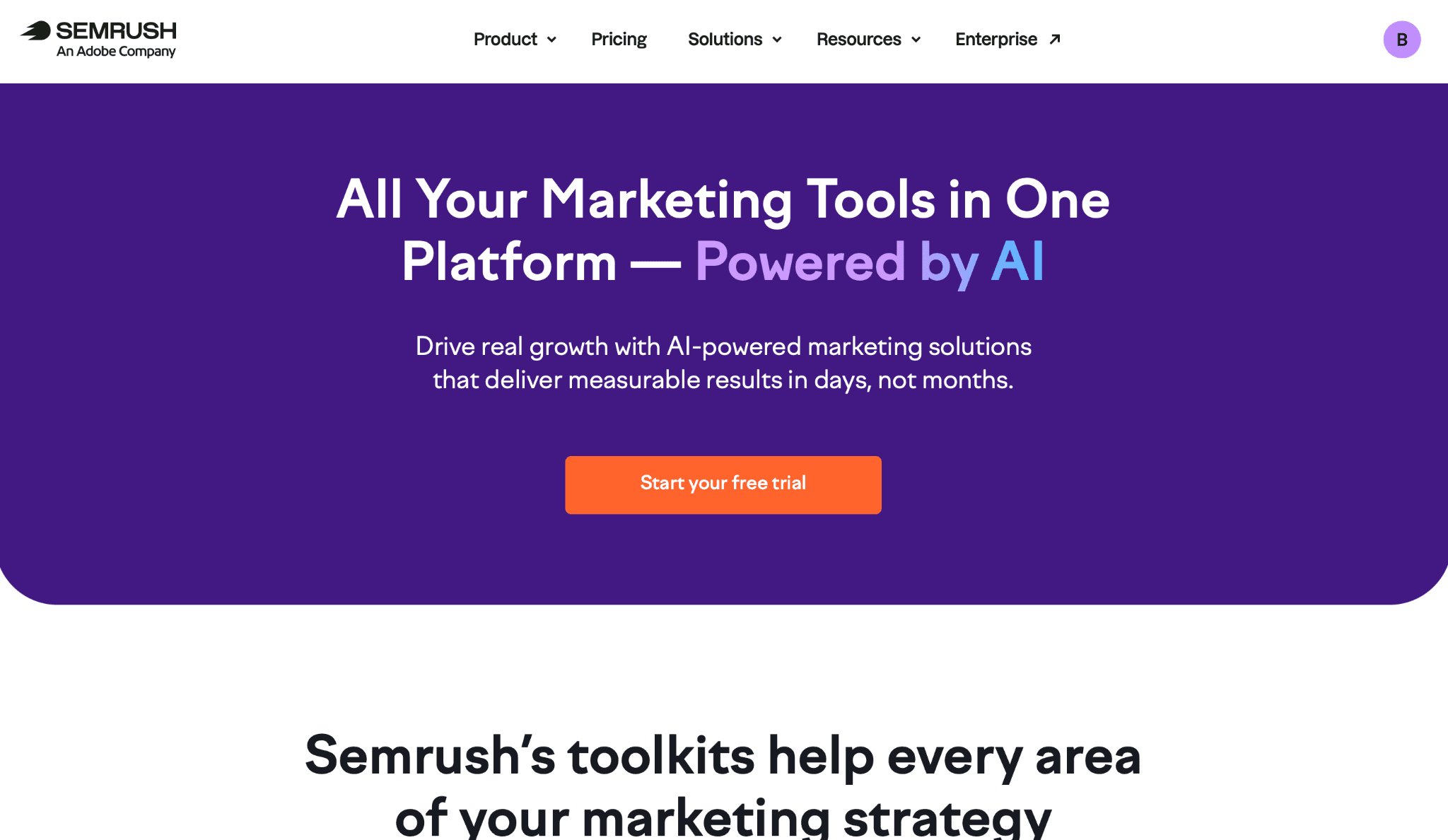
Semrush's AI tracking isn't one single product; it's split across the $99/month AI Visibility Toolkit (25 custom prompt slots refreshed daily, tracking mentions across ChatGPT, Google AI, Gemini, and Perplexity; Claude is not included at this tier), the Position Tracking feature bundled into the standard SEO Toolkit, and the broader Semrush One suite that combines SEO and AI visibility tracking in one subscription. For teams already running keyword research and audits inside Semrush, the AI Visibility toolkit sits inside the same interface they already know, which removes the overhead of evaluating and onboarding a second platform. The main constraints on the $99/mo Base plan are the four-engine coverage (Claude is excluded) and the 25-prompt ceiling, which gets tight for agencies tracking multiple brands or product lines.
Pros
Extensive coverage combining traditional SEO and AI results.
Useful for diagnosing AI Overviews behavior alongside other SEO processes.
Strong integration with existing SEO workflows.
Cons
May be overwhelming for smaller teams focused solely on AI Overviews tracking.
Pricing can be high for smaller businesses.
Suitable Use Cases
Large agencies managing complex SEO campaigns.
Brands needing a hybrid tool for AI and traditional SEO metrics.
Pricing
Semrush's AI tracking is split across the $99/month AI Visibility Toolkit (25 prompts, one domain), Position Tracking, and the bundled Semrush One suite (Starter ~$165/mo annual / $199 monthly, Pro+ ~$248/mo annual / $299 monthly), with a 7-day free trial on Semrush One.
3. Surfer SEO
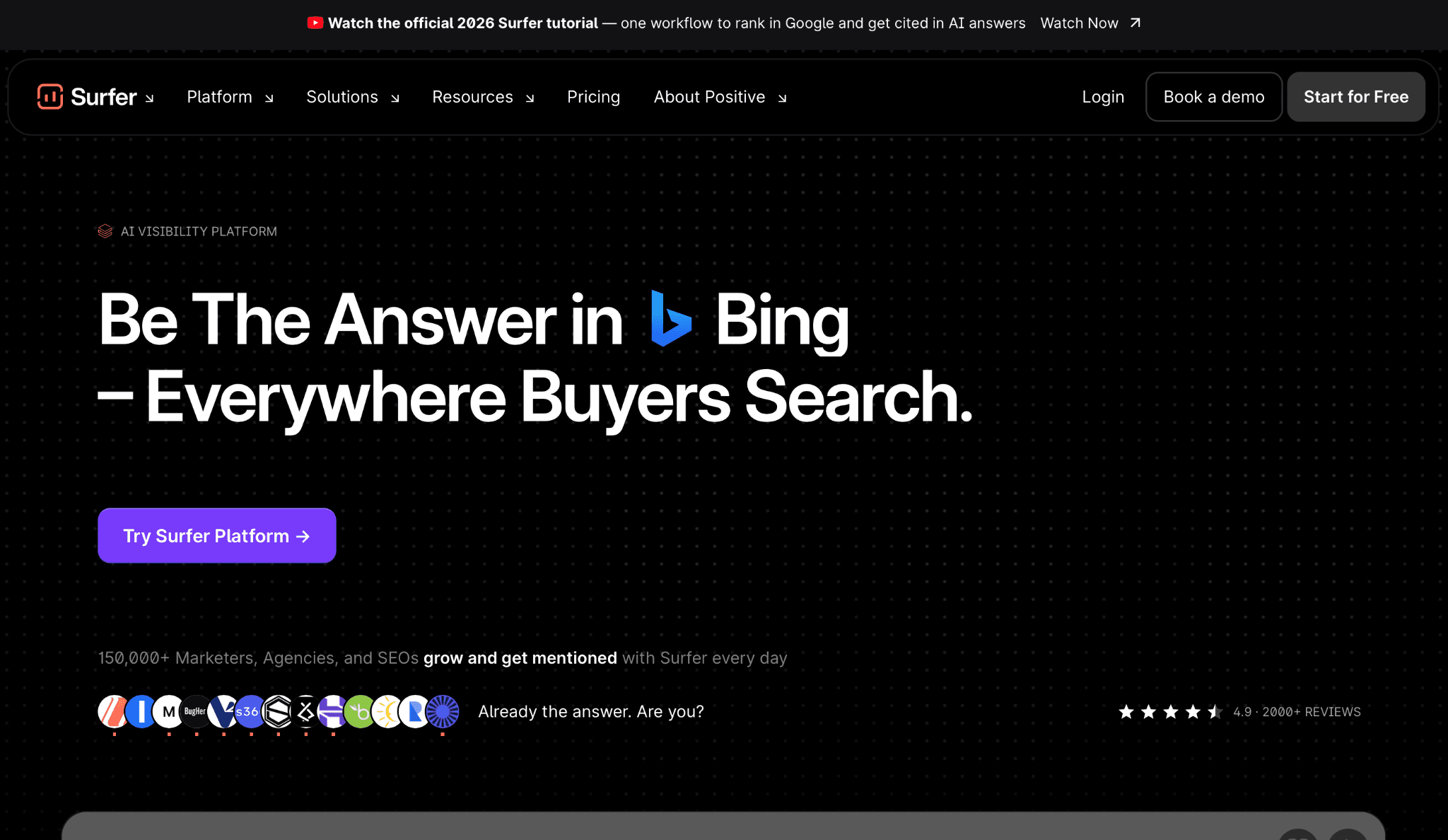
Surfer SEO is one of the best tools for monitoring AI Overviews. Their "AI Tracker" analyzes how Google's summaries ingest your articles, identifying "citation gaps" where competitors are winning real estate that your content should own. It utilizes a Topical Map approach to help you see how your informational guides influence your visibility in Google's summarized panels over time. By examining the structure of winning AI answers, Surfer provides a real-time feedback loop for your writers. It helps them ensure that your content is structured in the "question-answer" format that Google's crawlers prefer to "lift."
Pros
Strong content optimization recommendations.
Prompt-level tracking integrated with AI Overviews data.
User-friendly interface for content teams.
Cons
Less focused on competitor benchmarking.
Limited multi-platform AI visibility tracker.
Suitable Use Cases
Content teams optimizing for AI-driven search results.
Brands focusing on AI Overviews-triggering content.
Pricing Surfer SEO base pricing starts at $158/month.
4. Rank Prompt
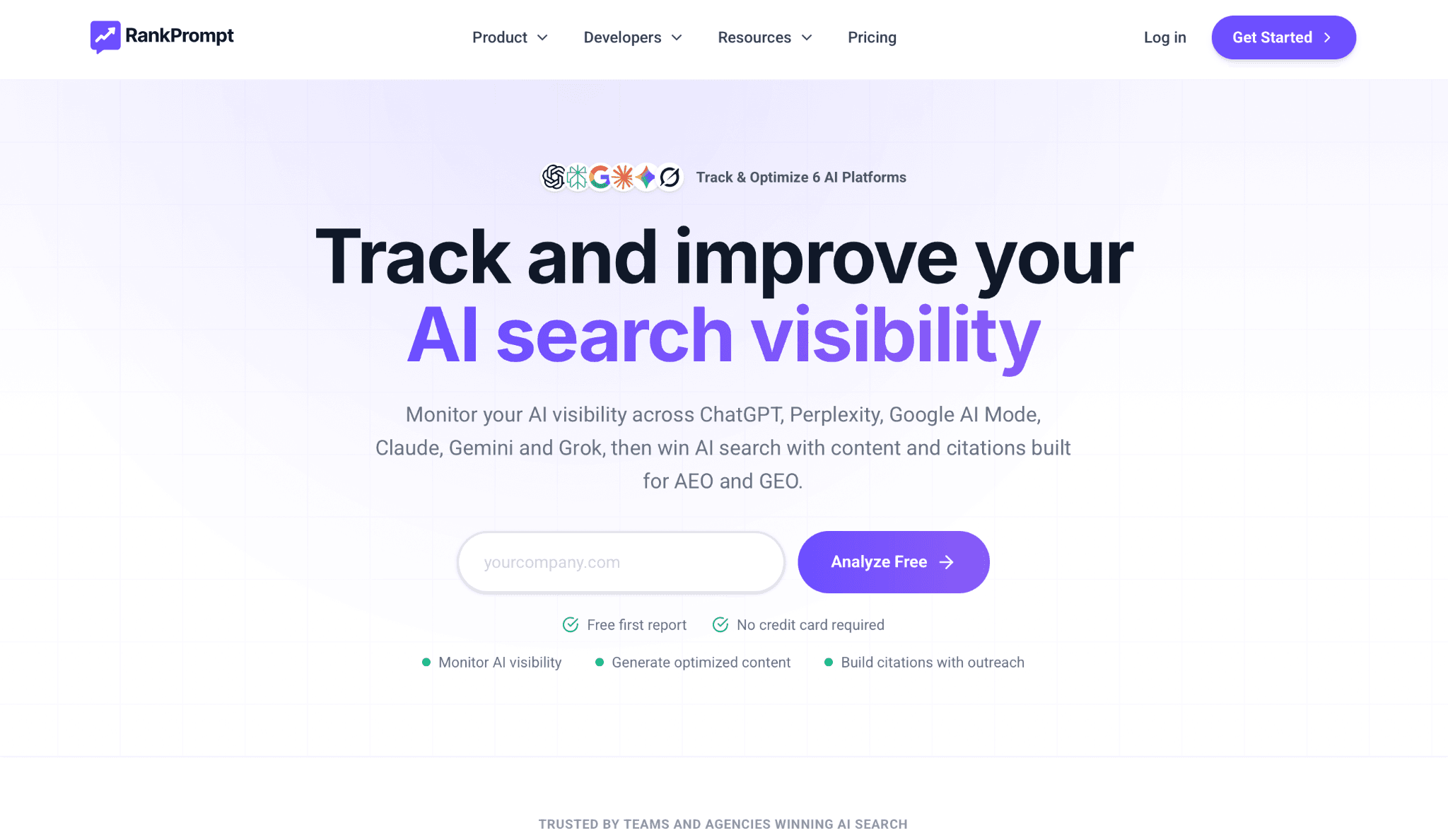
Rank Prompt is a precision-engineered AI Overviews rank tracker designed for enterprise-level scaling. It operates on a credit-based system, allowing you to track thousands of conversational prompts across multiple niches simultaneously. Its standout feature is Atomic Answer Scoring, which evaluates whether your content is written in the 50-80 word passages that Google's generative engine prefers to scrape.
Pros
Comprehensive prompt-level tracking.
Supports multiple AI search engines and AI Overviews panels.
Scalable for large enterprises.
Cons
Enterprise-level pricing.
Complexity may be too high for smaller teams.
Suitable Use Cases
Enterprises tracking multiple websites.
Brands tracking AI Overviews exposure at scale.
Pricing Rank Prompt offers a Starter plan at $39.17/month.
5. xSeek

xSeek operates differently from every other tool on this list. Rather than handing you a dashboard to interpret, it delivers a short prioritized action plan every Monday (which queries to target, which competitors are being cited where you aren't, what to create next) with a dedicated specialist working alongside you. Daily monitoring covers ChatGPT, Claude, Perplexity, Gemini, Grok, DeepSeek, and Mistral, and the native Claude integration lets your team generate brand-voice articles directly from tracking data without switching tools. Note that xSeek bills on a six-month commitment rather than monthly.
Pros:
Weekly prioritized action plan removes the "what do I do with this data" problem that most visibility tools leave unsolved
Native Claude integration generates articles directly from tracking data inside a tool your team already uses
Dedicated specialist on every plan with direct Slack access on Scale, not a ticketing queue
Cons:
Six-month billing commitment rather than monthly. Not the right entry point for teams still evaluating whether AI visibility is worth investing in.
Not a self-serve tool. Teams that want to explore the data independently will find the service model constraining.
Suitable Use Cases:
Senior marketing leads at high-growth B2B SaaS with an existing content program who want AI visibility turned into a measurable channel fast
Founders who treat content as a competitive moat and want a managed workflow rather than another tool to learn
Teams that have tried self-serve AI visibility platforms and found the action gap is the real bottleneck
Pricing: xSeek starts at $249.99/month
6. Scrunch AI
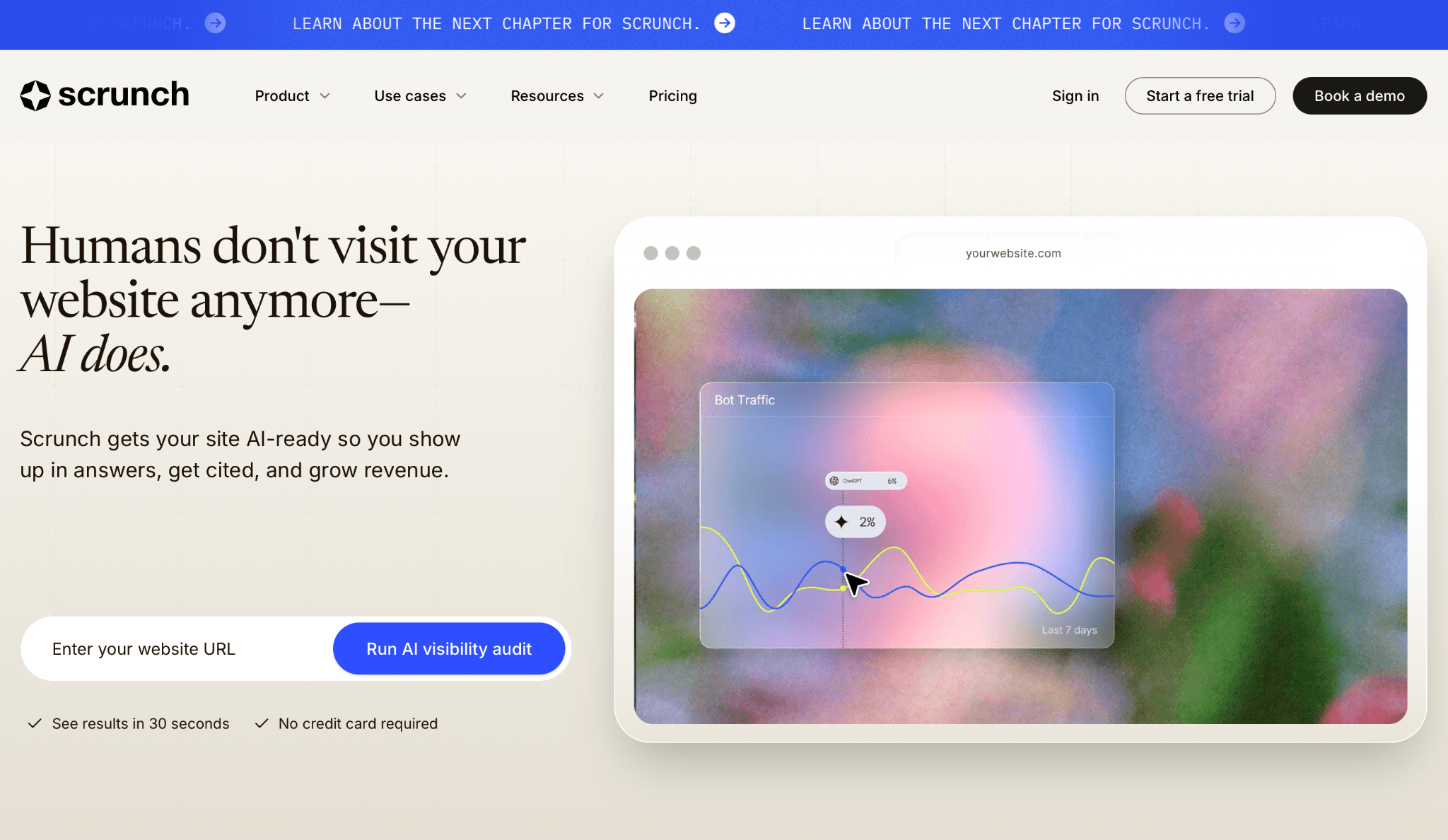
Scrunch AI is an enterprise-grade platform that delivers the best Google AI Overviews tracking tools for teams focused on the "AI-ready" customer experience. Their platform helps marketers understand not just what AI sees, but why. It features automatic prompt tagging, where the system classifies every query by user intent and topic cluster, allowing you to track your AI presence without manual configuration. The $250/month plan covers four platforms: ChatGPT, Perplexity, Google AI Overviews, and Microsoft Copilot. Google AI Mode tracking, along with Claude, Gemini, and Meta AI coverage, requires the custom-priced Enterprise tier, which also adds Scrunch's Agent Experience Platform, working at the CDN layer to serve AI crawlers a clean, parseable version of your site.
Pros
Cross-platform AI Overviews tracking.
Trend analysis for AI search growth.
Agency-focused features.
Cons
May lack depth in traditional SEO metrics.
Suitable Use Cases
Agencies monitoring AI Overviews trends.
Brands expanding into multiple AI search platforms.
Pricing
Scrunch AI's plan starts at $250/month and covers four platforms (ChatGPT, Perplexity, Google AI Overviews, and Microsoft Copilot); Google AI Mode tracking and broader engine coverage require the custom-priced Enterprise plan.
7. SE Ranking
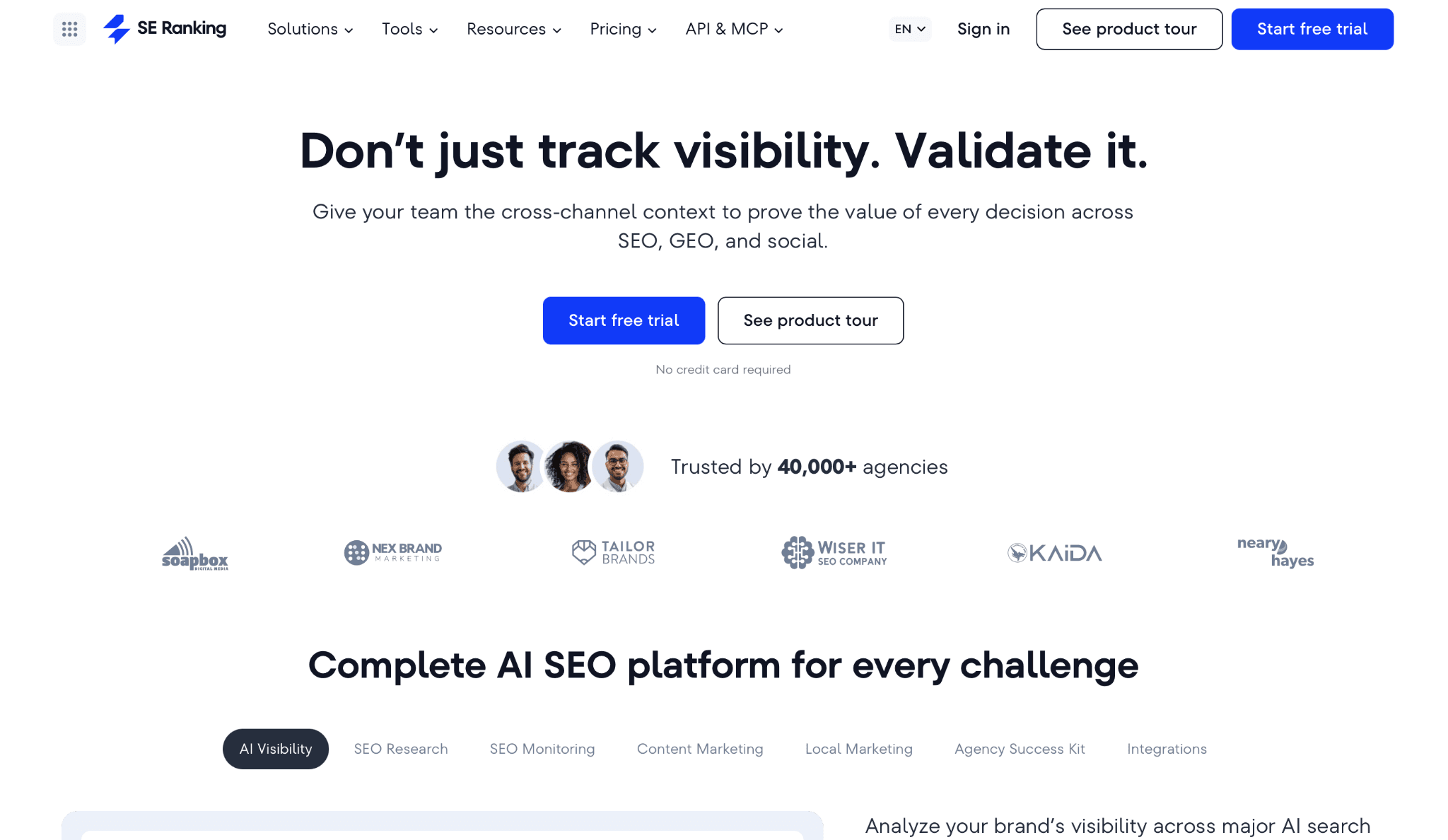
SE Ranking is a good option for small to mid-sized teams that need a reliable, value-driven gateway into AI monitoring. Their "AI Overviews Tracker" monitors the summarized snippets Google integrates into traditional results, showing your presence and source rank for every target keyword. A user favorite is the "No cited" feature, which highlights keywords where your competitors are mentioned but your brand is missing, essentially a roadmap for content ideas.
Pros
Includes "No cited" competitive gap analysis for content ideation.
Integrates AI tracking into a familiar, all-in-one SEO suite.
Cons
AI tracking is bundled into paid plans rather than sold as a standalone add-on, so you're paying for the full SEO suite to get it.
Fewer advanced AI Overviews analytics compared to niche, specialized tools.
Suitable Use Cases
EYClick, a digital marketing agency based in Barcelona and Madrid, used SE Ranking to grow organic traffic 300% in three months for La Estrella del Jamón, a family-run Catalan restaurant in La Riera de Gaià, pushing 20+ keywords into Google's Top 10 and taking the #1 spot for competitive local terms like "restaurante catalán Tarragona."
Pricing
SE Ranking bundles AI Overview tracking into its Core plan ($129/month, $103.20/month billed annually, 100 AI prompt checks/day) and Growth plan ($279/month, $223.20/month billed annually, 250 AI prompt checks/day), with a 14-day free trial.
8. Thruuu

Thruuu is the best Google AI Overviews tracker for those who need a browser-accurate simulation of real-world results. Unlike API-reliant tools, Thruuu scrapes Google directly for every tracked query, extracting the full AI Overview text. It identifies every location where your brand appears, as a cited source URL or as a named mention within the summary text. What sets Thruuu apart is the combination of AI visibility and organic ranking data in a single report; Pro and Agency plans extend tracking beyond Google AI Overviews to ChatGPT, Google AI Mode, Gemini, and Perplexity.
Pros
Cost-effective for brand mention tracking.
Simple interface focused on AI Overviews.
Cons
Limited features beyond brand monitoring.
Less suitable for comprehensive SEO teams.
Suitable Use Cases
Small businesses monitoring AI Overviews mentions.
Brands on a budget.
Pricing
Thruuu's Starter plan costs $19/month monthly ($13/month billed annually); Pro runs $49/month ($33 annually, 250 credits) and Agency $99/month ($66 annually, 700 credits). However, AI Overviews tracking only comes in on the Agency plan.
Other AI Overviews Tracking Tools: Advanced Web Ranking, Keyword.com AI Overview Tracker and More
Advanced Web Ranking, SERPWatcher, and AccuRanker are popular traditional SEO tools that many SEO teams continue to rely on alongside newer AI-focused platforms. Advanced Web Ranking offers comprehensive keyword tracking with multi-region and local SEO capabilities, making it ideal for agencies managing diverse client portfolios; it doesn't have a permanent free plan, but its 7-day free trial unlocks full features, which is enough to spot-check AI Overview presence across a real keyword set before committing.
SERPWatcher and AccuRanker provide user-friendly dashboards focused on visibility trends and straightforward rank tracking, which suits small to medium-sized businesses and agencies transitioning into AI SEO. While these tools excel at traditional SEO metrics and offer reliable performance, they have limited features specifically tailored to AI Overviews tracking or the AI search ecosystem.
Beyond these three, a newer wave of tools was built specifically around AI visibility rather than adapting a classic rank tracker.
Otterly AI runs a credit-based model (Lite $29/month for 15 prompts, Standard $189/month for 100 prompts, Premium $489/month for 400 prompts) built around a "Share of AI Voice" metric, the percentage of citations you own versus competitors on a given query set.
Profound AI starts at $99/month for Starter (ChatGPT tracking only) and $399/month for Growth (adds Perplexity and Google AI Overviews), with Gemini and full nine-platform coverage reserved for its custom-priced Enterprise tier, which also unlocks ChatGPT Shopping placement tracking.
Ziptie runs a usage-based model from roughly $35.63/month up to $2,614/month depending on prompt volume, refresh frequency, and engine coverage, built around per-query "AI Success Scores" that blend citation rate, mention rate, and sentiment into a single 0-100 number to help you prioritize what to fix first.
Keyword.com offers AI Search Visibility as a credit-based add-on starting around $24.50/month for 50 credits, tracking ChatGPT, Perplexity, Gemini, and Claude.
seoClarity's Clarity ArcAI module tracks nine AI engines (including ChatGPT, Perplexity, Google AI Mode, Google AI Overviews, Gemini, DeepSeek, Claude, Copilot, and Grok) and includes ArcAI Accuracy, a feature built to catch AI "hallucinations," cases where a model cites your brand inaccurately; pricing is custom and not published.
Peec AI's Starter plan runs roughly €80/month and Pro around €205/month, centered on a "Find Key Sources" feature that surfaces the citations shaping your AI visibility.
HubSpot now offers a standalone AEO product at $50/month ($45/month billed annually), or it comes bundled into Marketing Hub Professional starting at $800/month.
Rankscale AI runs a credit-based model from €20 to €780/month across ten named AI engines, including ChatGPT, Perplexity, Google AI Mode, Google AI Overviews, Gemini, Claude, Copilot, Grok, DeepSeek, and Mistral.
If your priority is monitoring answers beyond Google, our roundup of the best AEO tools compares platforms built for ChatGPT, Perplexity, and other answer engines.
Free AI Overview Checker Tools You Can Try First
Before you commit to a paid tracker, it's worth spot-checking your AI Overview presence with what's already free.
SEO.com's AI Overviews Checker is a genuinely manual tool: you enter a domain, a keyword, and an email address (no account or credit card needed), and it tells you whether an AI Overviews appears for that keyword, which URLs it cites, and an estimated traffic impact, capped at 3 free detailed checks per day.
PAN Communications runs a different kind of free tool: instead of letting you check your own arbitrary keywords, it tracks a curated set of 5,000+ B2B keywords (built with Semrush data plus human review) and lets you browse AI Overviews appearance across that set, filtered by intent and funnel stage, updated monthly. It's a good way to see category-level trends even though you can't plug in your own keyword list.
Advanced Web Ranking, while it doesn't have a permanent free plan, offers a genuine 7-day free trial with every feature unlocked (data stays accessible for 14 days after), which is enough time to run a real AI Overviews check across your own keyword set at scale.
None of these give you the ongoing, historical tracking a paid tool does; they're a reasonable way to confirm the problem exists in your category before you pay for a tracker that watches it continuously.
Why AI Overviews Tracking Matters More Than Ever
Imagine searching "Best wireless earbuds for sports" on Google today. Sure, you'll get organic results from the classic search engine. But you'll likely see an AI Overview up top, summarizing options and sources in a single block. That's the first thing users see.
Now, ask the same in ChatGPT or Perplexity. These models will pull their own AI search results, often from different websites, sometimes without clear citations or obvious AI snippets. But for most users, what appears in Google's AI Overviews is the main decision-making layer.
Google's AI Mode pushes this even further by replacing the results page with a full conversational answer, so it's worth pairing your AI Overviews data with a Google AI Mode visibility tracker to see whether your brand surfaces there too.
If your brand isn't mentioned in that panel, no matter how strong your SEO, you disappear.
That's why modern SEO demands new AI tools. Tools that:
Track your site in both classic organic listings and AI-generated results, with a focus on whether an AI Overviews appears and whether you're cited inside it
Surface the questions users actually ask, a.k.a. "prompt mentions," and search intent patterns that tend to trigger AI Overviews
Surface every time your brand or content is cited as a source by LLMs, AI-generated content blocks, or AI summaries
2026's SEO winners are those who measure, act, and adapt on all these fronts, combining traditional SEO with AI-driven search to protect and grow AI traffic, starting with Google's AI Overviews layer. Check out this video where we discuss success stories:
The scale of the shift is measurable.
Google AI Overviews now appear on somewhere between 48% of tracked queries (BrightEdge, data through February 2026) and roughly 75% of personalized U.S. results (Advanced Web Ranking's live tracker, August 2026); either way, a majority of searches now carry one.
Ahrefs' 300,000-keyword study found position-1 organic CTR drops 58% once an AI Overviews appears, and coverage has grown fast: BrightEdge separately measured a 58% increase in AI Overview coverage between February 2025 and February 2026.
On top of that, what gets cited doesn't hold still. Semrush's citation-volatility study, tracking 1,500 keywords that triggered an AI Overview on at least 20 of 31 days, found zero of them kept the exact same cited URLs for the full month, and the cited URL set changed about 12 times per keyword over that period. That study is from late 2024, so treat the exact number as a snapshot rather than a live figure, but it illustrates the underlying pattern well: a tracked citation today is often gone within days, which is the core argument for tracking AI Overviews continuously rather than checking in occasionally.
What Sets AI Overview Rank Trackers Apart
Classic rank trackers measure keyword positions in organic search. That hasn't changed. But AI-centered SEO calls for features designed for how people and machines query, summarize, and recommend content in this AI era, especially within AI Overview panels.
For example, a recent Writesonic LLM citation study analyzing over 280 million citations across eight AI platforms showed that citation patterns change dramatically when users shift from generic queries to branded prompts with reviews, comparison pages, and press coverage gaining far more visibility than simple listicles or pricing pages.
This kind of behavior is exactly why tracking branded prompts, brand mentions, and citation types inside AI answers (and specifically Google AI Overviews) matters so much for modern AI SEO rank tracking.
Here's what makes today's top AI SEO tools different:
Prompt-level analysis: Not just keywords, but tracking specific questions and topics users pose to AI Overviews, and how AI responses shift over time based on historical data, especially for prompts known to trigger AI Overviews.
Brand mentions and citations: Pinpointing when your site is cited inside Google AI Overviews, and how those mentions compare to what appears in ChatGPT or Perplexity answers.
Multi-platform dashboards: Seeing one view for all traditional search engines and emerging AI search platforms, while still prioritizing the AI Overviews appearance as the main KPI.
Actionable competitor insights: Benchmark your share of AI answers and AI Overviews citations against rivals and see where a competitor rank tracker view reveals gaps.
Direct connection to your revenue pipeline: Map prompt clusters (especially those that trigger AI Overviews) to the pages and content that actually convert, not just raw SEO performance metrics.
A tool that can't show you how you're performing inside AI Overviews is only telling half the story and leaves big gaps in your overall SEO strategy.
Underneath all of that, a good tracker is really solving three separate measurement problems. Presence tracking answers the simplest question: does an AI Overview show up at all for a given prompt. Brand mention tracking goes further and checks whether your brand is named inside that AI Overview, even without a link back to your site. Citation tracking is the strictest of the three: whether your brand is linked as a source the AI Overview points readers to. A tool that only reports "presence" without breaking out mentions versus citations will overstate your visibility, since being present in an AI Overview that names three competitors and links none of them tells you almost nothing about where you actually stand.
It's also worth tracking AI Mode separately from AI Overviews rather than treating them as the same feature with a different name. AI Overviews sit inside a normal results page alongside organic listings, in a roughly fixed position. AI Mode replaces the results page with a full, multi-paragraph conversational answer that has no fixed position at all, and it can pull in follow-up questions within the same session. Tracking AI Mode well means measuring inclusion (did your brand come up), mention (were you named), citation (were you linked), and what's sometimes called "answer share," the percentage of the answer's actual content that covers your brand versus competitors, rather than trying to force a single rank number onto a format that was never built to have one.
How to Choose the Best AI SEO Rank Tracker
Every site is unique. Ask yourself:
Do I mainly need classic keyword data, or also want to track AI answers and AI-generated results, with a focus on Google AI Overviews?
Will I manage lots of prompts (topics/questions), or just branded terms, and when my brand appears in AI Overview snippets?
How important is competitor benchmarking, AI search tracking, and seeing actual citations inside AI Overviews?
Do I need integrations, idea suggestions, AI SEO tools for automation, or just reporting?
In my experience, mapping your actual revenue clusters to tracked prompts is key. Watch not just where you "show up," but where users actually ask and buy. This is where combining data from Google Search Console, Google Analytics, and AIclicks' own AI visibility features gives you a richer view of SEO performance than any single SEO tool alone.
Always look for tools that:
Track both SEO and AI-generated answers in one rank tracking view, with AI Overview data front and center
Let you group/report by clusters (not just keywords) for faster SEO tasks
Offer citation/source insights, not just mentions, so you can track brand mentions precisely inside AI Overviews
Give actionable "what to fix/build next" recommendations for both traditional SEO and AI SEO
Validate detection accuracy against manual SERP checks rather than asking you to trust a black box
Publish a clear refresh cadence, so you know whether you're looking at daily data or a stale weekly snapshot
Cover multiple devices and countries, since AI Overviews presence and citations can differ by geography and device
Alert you when visibility changes, instead of requiring you to log in and check manually
Support API or CSV export, so tracking data can feed your own reporting rather than staying locked in one dashboard
How to Verify a Tool Actually Delivers AI Mode Tracking Before You Buy
Every vendor on this list claims AI Mode or AI Overviews coverage somewhere in their marketing. Not all of those claims hold up once you actually start using the tool, so it's worth running a short verification pass before you commit a budget. Before buying, check:
Country and locale selection: can you set the exact market you care about, or does the tool default to a single region regardless of where your customers search from?
Logged-out verification: does the tool check results the way a real anonymous searcher would see them, or does it rely on a signed-in, personalized session that can skew what shows up?
Screenshot or raw-output evidence: can you see the actual AI Overviews or AI Mode response the tool captured, not just a summarized score, so you can sanity-check its own findings?
URL-level citation capture: does it show you exactly which URLs got cited, not just a binary "you were mentioned" flag?
A clear line between AI Overviews and AI Mode: as covered above, these are different formats with different measurement needs, and a tool that reports them as one metric is hiding useful detail.
Handling of follow-up and conversational queries: AI Mode in particular supports multi-turn conversations; does the tool track how visibility shifts across a follow-up question, or only the first response?
Configurable refresh cadence: can you set how often it re-checks your prompts, and does that match how fast your category actually moves?
CSV or API export: can you get the raw data out for your own reporting, or are you stuck screenshotting a dashboard?
The fastest way to test all of this at once: pick 15-20 real prompts from your own space, run them across 2-3 candidate tools for 24-48 hours, and compare what each one actually shows for inclusion and citation accuracy against what you can verify by hand. Vendor claims are easy to write; a short side-by-side test is the only way to know which tool's numbers you can actually trust.
Practical Use Cases
Here's how I've seen AI SEO tracking change the game:
Agency reporting: Instead of only showing clients' positions in Google, show them prompt-by-prompt wins in Google AI Overviews and ChatGPT, with real citations. Clients trust what they see, and you can prove ROI even when organic traffic is flat, especially when AI Overviews exposure grows.
E-commerce: Track "best [product] for [use case]" prompts, then map those to product and comparison pages. Spot where Google's AI Overview lists your product, but another AI engine does not, and act accordingly.
SaaS: Monitor your share of answer mentions in "best CRM for startups" across Google and LLMs, paying extra attention to whether Google AI Overviews include your tool. Adjust messaging and authority-building campaigns as you see who's winning in model recommendations, especially for new features or integrations.
These aren't hypothetical gains. Fintech company Ramp used Profound's AI visibility tracking to grow its Accounts Payable product's AI search visibility from 3.2% to 22.2% in a single month, a roughly 7x improvement that also moved its competitive ranking in that category from 19th to 8th place. And the EYClick case study mentioned earlier is a smaller-scale version of the same pattern: tracking data pointed to specific gaps, the agency acted on them, and organic traffic tripled in three months. The common thread in both cases isn't the tool, it's treating the tracking data as a to-do list rather than a report you glance at once a month.
Advanced Tips for Maximizing AI Visibility
From countless audits and user studies, a few tips make a clear difference for SEO professionals aiming to win AI Overviews:
Open the doors: Make sure AI/search bots (like Googlebot, GPTBot, and PerplexityBot) can crawl your content. Avoid accidental blocks that stop AI-generated summaries from seeing your pages.
Prioritize server-side rendering (SSR): Especially for core pages and anything you want AI Overviews to cite. This makes it easier for AI search engines and crawlers built on natural language processing to parse your content and confidently include it in AI Overviews.
Pair content types: Use both transactional and informational pages. For instance, product details plus "how-to" and comparison guides. Pass authority between them with smart internal linking and technical SEO hygiene.
Engineer "liftable" pages: Use answer-first intros, strong headings, bullet lists, and comparison tables. These are easier for AI to "lift" as AI snippets and cite in an AI Overview.
Win real external corroboration: Refresh reviews, keep directory listings like G2 or Capterra updated, and engage authentically on forums, especially ones that AI often sources from, like Reddit. This can quietly trigger AI Overviews and AI-generated results to include your brand.
Blend AI SEO with classic workflows: Use your AI SEO tool alongside site audit checklists, local SEO campaigns, and broader digital marketing efforts, so you're not managing AI presence in a silo.
Final Thoughts: Why Ongoing AI Rank Tracking Makes a Difference
The rise of AI Overviews, LLM-powered answers, and new discovery engines has totally changed the game for SEO. Brands no longer compete for organic placements alone, but for a share of answers, explainers, and recommendations crafted by machines. It's a new kind of visibility war, with Google AI Overviews sitting at the very front line.
To win in 2026 and beyond:
Regularly audit your presence in both classic SEO and AI answer platforms, prioritizing AI Overviews as a key KPI.
Use rank tracking tools built for this hybrid era, with AIclicks as your likely first port of call for prompt-level insight, citations, and actions.
Don't forget: the best tool is the one that makes you act, not just observe.
Stay ahead by making your brand findable wherever users (and AI Overviews) are searching for answers. And remember, being absent from a machine's answer, especially in AI Overviews, is the new "page two" of SEO, rarely seen.
For the smart marketer, the right tracker is your flashlight in this new search world. AIclicks.io, our AI visibility tracker, was built for this very job. Try it, measure, iterate, and watch your footprint grow: across organic search, AI Overviews, and everywhere your customers look for answers.
FAQs
What is an AI Overview?
An AI Overview is an AI-generated summary that appears at the top of Google search results. It synthesizes information from various web sources to provide a direct answer to the user's query and includes links to the sources it used for the synthesis.
How to track AI Overviews?
Use specialized SEO tools, like AIclicks, with dedicated AI Overview rank tracking. Set up projects with target URLs and keywords, monitor when AI Overviews appear, track whether your brand is cited, and compare with competitors. Google Search Console only began rolling out a dedicated AI performance report in June 2026, and as of this writing it's still impressions-only, with no click, CTR, or query-level breakdown, and not yet available in every country, which is exactly why a third-party tracker still matters. Given how fast citations shift, check your AI Overview visibility daily if you can, or at minimum weekly.
How to rank for AI Overviews?
Create well-structured, concise, and up-to-date content that clearly answers user intent. Use headings, direct answers, structured data, and build backlinks. Focus on E-E-A-T (Experience, Expertise, Authoritativeness, Trustworthiness), and regularly refresh your content. For more on AEO best practices, see our AEO vs SEO: Key Differences and Proven Optimization Tips.
How to track competitor mentions in AI Overviews and summaries?
You can use the best Google AI Overviews tracking tools to perform citation audits. Tools like AIclicks and Thruuu allow you to add competitor domains to your projects, letting you see their "Share of Model" and which of their pages are winning the most citations.
How accurate are AI Overviews?
They can miss the mark, sometimes citing poor sources or misreading queries. Accuracy is improving, but always double-check sources and treat overviews as a starting point, not the gospel truth. A Semrush study tracking keywords that triggered an AI Overview on most days across a 31-day window found none of them kept the exact same cited URLs the whole time, with the cited URL set changing roughly 12 times per keyword over the month; that data is from late 2024, but it's a good illustration of why accuracy and citations should be re-checked often rather than treated as fixed. Use AI Overview tracking to spot mismatches and content gaps.
Is AI Overview the same as ChatGPT?
No. AI Overviews (like Google's) pull recent web content and give explicit citations; ChatGPT generates conversational answers, based on its data, and citations vary. Think of AI Overviews as an integrated part of search results, while ChatGPT is more of a conversational AI search interface.
Is there an AI for SEO?
Yes. Tools like AIclicks and other AI SEO tools now use AI for keyword research, audits, reporting, and even content writing. Many of them are evolving into AI Overview SEO rank trackers that help you understand AI search engines and AI-generated results. But human oversight is always key to maintaining high-quality and helpful content.
Our Content:




Any questions left?
Book a call here: