SEO for Medical Practices:
A patient with a new symptom searches, reads 2 or 3 provider bios, checks whether you take their plan, and asks an AI assistant who is any good, all before your front desk hears a ring. Search decides which practices survive that shortlist.









Why Medical Practices Need SEO
Google fields more than 1 billion health questions a day, and a growing share never reach a website at all. That leaves practices invisible in 3 separate places.
Your site is organised the way a practice is organised: Internal Medicine, Cardiology, Endocrinology. Nobody types that. They type why does my chest hurt at night or which doctor treats thyroid problems. The page that answers them belongs to a health publisher or hospital system, and you never learn the visit was lost.
Type doctors accepting new patients near me anywhere in the country and the first organic results are hospital-system provider finders and Zocdoc, not practices. Worse, the affiliated hospital’s profile of your own physician often outranks their page on your site, so the booking happens inside someone else’s funnel.
Most practices pay a medical web vendor several hundred dollars a month to host and maintain a site that they cannot edit, then buy ads on top of that for the high-value procedure terms. Cancel either one and the pipeline stops the same week. Years of payments, and not one page, profile or link that the practice owns.
How SEO Works for Medical Practices
Search Engine Optimization projects are long-term investments for physicians, where each task supplements the others and creates compound results over time.
01
Keywords, page structure, and the signals Google reads directly
On-page work in medicine has an extra layer no other local business carries: the page has to belong to a person, not a practice. Google files health content under YMYL and looks for a named, credentialled author before it will rank a claim about treatment. That makes provider bios load-bearing rather than decorative. The pages that actually pull appointments are your condition pages written in symptom language, your provider bios carrying board certification and hospital privileges, your insurance page, and the new patient intake page. The blog is not on that list, which is where most practices spend their entire content budget.
Condition and procedure explainers hold their value for years, because the human body does not get redesigned and the questions patients ask about it do not change. A page on what to expect at a first cardiology consult, or how long recovery from a hernia repair takes, still pulls appointments in 5 years. What decays is everything tied to staffing and events: the flu clinic announcement, the welcome post for a physician who left in 2023, the health fair recap. Practices accumulate hundreds of those. Worse, the departed physician’s bio usually stays live, still collecting the referral searches for a doctor who no longer works there.
1
Give each condition its own page, titled the way patients describe the symptom, with the treating physician named and credentialled on it.
2
When a physician leaves, 301 their bio to the department page the same week, and pull the NPI listing from every directory.
3
Mark every bio with Physician schema including medicalSpecialty and hospitalAffiliation, nest it inside MedicalOrganization, and confirm the markup parses in Schema Markup Validator.
4
Publish a what to expect page for every procedure and first consult you offer, since those rank year-round and cut no-shows.
02
Map Pack visibility, citations, and proximity signals
Almost all non-emergency medical demand is local and insurance-bound: patients pick from providers who are close, in network and taking new patients. It is also why the 3 map results sit above every health system and above Zocdoc, absorbing the calls that would otherwise reach an organic listing. For an independent practice that is the only surface where proximity beats a health system’s domain authority, and claiming the profile costs nothing at all.
Pick the most specific category Google offers, Internal Medicine Physician rather than Medical Clinic, then add each service you genuinely bill for: annual physicals, sports physicals, chronic care management, telehealth visits. List accepted plans, real hours including any same-day slots, and an appointment link that goes to your own scheduler rather than a third-party booking site. Pre-answer the questions the front desk fields daily: parking, wait times, whether you take new patients.
Medicine has a credential layer general local SEO never mentions. Healthgrades, Vitals, Doximity, RateMDs, Castle Connolly and the AMA DoctorFinder all pull from the NPPES NPI registry, so an error there propagates everywhere at once. Add CMS Care Compare, your state licensing board record, your specialty board’s verification page, and the provider directory of every payer you contract with. One physician with 2 name variants reads as 2 different doctors to Google and to AI assistants.
1
Pick the specialty-specific primary category, add every billable service, and attach your online scheduler link so Google Business Profile bookings land in your system.
2
Give every site its own profile, and every physician who practises at more than one site their own practitioner listing at each.
3
Correct NPPES first, then push the same name, suite and phone through Healthgrades, Vitals, Doximity and every payer portal using BrightLocal or Yext.
4
Post to the profile weekly with something concrete: which physicians are accepting new patients, a new plan accepted, a seasonal clinic now open.
03
Topic authority, inbound links, and content that earns traffic
Before a patient calls, they are working out 3 things: whether the symptom warrants a visit, which kind of specialist handles it, and what their plan will actually leave them owing. Content that answers those honestly earns the appointment. A page explaining when back pain needs imaging, or which doctor treats persistent fatigue, reaches people months before they would ever think to search your specialty by name.
A patient who knows they need the procedure is now choosing the physician, and they want evidence. Board certification and fellowship training stated plainly, the hospitals you admit to, the plans you accept, how soon the next new patient slot is, and what happens at the first visit. Put that on the provider bio and the procedure page, not buried in a PDF. Most practices lose the patient at the exact moment coverage cannot be confirmed.
Medical links come from the referral network and the institutions already around you. The hospital you have privileges at publishes an affiliated provider page. Residency programmes and medical schools list faculty and alumni. Specialty societies publish member registries. Patient advocacy groups keep clinician directories. Local newsrooms need a physician to comment on a health story on deadline; pitch through Qwoted or your hospital’s media relations office. None of it involves buying links.
1
Publish a which specialist treats what guide for each condition cluster you cover, updated annually, and link it to the matching provider bios.
2
Build a page per physician per clinic site, listing that doctor’s conditions treated, plans accepted and next available slot, not a duplicated stub.
3
Build one hub covering every money question: what we bill, plans accepted, self-pay rates, HSA and FSA use, and good faith estimates.
4
Give each device or technique you offer its own page, such as da Vinci robotic surgery or Cologuard, because patients search brands first.
04
Site speed, crawlability, Core Web Vitals, and mobile health
The defining technical failure in medicine is the find a provider widget. Practices run their directory through Kyruus ProviderMatch, Phreesia or an EHR-bundled search tool that renders every physician client side. Google indexes the empty search shell and its paginated query strings, never the 40 provider profiles underneath. The bios exist, patients can click to them, and they are simply not in the index. It goes unnoticed for years, because searching the practice name still returns the right site.
Medical searches happen at 11 at night by someone worried, or in a car park with a referral slip and a phone. They want the plan check, the phone number and the next slot. Practice sites bury all 3 behind a cookie banner, a chat bot and a patient portal login that loads before the content does. If the phone number renders as an image, or tapping call opens the portal instead, they go back and pick the next result.
1
Fetch the find a provider page in Search Console URL Inspection; if physician names are missing from the rendered HTML, server render them instead.
2
Profile the busiest provider bio and the appointment page in PageSpeed Insights, then cut anything pushing Interaction to Next Paint past 200 milliseconds.
3
Compress physician headshots and facility photography to WebP under 100 kilobytes each, set explicit dimensions, and lazy-load everything below the fold.
4
Keep provider, location and condition URLs in sitemaps separate from news, and resubmit the provider sitemap the day a physician joins or leaves.
05
Star ratings, review volume, and response strategy that builds trust
Reviews decide medical searches because a stranger is choosing who examines them, and the rating is the only evidence they have before the visit. Medicine also makes them uniquely awkward to gather. HIPAA means you cannot confirm the reviewer is a patient, let alone discuss care, and the loudest reviewers are usually reacting to a bill, a wait or a front desk exchange rather than to clinical outcome. Reviews also attach to the physician, not just the practice.
Ask while the patient is still in the building, at check-out, when relief is fresh and the phone is already in their hand. If you automate, fire the request 2 hours after the visit closes in the EHR, signed by the clinician they saw, and route it to the physician’s own profile as well as the practice listing. Ask after every visit type, including annual physicals and follow-ups, because routine appointments outnumber every other visit type you run.
1
Trigger the review request from athenahealth, eClinicalWorks or Weave when the encounter is closed, naming the clinician the patient actually saw.
2
Reply inside 48 hours inviting the reviewer to call the practice manager, never confirming treatment, because acknowledging a patient publicly is a HIPAA breach.
3
Surface each physician’s own reviews on their bio page and on the condition pages they treat, rather than one site-wide testimonial slider.
4
Collect reviews for the lab draw, imaging suite and telehealth visits separately, since those touchpoints generate volume the physician visit never will.
Google is No Longer the Only Place Your patients are Searching
Patients are using AI to find answers, and they trust what it tells them. Invest in GEO to get recommended in those answers.
1 Billion
Questions ChatGPT receives every single day
38%
Your #1 top ranking page on Google would be cited by AI
14%
of physicians optimise for GEO. The rest are invisible in AI answers


You can rank #1 for “physician near me” and still not exist in ChatGPT’s answer. Run a free GEO audit to see where your brand actually stands.
GEO vs SEO: Same Goal, Different Methods
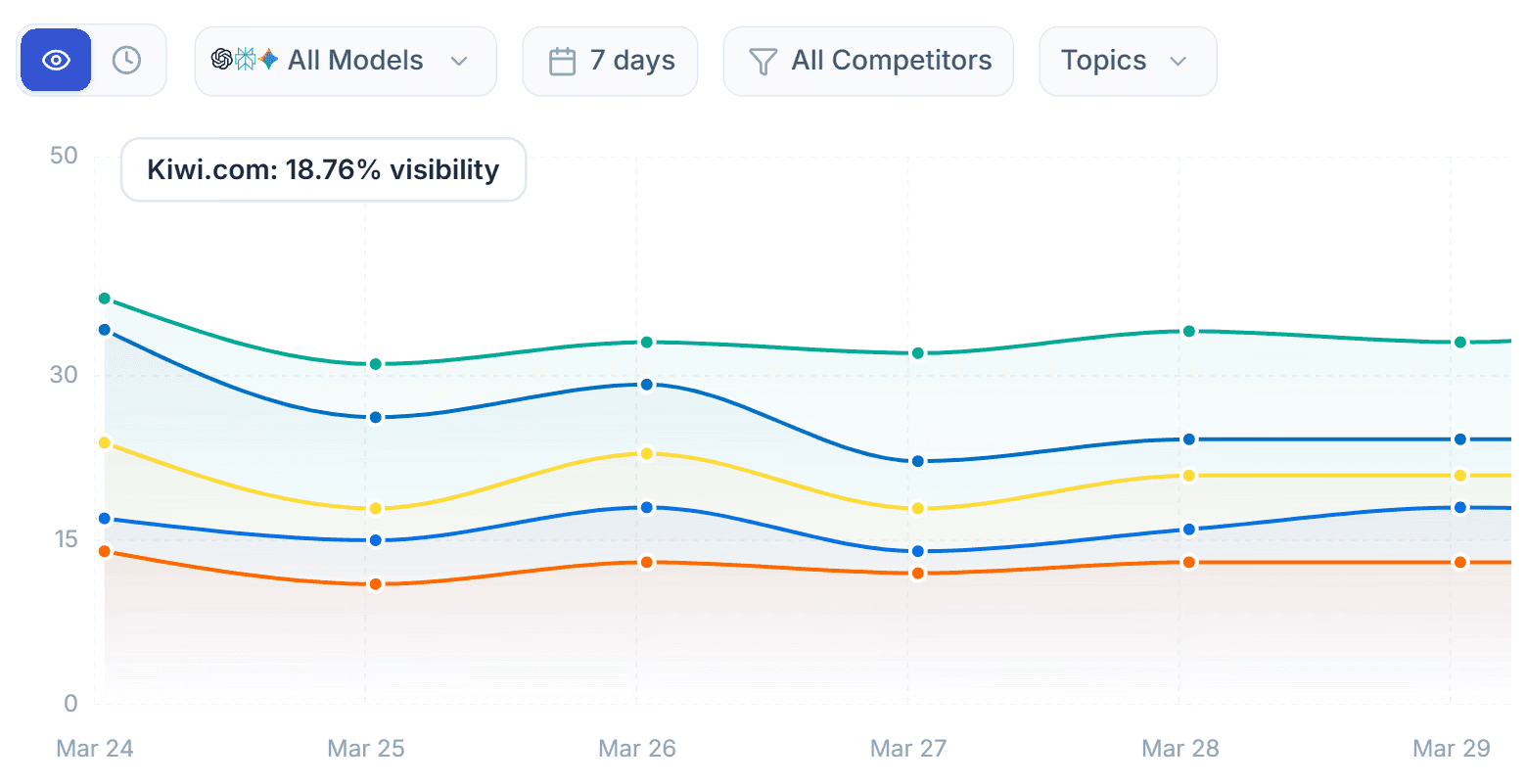
GEO is wider than SEO. AI recommends the brands that show up across the sources it reads, so your presence in forums, social platforms and medical blogs decides your odds. AIclicks measures the three metrics below so you know which to work on first.
AI Assistant
What kind of doctor should I see for fatigue?
Your Clinic
Citation Rate
Shows how many AI answers about medical practices name your brand, out of every 100. Models pull from the same trusted pages over and over, so citations compound: once you are in, staying in gets easier. Find the competitor pages AI cites most, then publish your own version of each.
Your Clinic
82% positive
Competitor A
54% positive
Competitor B
38% positive
Brand Sentiment
Shows how AI describes you when your brand comes up: positive, neutral or negative. Tone is what separates being mentioned from being recommended, and models repeat whatever framing they find. Track the negative mentions back to the reviews and threads behind them, then publish content that answers those directly.
Others 52%
You 24%
— 24%
Your Clinic
AI mention share of voice — medical category
Competitors
Not Cited
Share of Voice in AI
Shows how much of the medical conversation belongs to you rather than your competitors. This is the metric that matters most, the GEO version of a Google ranking. With only 1–5 brands named per answer, the market is winner-takes-more and every point is taken from someone.
The Dashboard Your Dedicated AI Search Team Works In
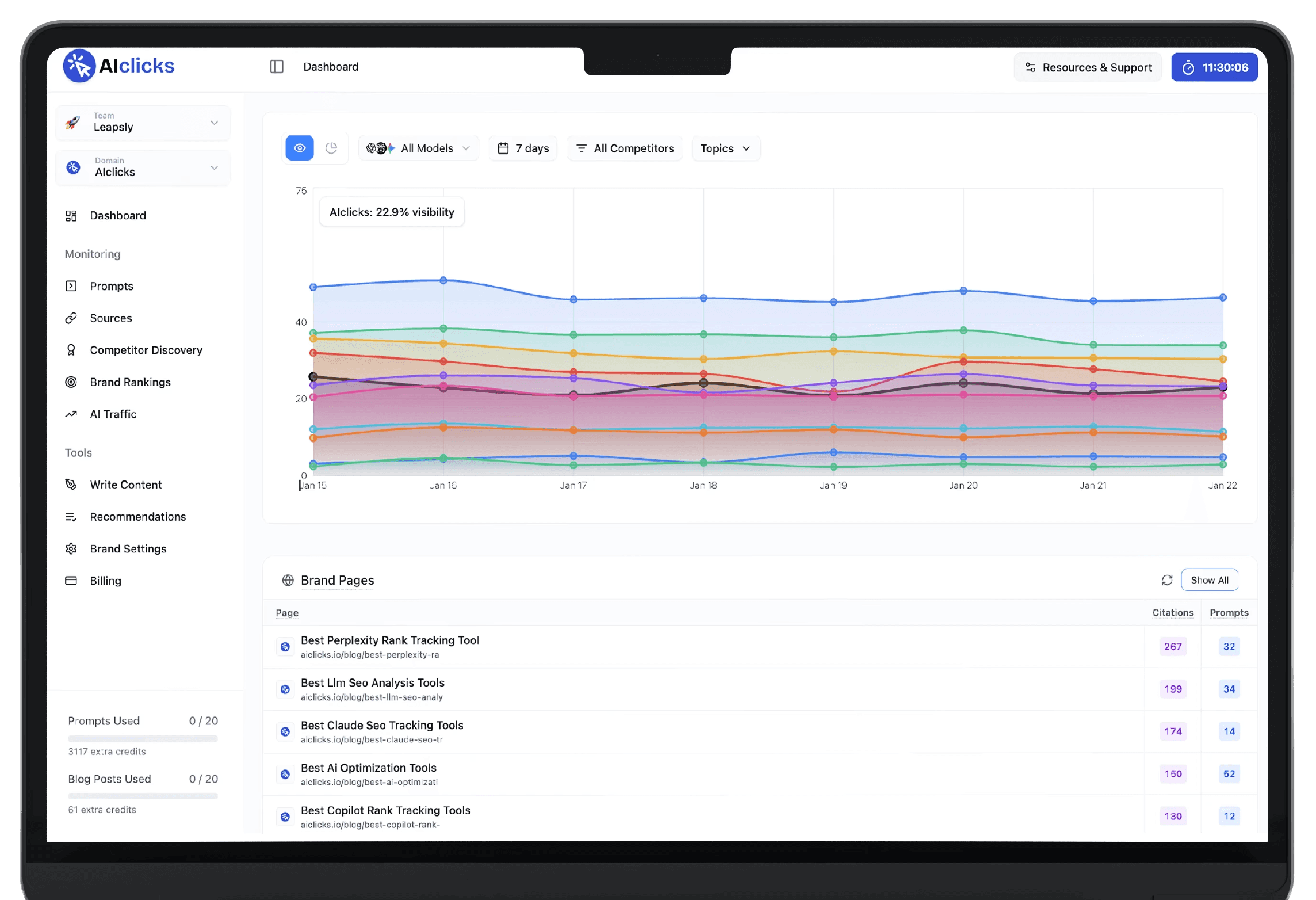
AIclicks gives you a live dashboard with daily ChatGPT mention rate, citation rate, sentiment, and share-of-voice across your tracked prompts, plus GA4 referral attribution for the traffic ChatGPT does send back.
Choose Your Plan
Flexible pricing that grows with your team. Upgrade or downgrade at any time.
Monthly
Yearly
-20%
Starter
Perfect for individuals & small teams
$49
/ month
Billed annually — you save $142
Choose 3 from:
Daily

" height="16px" id="fvSweaOBo" transform="translate(1 0)" width="14px"/></svg>)
" width="14px"><path d="M 13.864 5.629 L 13.3 5.629 L 13.3 5.6 L 7 5.6 L 7 8.4 L 10.956 8.4 C 10.379 10.03 8.828 11.2 7 11.2 C 4.681 11.2 2.8 9.319 2.8 7 C 2.8 4.681 4.681 2.8 7 2.8 C 8.071 2.8 9.045 3.204 9.786 3.864 L 11.766 1.884 C 10.516 0.719 8.844 0 7 0 C 3.134 0 0 3.134 0 7 C 0 10.866 3.134 14 7 14 C 10.866 14 14 10.866 14 7 C 14 6.531 13.952 6.073 13.864 5.629 Z" fill="rgb(255, 193, 7)" height="14px" id="H_YjfTNpn" width="14px"/><path d="M 0 3.742 L 2.3 5.429 C 2.922 3.888 4.429 2.8 6.193 2.8 C 7.264 2.8 8.238 3.204 8.979 3.864 L 10.959 1.884 C 9.709 0.719 8.037 0 6.193 0 C 3.504 0 1.172 1.518 0 3.742 Z" fill="rgb(255, 61, 0)" height="5.428500000000002px" id="PlkthQDhg" transform="translate(0.875 0)" width="10.959199999999996px"/><path d="M 6.232 5.581 C 8.04 5.581 9.683 4.889 10.925 3.764 L 8.758 1.931 C 8.032 2.483 7.144 2.782 6.232 2.781 C 4.411 2.781 2.865 1.62 2.283 0 L 0 1.759 C 1.159 4.026 3.511 5.581 6.232 5.581 Z" fill="rgb(76, 175, 80)" height="5.581099999999999px" id="WlnJ5gngE" transform="translate(0.7 8.4)" width="10.924899999999994px"/><path d="M 6.864 0.029 L 6.3 0.029 L 6.3 0 L 0 0 L 0 2.8 L 3.956 2.8 C 3.68 3.576 3.183 4.254 2.526 4.75 L 2.527 4.749 L 4.693 6.582 C 4.54 6.722 7 4.9 7 1.4 C 7 0.931 6.952 0.473 6.864 0.029 Z" fill="rgb(25, 118, 210)" height="6.589883930775992px" id="x_rSW275p" transform="translate(7 5.6)" width="7px"/></g></svg>)
" height="16px" id="hHS98fTxZ" width="16px"/></svg>)
 scale(1 1) translate(-1.861736945942159, -1.1170155383302638)" id="P20NzAvj0-699428820-radial-gradient" r="0.9935228066204626"><stop offset="0" stop-color="rgb(0, 174, 255)"/><stop offset="1" stop-color="rgb(7, 54, 196)"/></radialGradient><radialGradient cx="0.48250042504016705" cy="1.8366934653567062" gradient-transform="translate(0.48250042504016705, 1.8366934653567062) scale(1 1) translate(-0.48250042504016705, -1.8366934653567062)" id="UEWZqVjij-699428820-radial-gradient" r="0.9176890228114506"><stop offset="0" stop-color="rgb(255, 182, 87)"/><stop offset="1" stop-color="rgb(192, 43, 60)"/></radialGradient><linearGradient id="jyMN3TmKx-699428820-linear-gradient" x1="0.4594862532842614" x2="0.5405137467157386" y1="0" y2="1"><stop offset="0" stop-color="rgb(13, 145, 225)"/><stop offset="1" stop-color="rgb(255, 200, 0)"/></linearGradient><linearGradient id="xhMNwDFG0-699428820-linear-gradient" x1="0.4784828731548295" x2="0.5215171268451705" y1="5.551115123125783e-17" y2="1"><stop offset="0" stop-color="rgb(61, 203, 255)"/><stop offset="1" stop-color="rgba(5, 136, 247, 0)"/></linearGradient><radialGradient cx="1.4305090871482182" cy="0.34866158048251783" gradient-transform="translate(1.4305090871482182, 0.34866158048251783) scale(1 1) translate(-1.4305090871482182, -0.34866158048251783)" id="i79kAqaS4-699428820-radial-gradient" r="1.3362743412697924"><stop offset="0" stop-color="rgb(140, 72, 255)"/><stop offset="1" stop-color="rgb(255, 177, 82)"/></radialGradient><linearGradient id="mcxvno3tX-699428820-linear-gradient" x1="0.49844355920154226" x2="0.5015564407984577" y1="0" y2="1"><stop offset="0" stop-color="rgb(248, 173, 250)"/><stop offset="1" stop-color="rgba(168, 110, 221, 0)"/></linearGradient></defs><g d="M 11.605 1.219 C 11.397 0.499 10.739 0.002 9.989 0 L 9.498 0 C 8.682 0.002 7.985 0.588 7.842 1.391 L 7 6.016 L 7.209 5.296 C 7.416 4.574 8.075 4.076 8.825 4.074 L 11.681 4.074 L 12.879 4.545 L 14.033 4.074 L 13.697 4.074 C 12.947 4.072 12.289 3.575 12.081 2.855 Z M 4.413 13.387 C 4.618 14.111 5.278 14.611 6.031 14.613 L 7.075 14.613 C 7.988 14.613 8.735 13.88 8.758 12.96 L 8.871 8.5 L 8.633 9.319 C 8.426 10.039 7.768 10.537 7.018 10.539 L 4.138 10.539 L 3.111 9.977 L 2 10.539 L 2.331 10.539 C 3.084 10.542 3.743 11.042 3.949 11.766 L 4.413 13.387 Z M 9.999 0 L 4.167 0 C 2.501 0 1.501 2.221 0.834 4.441 C 0.045 7.073 -0.989 10.591 2.001 10.591 L 4.519 10.591 C 5.273 10.591 5.933 10.089 6.139 9.36 C 6.577 7.815 7.345 5.121 7.948 3.069 C 8.255 2.027 8.509 1.132 8.901 0.575 C 9.148 0.212 9.56 -0.004 9.999 0 M 9.999 0 L 4.167 0 C 2.501 0 1.501 2.221 0.834 4.441 C 0.045 7.073 -0.989 10.591 2.001 10.591 L 4.519 10.591 C 5.273 10.591 5.933 10.089 6.139 9.36 C 6.577 7.815 7.345 5.121 7.948 3.069 C 8.255 2.027 8.509 1.132 8.901 0.575 C 9.148 0.212 9.56 -0.004 9.999 0 M 6 14.593 L 11.833 14.593 C 13.499 14.593 14.499 12.372 15.166 10.151 C 15.955 7.519 16.989 4 13.999 4 L 11.48 4 C 10.725 4.002 10.063 4.505 9.86 5.232 C 9.266 7.332 8.663 9.429 8.051 11.523 C 7.745 12.566 7.49 13.461 7.098 14.019 C 6.851 14.382 6.439 14.597 6 14.593 M 6 14.593 L 11.833 14.593 C 13.499 14.593 14.499 12.372 15.166 10.151 C 15.955 7.519 16.989 4 13.999 4 L 11.48 4 C 10.725 4.002 10.063 4.505 9.86 5.232 C 9.266 7.332 8.663 9.429 8.051 11.523 C 7.745 12.566 7.49 13.461 7.098 14.019 C 6.851 14.382 6.439 14.597 6 14.593" fill="transparent" height="14.613333333333333px" id="QzkBy4Ibc" transform="translate(0 1)" width="16.00011071294081px"><path d="M 4.605 1.219 C 4.397 0.499 3.739 0.002 2.989 0 L 2.498 0 C 1.682 0.002 0.985 0.588 0.842 1.391 L 0 6.016 L 0.209 5.296 C 0.416 4.574 1.075 4.076 1.825 4.074 L 4.681 4.074 L 5.879 4.545 L 7.033 4.074 L 6.697 4.074 C 5.947 4.072 5.289 3.575 5.081 2.855 Z" fill="url(%23P20NzAvj0-699428820-radial-gradient)" height="6.016px" id="P20NzAvj0" transform="translate(7 0)" width="7.0333333333333385px"/><path d="M 2.413 4.887 C 2.618 5.611 3.278 6.111 4.031 6.113 L 5.075 6.113 C 5.988 6.113 6.735 5.38 6.758 4.46 L 6.871 0 L 6.633 0.819 C 6.426 1.539 5.768 2.037 5.018 2.039 L 2.138 2.039 L 1.111 1.477 L 0 2.039 L 0.331 2.039 C 1.084 2.042 1.743 2.542 1.949 3.266 L 2.413 4.887 Z" fill="url(%23UEWZqVjij-699428820-radial-gradient)" height="6.113333333333333px" id="UEWZqVjij" transform="translate(2 8.5)" width="6.871333333333332px"/><path d="M 9.999 0 L 4.167 0 C 2.501 0 1.501 2.221 0.834 4.441 C 0.045 7.073 -0.989 10.591 2.001 10.591 L 4.519 10.591 C 5.273 10.591 5.933 10.089 6.139 9.36 C 6.577 7.815 7.345 5.121 7.948 3.069 C 8.255 2.027 8.509 1.132 8.901 0.575 C 9.148 0.212 9.56 -0.004 9.999 0" fill="url(%23jyMN3TmKx-699428820-linear-gradient)" height="10.591388755215167px" id="jyMN3TmKx" width="9.999444046274142px"/><path d="M 9.999 0 L 4.167 0 C 2.501 0 1.501 2.221 0.834 4.441 C 0.045 7.073 -0.989 10.591 2.001 10.591 L 4.519 10.591 C 5.273 10.591 5.933 10.089 6.139 9.36 C 6.577 7.815 7.345 5.121 7.948 3.069 C 8.255 2.027 8.509 1.132 8.901 0.575 C 9.148 0.212 9.56 -0.004 9.999 0" fill="url(%23xhMNwDFG0-699428820-linear-gradient)" height="10.591388755215167px" id="xhMNwDFG0" width="9.999444046274142px"/><path d="M 0 10.593 L 5.833 10.593 C 7.499 10.593 8.499 8.372 9.166 6.151 C 9.955 3.519 10.989 0 7.999 0 L 5.48 0 C 4.725 0.002 4.063 0.505 3.86 1.232 C 3.266 3.332 2.663 5.429 2.051 7.523 C 1.745 8.566 1.49 9.461 1.098 10.019 C 0.851 10.382 0.439 10.597 0 10.593" fill="url(%23i79kAqaS4-699428820-radial-gradient)" height="10.593388755215164px" id="i79kAqaS4" transform="translate(6 4)" width="10.000110712940803px"/><path d="M 0 10.593 L 5.833 10.593 C 7.499 10.593 8.499 8.372 9.166 6.151 C 9.955 3.519 10.989 0 7.999 0 L 5.48 0 C 4.725 0.002 4.063 0.505 3.86 1.232 C 3.266 3.332 2.663 5.429 2.051 7.523 C 1.745 8.566 1.49 9.461 1.098 10.019 C 0.851 10.382 0.439 10.597 0 10.593" fill="url(%23mcxvno3tX-699428820-linear-gradient)" height="10.593388755215164px" id="mcxvno3tX" transform="translate(6 4)" width="10.000110712940803px"/></g></svg>)
" height="15.360666565427872px" id="HZPvvPBv7" transform="translate(0 0.5)" width="16px"/></svg>)
Tracked prompts
30
Websites you can add
3
LLMs you can track
3
Countries per project
1
LLM responses / mo
4,650
AI-optimized articles per month
10
Integrations
-
Support
Pro
For growing teams for more power
$140
/ month
Billed annually — you save $454
Choose 4 from:
Daily
Tracked prompts
150
Websites you can add
Unlimited
LLMs you can track
4
Countries per project
Unlimited
LLM responses / mo
18,600
AI-optimized articles per month
20
Integrations
Google Analytics
Support
BUSINESS
Best for medium-sized organizations
$357
/ month
Billed annually — you save $1198
Choose 6 from:
Daily
Tracked prompts
300
Websites you can add
Unlimited
LLMs you can track
6
Countries per project
Unlimited
LLM responses / mo
55,800
AI-optimized articles per month
30
Integrations
Google Analytics, API
Support
Dedicated account specialist
Become the #1 Answer in AI
Succeed in GEO yourself, or let us do all the work.
Do it yourself
Use AIclicks to see exactly where you appear across 10+ AI platforms, spot the gaps competitors are filling, and act on clear weekly recommendations.
From $59/month · Cancel anytime
Done for you
We Do All the Work for You
Our team manages your complete search presence: traditional SEO and GEO strategy, content, implementation, and reporting. You focus on patients.
Custom pricing · Minimum 3-month engagement
The AI SEO agency trusted by 1,000+ brands worldwide
From solo founders to multi-client agencies, AIclicks runs the full AI SEO agency program for organizations of every shape and size that want to be cited across every AI surface.
4.9/5 stars on G2





FAQ
How long before SEO brings our practice new patients?
Local signals move first, usually in 2 to 4 months, while condition and provider pages take 6 to 12. Agencies working in healthcare consistently report meaningful change at 3 to 6 months and real authority at 9 to 12, because YMYL content has to earn credential and citation signals before it ranks. A single-specialty practice in a quieter market moves faster. Watch map pack impressions; they rise well before the phone does.
Is Google still the priority, or is it ChatGPT?
Both, and medicine is where the split hurts most. Ahrefs analysed 863,000 keywords and found only 38% of pages cited in AI Overviews also ranked in the top 10, down from 76% a year earlier. Health queries trigger AI answers almost every time, and assistants tend to quote directories and hospital pages rather than practice sites. Getting cited needs named clinicians, direct first-sentence answers, FAQ markup and consistent entity data everywhere.
What makes medical SEO unlike ordinary local SEO?
Three things generic advice never covers. Your physicians are separate entities from your practice, each with an NPI number, a licence record and directory profiles that Google reconciles independently. Insurance filters demand before proximity does, so payer directories decide who is even eligible to be found. And HIPAA restricts what you may publish about any identifiable patient, which rules out the testimonial and case study tactics most local playbooks lead with.
What should a medical practice budget for SEO?
Published rates run from a few hundred dollars a month for a single-location practice to several thousand in a competitive specialty, and higher still once you run several sites. Many practices are already paying a medical web vendor around $250 a month purely to host and maintain a template site, which buys nothing that compounds. Judge any quote on cost per new patient against lifetime value, not on the retainer alone.
Do we still need ads once organic is working?
They cover different gaps. Ads fill next week’s schedule and stop the day you pause them; organic lowers cost per new patient over years. Most practices bid on the high-margin elective procedures where competition is brutal, and build organic strength on condition, insurance and accepting new patients queries that are far cheaper to win. Use the ad data to choose which pages to build, since converting keywords are the ones worth writing.
Which pages should a medical practice build first?
The Google Business Profile before anything on the website, because it outranks every site on the page and costs nothing. Then fix the provider directory so each physician bio is actually indexable, since those pages carry your credentials. Then the accepted insurance page. Then one condition page for each service that drives real revenue. Location pages come later, and the blog last of all, if ever. Most practices invert this and start by writing articles.
How do we know the SEO is actually working?
Count new patient appointments attributed to organic search, not rankings. Add call tracking, since most medical enquiries arrive by phone and vanish from analytics otherwise. In the profile dashboard, the earliest movers are booking clicks and direction requests. In Search Console, impressions on condition queries rise months before positions do. Then reconcile everything against your practice management system, because a booked slot that nobody kept has not paid for anything.
Should we hire an agency or keep it internal?
Split it by who holds the knowledge. Profile updates, review requests, photos and answering patient questions in plain language belong inside the practice, because only your staff know what patients actually ask. Rendering fixes, schema, entity cleanup across the NPI registry and link work need an outside specialist. When you do hire out, test whether they can explain HIPAA marketing rules and YMYL without hedging; a generalist will hand you copy the practice manager then has to take down.
Further Reading
Go deeper on GEO, AI search, and visibility tracking.