SEO for Family Law Firms:
Nobody hires a divorce attorney on impulse. The research starts months earlier, in private, on a phone: filing costs, custody odds, whether moving out hurts the case. Most of that happens before a single firm knows they exist.









Why Family Law Firms Need SEO
Divorce keywords carry most of the search demand in family law, and Google Ads for them run $50 to $200 a click. Organic and AI visibility is the version you keep.
Firms call themselves family law practices. Clients type divorce lawyer, custody attorney, or how do I file. That gap routes a parent researching relocation consent, or a spouse pricing an uncontested filing, straight to whoever wrote that page. The enquiry never reaches you, so nothing looks broken.
Type divorce lawyer near me anywhere in the US and directory listings sit above most individual practices. Justia, Super Lawyers, Avvo and FindLaw pool thousands of profiles into authority no solo firm can build alone, then sell your competitor premium placement on the very listing that outranked you.
Divorce clicks run $50 to $200 a piece in competitive markets, and firms routinely put $5,000 to $15,000 a month into Google Ads on top of an agency retainer of $2,500 to $7,500. Pause either one of them and the consultation calendar empties inside a week. Nothing at all was accumulating underneath it.
How SEO Works for Family Law Firms
Search Engine Optimization projects are long-term investments for family lawyers, where each task supplements the others and creates compound results over time.
01
Keywords, page structure, and the signals Google reads directly
On-page work in family law fights a naming problem before it fights Google. Firms organise sites around Family Law, Estate Planning and Mediation, which is how the practice thinks. Clients never use those words. They search divorce lawyer, child custody attorney, how much is child support, and can I move out of the house. Google also files family law under YMYL, its strictest quality tier, so an unsigned page written by a marketing agency stalls where the same page with a named, credentialed attorney ranks. The pages carrying the load are your divorce page, your custody page, and your attorney bio.
What holds value is procedural and financial: what a contested custody trial actually involves, how property gets divided when one spouse owned the house first, what child support is calculated from. Those questions repeat every year with new people asking them, and statutes move slowly enough that an annual review keeps the page current. What churns is everything a firm is tempted to publish instead. Awards, staff announcements, commentary on a celebrity split, and reflections on new legislation stop earning within a month. Most family law blogs are almost entirely the second kind, which is why they generate impressions and no consultations.
1
Retitle practice pages to the phrasing clients type: divorce lawyer, child custody attorney, spousal support, rather than Family Law Services.
2
Recheck statute pages every legislative session; refresh the figures, or 301 superseded custody guides into whichever practice page replaced them.
3
Add LegalService schema with areaServed to each service page and Person schema with hasCredential for board-certified family law specialists, then validate in Rich Results Test.
4
Publish state-level explainers on residency requirements, waiting periods, grounds for divorce and custody factors, the questions every consultation opens with anyway.
02
Map Pack visibility, citations, and proximity signals
Family law is jurisdictional by definition. A client must file where they live, so nobody hires across state lines and Google treats every one of these queries as local. That puts the 3-result map pack above all organic listings, above Justia and above Super Lawyers, and it is the one position a solo practice can genuinely take. Most firms get more signed retainers from that panel than from the entire rest of the site.
The counterintuitive move is the primary category. Agencies default to Family Law Attorney; switching it to Divorce Lawyer lifts rankings on the terms that actually carry volume without costing you the family law terms. Add mediation, child custody and adoption as separate services with descriptions. Use real office photos, not a stock gavel. Then pre-answer the questions that decide the call in Q&A: consultation fee, flat versus hourly, and whether you handle both sides.
Family law has a verification layer general local advice never mentions. Avvo, Justia, FindLaw, Martindale-Hubbell and Lawyers.com carry weight because they check bar admission. Above those sit the credential bodies: the American Academy of Matrimonial Lawyers fellows directory, your state bar family law section, and collaborative practice groups listed through the International Academy of Collaborative Professionals. Mismatch a suite number across those listings and each one quietly weakens the rest.
1
Set Divorce Lawyer as the primary category rather than Family Law Attorney, then list custody, mediation and adoption as individual services.
2
Build service area pages for towns you cover without an office, adding driving directions to your courthouse and that county’s local filing rules.
3
Audit Avvo, Justia, FindLaw and Lawyers.com with BrightLocal or Whitespark, reconciling every abbreviation, suite number and tracking phone number against your bar registration.
4
Post to Google Business Profile weekly: a plain answer on filing costs, a mediation explainer, or updated availability for consultations this month.
03
Topic authority, inbound links, and content that earns traffic
Before anyone picks up the phone, 3 questions get settled privately: whether filing is affordable, what happens to the children, and whether leaving costs them the house. Almost none of it is ever said out loud. Content answering those plainly, including where the answer is unwelcome, earns trust at the precise moment somebody decides whether to make contact at all. Firms that skip it are asking for a call from someone who has not decided anything yet.
Someone who has decided to file is now comparing firms on temperament as much as credentials. They want to know whether you push settlement or litigate, what a first consultation costs and whether it is free, who actually appears in court, and how quickly calls get returned during a hearing week. Put that on the divorce page itself. Firms lose these clients at the point where fee structure is described as competitive rather than stated.
Family law links come from the professionals who sit around the same client. Therapists, financial advisers, certified divorce financial analysts, parenting coordinators and appraisers all publish referral pages and will list you if asked. Domestic violence shelters, child advocacy centres and legal aid clinics keep resource pages that rank well and rarely get pitched. Add your state bar family law section, mediation training bodies, and the sponsorship pages of anything the firm already funds.
1
Publish an annual guide comparing contested, uncontested, mediated and collaborative divorce on cost, timeline and court appearances, refreshed each January.
2
Build one page per divorce type: military, high-net-worth, uncontested, grey divorce, fathers rights, same-sex, each with its own procedural detail.
3
Build interactive child support and alimony calculators using your state’s guidelines; they consistently outrank text pages and convert visitors into consultations.
4
Write a page for each credential you hold: board certification, AAML fellowship, collaborative divorce training, mediator roster status, since clients search these terms.
04
Site speed, crawlability, Core Web Vitals, and mobile health
The failure that quietly caps family law firms is the homepage competing with its own divorce page. Because divorce carries nearly all the volume, agencies optimise both for it, and the homepage wins on links while the divorce page holds the conversion content. Google alternates between them, so rankings wobble every few weeks and neither page settles. Firms read this as an algorithm problem. It is self-inflicted cannibalisation, and consolidating usually fixes it.
These searches happen in secret. A spouse researches at 1am on a phone, sometimes on a device the other party can unlock, and frequently in incognito. Load time matters, but so does what loads: an autoplay video and a chat widget that announces itself are actively unwelcome here. Sites serving domestic violence adjacent work should carry a visible quick-exit control and avoid anything that writes to browser history unnecessarily. Speed still decides the rest.
1
Filter Search Console by your main divorce query and check whether the homepage and divorce page swap positions; if so, consolidate one into the other.
2
Test the support calculator in PageSpeed Insights, usually the heaviest page on a family law site, and defer its scripts until someone interacts.
3
Compress calculator screenshots and courthouse imagery to WebP, lazy-load anything below the fold, and delete stock photos of couples arguing.
4
Keep practice pages, service area pages and calculators in a sitemap separate from the blog, and resubmit whenever support guidelines change.
05
Star ratings, review volume, and response strategy that builds trust
Reviews decide family law more than credentials do, and family law produces the hardest reviews to collect in any profession. Clients do not want their divorce publicly attached to their name. The matter frequently ends in a compromise nobody celebrates. Worst of all, the opposing spouse and occasionally their relatives leave retaliatory one-star reviews about a lawyer who never represented them, which is why unmanaged firms drift toward a rating that describes the case rather than the service.
Ask when the decree is entered and the client is relieved rather than months later when the bill is the last thing they remember. Offer a first-name-only or initials option upfront, because the privacy objection, not dissatisfaction, is what stops most family law clients from writing anything. Fire the request from Clio Grow, MyCase or Lawmatics on matter closure, signed by the attorney who appeared, and make it a single link with no login.
1
Trigger the review request from Clio Grow or Lawmatics the day the decree is entered, not at final invoicing weeks later.
2
Answer inside 24 hours in language that never concedes the reviewer was a client, and report opposing-party posts to Google as conflict-of-interest violations.
3
Place custody reviews on the custody page and mediation reviews on the mediation page, rather than one site-wide testimonials slider nobody reads.
4
Ask mediation-only and consulting clients for reviews too, since those matters close faster and carry none of the privacy weight a contested divorce does.
Google is No Longer the Only Place Your clients are Searching
Clients are using AI to find answers, and they trust what it tells them. Invest in GEO to get recommended in those answers.
1 Billion
Questions ChatGPT receives every single day
38%
Your #1 top ranking page on Google would be cited by AI
14%
of family lawyers optimise for GEO. The rest are invisible in AI answers


You can rank #1 for “family lawyer near me” and still not exist in ChatGPT’s answer. Run a free GEO audit to see where your brand actually stands.
GEO vs SEO: Same Goal, Different Methods
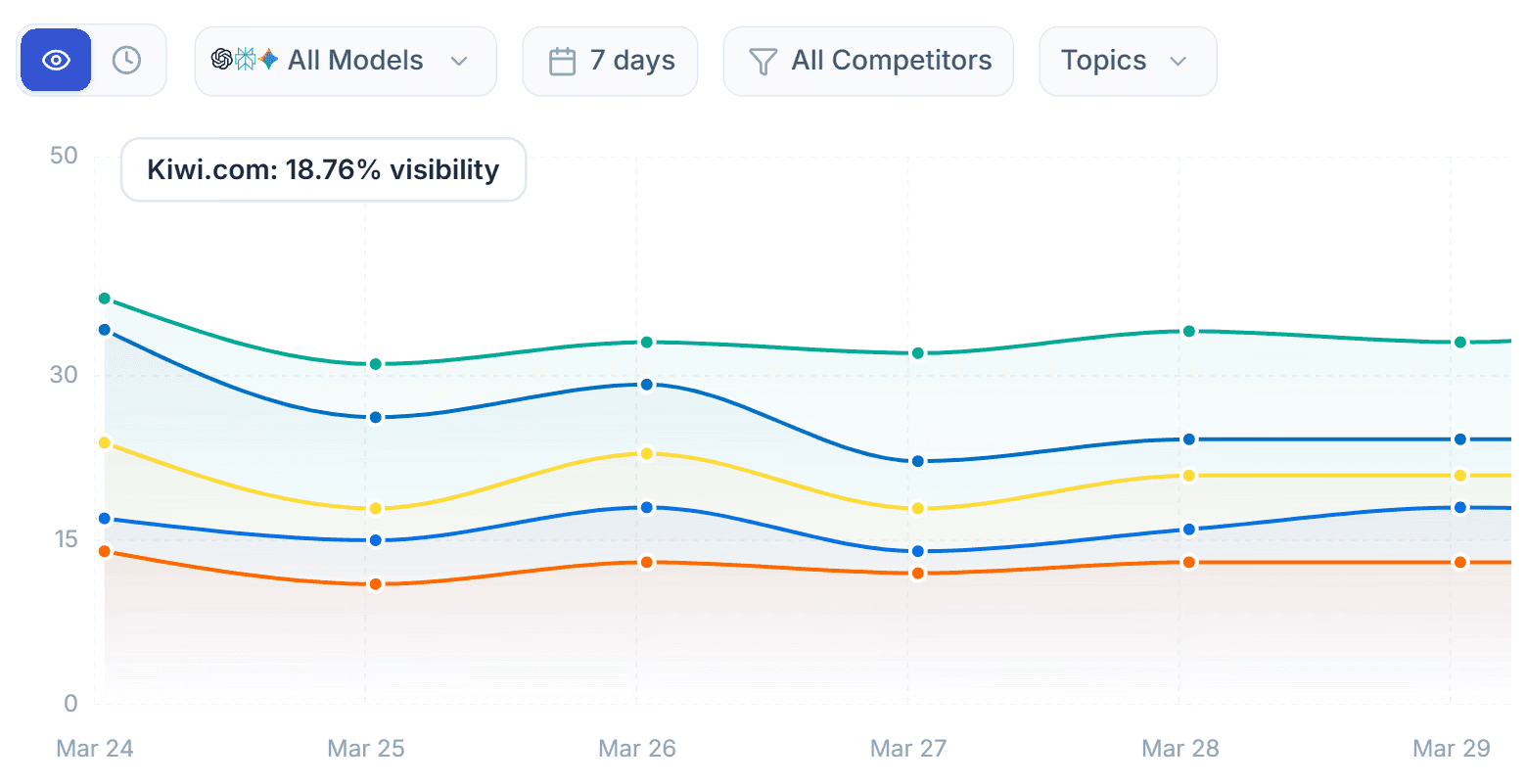
GEO is wider than SEO. AI recommends the brands that show up across the sources it reads, so your presence in forums, social platforms and family law blogs decides your odds. AIclicks measures the three metrics below so you know which to work on first.
AI Assistant
Who handles contested custody cases in my area?
Your Law Office
Citation Rate
Shows how many AI answers about family law firms name your brand, out of every 100. Models pull from the same trusted pages over and over, so citations compound: once you are in, staying in gets easier. Find the competitor pages AI cites most, then publish your own version of each.
Your Law Office
82% positive
Competitor A
54% positive
Competitor B
38% positive
Brand Sentiment
Shows how AI describes you when your brand comes up: positive, neutral or negative. Tone is what separates being mentioned from being recommended, and models repeat whatever framing they find. Track the negative mentions back to the reviews and threads behind them, then publish content that answers those directly.
Others 52%
You 24%
— 24%
Your Law Office
AI mention share of voice — family law category
Competitors
Not Cited
Share of Voice in AI
Shows how much of the family law conversation belongs to you rather than your competitors. This is the metric that matters most, the GEO version of a Google ranking. With only 1–5 brands named per answer, the market is winner-takes-more and every point is taken from someone.
The Dashboard Your Dedicated AI Search Team Works In
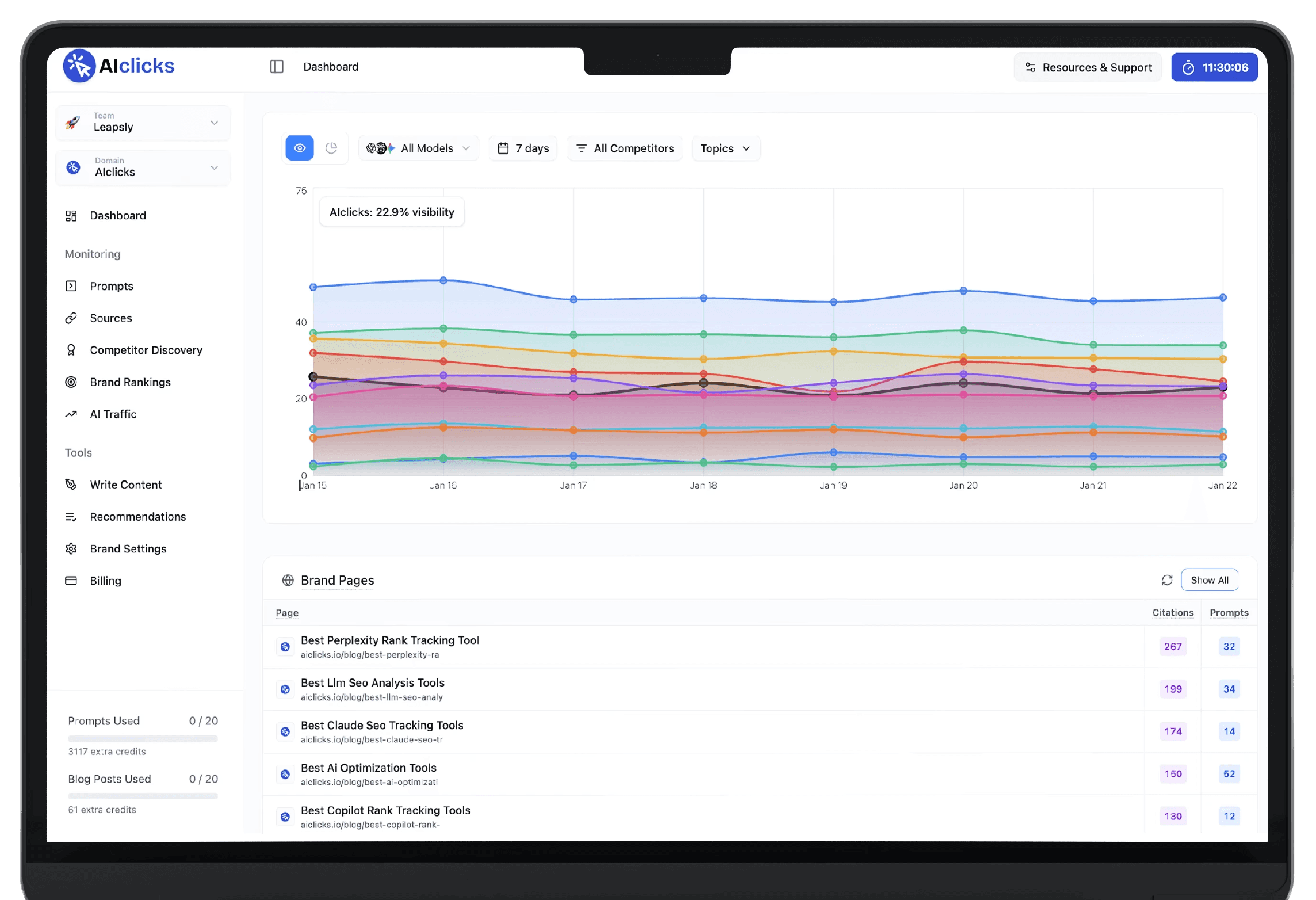
AIclicks gives you a live dashboard with daily ChatGPT mention rate, citation rate, sentiment, and share-of-voice across your tracked prompts, plus GA4 referral attribution for the traffic ChatGPT does send back.
Choose Your Plan
Flexible pricing that grows with your team. Upgrade or downgrade at any time.
Monthly
Yearly
-20%
Starter
Perfect for individuals & small teams
$49
/ month
Billed annually — you save $142
Choose 3 from:
Daily

" height="16px" id="fvSweaOBo" transform="translate(1 0)" width="14px"/></svg>)
" width="14px"><path d="M 13.864 5.629 L 13.3 5.629 L 13.3 5.6 L 7 5.6 L 7 8.4 L 10.956 8.4 C 10.379 10.03 8.828 11.2 7 11.2 C 4.681 11.2 2.8 9.319 2.8 7 C 2.8 4.681 4.681 2.8 7 2.8 C 8.071 2.8 9.045 3.204 9.786 3.864 L 11.766 1.884 C 10.516 0.719 8.844 0 7 0 C 3.134 0 0 3.134 0 7 C 0 10.866 3.134 14 7 14 C 10.866 14 14 10.866 14 7 C 14 6.531 13.952 6.073 13.864 5.629 Z" fill="rgb(255, 193, 7)" height="14px" id="H_YjfTNpn" width="14px"/><path d="M 0 3.742 L 2.3 5.429 C 2.922 3.888 4.429 2.8 6.193 2.8 C 7.264 2.8 8.238 3.204 8.979 3.864 L 10.959 1.884 C 9.709 0.719 8.037 0 6.193 0 C 3.504 0 1.172 1.518 0 3.742 Z" fill="rgb(255, 61, 0)" height="5.428500000000002px" id="PlkthQDhg" transform="translate(0.875 0)" width="10.959199999999996px"/><path d="M 6.232 5.581 C 8.04 5.581 9.683 4.889 10.925 3.764 L 8.758 1.931 C 8.032 2.483 7.144 2.782 6.232 2.781 C 4.411 2.781 2.865 1.62 2.283 0 L 0 1.759 C 1.159 4.026 3.511 5.581 6.232 5.581 Z" fill="rgb(76, 175, 80)" height="5.581099999999999px" id="WlnJ5gngE" transform="translate(0.7 8.4)" width="10.924899999999994px"/><path d="M 6.864 0.029 L 6.3 0.029 L 6.3 0 L 0 0 L 0 2.8 L 3.956 2.8 C 3.68 3.576 3.183 4.254 2.526 4.75 L 2.527 4.749 L 4.693 6.582 C 4.54 6.722 7 4.9 7 1.4 C 7 0.931 6.952 0.473 6.864 0.029 Z" fill="rgb(25, 118, 210)" height="6.589883930775992px" id="x_rSW275p" transform="translate(7 5.6)" width="7px"/></g></svg>)
" height="16px" id="hHS98fTxZ" width="16px"/></svg>)
 scale(1 1) translate(-1.861736945942159, -1.1170155383302638)" id="P20NzAvj0-699428820-radial-gradient" r="0.9935228066204626"><stop offset="0" stop-color="rgb(0, 174, 255)"/><stop offset="1" stop-color="rgb(7, 54, 196)"/></radialGradient><radialGradient cx="0.48250042504016705" cy="1.8366934653567062" gradient-transform="translate(0.48250042504016705, 1.8366934653567062) scale(1 1) translate(-0.48250042504016705, -1.8366934653567062)" id="UEWZqVjij-699428820-radial-gradient" r="0.9176890228114506"><stop offset="0" stop-color="rgb(255, 182, 87)"/><stop offset="1" stop-color="rgb(192, 43, 60)"/></radialGradient><linearGradient id="jyMN3TmKx-699428820-linear-gradient" x1="0.4594862532842614" x2="0.5405137467157386" y1="0" y2="1"><stop offset="0" stop-color="rgb(13, 145, 225)"/><stop offset="1" stop-color="rgb(255, 200, 0)"/></linearGradient><linearGradient id="xhMNwDFG0-699428820-linear-gradient" x1="0.4784828731548295" x2="0.5215171268451705" y1="5.551115123125783e-17" y2="1"><stop offset="0" stop-color="rgb(61, 203, 255)"/><stop offset="1" stop-color="rgba(5, 136, 247, 0)"/></linearGradient><radialGradient cx="1.4305090871482182" cy="0.34866158048251783" gradient-transform="translate(1.4305090871482182, 0.34866158048251783) scale(1 1) translate(-1.4305090871482182, -0.34866158048251783)" id="i79kAqaS4-699428820-radial-gradient" r="1.3362743412697924"><stop offset="0" stop-color="rgb(140, 72, 255)"/><stop offset="1" stop-color="rgb(255, 177, 82)"/></radialGradient><linearGradient id="mcxvno3tX-699428820-linear-gradient" x1="0.49844355920154226" x2="0.5015564407984577" y1="0" y2="1"><stop offset="0" stop-color="rgb(248, 173, 250)"/><stop offset="1" stop-color="rgba(168, 110, 221, 0)"/></linearGradient></defs><g d="M 11.605 1.219 C 11.397 0.499 10.739 0.002 9.989 0 L 9.498 0 C 8.682 0.002 7.985 0.588 7.842 1.391 L 7 6.016 L 7.209 5.296 C 7.416 4.574 8.075 4.076 8.825 4.074 L 11.681 4.074 L 12.879 4.545 L 14.033 4.074 L 13.697 4.074 C 12.947 4.072 12.289 3.575 12.081 2.855 Z M 4.413 13.387 C 4.618 14.111 5.278 14.611 6.031 14.613 L 7.075 14.613 C 7.988 14.613 8.735 13.88 8.758 12.96 L 8.871 8.5 L 8.633 9.319 C 8.426 10.039 7.768 10.537 7.018 10.539 L 4.138 10.539 L 3.111 9.977 L 2 10.539 L 2.331 10.539 C 3.084 10.542 3.743 11.042 3.949 11.766 L 4.413 13.387 Z M 9.999 0 L 4.167 0 C 2.501 0 1.501 2.221 0.834 4.441 C 0.045 7.073 -0.989 10.591 2.001 10.591 L 4.519 10.591 C 5.273 10.591 5.933 10.089 6.139 9.36 C 6.577 7.815 7.345 5.121 7.948 3.069 C 8.255 2.027 8.509 1.132 8.901 0.575 C 9.148 0.212 9.56 -0.004 9.999 0 M 9.999 0 L 4.167 0 C 2.501 0 1.501 2.221 0.834 4.441 C 0.045 7.073 -0.989 10.591 2.001 10.591 L 4.519 10.591 C 5.273 10.591 5.933 10.089 6.139 9.36 C 6.577 7.815 7.345 5.121 7.948 3.069 C 8.255 2.027 8.509 1.132 8.901 0.575 C 9.148 0.212 9.56 -0.004 9.999 0 M 6 14.593 L 11.833 14.593 C 13.499 14.593 14.499 12.372 15.166 10.151 C 15.955 7.519 16.989 4 13.999 4 L 11.48 4 C 10.725 4.002 10.063 4.505 9.86 5.232 C 9.266 7.332 8.663 9.429 8.051 11.523 C 7.745 12.566 7.49 13.461 7.098 14.019 C 6.851 14.382 6.439 14.597 6 14.593 M 6 14.593 L 11.833 14.593 C 13.499 14.593 14.499 12.372 15.166 10.151 C 15.955 7.519 16.989 4 13.999 4 L 11.48 4 C 10.725 4.002 10.063 4.505 9.86 5.232 C 9.266 7.332 8.663 9.429 8.051 11.523 C 7.745 12.566 7.49 13.461 7.098 14.019 C 6.851 14.382 6.439 14.597 6 14.593" fill="transparent" height="14.613333333333333px" id="QzkBy4Ibc" transform="translate(0 1)" width="16.00011071294081px"><path d="M 4.605 1.219 C 4.397 0.499 3.739 0.002 2.989 0 L 2.498 0 C 1.682 0.002 0.985 0.588 0.842 1.391 L 0 6.016 L 0.209 5.296 C 0.416 4.574 1.075 4.076 1.825 4.074 L 4.681 4.074 L 5.879 4.545 L 7.033 4.074 L 6.697 4.074 C 5.947 4.072 5.289 3.575 5.081 2.855 Z" fill="url(%23P20NzAvj0-699428820-radial-gradient)" height="6.016px" id="P20NzAvj0" transform="translate(7 0)" width="7.0333333333333385px"/><path d="M 2.413 4.887 C 2.618 5.611 3.278 6.111 4.031 6.113 L 5.075 6.113 C 5.988 6.113 6.735 5.38 6.758 4.46 L 6.871 0 L 6.633 0.819 C 6.426 1.539 5.768 2.037 5.018 2.039 L 2.138 2.039 L 1.111 1.477 L 0 2.039 L 0.331 2.039 C 1.084 2.042 1.743 2.542 1.949 3.266 L 2.413 4.887 Z" fill="url(%23UEWZqVjij-699428820-radial-gradient)" height="6.113333333333333px" id="UEWZqVjij" transform="translate(2 8.5)" width="6.871333333333332px"/><path d="M 9.999 0 L 4.167 0 C 2.501 0 1.501 2.221 0.834 4.441 C 0.045 7.073 -0.989 10.591 2.001 10.591 L 4.519 10.591 C 5.273 10.591 5.933 10.089 6.139 9.36 C 6.577 7.815 7.345 5.121 7.948 3.069 C 8.255 2.027 8.509 1.132 8.901 0.575 C 9.148 0.212 9.56 -0.004 9.999 0" fill="url(%23jyMN3TmKx-699428820-linear-gradient)" height="10.591388755215167px" id="jyMN3TmKx" width="9.999444046274142px"/><path d="M 9.999 0 L 4.167 0 C 2.501 0 1.501 2.221 0.834 4.441 C 0.045 7.073 -0.989 10.591 2.001 10.591 L 4.519 10.591 C 5.273 10.591 5.933 10.089 6.139 9.36 C 6.577 7.815 7.345 5.121 7.948 3.069 C 8.255 2.027 8.509 1.132 8.901 0.575 C 9.148 0.212 9.56 -0.004 9.999 0" fill="url(%23xhMNwDFG0-699428820-linear-gradient)" height="10.591388755215167px" id="xhMNwDFG0" width="9.999444046274142px"/><path d="M 0 10.593 L 5.833 10.593 C 7.499 10.593 8.499 8.372 9.166 6.151 C 9.955 3.519 10.989 0 7.999 0 L 5.48 0 C 4.725 0.002 4.063 0.505 3.86 1.232 C 3.266 3.332 2.663 5.429 2.051 7.523 C 1.745 8.566 1.49 9.461 1.098 10.019 C 0.851 10.382 0.439 10.597 0 10.593" fill="url(%23i79kAqaS4-699428820-radial-gradient)" height="10.593388755215164px" id="i79kAqaS4" transform="translate(6 4)" width="10.000110712940803px"/><path d="M 0 10.593 L 5.833 10.593 C 7.499 10.593 8.499 8.372 9.166 6.151 C 9.955 3.519 10.989 0 7.999 0 L 5.48 0 C 4.725 0.002 4.063 0.505 3.86 1.232 C 3.266 3.332 2.663 5.429 2.051 7.523 C 1.745 8.566 1.49 9.461 1.098 10.019 C 0.851 10.382 0.439 10.597 0 10.593" fill="url(%23mcxvno3tX-699428820-linear-gradient)" height="10.593388755215164px" id="mcxvno3tX" transform="translate(6 4)" width="10.000110712940803px"/></g></svg>)
" height="15.360666565427872px" id="HZPvvPBv7" transform="translate(0 0.5)" width="16px"/></svg>)
Tracked prompts
30
Websites you can add
3
LLMs you can track
3
Countries per project
1
LLM responses / mo
4,650
AI-optimized articles per month
10
Integrations
-
Support
Pro
For growing teams for more power
$140
/ month
Billed annually — you save $454
Choose 4 from:
Daily
Tracked prompts
150
Websites you can add
Unlimited
LLMs you can track
4
Countries per project
Unlimited
LLM responses / mo
18,600
AI-optimized articles per month
20
Integrations
Google Analytics
Support
BUSINESS
Best for medium-sized organizations
$357
/ month
Billed annually — you save $1198
Choose 6 from:
Daily
Tracked prompts
300
Websites you can add
Unlimited
LLMs you can track
6
Countries per project
Unlimited
LLM responses / mo
55,800
AI-optimized articles per month
30
Integrations
Google Analytics, API
Support
Dedicated account specialist
Become the #1 Answer in AI
Succeed in GEO yourself, or let us do all the work.
Do it yourself
Use AIclicks to see exactly where you appear across 10+ AI platforms, spot the gaps competitors are filling, and act on clear weekly recommendations.
From $59/month · Cancel anytime
Done for you
We Do All the Work for You
Our team manages your complete search presence: traditional SEO and GEO strategy, content, implementation, and reporting. You focus on clients.
Custom pricing · Minimum 3-month engagement
The AI SEO agency trusted by 1,000+ brands worldwide
From solo founders to multi-client agencies, AIclicks runs the full AI SEO agency program for organizations of every shape and size that want to be cited across every AI surface.
4.9/5 stars on G2







FAQ
When should a family law firm expect SEO results?
Local movement typically appears within 3 to 4 months, with steadier consultation volume by month 6. Page-one rankings on divorce terms in a competitive market take 6 to 12 months, since Google demands visible credentials and genuine authority before trusting YMYL legal content. Quieter markets move quicker. The earliest honest signal is map pack impressions, which climb long before anyone signs a retainer.
Should we optimise for Google or for AI assistants?
Both, and family law has an unusually strong reason to care about the second. Someone weighing divorce often asks an AI assistant first, precisely because it leaves no trace a spouse can find. Ahrefs analysed 863,000 keywords and found only 38% of pages cited in AI Overviews also ranked in the top 10, down from 76% a year earlier. A ranking no longer buys you a mention.
What makes family law SEO different from generic local SEO?
Three differences matter. Demand collapses almost entirely onto divorce terms, so a category or page structure that looks balanced quietly costs you volume. Reviews are structurally scarce, because clients will not attach their name to a divorce and opposing parties post retaliatory ones. And what you may say about outcomes is constrained by attorney advertising regulation in your state. Generic local SEO advice touches none of this.
How much should we spend on family law SEO?
Published agency rates for family law cluster around $2,500 to $7,500 a month, depending on how competitive your market is and where you are starting. Judge it against what you already spend: divorce clicks run $50 to $200, and firms commonly put $5,000 to $15,000 a month into Google Ads that stops working the day you pause it. The number to watch is cost per signed retainer.
Can SEO replace the Google Ads we currently run?
Eventually it can reduce them, rarely replace them outright. Most firms keep ads on the head divorce term, which is close to unwinnable organically in a large market, and build organic strength on custody, support, cost and process queries that are cheaper to reach. Use the ads data to sequence content: whichever keywords produce booked consultations, not clicks, are the ones that deserve a page next.
Which pages should a family law firm build first?
Google Business Profile first, with Divorce Lawyer set as the primary category, since it costs nothing and outranks every organic result. Then one strong divorce page, resolved against your homepage so they are not competing. Then child support and alimony calculators, which pull more organic traffic than anything else on a family law site. Then custody, then service area pages. Blog last, if at all.
How do we know the SEO is actually working?
Measure signed retainers from organic search, not positions. Put CallRail on the site, because family law enquiries arrive by phone and otherwise vanish from analytics. Tag consultation bookings by landing page in Clio Grow. In Search Console, track impressions on divorce and custody terms, which climb before rankings do. Separately, check monthly whether ChatGPT and AI Overviews name your firm for those queries. Most agencies never look.
Is family law SEO something we can run ourselves?
Partly. Keep review requests, profile posts and the plain-language answers to client questions internal, since no outsider understands how your local family court actually operates. Hand schema, page speed, cannibalisation fixes and directory cleanup to a specialist. When hiring, insist on family law case studies rather than general law firm ones, and ask directly how they handle attorney advertising rules. A generalist produces copy your managing partner has to unpick.
Further Reading
Go deeper on GEO, AI search, and visibility tracking.