
SEO for Criminal Defense Firms:
An arrest happens at 1am and the searching starts in the parking lot outside the jail, usually by a mother or a spouse rather than the person in custody. They call 3 firms in 20 minutes. Whoever they find first, and trust fastest, gets the retainer.









Why Criminal Defense Firms Need SEO
People with a legal problem now turn to a search engine before they ask family, friends or anyone qualified. Increasingly that search is an AI assistant that names nobody at all.
The phrase on your door is not the phrase anyone types. They search the charge on the citation: DUI, second offense OWI, domestic battery, possession with intent, probation violation. A site organised around Criminal Defense and Practice Areas matches nothing that they typed, and last night’s arrest reaches somebody else instead.
Run the dui lawyer near me search in a US metro and Justia and Super Lawyers sit above most firms, on pooled authority no individual practice can assemble. Worse, the results between them are often general firms that take the odd criminal file, outranking lawyers who do nothing else, because their sites are older and better linked.
Criminal defense agencies quote $3,000 to $5,000 per month, and specialist shops open at $5,000. Annualised, that is an associate you did not hire. Meanwhile a click on a criminal keyword runs past $100, so even a strong conversion rate leaves a paid lead in the hundreds. Stop paying and by Friday the phone is completely silent.
How SEO Works for Criminal Defense Firms
Search Engine Optimization projects are long-term investments for defense lawyers, where each task supplements the others and creates compound results over time.
01
Keywords, page structure, and the signals Google reads directly
On-page work in criminal defense is constrained before it is written, because attorney advertising rules police the exact words that would rank. You cannot call yourself the best, you cannot promise a dismissal, and in most states you cannot claim to be a specialist unless a board certified you. Google files the content as YMYL and wants a named, admitted lawyer behind every claim about penalties. So the load falls on charge pages, the results page with its required disclaimer, the lawyer bio, and the page that answers what this will cost.
What holds value is procedural. What happens at arraignment, whether a first offense can be diverted, what a plea does to a professional licence, how long a charge stays on a background check, and what happens if a probation officer files a violation. Those questions arrive fresh every week from people who have never been arrested before, and the answers move only when the legislature moves. The material that churns is whatever a firm publishes to look busy: verdict announcements, commentary on a case in the news, and posts about new office space. They earn nothing after a month and quietly outnumber the rest of the site.
1
Split the practice area page so each charge and degree gets its own: first offense DUI, felony possession, domestic violence, probation violation.
2
When a client’s record is sealed, unpublish that case result and 301 it into the charge page rather than leaving a 404.
3
Add Attorney schema with a knowsAbout array naming every charge you defend, plus AggregateRating, then confirm it in Search Console’s rich results report.
4
Publish pages on collateral consequences: what a conviction does to a CDL, a nursing licence, immigration status, gun rights and public housing.
02
Map Pack visibility, citations, and proximity signals
Almost every criminal case is jurisdictional: charges are heard in the county where they were filed, and clients want someone who knows that bench and that prosecutor’s office. Google reads the intent as local and ranks 3 map results ahead of the directories and ahead of every firm’s homepage. Look at any near me result and the profiles in that pack are open 24 hours, because after-hours availability is what the panel is really ranking.
Criminal Justice Attorney is the primary category to pick; add DUI Lawyer and any charge category you genuinely run as secondary. Give each charge a service entry of its own, described in the words of the citation. Open 24 hours belongs on the profile only if a human genuinely picks up at 3am; Google logs the calls your profile misses. Load real office and courthouse photos, turn messaging on, and put your retainer range into the Q&A in plain figures.
General local advice stops at Yelp and Bing Places. What moves criminal rankings is the verified legal layer: Avvo, Justia, FindLaw, Nolo and Lawyers.com, each of which checks bar admission. Above them sit the credential bodies clients are told to check: the National Association of Criminal Defense Lawyers directory, your state association of criminal defense lawyers, the National College for DUI Defense roster, and your county bar. A single legacy suite number, left on one of those entries, weakens all the others.
1
Set Criminal Justice Attorney as primary, add DUI Lawyer as secondary, and list every charge you defend as a separate service.
2
Never list a mailbox or shared suite near the courthouse; profiles without staff on site get suspended, and the main listing goes too.
3
Audit Avvo, Justia, FindLaw, Nolo and your state defense bar listing in Whitespark, then reconcile every suite number and tracking line.
4
Post one plain answer a week to a Google question about bail, first appearance or retainer size; dormant profiles lose map placement.
03
Topic authority, inbound links, and content that earns traffic
Nobody hires before they know how much trouble they are in. They search whether a first offense means jail, whether a public defender would be good enough, what a diversion program requires, and whether the charge will show up when an employer runs a background check. Answer those straight, including the cases where hiring you would waste their money, and the reader who braced for a pitch calls you instead.
Anyone at the point of hiring counsel is comparing 3 firms on evidence, not adjectives. They want dispositions with the charge and the outcome stated, the disclaimer alongside them, how many of these files you have taken to trial rather than pled, who appears at the first hearing, and what the retainer covers before it runs out. Put that on the charge page. Most firms hide the fee conversation until the consultation and lose the caller first.
Links in criminal defense come from the ecosystem around the courthouse rather than from legal blogs. Bail bond agents, treatment and rehabilitation centres, DUI education providers, reentry programs, expungement clinics and public defender offices all keep resource pages and rarely get pitched. Your state association of criminal defense lawyers links to members who write or teach for it. Local newsrooms need a defense lawyer to explain a charging decision the same afternoon, and a maintained Muck Rack profile is how they find one.
1
Publish an honest guide comparing a public defender, an appointed panel lawyer and private counsel on caseload, access and what each realistically costs.
2
Build a page per charge per county you appear in, naming that courthouse’s diversion program, its pretrial rules and the judges who hear them.
3
Group every what does a criminal lawyer cost query into a single hub: flat fees by charge, trial fees, payment plans, expert costs.
4
Build a page around each test you challenge: Intoxilyzer and Draeger breath devices, standardised field sobriety tests, blood draw chain of custody.
04
Site speed, crawlability, Core Web Vitals, and mobile health
The failure nobody audits is the statute library. Firms generate one page per code section by pasting the text straight from the legislature’s site, so a few hundred URLs carry wording that already exists on the state’s own domain and on every rival defense site. Google indexes it, ranks none of it, and burns crawl budget on boilerplate while the charge pages that convert wait their turn. The blog archive of old case results usually sits on top of that.
This one happens on a phone at 8% battery, in a booking area or a car park, sometimes through a jail phone system that cuts off after 15 minutes. Whoever answers first gets the case, so every second the page spends loading a chat widget, an exit popup and a video of the courthouse is a second the caller spends on a competitor. Test on a throttled connection, never on office wifi.
1
Crawl every URL with Sitebulb, flag any page whose body text matches the state code verbatim, then rewrite those pages or noindex them.
2
Profile your DUI page in Lighthouse over a throttled 3G connection, and defer every script that competes with the click-to-call button.
3
Replace scanned dismissal orders and stacked award badges with compressed WebP plus real HTML text, since Google cannot read an outcome inside a picture.
4
Put charge and county pages in one sitemap and the statute archive in another, then resubmit whenever a legislative session changes a penalty.
05
Star ratings, review volume, and response strategy that builds trust
A star rating decides these searches, because a frightened caller cannot assess legal skill and can only assess whether people felt defended. Collecting them is worse here than anywhere. Nobody wants an arrest attached to their name in public. Some clients are convicted and blame you. Some are told by a probation officer to keep a low profile. And the family who actually paid the retainer is often not the person you represented, so the obvious reviewer is the wrong one.
Ask in the corridor the moment the case is dismissed or reduced, before the relief has worn off, not at final billing weeks later. Send it from your practice management system when the disposition is recorded, under the name of the lawyer who stood up in court. Offer initials or a first name only, since it is exposure rather than unhappiness that keeps defense clients silent. Ask on every matter, including the misdemeanors that resolved in one appearance.
1
Fire the review request out of Smokeball or PracticePanther when a case status flips to disposed, sent by the lawyer who appeared.
2
Reply the same day, never conceding that anyone was represented and never naming a charge; ABA Opinion 496 warns against defending yourself with case facts.
3
Show DUI reviews on the DUI page and domestic violence reviews on that one, sitting next to the dispositions instead of a homepage slider.
4
Ask expungement and licence restoration clients as well, because those matters close in weeks, end well, and nobody minds being named on one.
Google is No Longer the Only Place Your clients are Searching
Clients are using AI to find answers, and they trust what it tells them. Invest in GEO to get recommended in those answers.
1 Billion
Questions ChatGPT receives every single day
38%
Your #1 top ranking page on Google would be cited by AI
14%
of defense lawyers optimise for GEO. The rest are invisible in AI answers


You can rank #1 for “defense lawyer near me” and still not exist in ChatGPT’s answer. Run a free GEO audit to see where your brand actually stands.
GEO vs SEO: Same Goal, Different Methods
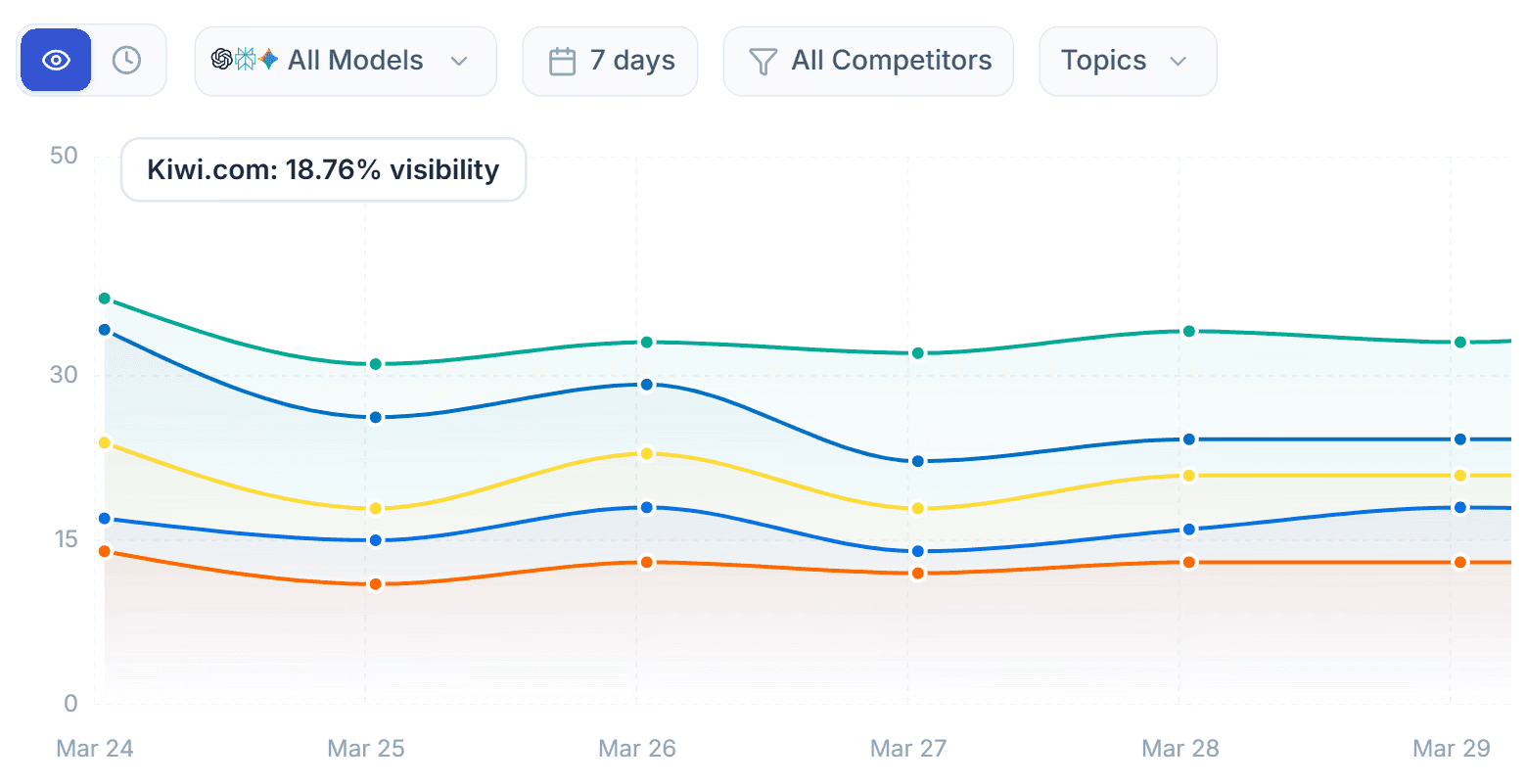
GEO is wider than SEO. AI recommends the brands that show up across the sources it reads, so your presence in forums, social platforms and criminal defense blogs decides your odds. AIclicks measures the three metrics below so you know which to work on first.
AI Assistant
Which lawyer handles a first DUI charge best?
Your Defense Firm
Citation Rate
Shows how many AI answers about criminal defense firms name your brand, out of every 100. Models pull from the same trusted pages over and over, so citations compound: once you are in, staying in gets easier. Find the competitor pages AI cites most, then publish your own version of each.
Your Defense Firm
82% positive
Competitor A
54% positive
Competitor B
38% positive
Brand Sentiment
Shows how AI describes you when your brand comes up: positive, neutral or negative. Tone is what separates being mentioned from being recommended, and models repeat whatever framing they find. Track the negative mentions back to the reviews and threads behind them, then publish content that answers those directly.
Others 52%
You 24%
— 24%
Your Defense Firm
AI mention share of voice — criminal defense category
Competitors
Not Cited
Share of Voice in AI
Shows how much of the criminal defense conversation belongs to you rather than your competitors. This is the metric that matters most, the GEO version of a Google ranking. With only 1–5 brands named per answer, the market is winner-takes-more and every point is taken from someone.
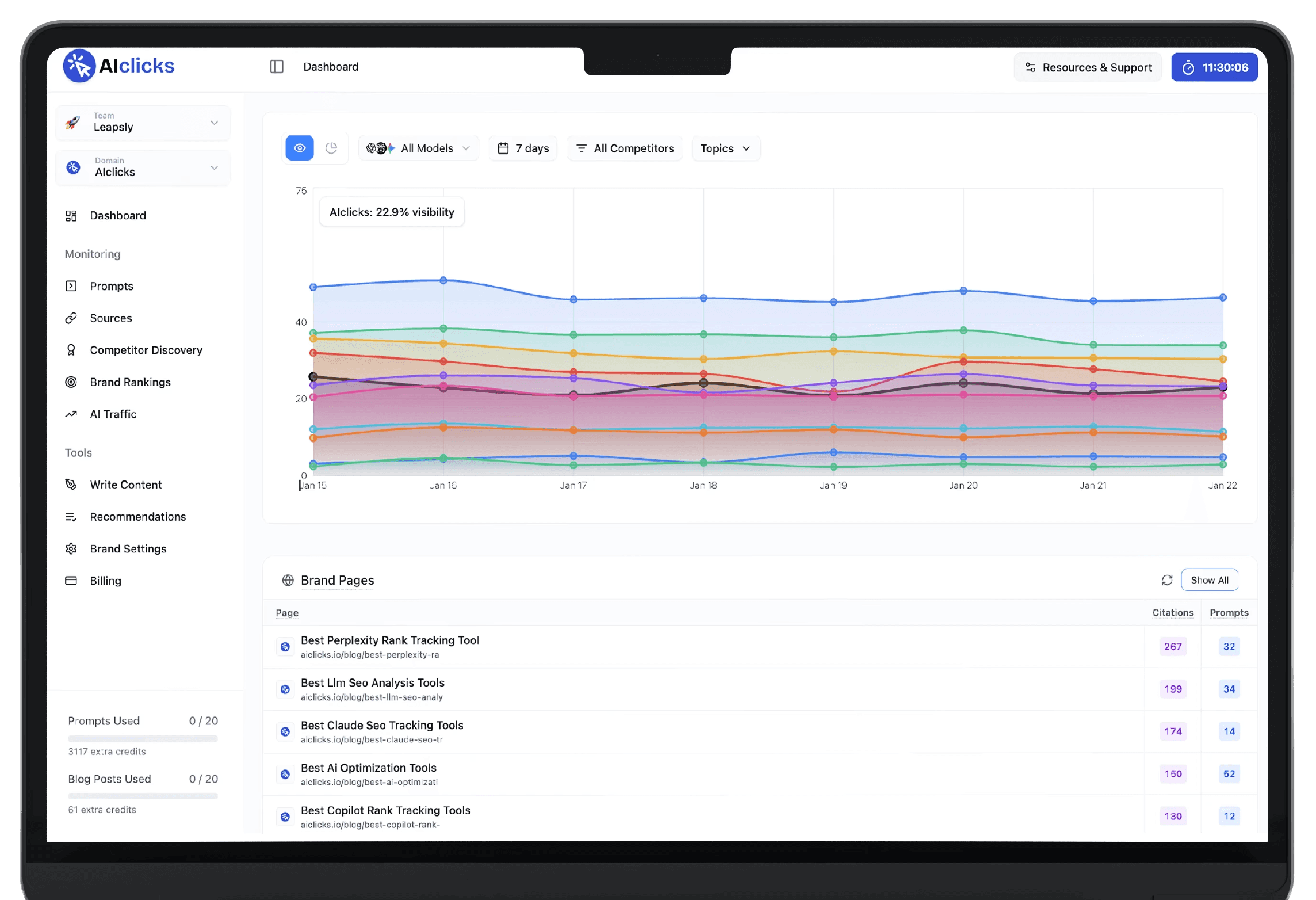
The Dashboard Your Dedicated AI Search Team Works In
AIclicks gives you a live dashboard with daily ChatGPT mention rate, citation rate, sentiment, and share-of-voice across your tracked prompts, plus GA4 referral attribution for the traffic ChatGPT does send back.
Choose Your Plan
Flexible pricing that grows with your team. Upgrade or downgrade at any time.
Monthly
Yearly
-20%
Starter
Perfect for individuals & small teams
$49
/ month
Billed annually — you save $142
Choose 3 from:
Daily

" height="16px" id="fvSweaOBo" transform="translate(1 0)" width="14px"/></svg>)
" width="14px"><path d="M 13.864 5.629 L 13.3 5.629 L 13.3 5.6 L 7 5.6 L 7 8.4 L 10.956 8.4 C 10.379 10.03 8.828 11.2 7 11.2 C 4.681 11.2 2.8 9.319 2.8 7 C 2.8 4.681 4.681 2.8 7 2.8 C 8.071 2.8 9.045 3.204 9.786 3.864 L 11.766 1.884 C 10.516 0.719 8.844 0 7 0 C 3.134 0 0 3.134 0 7 C 0 10.866 3.134 14 7 14 C 10.866 14 14 10.866 14 7 C 14 6.531 13.952 6.073 13.864 5.629 Z" fill="rgb(255, 193, 7)" height="14px" id="H_YjfTNpn" width="14px"/><path d="M 0 3.742 L 2.3 5.429 C 2.922 3.888 4.429 2.8 6.193 2.8 C 7.264 2.8 8.238 3.204 8.979 3.864 L 10.959 1.884 C 9.709 0.719 8.037 0 6.193 0 C 3.504 0 1.172 1.518 0 3.742 Z" fill="rgb(255, 61, 0)" height="5.428500000000002px" id="PlkthQDhg" transform="translate(0.875 0)" width="10.959199999999996px"/><path d="M 6.232 5.581 C 8.04 5.581 9.683 4.889 10.925 3.764 L 8.758 1.931 C 8.032 2.483 7.144 2.782 6.232 2.781 C 4.411 2.781 2.865 1.62 2.283 0 L 0 1.759 C 1.159 4.026 3.511 5.581 6.232 5.581 Z" fill="rgb(76, 175, 80)" height="5.581099999999999px" id="WlnJ5gngE" transform="translate(0.7 8.4)" width="10.924899999999994px"/><path d="M 6.864 0.029 L 6.3 0.029 L 6.3 0 L 0 0 L 0 2.8 L 3.956 2.8 C 3.68 3.576 3.183 4.254 2.526 4.75 L 2.527 4.749 L 4.693 6.582 C 4.54 6.722 7 4.9 7 1.4 C 7 0.931 6.952 0.473 6.864 0.029 Z" fill="rgb(25, 118, 210)" height="6.589883930775992px" id="x_rSW275p" transform="translate(7 5.6)" width="7px"/></g></svg>)
" height="16px" id="hHS98fTxZ" width="16px"/></svg>)
 scale(1 1) translate(-1.861736945942159, -1.1170155383302638)" id="P20NzAvj0-699428820-radial-gradient" r="0.9935228066204626"><stop offset="0" stop-color="rgb(0, 174, 255)"/><stop offset="1" stop-color="rgb(7, 54, 196)"/></radialGradient><radialGradient cx="0.48250042504016705" cy="1.8366934653567062" gradient-transform="translate(0.48250042504016705, 1.8366934653567062) scale(1 1) translate(-0.48250042504016705, -1.8366934653567062)" id="UEWZqVjij-699428820-radial-gradient" r="0.9176890228114506"><stop offset="0" stop-color="rgb(255, 182, 87)"/><stop offset="1" stop-color="rgb(192, 43, 60)"/></radialGradient><linearGradient id="jyMN3TmKx-699428820-linear-gradient" x1="0.4594862532842614" x2="0.5405137467157386" y1="0" y2="1"><stop offset="0" stop-color="rgb(13, 145, 225)"/><stop offset="1" stop-color="rgb(255, 200, 0)"/></linearGradient><linearGradient id="xhMNwDFG0-699428820-linear-gradient" x1="0.4784828731548295" x2="0.5215171268451705" y1="5.551115123125783e-17" y2="1"><stop offset="0" stop-color="rgb(61, 203, 255)"/><stop offset="1" stop-color="rgba(5, 136, 247, 0)"/></linearGradient><radialGradient cx="1.4305090871482182" cy="0.34866158048251783" gradient-transform="translate(1.4305090871482182, 0.34866158048251783) scale(1 1) translate(-1.4305090871482182, -0.34866158048251783)" id="i79kAqaS4-699428820-radial-gradient" r="1.3362743412697924"><stop offset="0" stop-color="rgb(140, 72, 255)"/><stop offset="1" stop-color="rgb(255, 177, 82)"/></radialGradient><linearGradient id="mcxvno3tX-699428820-linear-gradient" x1="0.49844355920154226" x2="0.5015564407984577" y1="0" y2="1"><stop offset="0" stop-color="rgb(248, 173, 250)"/><stop offset="1" stop-color="rgba(168, 110, 221, 0)"/></linearGradient></defs><g d="M 11.605 1.219 C 11.397 0.499 10.739 0.002 9.989 0 L 9.498 0 C 8.682 0.002 7.985 0.588 7.842 1.391 L 7 6.016 L 7.209 5.296 C 7.416 4.574 8.075 4.076 8.825 4.074 L 11.681 4.074 L 12.879 4.545 L 14.033 4.074 L 13.697 4.074 C 12.947 4.072 12.289 3.575 12.081 2.855 Z M 4.413 13.387 C 4.618 14.111 5.278 14.611 6.031 14.613 L 7.075 14.613 C 7.988 14.613 8.735 13.88 8.758 12.96 L 8.871 8.5 L 8.633 9.319 C 8.426 10.039 7.768 10.537 7.018 10.539 L 4.138 10.539 L 3.111 9.977 L 2 10.539 L 2.331 10.539 C 3.084 10.542 3.743 11.042 3.949 11.766 L 4.413 13.387 Z M 9.999 0 L 4.167 0 C 2.501 0 1.501 2.221 0.834 4.441 C 0.045 7.073 -0.989 10.591 2.001 10.591 L 4.519 10.591 C 5.273 10.591 5.933 10.089 6.139 9.36 C 6.577 7.815 7.345 5.121 7.948 3.069 C 8.255 2.027 8.509 1.132 8.901 0.575 C 9.148 0.212 9.56 -0.004 9.999 0 M 9.999 0 L 4.167 0 C 2.501 0 1.501 2.221 0.834 4.441 C 0.045 7.073 -0.989 10.591 2.001 10.591 L 4.519 10.591 C 5.273 10.591 5.933 10.089 6.139 9.36 C 6.577 7.815 7.345 5.121 7.948 3.069 C 8.255 2.027 8.509 1.132 8.901 0.575 C 9.148 0.212 9.56 -0.004 9.999 0 M 6 14.593 L 11.833 14.593 C 13.499 14.593 14.499 12.372 15.166 10.151 C 15.955 7.519 16.989 4 13.999 4 L 11.48 4 C 10.725 4.002 10.063 4.505 9.86 5.232 C 9.266 7.332 8.663 9.429 8.051 11.523 C 7.745 12.566 7.49 13.461 7.098 14.019 C 6.851 14.382 6.439 14.597 6 14.593 M 6 14.593 L 11.833 14.593 C 13.499 14.593 14.499 12.372 15.166 10.151 C 15.955 7.519 16.989 4 13.999 4 L 11.48 4 C 10.725 4.002 10.063 4.505 9.86 5.232 C 9.266 7.332 8.663 9.429 8.051 11.523 C 7.745 12.566 7.49 13.461 7.098 14.019 C 6.851 14.382 6.439 14.597 6 14.593" fill="transparent" height="14.613333333333333px" id="QzkBy4Ibc" transform="translate(0 1)" width="16.00011071294081px"><path d="M 4.605 1.219 C 4.397 0.499 3.739 0.002 2.989 0 L 2.498 0 C 1.682 0.002 0.985 0.588 0.842 1.391 L 0 6.016 L 0.209 5.296 C 0.416 4.574 1.075 4.076 1.825 4.074 L 4.681 4.074 L 5.879 4.545 L 7.033 4.074 L 6.697 4.074 C 5.947 4.072 5.289 3.575 5.081 2.855 Z" fill="url(%23P20NzAvj0-699428820-radial-gradient)" height="6.016px" id="P20NzAvj0" transform="translate(7 0)" width="7.0333333333333385px"/><path d="M 2.413 4.887 C 2.618 5.611 3.278 6.111 4.031 6.113 L 5.075 6.113 C 5.988 6.113 6.735 5.38 6.758 4.46 L 6.871 0 L 6.633 0.819 C 6.426 1.539 5.768 2.037 5.018 2.039 L 2.138 2.039 L 1.111 1.477 L 0 2.039 L 0.331 2.039 C 1.084 2.042 1.743 2.542 1.949 3.266 L 2.413 4.887 Z" fill="url(%23UEWZqVjij-699428820-radial-gradient)" height="6.113333333333333px" id="UEWZqVjij" transform="translate(2 8.5)" width="6.871333333333332px"/><path d="M 9.999 0 L 4.167 0 C 2.501 0 1.501 2.221 0.834 4.441 C 0.045 7.073 -0.989 10.591 2.001 10.591 L 4.519 10.591 C 5.273 10.591 5.933 10.089 6.139 9.36 C 6.577 7.815 7.345 5.121 7.948 3.069 C 8.255 2.027 8.509 1.132 8.901 0.575 C 9.148 0.212 9.56 -0.004 9.999 0" fill="url(%23jyMN3TmKx-699428820-linear-gradient)" height="10.591388755215167px" id="jyMN3TmKx" width="9.999444046274142px"/><path d="M 9.999 0 L 4.167 0 C 2.501 0 1.501 2.221 0.834 4.441 C 0.045 7.073 -0.989 10.591 2.001 10.591 L 4.519 10.591 C 5.273 10.591 5.933 10.089 6.139 9.36 C 6.577 7.815 7.345 5.121 7.948 3.069 C 8.255 2.027 8.509 1.132 8.901 0.575 C 9.148 0.212 9.56 -0.004 9.999 0" fill="url(%23xhMNwDFG0-699428820-linear-gradient)" height="10.591388755215167px" id="xhMNwDFG0" width="9.999444046274142px"/><path d="M 0 10.593 L 5.833 10.593 C 7.499 10.593 8.499 8.372 9.166 6.151 C 9.955 3.519 10.989 0 7.999 0 L 5.48 0 C 4.725 0.002 4.063 0.505 3.86 1.232 C 3.266 3.332 2.663 5.429 2.051 7.523 C 1.745 8.566 1.49 9.461 1.098 10.019 C 0.851 10.382 0.439 10.597 0 10.593" fill="url(%23i79kAqaS4-699428820-radial-gradient)" height="10.593388755215164px" id="i79kAqaS4" transform="translate(6 4)" width="10.000110712940803px"/><path d="M 0 10.593 L 5.833 10.593 C 7.499 10.593 8.499 8.372 9.166 6.151 C 9.955 3.519 10.989 0 7.999 0 L 5.48 0 C 4.725 0.002 4.063 0.505 3.86 1.232 C 3.266 3.332 2.663 5.429 2.051 7.523 C 1.745 8.566 1.49 9.461 1.098 10.019 C 0.851 10.382 0.439 10.597 0 10.593" fill="url(%23mcxvno3tX-699428820-linear-gradient)" height="10.593388755215164px" id="mcxvno3tX" transform="translate(6 4)" width="10.000110712940803px"/></g></svg>)
" height="15.360666565427872px" id="HZPvvPBv7" transform="translate(0 0.5)" width="16px"/></svg>)
Tracked prompts
30
Websites you can add
3
LLMs you can track
3
Countries per project
1
LLM responses / mo
4,650
AI-optimized articles per month
10
Integrations
-
Support
Pro
For growing teams for more power
$140
/ month
Billed annually — you save $454
Choose 4 from:
Daily
Tracked prompts
150
Websites you can add
Unlimited
LLMs you can track
4
Countries per project
Unlimited
LLM responses / mo
18,600
AI-optimized articles per month
20
Integrations
Google Analytics
Support
BUSINESS
Best for medium-sized organizations
$357
/ month
Billed annually — you save $1198
Choose 6 from:
Daily
Tracked prompts
300
Websites you can add
Unlimited
LLMs you can track
6
Countries per project
Unlimited
LLM responses / mo
55,800
AI-optimized articles per month
30
Integrations
Google Analytics, API
Support
Dedicated account specialist
Become the #1 Answer in AI
Succeed in GEO yourself, or let us do all the work.
Do it yourself
Use AIclicks to see exactly where you appear across 10+ AI platforms, spot the gaps competitors are filling, and act on clear weekly recommendations.
From $59/month · Cancel anytime
Done for you
We Do All the Work for You
Our team manages your complete search presence: traditional SEO and GEO strategy, content, implementation, and reporting. You focus on clients.
Custom pricing · Minimum 3-month engagement
The AI SEO agency trusted by 1,000+ brands worldwide
From solo founders to multi-client agencies, AIclicks runs the full AI SEO agency program for organizations of every shape and size that want to be cited across every AI surface.
4.9/5 stars on G2





FAQ
How long before criminal defense SEO brings in cases?
Local visibility usually starts moving around month 3 or 4, with steady case flow between months 6 and 9. Defense agencies put the point of meaningful ranking change at month 3 to month 6, and a competitive DUI market full of older firms takes 12 or more. Narrow charges like probation violation or expungement move far faster than DUI head terms. A brand-new defense site will not rank inside 90 days, whatever the pitch deck says.
Should we be optimising for ChatGPT or Google?
Both, and criminal defense has an unusual stake in the second one. Penalty questions, whether a first offense means jail, whether you even need a lawyer, all used to bring readers to your blog and are now answered above the results. Ahrefs analysed 863,000 keywords and found only 38% of pages cited in AI Overviews also ranked in the top 10, down from 76% a year earlier.
Why won't generic local SEO advice work for us?
Three things. The clock: a defense lead decides within hours, not days, so intake speed is a ranking-adjacent problem and the last firm to call back loses. Lead quality: broad wording pulls in assault victims, out-of-state searchers and reporters, none of whom hire you. And attorney advertising regulation bans the exact superlatives that would otherwise rank. None of the three appear in generic local SEO advice.
How much should a criminal defense firm pay for SEO?
Expect $3,000 to $5,000 monthly for one office, with specialist shops opening at $5,000 and large metro programs running higher. Firms comparing quotes describe them as costing the same as an associate once annualised, which is the right comparison to make. Judge it against paid: criminal clicks commonly run past $100, and even a good conversion rate leaves a paid lead costing hundreds. Then measure the cost of a signed case, not the invoice.
Should we run Local Services Ads or SEO?
Run search ads and SEO; treat Local Services Ads as optional here. Defense lawyers report that LSAs work poorly for narrow charge-level intent, because the lead categories are broad and you pay for callers whose matter you would never take. Paid search buys this week’s arrests at a rate that never falls. Organic makes every case after it cheaper to win, and the ad conversion data tells you which charge page to build next.
What should a defense firm build before anything else?
Do the Google Business Profile first, ahead of the website, set to Criminal Justice Attorney; it is the one free asset that outranks your own domain. Then take whichever charge you most want to see more of, and build it a proper page, with real dispositions and the required disclaimer. Then the fee page, because cost decides the call. Then the lawyer bio carrying your admissions and board certification. Collateral consequence pages after that. The statute library never.
What proves the work is paying off?
Count signed retainers by charge type and the fee actually collected against each. Position reports hide the real failure here, which is volume of enquiries you cannot accept. Give the profile, the website and every directory its own tracked number, record and score intake calls, and label form submissions by the page they came from. Once a month, ask ChatGPT and check the AI Overview for your charge terms, then see whether the firm appears.
Can we handle criminal defense SEO ourselves?
Partly. Keep the writing and the reviews inside the firm, because only the lawyer who stood in that courtroom can describe a diversion program accurately or answer a Google question without creating an ethics problem. Send the technical layer outside: statute page cleanup, schema, speed and citation work. Before signing, make the agency name 2 criminal defense clients it still works with, then ask whether a language model drafts the pages.
Further Reading
Go deeper on GEO, AI search, and visibility tracking.