SEO for Chiropractic Clinics:
Someone wakes up unable to turn their neck and searches on a phone before breakfast. They read reviews, check whether you take their insurance, and increasingly ask ChatGPT how to tell a good chiropractor from a bad one. That whole decision happens before your front desk opens.









Why Chiropractic Clinics Need SEO
Every chiropractic search now ends in an answer someone else wrote. The map pack takes 3 slots, Google’s AI Overview takes the rest, and patients rarely scroll past either.
Sciatica, whiplash, herniated discs, migraines and pregnancy back pain all sit as bullets under one Services heading. Each one is its own query, with its own urgency. The patient with shooting leg pain at 6am finds the clinic that wrote 900 words about sciatica, and you never learn they looked.
Type chiropractor near me anywhere nationally and a franchise takes the first organic slot: The Joint Chiropractic, hundreds of clinics pooled behind one domain. Zocdoc, 100% Chiropractic and Palmer College’s alumni finder fill the rest. No solo clinic can out-authority that group on its own.
Practice owners routinely report paying $2,000 a month to a marketing agency plus $1,000 to $2,000 in ad spend, and specialist retainers run anywhere from $800 to $8,000. Pause the campaign and the schedule empties inside a week. The money bought appointments, never an asset the clinic owns.
How SEO Works for Chiropractic Clinics
Search Engine Optimization projects are long-term investments for chiropractors, where each task supplements the others and creates compound results over time.
01
Keywords, page structure, and the signals Google reads directly
Chiropractic on-page work carries a handicap most local businesses do not. Google files health content under YMYL, applies its strictest quality bar, and state chiropractic boards separately restrict what a clinic may claim about outcomes. So the page has to be careful and specific at the same time. The bigger problem is vocabulary: clinics write about subluxation correction and spinal hygiene, while patients type pinched nerve, lower back pain and chiropractor for sciatica. The pages doing the actual work are one per condition, one per technique you are certified in, your new patient page, and your insurance page.
Condition pages age extremely well. What sciatica feels like, whether an adjustment helps a herniated disc, what a first visit involves, and whether the treatment is safe during pregnancy are questions asked identically year after year, and the anatomy behind them never updates. What churns is everything dated: the new patient special that expired in March, the health fair recap, the post about the new decompression table. Those own the majority of most clinic blogs and index for a fortnight. Write fewer pages, tie each to a condition or a technique, and revisit the pricing and insurance detail every January.
1
Break the services list apart into a page per condition, sciatica, whiplash, herniated disc, scoliosis and migraines, using the words patients actually type.
2
Unpublish last year’s new patient specials and retired equipment pages, then 301 each one to the condition page now covering it.
3
Use schema.org Chiropractic for the clinic, MedicalCondition on each condition page and FAQPage on visit questions, then check rendering in Rich Results Test.
4
Publish a page per technique you actually perform, Gonstead, Activator, flexion-distraction, Thompson drop, since patients compare techniques before they compare clinics.
02
Map Pack visibility, citations, and proximity signals
Nobody drives across the state for an adjustment, and most care plans involve 2 or 3 visits a week for months, so the search radius is small. Which is why those 3 pinned map results decide more of the schedule than the rest of the site combined. They render above The Joint, above Zocdoc, and they are the only surface where a single-doctor clinic beats a national brand. You cannot move the clinic, but you can finish the profile and chase the reviews.
Chiropractor is the primary category; add Sports Medicine Clinic, Physical Therapist or Massage Therapist only if you truly offer them. List every technique and condition as its own service with a description. Upload genuine photographs of the adjusting tables, the decompression unit and the team, not stock spines. Then answer, in the Q&A, the things that actually decide a booking: does it hurt, do you take Medicare, do you see infants, is there parking.
Chiropractic has a citation layer nobody outside it knows about. Beyond Google, Yelp, Bing Places and Apple Maps sit the ones that actually verify you: your state chiropractic association and licensing board register, the ACA and ICA member directories, Palmer and Life University alumni finders, and technique registries like the ICPA Webster listing, Gonstead Clinical Studies Society, Active Release Techniques and Graston. Every entry needs the identical clinic name, suite and phone, or the signal cancels itself out.
1
Make Chiropractor the primary category, add each technique as its own service, and seed the Q&A with pricing, Medicare and pregnancy questions.
2
Run a separate Google profile and a separate landing page per clinic, each listing only the chiropractors who actually adjust patients there.
3
Audit your listing on the state board register, ACA, ICPA and Healthgrades with Yext or BrightLocal, fixing every clinic name variant.
4
Publish something to the Google Business Profile weekly: an open Saturday slot, a range-of-motion drill, a short adjusting clip.
03
Topic authority, inbound links, and content that earns traffic
Patients settle 2 things before booking, and neither gets said on the phone: will this hurt, and is chiropractic actually legitimate. Google’s own suggested questions on chiropractor searches include red flags for chiropractors and how to tell if a chiropractor is good. Answer those honestly, including the point at which you would refer out for imaging or to an orthopaedist, and you convert people other clinics never even hear from.
Once someone has settled on chiropractic, they are choosing between clinics, and they want the facts your competitors hide. Publish what the first visit costs, what a typical care plan runs, which insurers you bill and whether Medicare covers the exam. Name the doctor who will adjust them, their college and their certifications. Clinics bleed these patients at the precise moment the site refuses to give a number.
Chiropractic links come from the room next door and from the referral network. CrossFit boxes, running clubs, yoga studios and youth sports leagues publish partner pages and nobody claims them. Massage therapists, personal injury attorneys and physical therapists you already exchange patients with should be linking back. Your alma mater lists alumni, technique bodies list certified providers, and local news needs someone to explain a posture story on deadline.
1
Post a yearly pricing guide covering the exam, single adjustments and a full care plan, with real ranges instead of call for pricing.
2
Template a page for each condition in each town you serve, adding real drive-time and parking detail so they are not clones.
3
Build one hub for money questions: Medicare limits, HSA and FSA use, cash rates, prepay packages and the cost of a visit uninsured.
4
Give every certification and system its own page, Webster, Active Release, Graston, spinal decompression, because those brand terms carry real volume.
04
Site speed, crawlability, Core Web Vitals, and mobile health
Chiropractic websites fail in a way almost nobody audits for. A huge share of clinics run a single scrolling template where services, conditions, the team and the booking form are anchor links on one URL. Google has exactly one page to index, so sciatica chiropractor has nothing to rank against. Crawl one of these and you find 4 indexable URLs and a booking widget rendered in JavaScript that crawlers never see.
The highest-intent chiropractic search happens at 6am from someone who cannot straighten up, holding a phone in one hand. What they need is a phone number and one line confirming you can see them today. Instead the homepage opens with an autoplay video of an adjustment, a $47 new-patient popup and a chat bubble, and the click-to-call sits below all 3. That patient is back in the results before the hero image finishes loading.
1
Run Screaming Frog over the domain; fewer than 10 indexable URLs means your anchor sections must become real pages.
2
Test the booking page in PageSpeed Insights with the Jane or ChiroTouch widget loaded, and defer it until after Largest Contentful Paint.
3
Replace the autoplay hero video with a compressed WebP still, and lazy-load posture and X-ray galleries below the fold.
4
Split condition and technique pages into their own sitemap away from the blog, then resubmit through Search Console when hours or accepted insurers change.
05
Star ratings, review volume, and response strategy that builds trust
Reviews carry more weight in chiropractic than in almost any local trade, because the profession is publicly contested and someone is about to let a stranger apply force to their spine. Star count is the only evidence they have. Volume is the hard part: a care plan means the same 40 people visiting weekly for months, so the patient list is small and the same faces recur. Meanwhile the loudest reviewers are the ones who quit a plan early.
Ask at the visit where the patient first notices the difference, usually visit 3 or 4, not at discharge months later. Wire the request into the practice management system so it fires on that appointment status, signed by the doctor who adjusted them rather than the clinic. A single link and a single line of text, with no login. Ask every patient on every care plan, not only the dramatic recoveries, or the profile reads curated rather than real.
1
Trigger the review link out of Jane App or ChiroTouch when visit 3 checks out, signed by the treating chiropractor.
2
Answer negative reviews the same day, but never state that the reviewer was ever treated, since acknowledging care in public breaches HIPAA.
3
Pull sciatica reviews onto the sciatica page and prenatal reviews onto the Webster page, putting evidence where the choice gets made.
4
Ask massage, rehab and decompression patients separately, since those services produce willing reviewers who never book an adjustment.
Google is No Longer the Only Place Your patients are Searching
Patients are using AI to find answers, and they trust what it tells them. Invest in GEO to get recommended in those answers.
1 Billion
Questions ChatGPT receives every single day
38%
Your #1 top ranking page on Google would be cited by AI
14%
of chiropractors optimise for GEO. The rest are invisible in AI answers


You can rank #1 for “chiropractor near me” and still not exist in ChatGPT’s answer. Run a free GEO audit to see where your brand actually stands.
GEO vs SEO: Same Goal, Different Methods
GEO is wider than SEO. AI recommends the brands that show up across the sources it reads, so your presence in forums, social platforms and chiropractic blogs decides your odds. AIclicks measures the three metrics below so you know which to work on first.
AI Assistant
Who should I see for a herniated disc nearby?
Your Clinic
Citation Rate
Shows how many AI answers about chiropractic clinics name your brand, out of every 100. Models pull from the same trusted pages over and over, so citations compound: once you are in, staying in gets easier. Find the competitor pages AI cites most, then publish your own version of each.
Your Clinic
82% positive
Competitor A
54% positive
Competitor B
38% positive
Brand Sentiment
Shows how AI describes you when your brand comes up: positive, neutral or negative. Tone is what separates being mentioned from being recommended, and models repeat whatever framing they find. Track the negative mentions back to the reviews and threads behind them, then publish content that answers those directly.
Others 52%
You 24%
— 24%
Your Clinic
AI mention share of voice — chiropractic category
Competitors
Not Cited
Share of Voice in AI
Shows how much of the chiropractic conversation belongs to you rather than your competitors. This is the metric that matters most, the GEO version of a Google ranking. With only 1–5 brands named per answer, the market is winner-takes-more and every point is taken from someone.
The Dashboard Your Dedicated AI Search Team Works In
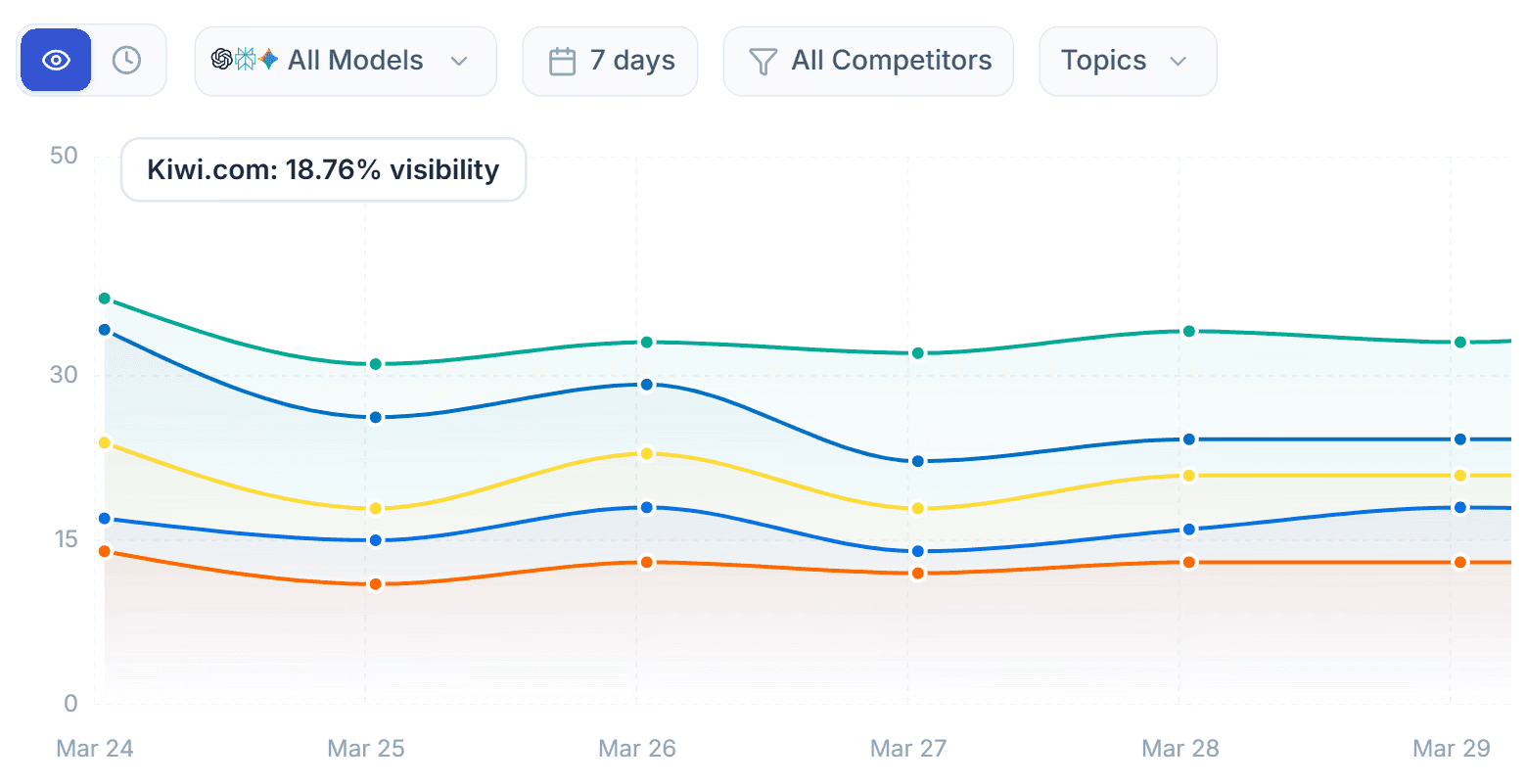
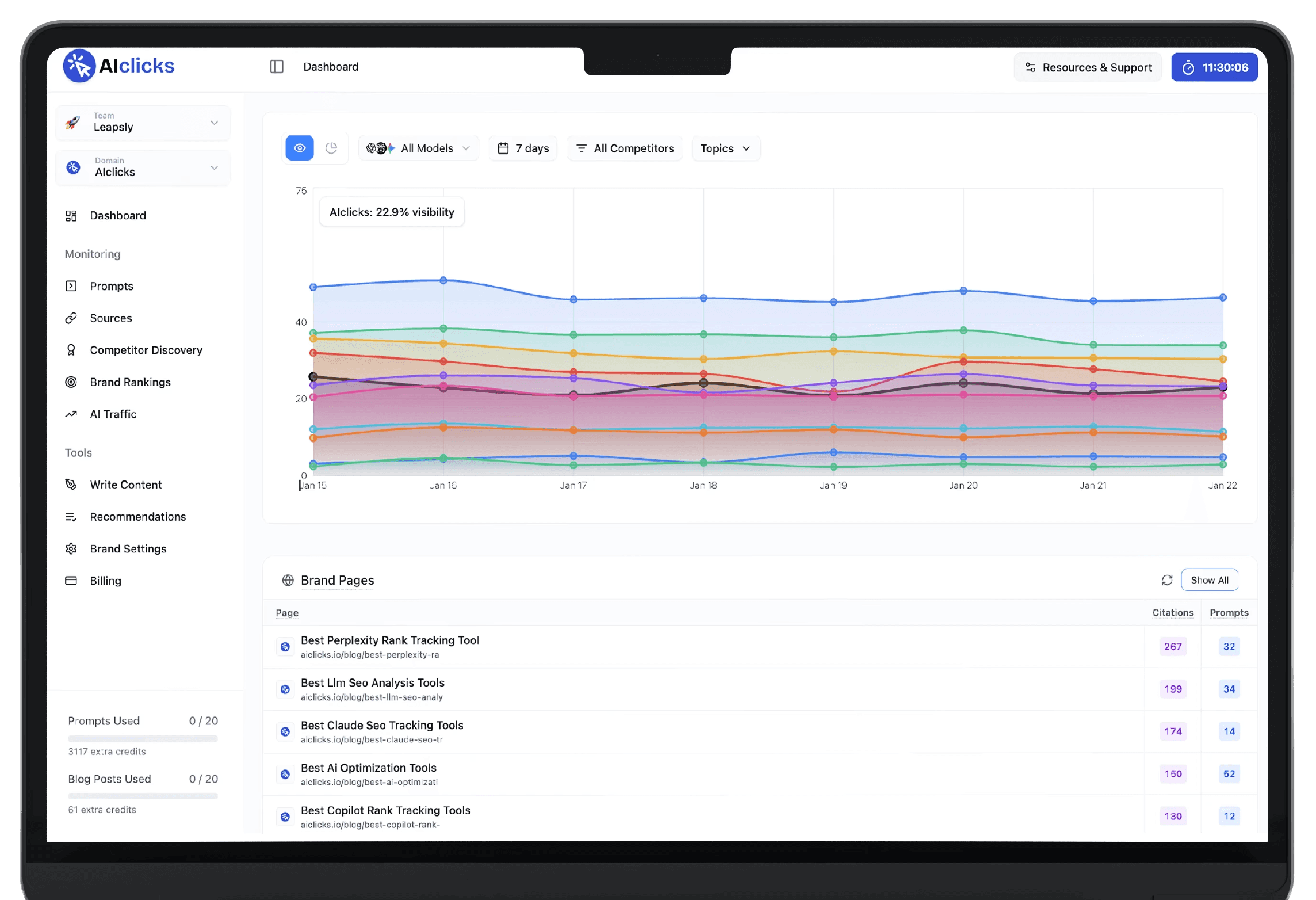
AIclicks gives you a live dashboard with daily ChatGPT mention rate, citation rate, sentiment, and share-of-voice across your tracked prompts, plus GA4 referral attribution for the traffic ChatGPT does send back.
Choose Your Plan
Flexible pricing that grows with your team. Upgrade or downgrade at any time.
Monthly
Yearly
-20%
Starter
Perfect for individuals & small teams
$49
/ month
Billed annually — you save $142
Choose 3 from:
Daily

" height="16px" id="fvSweaOBo" transform="translate(1 0)" width="14px"/></svg>)
" width="14px"><path d="M 13.864 5.629 L 13.3 5.629 L 13.3 5.6 L 7 5.6 L 7 8.4 L 10.956 8.4 C 10.379 10.03 8.828 11.2 7 11.2 C 4.681 11.2 2.8 9.319 2.8 7 C 2.8 4.681 4.681 2.8 7 2.8 C 8.071 2.8 9.045 3.204 9.786 3.864 L 11.766 1.884 C 10.516 0.719 8.844 0 7 0 C 3.134 0 0 3.134 0 7 C 0 10.866 3.134 14 7 14 C 10.866 14 14 10.866 14 7 C 14 6.531 13.952 6.073 13.864 5.629 Z" fill="rgb(255, 193, 7)" height="14px" id="H_YjfTNpn" width="14px"/><path d="M 0 3.742 L 2.3 5.429 C 2.922 3.888 4.429 2.8 6.193 2.8 C 7.264 2.8 8.238 3.204 8.979 3.864 L 10.959 1.884 C 9.709 0.719 8.037 0 6.193 0 C 3.504 0 1.172 1.518 0 3.742 Z" fill="rgb(255, 61, 0)" height="5.428500000000002px" id="PlkthQDhg" transform="translate(0.875 0)" width="10.959199999999996px"/><path d="M 6.232 5.581 C 8.04 5.581 9.683 4.889 10.925 3.764 L 8.758 1.931 C 8.032 2.483 7.144 2.782 6.232 2.781 C 4.411 2.781 2.865 1.62 2.283 0 L 0 1.759 C 1.159 4.026 3.511 5.581 6.232 5.581 Z" fill="rgb(76, 175, 80)" height="5.581099999999999px" id="WlnJ5gngE" transform="translate(0.7 8.4)" width="10.924899999999994px"/><path d="M 6.864 0.029 L 6.3 0.029 L 6.3 0 L 0 0 L 0 2.8 L 3.956 2.8 C 3.68 3.576 3.183 4.254 2.526 4.75 L 2.527 4.749 L 4.693 6.582 C 4.54 6.722 7 4.9 7 1.4 C 7 0.931 6.952 0.473 6.864 0.029 Z" fill="rgb(25, 118, 210)" height="6.589883930775992px" id="x_rSW275p" transform="translate(7 5.6)" width="7px"/></g></svg>)
" height="16px" id="hHS98fTxZ" width="16px"/></svg>)
 scale(1 1) translate(-1.861736945942159, -1.1170155383302638)" id="P20NzAvj0-699428820-radial-gradient" r="0.9935228066204626"><stop offset="0" stop-color="rgb(0, 174, 255)"/><stop offset="1" stop-color="rgb(7, 54, 196)"/></radialGradient><radialGradient cx="0.48250042504016705" cy="1.8366934653567062" gradient-transform="translate(0.48250042504016705, 1.8366934653567062) scale(1 1) translate(-0.48250042504016705, -1.8366934653567062)" id="UEWZqVjij-699428820-radial-gradient" r="0.9176890228114506"><stop offset="0" stop-color="rgb(255, 182, 87)"/><stop offset="1" stop-color="rgb(192, 43, 60)"/></radialGradient><linearGradient id="jyMN3TmKx-699428820-linear-gradient" x1="0.4594862532842614" x2="0.5405137467157386" y1="0" y2="1"><stop offset="0" stop-color="rgb(13, 145, 225)"/><stop offset="1" stop-color="rgb(255, 200, 0)"/></linearGradient><linearGradient id="xhMNwDFG0-699428820-linear-gradient" x1="0.4784828731548295" x2="0.5215171268451705" y1="5.551115123125783e-17" y2="1"><stop offset="0" stop-color="rgb(61, 203, 255)"/><stop offset="1" stop-color="rgba(5, 136, 247, 0)"/></linearGradient><radialGradient cx="1.4305090871482182" cy="0.34866158048251783" gradient-transform="translate(1.4305090871482182, 0.34866158048251783) scale(1 1) translate(-1.4305090871482182, -0.34866158048251783)" id="i79kAqaS4-699428820-radial-gradient" r="1.3362743412697924"><stop offset="0" stop-color="rgb(140, 72, 255)"/><stop offset="1" stop-color="rgb(255, 177, 82)"/></radialGradient><linearGradient id="mcxvno3tX-699428820-linear-gradient" x1="0.49844355920154226" x2="0.5015564407984577" y1="0" y2="1"><stop offset="0" stop-color="rgb(248, 173, 250)"/><stop offset="1" stop-color="rgba(168, 110, 221, 0)"/></linearGradient></defs><g d="M 11.605 1.219 C 11.397 0.499 10.739 0.002 9.989 0 L 9.498 0 C 8.682 0.002 7.985 0.588 7.842 1.391 L 7 6.016 L 7.209 5.296 C 7.416 4.574 8.075 4.076 8.825 4.074 L 11.681 4.074 L 12.879 4.545 L 14.033 4.074 L 13.697 4.074 C 12.947 4.072 12.289 3.575 12.081 2.855 Z M 4.413 13.387 C 4.618 14.111 5.278 14.611 6.031 14.613 L 7.075 14.613 C 7.988 14.613 8.735 13.88 8.758 12.96 L 8.871 8.5 L 8.633 9.319 C 8.426 10.039 7.768 10.537 7.018 10.539 L 4.138 10.539 L 3.111 9.977 L 2 10.539 L 2.331 10.539 C 3.084 10.542 3.743 11.042 3.949 11.766 L 4.413 13.387 Z M 9.999 0 L 4.167 0 C 2.501 0 1.501 2.221 0.834 4.441 C 0.045 7.073 -0.989 10.591 2.001 10.591 L 4.519 10.591 C 5.273 10.591 5.933 10.089 6.139 9.36 C 6.577 7.815 7.345 5.121 7.948 3.069 C 8.255 2.027 8.509 1.132 8.901 0.575 C 9.148 0.212 9.56 -0.004 9.999 0 M 9.999 0 L 4.167 0 C 2.501 0 1.501 2.221 0.834 4.441 C 0.045 7.073 -0.989 10.591 2.001 10.591 L 4.519 10.591 C 5.273 10.591 5.933 10.089 6.139 9.36 C 6.577 7.815 7.345 5.121 7.948 3.069 C 8.255 2.027 8.509 1.132 8.901 0.575 C 9.148 0.212 9.56 -0.004 9.999 0 M 6 14.593 L 11.833 14.593 C 13.499 14.593 14.499 12.372 15.166 10.151 C 15.955 7.519 16.989 4 13.999 4 L 11.48 4 C 10.725 4.002 10.063 4.505 9.86 5.232 C 9.266 7.332 8.663 9.429 8.051 11.523 C 7.745 12.566 7.49 13.461 7.098 14.019 C 6.851 14.382 6.439 14.597 6 14.593 M 6 14.593 L 11.833 14.593 C 13.499 14.593 14.499 12.372 15.166 10.151 C 15.955 7.519 16.989 4 13.999 4 L 11.48 4 C 10.725 4.002 10.063 4.505 9.86 5.232 C 9.266 7.332 8.663 9.429 8.051 11.523 C 7.745 12.566 7.49 13.461 7.098 14.019 C 6.851 14.382 6.439 14.597 6 14.593" fill="transparent" height="14.613333333333333px" id="QzkBy4Ibc" transform="translate(0 1)" width="16.00011071294081px"><path d="M 4.605 1.219 C 4.397 0.499 3.739 0.002 2.989 0 L 2.498 0 C 1.682 0.002 0.985 0.588 0.842 1.391 L 0 6.016 L 0.209 5.296 C 0.416 4.574 1.075 4.076 1.825 4.074 L 4.681 4.074 L 5.879 4.545 L 7.033 4.074 L 6.697 4.074 C 5.947 4.072 5.289 3.575 5.081 2.855 Z" fill="url(%23P20NzAvj0-699428820-radial-gradient)" height="6.016px" id="P20NzAvj0" transform="translate(7 0)" width="7.0333333333333385px"/><path d="M 2.413 4.887 C 2.618 5.611 3.278 6.111 4.031 6.113 L 5.075 6.113 C 5.988 6.113 6.735 5.38 6.758 4.46 L 6.871 0 L 6.633 0.819 C 6.426 1.539 5.768 2.037 5.018 2.039 L 2.138 2.039 L 1.111 1.477 L 0 2.039 L 0.331 2.039 C 1.084 2.042 1.743 2.542 1.949 3.266 L 2.413 4.887 Z" fill="url(%23UEWZqVjij-699428820-radial-gradient)" height="6.113333333333333px" id="UEWZqVjij" transform="translate(2 8.5)" width="6.871333333333332px"/><path d="M 9.999 0 L 4.167 0 C 2.501 0 1.501 2.221 0.834 4.441 C 0.045 7.073 -0.989 10.591 2.001 10.591 L 4.519 10.591 C 5.273 10.591 5.933 10.089 6.139 9.36 C 6.577 7.815 7.345 5.121 7.948 3.069 C 8.255 2.027 8.509 1.132 8.901 0.575 C 9.148 0.212 9.56 -0.004 9.999 0" fill="url(%23jyMN3TmKx-699428820-linear-gradient)" height="10.591388755215167px" id="jyMN3TmKx" width="9.999444046274142px"/><path d="M 9.999 0 L 4.167 0 C 2.501 0 1.501 2.221 0.834 4.441 C 0.045 7.073 -0.989 10.591 2.001 10.591 L 4.519 10.591 C 5.273 10.591 5.933 10.089 6.139 9.36 C 6.577 7.815 7.345 5.121 7.948 3.069 C 8.255 2.027 8.509 1.132 8.901 0.575 C 9.148 0.212 9.56 -0.004 9.999 0" fill="url(%23xhMNwDFG0-699428820-linear-gradient)" height="10.591388755215167px" id="xhMNwDFG0" width="9.999444046274142px"/><path d="M 0 10.593 L 5.833 10.593 C 7.499 10.593 8.499 8.372 9.166 6.151 C 9.955 3.519 10.989 0 7.999 0 L 5.48 0 C 4.725 0.002 4.063 0.505 3.86 1.232 C 3.266 3.332 2.663 5.429 2.051 7.523 C 1.745 8.566 1.49 9.461 1.098 10.019 C 0.851 10.382 0.439 10.597 0 10.593" fill="url(%23i79kAqaS4-699428820-radial-gradient)" height="10.593388755215164px" id="i79kAqaS4" transform="translate(6 4)" width="10.000110712940803px"/><path d="M 0 10.593 L 5.833 10.593 C 7.499 10.593 8.499 8.372 9.166 6.151 C 9.955 3.519 10.989 0 7.999 0 L 5.48 0 C 4.725 0.002 4.063 0.505 3.86 1.232 C 3.266 3.332 2.663 5.429 2.051 7.523 C 1.745 8.566 1.49 9.461 1.098 10.019 C 0.851 10.382 0.439 10.597 0 10.593" fill="url(%23mcxvno3tX-699428820-linear-gradient)" height="10.593388755215164px" id="mcxvno3tX" transform="translate(6 4)" width="10.000110712940803px"/></g></svg>)
" height="15.360666565427872px" id="HZPvvPBv7" transform="translate(0 0.5)" width="16px"/></svg>)
Tracked prompts
30
Websites you can add
3
LLMs you can track
3
Countries per project
1
LLM responses / mo
4,650
AI-optimized articles per month
10
Integrations
-
Support
Pro
For growing teams for more power
$140
/ month
Billed annually — you save $454
Choose 4 from:
Daily
Tracked prompts
150
Websites you can add
Unlimited
LLMs you can track
4
Countries per project
Unlimited
LLM responses / mo
18,600
AI-optimized articles per month
20
Integrations
Google Analytics
Support
BUSINESS
Best for medium-sized organizations
$357
/ month
Billed annually — you save $1198
Choose 6 from:
Daily
Tracked prompts
300
Websites you can add
Unlimited
LLMs you can track
6
Countries per project
Unlimited
LLM responses / mo
55,800
AI-optimized articles per month
30
Integrations
Google Analytics, API
Support
Dedicated account specialist
Become the #1 Answer in AI
Succeed in GEO yourself, or let us do all the work.
Do it yourself
Use AIclicks to see exactly where you appear across 10+ AI platforms, spot the gaps competitors are filling, and act on clear weekly recommendations.
From $59/month · Cancel anytime
Done for you
We Do All the Work for You
Our team manages your complete search presence: traditional SEO and GEO strategy, content, implementation, and reporting. You focus on patients.
Custom pricing · Minimum 3-month engagement
The AI SEO agency trusted by 1,000+ brands worldwide
From solo founders to multi-client agencies, AIclicks runs the full AI SEO agency program for organizations of every shape and size that want to be cited across every AI surface.
4.9/5 stars on G2






FAQ
How long does it take chiropractic SEO to work?
Local movement usually lands between month 2 and month 4, with a steady lift in new patients around month 6. A competitive city with a franchise clinic nearby is more like 9 to 12. Profile and review work compounds quickest, which is why map pack impressions climb long before bookings do. Anyone guaranteeing first-page rankings inside a month is selling ads with an SEO label on them.
Should we bother with ChatGPT or just Google?
Both matter, and they are not one and the same. Ahrefs analysed 863,000 keywords and found only 38% of pages cited in AI Overviews also ranked in the top 10, down from 76% a year earlier. A good position no longer buys you a place inside the answer. Chiropractic queries are unusually AI-heavy, because patients ask whether it is safe and how to spot a bad practitioner before they ask who is nearby.
Why can't we just follow generic local SEO advice?
Three things. Google treats chiropractic as YMYL health content and wants visible credentials, so unsigned pages will not rank. Your state chiropractic board regulates what you may claim about outcomes, which rules out most of the copy competitors use. And your head terms are held by a franchise chain and a booking platform, not by other clinics, so the usual advice about beating the practice down the road misses the actual competitor.
What is a realistic monthly budget for search?
Specialist retainers in chiropractic run roughly $800 to $8,000 a month, and most single-clinic owners land between $1,000 and $3,000 before ad spend. Clinics commonly report paying an agency $2,000 monthly plus another $1,000 to $2,000 in Google Ads. Measure any of it against what one completed care plan is worth, not against the retainer in isolation. Agencies tier on deliverables, so compare what actually gets produced.
How should search sit alongside the ads we run?
Ads buy this week’s appointments; search builds next year’s. Most clinics keep paid running on decompression, auto injury and new-patient offers, where competition is brutal, while growing organic strength on condition and cost queries that are cheaper to win. The useful discipline is judging both on cost per new patient exam, and letting the keywords that actually convert decide which condition page you write next.
Which pages should a new clinic build first?
Claim the Google Business Profile before anything else; it costs nothing and it renders above every organic result. Then the new patient page, covering what the first visit costs and what actually happens in it. Then one page apiece for your 3 highest-volume conditions, in patient language. Then insurance and Medicare. Location pages after that, blog last. Most clinics open with a blog nobody searches for and wonder why the phone stays quiet.
How do we prove any of this is working?
Count new patient exams that came from organic and map results, not rankings. Call tracking is non-negotiable, since chiropractic enquiries arrive by phone and never surface in analytics. Inside Google Business Profile, the call, direction and website-click counts move before anything else does. Condition-term impressions in Search Console climb well ahead of positions, which makes them the first honest read you get. Close the loop in your practice management software.
Can we do our own SEO or hire someone?
Split it. Keep profile updates, clinic photos, the review ask and any writing about technique in-house, because nobody outside can describe how you actually treat or who refers to you. Hand the technical layer out: crawl fixes, schema, page speed and citation cleanup. If you hire out, make the agency name your state board’s advertising rules before you sign, and avoid anyone who builds your site from the identical template 300 other clinics run.
Further Reading
Go deeper on GEO, AI search, and visibility tracking.