" width="14px"><path d="M 13.864 5.629 L 13.3 5.629 L 13.3 5.6 L 7 5.6 L 7 8.4 L 10.956 8.4 C 10.379 10.03 8.828 11.2 7 11.2 C 4.681 11.2 2.8 9.319 2.8 7 C 2.8 4.681 4.681 2.8 7 2.8 C 8.071 2.8 9.045 3.204 9.786 3.864 L 11.766 1.884 C 10.516 0.719 8.844 0 7 0 C 3.134 0 0 3.134 0 7 C 0 10.866 3.134 14 7 14 C 10.866 14 14 10.866 14 7 C 14 6.531 13.952 6.073 13.864 5.629 Z" fill="rgb(255, 193, 7)" height="14px" id="H_YjfTNpn" width="14px"/><path d="M 0 3.742 L 2.3 5.429 C 2.922 3.888 4.429 2.8 6.193 2.8 C 7.264 2.8 8.238 3.204 8.979 3.864 L 10.959 1.884 C 9.709 0.719 8.037 0 6.193 0 C 3.504 0 1.172 1.518 0 3.742 Z" fill="rgb(255, 61, 0)" height="5.428500000000002px" id="PlkthQDhg" transform="translate(0.875 0)" width="10.959199999999996px"/><path d="M 6.232 5.581 C 8.04 5.581 9.683 4.889 10.925 3.764 L 8.758 1.931 C 8.032 2.483 7.144 2.782 6.232 2.781 C 4.411 2.781 2.865 1.62 2.283 0 L 0 1.759 C 1.159 4.026 3.511 5.581 6.232 5.581 Z" fill="rgb(76, 175, 80)" height="5.581099999999999px" id="WlnJ5gngE" transform="translate(0.7 8.4)" width="10.924899999999994px"/><path d="M 6.864 0.029 L 6.3 0.029 L 6.3 0 L 0 0 L 0 2.8 L 3.956 2.8 C 3.68 3.576 3.183 4.254 2.526 4.75 L 2.527 4.749 L 4.693 6.582 C 4.54 6.722 7 4.9 7 1.4 C 7 0.931 6.952 0.473 6.864 0.029 Z" fill="rgb(25, 118, 210)" height="6.589883930775992px" id="x_rSW275p" transform="translate(7 5.6)" width="7px"/></g></svg>)



Reviewed by:
Matas Kibildis

Head of Growth @ AIclicks
Last updated:
Expert Verified

After building AIclicks, an AI search visibility tool, and working with dozens of ecommerce brands over the past few years, I've learned one critical truth: the tools you choose can make or break your online business. I've watched brands scale from $10K to $1M with the right stack, and I've seen others burn through cash on redundant subscriptions that delivered zero ROI.
The ecommerce landscape in 2026 looks nothing like it did even two years ago. Customer acquisition is more expensive. AI search engines like ChatGPT and Perplexity are now where people discover products before they even hit Google. And the gap between brands with clean, integrated tech stacks and those drowning in tool bloat has never been wider.
Here's what most "best ecommerce tools" guides won't tell you: you don't need 40 different platforms. You need the right ecommerce tools that actually work together, track what matters, and scale with your business without requiring a dev team.
In this guide, I'm sharing the exact tools I've tested and vetted across different ecommerce needs. Whether you're launching your first online store or scaling an established ecommerce business, this breakdown will help you build a stack that drives real results.
TL;DR: Essential Ecommerce Tools You Actually Need
Every successful ecommerce store needs five core tool categories:
1. Platform Foundation: Your ecommerce platform (Shopify, WooCommerce, BigCommerce) handles storefront, checkout, and basic inventory management
2. Marketing & Automation: Email marketing and marketing automation tools to drive repeat purchases
3. Analytics & Intelligence: Track customer behavior, conversions, and—critically—how AI search engines present your brand (this is where AIclicks comes in)
4. Customer Communication: CRM software, live chat, and support tools to manage customer relationships
5. Operations: Payment gateways, shipping, and inventory management
My recommendation: Start with a platform, payments, Google Analytics, and one email tool. That's $100-$200/month. Add specialized tools as specific problems emerge, not before.
For 2026 success: Track both traditional discovery (Google, social) and AI-powered discovery. By late 2026, AI platforms will account for over $20 billion in ecommerce revenue. If you're not monitoring how ChatGPT and Perplexity recommend your products, you're flying blind on a massive channel.
Best Ecommerce Tools 2026: Feature and Pricing Comparison
Tool | Best For | Coverage | Key Features | Strengths | Limitations | Pricing |
|---|---|---|---|---|---|---|
AIclicks | AI search visibility & brand discovery tracking | ChatGPT, Perplexity, Claude, Grok, AI Overviews, Gemini | AI citation tracking, sentiment analysis, competitive intelligence, Share of Model metrics | Only platform tracking brand mentions in AI search; critical for modern customer discovery | Focused on AI search, not traditional SEO or social scheduling | From $59/mo (Starter) |
Shopify | Quick launch & scaling | Global ecommerce | Drag-and-drop builder, 8,000+ apps, multichannel selling, built-in marketing tools | Easiest platform to start; highest-converting checkout; massive app ecosystem | Monthly fees + transaction fees without Shopify Payments | $39-$399/mo |
WooCommerce | WordPress users & customization | WordPress ecosystem | Open-source, complete control, 50,000+ plugins, built-in SEO tools | Free core plugin; ultimate flexibility; own your data | Requires technical expertise; manual security updates | Free + hosting ($3.99-$5,000/mo) |
BigCommerce | Scaling without app costs | Enterprise-ready | Built-in advanced features, no transaction fees, multi-storefront | Strong native features; SEO-friendly; saves on app subscriptions | Steeper learning curve than Shopify | $39-$399/mo |
Omnisend | Ecommerce email & SMS | Email/SMS marketing | Pre-built automation, product recommendations, A/B testing | Built specifically for ecommerce workflows; excellent deliverability | More expensive than generic email tools | Free-$59/mo |
Klaviyo | Advanced email segmentation | Email marketing | Predictive analytics, dynamic content, deep platform integrations | Powerful data-driven personalization; best-in-class for high-volume stores | Complex interface; pricing scales quickly | Free-$45+/mo |
HubSpot | All-in-one CRM | Sales, marketing, service | Free CRM, marketing automation, sales pipeline, customer service | Unified customer data across channels; scales from free to enterprise | Advanced features expensive | Free-$800+/mo |
Google Analytics | Website traffic analysis | Web analytics | Traffic sources, conversion tracking, audience insights, ecommerce tracking | Free; comprehensive; industry standard | GA4 has steep learning curve | Free |
Stripe | Payment processing | 135+ currencies | Developer-friendly APIs, subscription billing, fraud prevention | Best-in-class reliability; excellent documentation | Slightly technical for non-developers | 2.9% + $0.30/transaction |
Gorgias | Ecommerce customer support | Shopify, Magento, BigCommerce | Unified inbox, revenue tracking, macros, automation | Built for ecommerce support; sees order history in tickets | Best with Shopify; can get expensive | $10-$900/mo |
SEMrush | SEO & competitive analysis | Google Search + limited AI | Keyword research, competitor analysis, site audits, position tracking | Comprehensive SEO data; familiar to marketing teams | AI visibility tracking is expensive add-on | $139.95/mo + $99/mo AI add-on |
ShipStation | Multi-carrier shipping | USPS, UPS, FedEx, DHL | Batch label printing, automation rules, branded tracking | Saves hours weekly on fulfillment; excellent automation | Essential only at 20+ daily orders | $9.99-$159.99/mo |
1. Platform & Foundation Tools
Shopify - The All-in-One Ecommerce Platform

Shopify is the most popular ecommerce platform globally, and for good reason. It handles your entire storefront, checkout, inventory management, and basic marketing in one integrated package.
After working with dozens of brands on Shopify, here's my honest take: it's the best choice if you want to launch fast and focus on growing your business rather than fighting with technical issues. The platform just works. Their checkout converts better than almost any custom solution I've tested, and the app ecosystem means you can extend functionality for virtually any use case.
Key features:
Drag-and-drop store builder with mobile-responsive themes
8,000+ apps in the Shopify App Store
Built-in marketing tools including email, SEO, and social media integration
Multichannel selling (Instagram, Facebook, Amazon, TikTok)
Point of sale for physical retail
Why it matters for ecommerce: Most ecommerce platforms make you choose between ease of use and power. Shopify delivers both. You can launch in hours, then scale to millions in revenue without migrating platforms.
The reality: You'll pay monthly fees ($39-$399) plus transaction fees if you don't use Shopify Payments (2.9% + 30¢). But the time saved on technical management usually justifies the cost. The highest hidden cost is app subscriptions; they add up quickly if you're not careful.
Best for: First-time sellers launching their own online store, growing brands scaling to 7-8 figures, and anyone who wants a comprehensive solution without custom development.
Pricing: Basic $39/mo, Shopify $105/mo, Advanced $399/mo
WooCommerce - The WordPress Ecommerce Solution
WooCommerce transforms your existing WordPress site into a full-featured ecommerce store. It's open-source and free, giving you complete control over your online business.
I recommend WooCommerce primarily for brands that already have an established WordPress website with significant organic traffic. The SEO advantages of keeping everything on one domain are real. But let me be clear: "free" is misleading. You'll pay for hosting, security, premium plugins, and likely developer time.
Key features:
50,000+ WordPress plugins for extending functionality
Complete customization of checkout, cart, and product pages
Built-in SEO advantages when properly configured
Own your customer data completely
No transaction fees
Why it matters for ecommerce: If you need ultimate control and have technical expertise (or budget to hire it), WooCommerce offers flexibility no hosted platform can match. You can customize literally everything.
The reality: You're responsible for security patches, performance optimization, and keeping everything updated. For non-technical founders, this becomes a distraction from actual business operations. The time cost is substantial.
Best for: WordPress users who want maximum control, brands with technical resources, content-heavy sites that need commerce functionality integrated.
Pricing: Free plugin + hosting ($3.99-$5,000/mo) + premium extensions + developer costs
BigCommerce - The Scalable Enterprise Platform
BigCommerce is built for brands planning to scale significantly. It includes advanced ecommerce features natively that require paid apps on other platforms.
The standout advantage? Zero transaction fees regardless of which payment gateway you use. For high-volume stores, this saves serious money. I've seen brands save $30,000+ annually by switching from platforms with transaction fees.
Key features:
Advanced built-in features (abandoned cart recovery, customer segmentation, advanced product filtering)
Multi-storefront management from one backend
Excellent SEO structure out of the box
B2B and wholesale capabilities
Unlimited bandwidth and products
Why it matters for ecommerce: The native features mean fewer app subscriptions. Where Shopify stores might pay for 15 apps to get comparable functionality, BigCommerce includes it in the base platform.
The reality: The interface has more of a learning curve than Shopify. But the time investment pays off for serious ecommerce businesses focused on profit margins.
Best for: Growing businesses planning significant scale, brands tired of app subscription costs, stores doing $250K+ annually.
Pricing: Standard $39/mo, Plus $105/mo, Pro $399/mo
2. Marketing & Automation Tools
Omnisend - Email & SMS Marketing for Ecommerce
Omnisend is an email marketing platform built specifically for ecommerce stores. The automation workflows are designed around purchase behavior, not generic email marketing.
I've tested Omnisend against Mailchimp, Klaviyo, and ActiveCampaign. For most ecommerce brands under $2M in revenue, Omnisend offers the best balance of power and usability. The pre-built automation for abandoned carts, post-purchase sequences, and browse abandonment works immediately.
Key features:
Pre-built ecommerce automation workflows
Product recommendation blocks in emails
SMS marketing integrated with email campaigns
Segmentation based on purchase history and customer behavior
A/B testing and reporting tools focused on revenue
Why it matters for ecommerce: Email remains one of the highest-ROI channels for online sales. The difference between generic email tools and ecommerce-specific platforms is massive—Omnisend understands purchase cycles, product recommendations, and revenue attribution natively.
The reality: It costs more than general email tools, but conversion rates justify it. One client saw abandoned cart recovery jump from 8% to 24% just by switching from Mailchimp and properly implementing automation.
Best for: Ecommerce stores wanting sophisticated marketing automation without Klaviyo's complexity or price tag, small businesses managing their own email marketing.
Pricing: Free up to 250 contacts, then $16-$59/mo based on list size
Klaviyo - Advanced Email Marketing with Predictive Analytics

Klaviyo is the most powerful email marketing platform for data-driven ecommerce brands. The segmentation and predictive analytics capabilities are unmatched.
When to choose Klaviyo over Omnisend: You're doing $1M+ in revenue and need predictive analytics for customer lifetime value, churn risk, and optimal send times. The learning curve is steeper, but the revenue impact justifies it at scale.
Key capabilities:
Predictive analytics (next purchase date, lifetime value, churn probability)
Dynamic content blocks that personalize per recipient
Deep integration with ecommerce platforms
Sophisticated segmentation (create segments like "customers who bought X but not Y in the last 30 days with lifetime value over $500")
Mobile push notifications
Why it matters for ecommerce: At scale, small improvements in email performance compound dramatically. Klaviyo's data science features help you send the right message to the right person at exactly the right time.
The reality: Pricing scales with contacts quickly. At 10,000 contacts, you're paying $150/mo. But the revenue attribution is crystal clear—you see exactly how much each campaign drives.
Best for: Growing ecommerce brands with robust customer data, brands over $1M annual revenue who want to maximize email revenue through advanced personalization.
Pricing: Free up to 250 contacts, then $45/mo and scales with list size
3. Customer Relationship & Communication Tools
HubSpot - The All-in-One CRM Platform
HubSpot is a comprehensive CRM that manages customer relationships across sales, marketing, and service. For ecommerce, it's powerful for understanding customer interactions across the entire lifecycle.
I use HubSpot for AIclicks, and here's what makes it valuable for ecommerce: the free CRM is genuinely useful, and you can scale into paid marketing automation and sales tools as you grow. The unified customer data means your support team sees the same history as your sales and marketing teams.
Key features:
Free CRM with unlimited users and contacts
Email marketing and marketing automation
Sales pipeline management
Customer service ticketing
Built-in reporting across all customer touchpoints
Why it matters for ecommerce: Customer relationships drive repeat purchases. HubSpot ensures every team member has complete context when interacting with customers—order history, support tickets, email engagement, everything.
The reality: The free tier is excellent for starting out. Paid tiers get expensive fast—Marketing Hub is $800/mo for advanced features. But for brands with complex B2B sales or high-touch customer relationships, it's worth every dollar.
Best for: B2B ecommerce, brands with sales teams, businesses tracking complex customer journeys across multiple touchpoints.
Pricing: Free CRM, Marketing Hub from $45/mo, Sales Hub from $45/mo (but real value starts at higher tiers)
Gorgias - Ecommerce Customer Support Platform
Gorgias is a helpdesk built specifically for ecommerce. It pulls customer data from your ecommerce platform directly into support tickets, so agents see order history, shipping status, and customer value immediately.
After implementing Gorgias with several clients, the time savings are dramatic. Support agents resolve tickets 30-40% faster because they're not switching between systems to look up orders.
Key capabilities:
Unified inbox for email, chat, social media, and SMS
Macros for one-click responses to common questions
Revenue tracking per ticket (see when support converts to sales)
Deep Shopify integration
Automation rules to route tickets intelligently
Why it matters for ecommerce: Fast, informed support drives customer satisfaction and repeat purchases. Gorgias makes every support agent instantly knowledgeable about every customer.
The reality: It's built for Shopify first. WooCommerce and BigCommerce integrations are less seamless. Also, at $10/mo for just 50 tickets, you'll quickly grow into higher tiers as your online business scales.
Best for: Shopify stores with significant support volume, brands focused on improving customer satisfaction and response times.
Pricing: $10-$900/mo based on ticket volume
4. Analytics & Intelligence Tools
AIclicks - AI Search Visibility & Brand Discovery Intelligence
Full transparency: this is our platform. AIclicks tracks how your ecommerce brand appears in AI search results across ChatGPT, Perplexity, Claude, Gemini, and other major LLMs.
Here's why this matters for ecommerce in 2026: your customers aren't just Googling "best standing desk" anymore. They're asking ChatGPT, "What's the best ergonomic desk for under $500 for someone with back pain?" These AI assistants make product recommendations based on training data and real-time search, and most ecommerce brands have zero visibility into whether they're being mentioned.
Key capabilities:
Real-time AI visibility monitoring across 6 major LLMs
Citation sentiment analysis (how AI describes your products)
Competitive intelligence (how often you're mentioned vs. competitors)
Share of Model metrics
Actionable recommendations to improve AI visibility
Why it matters for ecommerce: Traditional analytics tools show what happens after someone reaches your ecommerce site. SEO tools show where you rank in Google. But neither tells you how AI search engines present your brand when people ask for product recommendations. This is the missing piece of modern customer acquisition.
Real example: One of our ecommerce clients discovered ChatGPT was recommending their competitor 78% of the time for their core product category. They used AIclicks insights to optimize their content strategy and doubled their AI citation rate in 60 days. That translated to 23% more organic traffic from AI-driven searches.
The reality: This is a new category. If you're not tracking AI visibility, you're missing a channel that's growing exponentially. By late 2026, we're seeing AI platforms account for billions in ecommerce revenue globally.
Best for: Established ecommerce brands serious about modern customer acquisition, brands in competitive categories where AI recommendations drive discovery, anyone investing in content marketing who wants to know if it's actually working in AI search.
Integration: Works alongside your existing analytics tools. Where Google Analytics shows site behavior and conversion rates, AIclicks shows discovery, how customers find you through AI before they arrive.
Pricing: From $59/mo (Starter plan), scales with brand volume and competitive monitoring
Google Analytics - Web Analytics Foundation
Google Analytics tracks everything happening on your ecommerce website, traffic sources, conversion rates, user behavior, customer data, and more. It's the foundation of any ecommerce analytics stack.
Let me be honest: GA4 (the current version) has a significant learning curve. But you absolutely need this data. Where do customers come from? What pages do they visit before buying? What's your actual conversion rate by channel? Google Analytics answers these critical questions.
Key features:
Traffic source tracking
Ecommerce conversion tracking
Audience demographics and interests
Custom reporting and dashboards
Integration with Google Ads for advertising tools optimization
Why it matters for ecommerce: You cannot improve what you don't measure. Google Analytics provides the baseline metrics every ecommerce business needs to analyze data and make informed decisions.
The reality: GA4 is not intuitive. Plan to invest time learning it or hire someone who knows it. But it's free and comprehensive—there's no excuse not to have it properly installed.
Pro tip: Set up enhanced ecommerce tracking from day one. Standard implementation misses crucial data like add-to-cart rates, checkout abandonment points, and product performance.
Best for: Every ecommerce business, period. This is non-negotiable.
Pricing: Free
5. Payment & Financial Tools
Stripe - Payment Gateway Standard
Stripe processes payments and handles the complex backend of accepting money online. It's become the industry standard for modern ecommerce.
Why I recommend Stripe: The developer documentation is excellent, the APIs are flexible, and it handles complex scenarios like subscriptions, split payments, and 135+ currencies cleanly. If you need anything beyond basic credit card processing, Stripe probably supports it.
Key features:
Accepts 135+ currencies
Subscription and recurring billing
Fraud prevention (Stripe Radar)
Detailed reporting and reconciliation
Mobile SDKs for in-app purchases
Why it matters for ecommerce: Payment processing needs to be bulletproof. Stripe provides enterprise-grade reliability with developer-friendly tools.
The reality: At 2.9% + $0.30 per transaction, it's industry-standard pricing. The real advantage is reliability and feature set. I've never had a client switch away from Stripe once properly set up.
Best for: Most ecommerce businesses. The default choice unless you have very specific needs.
Pricing: 2.9% + $0.30 per transaction (volume discounts available)
PayPal - Trusted Checkout Alternative
PayPal is a payment gateway that customers trust. Offering it as a checkout option increases conversions, particularly for first-time customers hesitant to enter credit card details.
The data: Sites offering PayPal see 15-20% of customers choose it. That's potentially significant revenue you'd lose without it.
Best for: Every ecommerce store should offer PayPal as an option alongside Stripe. The brand trust is real and measurable.
Pricing: 2.99% + $0.49 per transaction
6. Inventory & Operations Tools
ShipStation - Multi-Carrier Shipping Automation
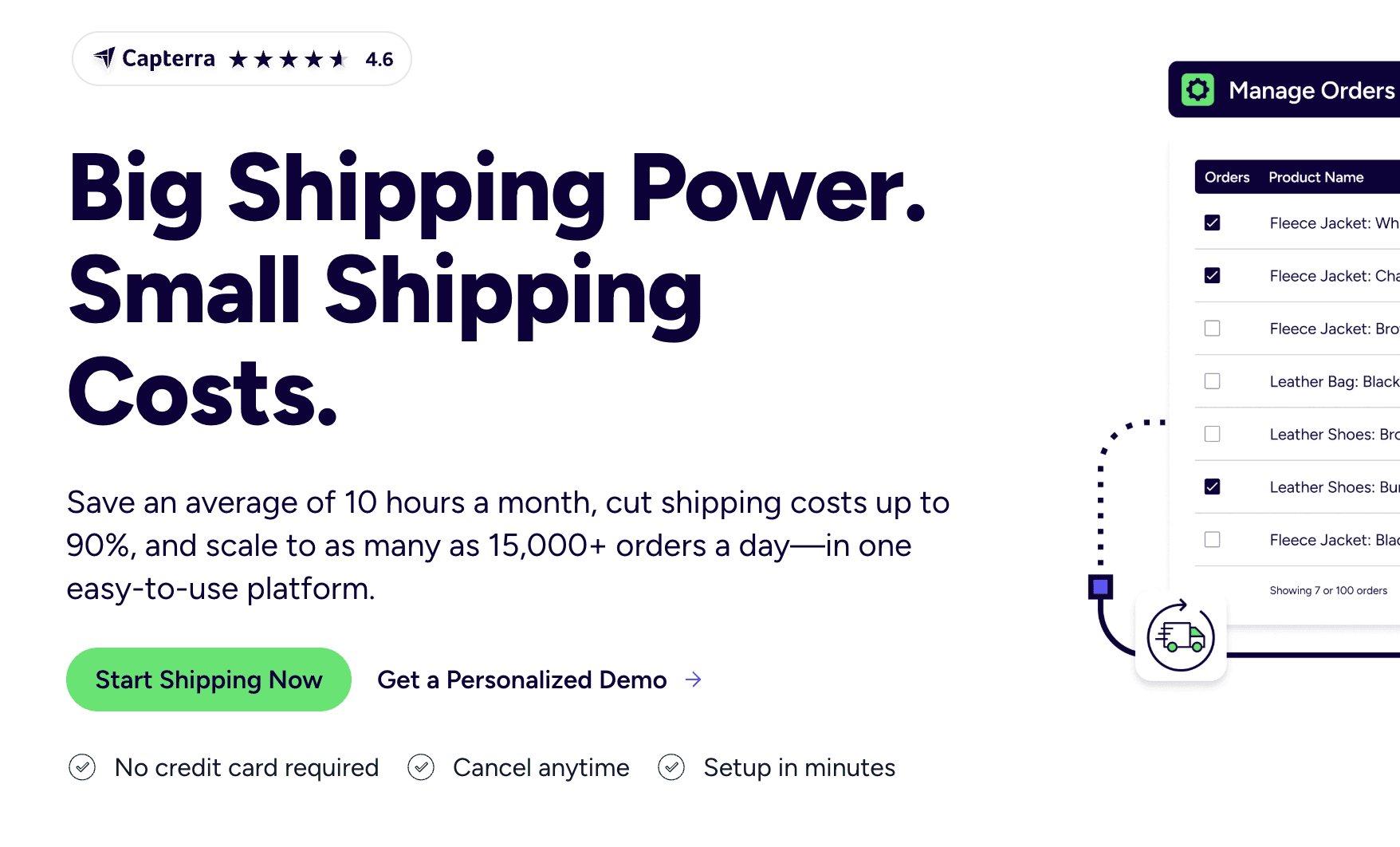
ShipStation connects your ecommerce store to shipping carriers (USPS, UPS, FedEx, DHL) and automates fulfillment. It's essential once you're shipping more than a handful of orders daily.
I've seen businesses save 5-10 hours per week on shipping logistics after implementing ShipStation. The automation rules are powerful; you can auto-assign carrier and service based on package weight, destination, and customer preferences.
Key features:
Connect unlimited sales channels and stores
Batch label printing
Automation rules for shipping method selection
Branded tracking pages
Returns management
Why it matters for ecommerce: Manual shipping management doesn't scale. ShipStation automates the entire workflow so you can focus on growing your online business.
Best for: Any ecommerce business shipping physical products. Essential at 20+ daily orders.
Pricing: $9.99-$159.99/mo based on monthly shipments
QuickBooks Commerce - Inventory Management
QuickBooks Commerce (formerly TradeGecko) handles inventory management across multiple channels, ensuring you don't oversell products and providing real-time visibility into stock levels.
The problem it solves: You're selling on your website, Amazon, and Instagram. Without proper inventory management, you sell your last unit on three platforms simultaneously. QuickBooks Commerce syncs inventory across all channels instantly.
Why it matters for ecommerce: Inventory accuracy directly affects customer satisfaction. Overselling damages trust; underselling leaves money on the table.
Best for: Multi-channel sellers managing inventory across marketplaces and their own ecommerce site.
Pricing: Contact for pricing (typically $300-$800/mo)
7. SEO & Content Tools
SEMrush - SEO & Competitive Analysis
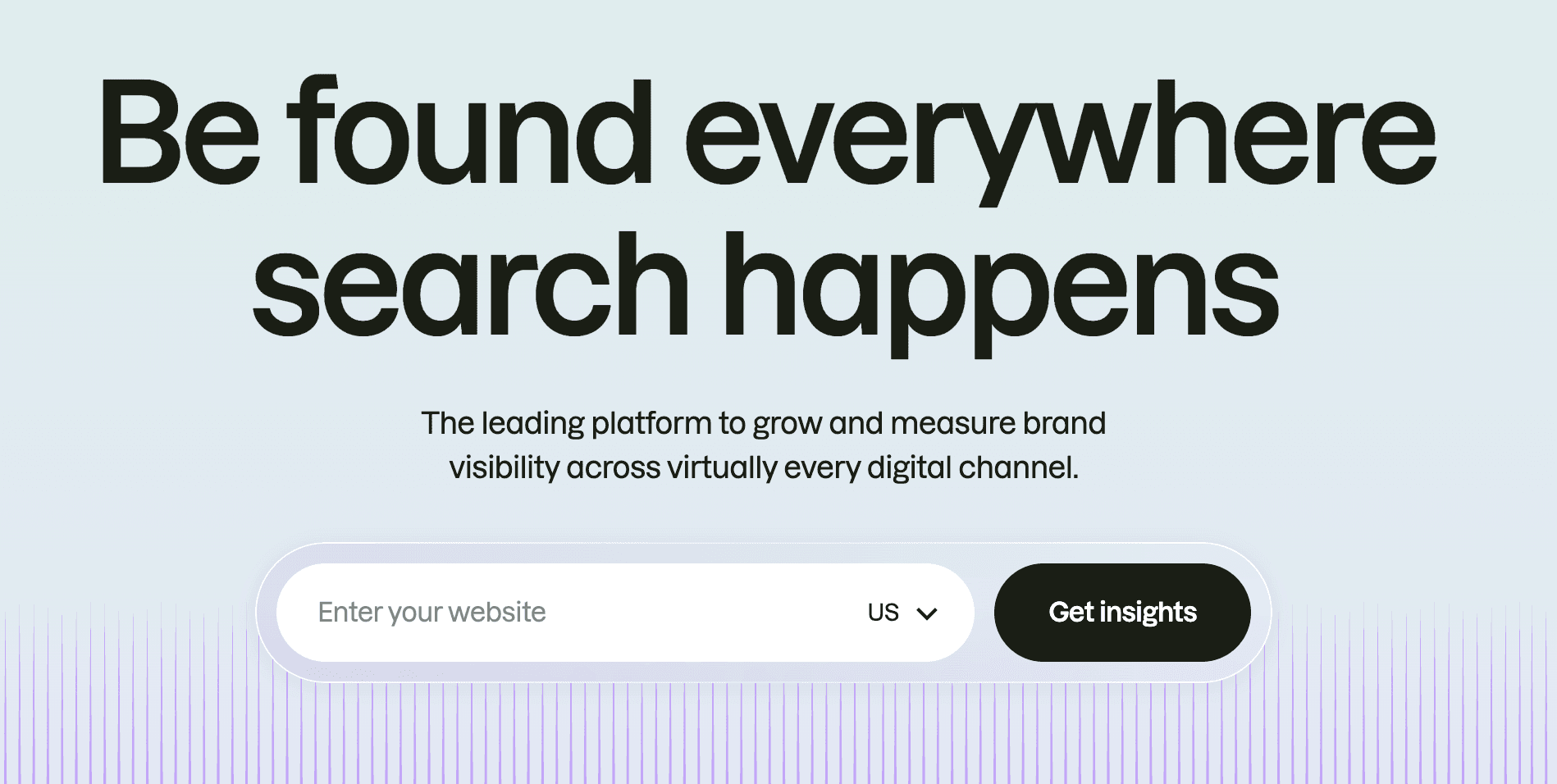
SEMrush is a comprehensive SEO platform handling keyword research, competitive analysis, backlink tracking, and rank monitoring.
Here's my workflow: I use SEMrush for traditional search engine visibility and AIclicks for AI search visibility. They're complementary, not competitive. SEMrush shows you what keywords to target for Google; AIclicks shows you how AI engines present your brand when people ask for product recommendations.
Key features:
Keyword research with search volume and difficulty
Competitor analysis (see their top pages and keywords)
Backlink analysis and outreach
Site audits for technical SEO issues
Position tracking
Why it matters for ecommerce: If you're investing in content marketing and organic search, SEMrush provides the data to compete effectively. The built-in SEO tools help identify opportunities competitors are missing.
Best for: Ecommerce brands investing in content marketing and organic search, especially those competing for competitive product category keywords.
Pricing: $139.95-$499.95/mo (AI visibility tracking is $99/mo add-on)
8. Social Media & Content Tools
Buffer - Social Media Posts Scheduling
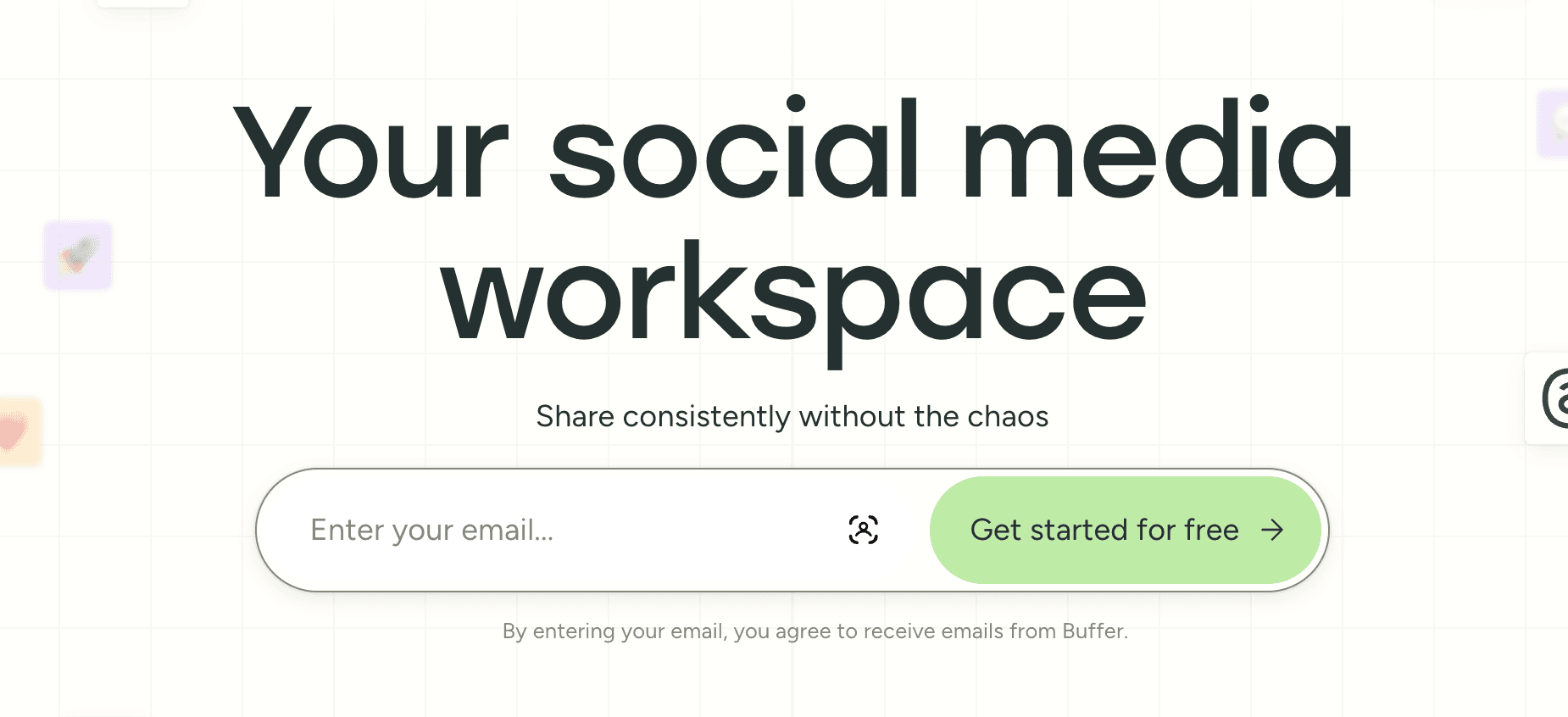
Buffer lets you schedule social media posts across Facebook, Instagram, Twitter, LinkedIn, and Pinterest from one user-friendly interface.
Why I like Buffer: It's not trying to be everything. It does scheduling and basic analytics exceptionally well. For most ecommerce brands, that's sufficient for social media management without overwhelming complexity.
Best for: Small businesses managing social media posts without a dedicated team. The intuitive interface makes it accessible.
Pricing: Free for 3 channels, then $6-$120/mo
Canva - Visual Content Creation

Canva is a design tool making it easy to create social media posts, product images, email headers, and marketing materials—even without design experience.
The reality: You don't need a professional designer for every social post. Canva's templates and drag-and-drop interface let you create professional-looking content in just a few clicks.
Why it matters for ecommerce: Visual quality affects perceived brand value. Canva democratizes design, letting small businesses compete visually with larger brands.
Best for: Every ecommerce business. Even with designers on staff, Canva is useful for quick edits and social content.
Pricing: Free, Pro at $12.99/mo
9. Conversion & Automation Tools
Privy - Email Capture & Popup Tools
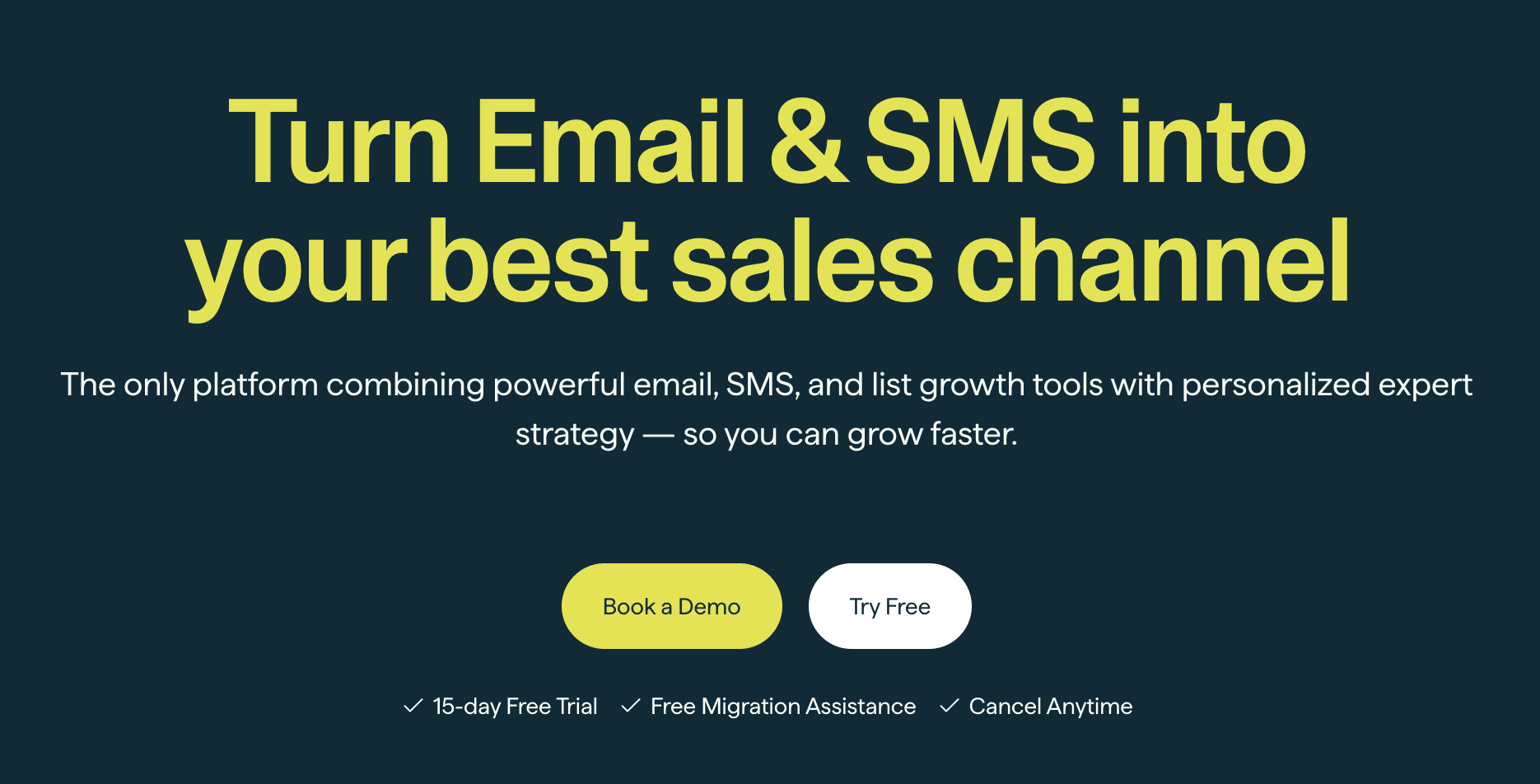
Privy creates popups, banners, and flyouts to capture email addresses and reduce cart abandonment. It's focused on converting anonymous visitors into contacts.
The strategy: Exit-intent popups offering 10-15% off can capture 2-5% of exiting visitors. That's found money, people who would have left without sharing contact information.
Why it matters for ecommerce: Your email list is your most valuable marketing asset. Privy helps grow it aggressively while visitors are most engaged.
Best for: Stores building email lists and reducing bounce rates, especially newer ecommerce sites focused on lead generation.
Pricing: Free up to 100 contacts, then $15-$45/mo
Optimizely - A/B Testing Platform
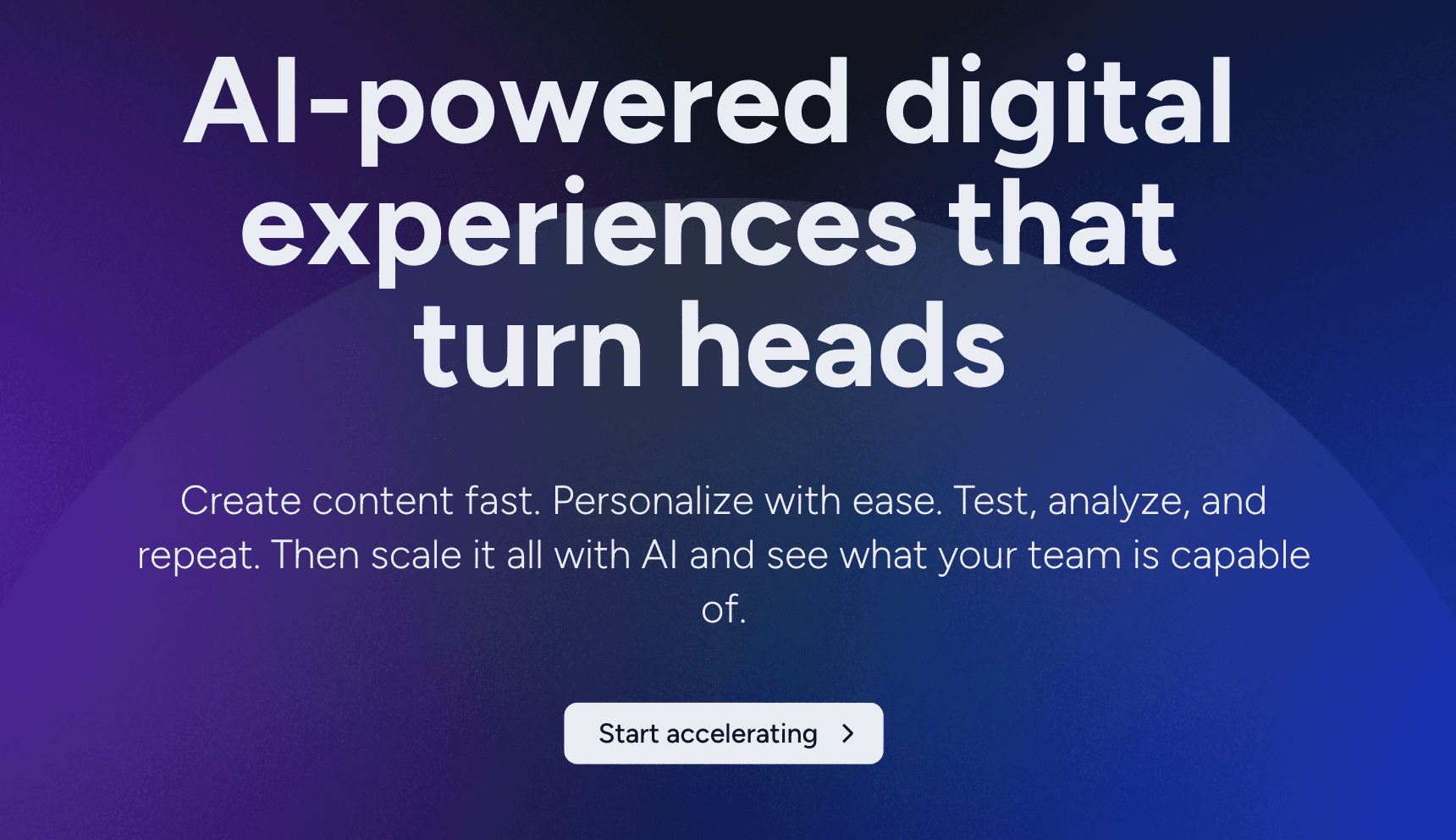
Optimizely lets you run A/B tests on your ecommerce site to improve conversion rates. Test different headlines, layouts, call-to-action buttons, and checkout flows.
Important caveat: Don't start A/B testing until you have meaningful traffic (5,000+ monthly visitors minimum). Otherwise, tests take too long to reach statistical significance.
Why it matters for ecommerce: Small conversion improvements compound dramatically at scale. A 0.5% conversion increase on a store doing $1M annually is $5,000 in additional revenue.
Best for: Established stores with traffic who want to systematically boost sales through testing.
Pricing: Contact for pricing (typically $50,000+/year for enterprise)
10. AI & Emerging Tools
ChatGPT/Claude - Product Description Generation
AI tools like ChatGPT and Claude can generate product descriptions at scale. Feed them product specifications and brand voice guidelines, and they'll write unique descriptions.
My approach: Use AI for first drafts, then edit ruthlessly for accuracy and brand voice. Never publish AI content without human review, especially for product claims and specifications.
Why it matters for ecommerce: Large catalogs need unique product descriptions for SEO. Writing them manually is time-prohibitive. AI tools make it feasible.
Best for: Stores with large catalogs (100+ products) needing unique descriptions, brands selling physical and digital products that require detailed specifications.
Pricing: ChatGPT Plus $20/mo, Claude Pro $20/mo
How to Build Your Ecommerce Tech Stack (My Framework)
After reviewing these options, here's my proven framework for building the right tool stack:
Phase 1: Foundation (Months 0-3)
Essential tools:
Ecommerce platform (Shopify, WooCommerce, or BigCommerce)
Payment gateway (Stripe + PayPal)
Google Analytics
One email marketing platform (Omnisend for beginners, Klaviyo if data-savvy)
Budget: $150-$300/month
Goal: Get your online store live and start collecting customer data. Focus on learning your customer behavior before adding complexity.
Phase 2: Growth (Months 3-12)
Add these tools:
CRM (HubSpot free tier or paid)
Customer support platform (Gorgias if on Shopify)
Shipping automation (ShipStation)
Basic SEO tools (SEMrush or Ahrefs)
Social media scheduling (Buffer)
Budget: $400-$700/month
Goal: Professionalize operations and improve customer experience. Start tracking competitive positioning.
Phase 3: Optimization (Year 2+)
Advanced additions:
AI search visibility tracking (AIclicks)
Advanced analytics (Hotjar for customer feedback)
Inventory management (if multi-channel)
A/B testing platform
Marketing automation expansion
Budget: $800-$1,500/month
Goal: Maximize efficiency and capture market share. Understand how customers discover you across all channels, including AI-powered search.
The 2026 Ecommerce Reality: AI Changes Customer Discovery
Here's what most ecommerce tool guides completely miss: customer discovery has fundamentally shifted in 2026.
Your potential customers aren't just Googling "best wireless headphones under $200" anymore. They're asking ChatGPT, "What are the most comfortable wireless headphones for someone with glasses who works from home?" or telling Perplexity, "Find me noise-canceling headphones with at least 30-hour battery life, preferably under $200."
These AI assistants make personalized recommendations based on vast training data and real-time search, and most ecommerce brands have zero visibility into whether they're being mentioned at all, let alone how they're being described.
This is why we built AIclicks.
Traditional analytics tools show you what happens after someone reaches your ecommerce site. SEO tools show you where you rank in Google search results. But neither tells you how AI search engines present your brand when people ask for product recommendations in natural language.
I've watched this shift firsthand. Ecommerce brands spending $50,000/month on Google Ads have no idea that ChatGPT mentions their competitor 3x more often when users ask category questions. That's a massive blind spot affecting customer acquisition costs and market share.
The data backs this up: By late 2026, AI platforms will account for over $20 billion in ecommerce revenue globally. That number is growing exponentially. If you're not tracking how AI engines discover and recommend your products, you're missing a channel that's rapidly becoming as important as Google was in 2010.
If you want to learn more, watch this video where we explore a real use case and share the results:
Choosing the Right Ecommerce Tools: My Final Advice
Don't try to implement everything simultaneously. Tool bloat kills more ecommerce businesses than missing features. I've consulted with brands paying for 30+ subscriptions when they actively use 8 effectively.

Ask yourself these questions before adding any tool:
1. What specific problem does this solve?
Don't add tools for theoretical problems. Focus on real pain points in your business operations.
2. Does it integrate with your core platform?
Disconnected tools create data silos and manual work. Prioritize native integrations with your ecommerce platform.
3. Can you measure ROI?
If you can't tie a tool to revenue, customer satisfaction, or measurable time savings, seriously reconsider it.
4. Do you have bandwidth to implement properly?
A powerful tool implemented poorly is worse than a simple tool used well. Be honest about your team's capacity.
5. What's the switching cost?
Some tools are easy to try and replace (social media scheduling). Others create lock-in (CRM with years of customer data, existing WordPress site infrastructure). Choose carefully for high-switching-cost categories.
The brands winning in 2026 aren't those with the most sophisticated tech stacks. They're the ones that:
Understand their customers deeply through clean customer data
Track the right metrics ruthlessly
Optimize the channels that actually drive growth
Monitor both traditional discovery (Google, social) and modern discovery (AI search)
That means having customer data that flows seamlessly between marketing, sales, and support tools. It means choosing ecommerce software that scales without forcing expensive migrations later. And critically, it means tracking how customers discover you before they reach your site—including through AI-powered recommendations.
Ready to understand how customers discover your ecommerce brand in 2026?
While most ecommerce brands focus exclusively on Google Analytics and traditional SEO tools, they're missing a fundamental shift in customer behavior. AI search engines are increasingly where discovery happens—especially for product recommendations and purchase decisions.
AIclicks tracks your brand mentions across ChatGPT, Perplexity, Claude, Gemini, and other major AI platforms, giving you actionable insights into how AI presents your products compared to competitors. If you're serious about understanding your complete customer journey in 2026, this is the missing piece of your analytics stack.
Start tracking your AI visibility today at AIclicks.io and discover exactly how AI search engines talk about your ecommerce brand.
Frequently Asked Questions
Do I need all these ecommerce tools as a beginner?
No. Start with your ecommerce platform, payment processing, Google Analytics, and one email marketing tool. That's $100-$200/month covering essential needs. Add specialized tools only when specific problems emerge—not before you actually need them.
What's the difference between ecommerce platforms and ecommerce tools?
Your ecommerce platform (Shopify, WooCommerce, BigCommerce) is the foundation—it handles your storefront, products, checkout, and basic inventory management. Ecommerce tools are specialized solutions extending functionality in specific areas like email marketing, customer support, analytics tools, or inventory management.
Which tools integrate best with Shopify?
Shopify has the most mature app ecosystem. Gorgias (support), Omnisend/Klaviyo (email marketing), Yotpo (reviews), Privy (popups), and ShipStation (shipping) all have native Shopify integrations. Most tools on this list offer direct Shopify connections.
Should I use an existing WordPress site or start fresh with Shopify?
If you have an established WordPress website with significant organic traffic and built-in SEO tools working well, WooCommerce makes sense, and you keep that SEO equity. If you're starting from scratch or your WordPress site isn't driving business, Shopify's simplicity usually wins. The time savings on technical management are substantial for small businesses.
How do I track if my ecommerce brand appears in AI search results?
This is exactly what AIclicks does. We monitor ChatGPT, Perplexity, Claude, Gemini, and other major AI engines for mentions of your brand, track sentiment and context, and provide competitive intelligence. Traditional SEO tools track Google rankings, but they don't cover AI-powered search, which is increasingly where product discovery happens in 2026.
What are the most important ecommerce features to prioritize?
Mobile-responsive checkout (70%+ of traffic is mobile), multiple payment options including PayPal, email capture and marketing automation, basic SEO structure, customer data integration across tools, and inventory management for physical products. Everything else is secondary until you have these fundamentals working properly.



Any questions left?
Book a call here: