AI Competitor Monitoring
Track Competitors Inside AI Answers
Find out which brands ChatGPT, Perplexity, and Gemini name when your buyers ask, and exactly which prompts you're absent from. Competitor visibility, share of voice, and position, measured on the questions you already track.
COMPETITOR VISIBILITY ACROSS EVERY MODEL YOU TRACK
CHATGPT
" height="16px" id="fvSweaOBo" transform="translate(1 0)" width="14px"/></svg>)
PERPLEXITY
" height="16px" id="hHS98fTxZ" width="16px"/></svg>)
CLAUDE
" height="15.360666565427872px" id="HZPvvPBv7" transform="translate(0 0.5)" width="16px"/></svg>)
GROK
What is it?
Competitor Discovery
Brands models already treat as your alternatives, surfaced from your prompts
Brand Rankings
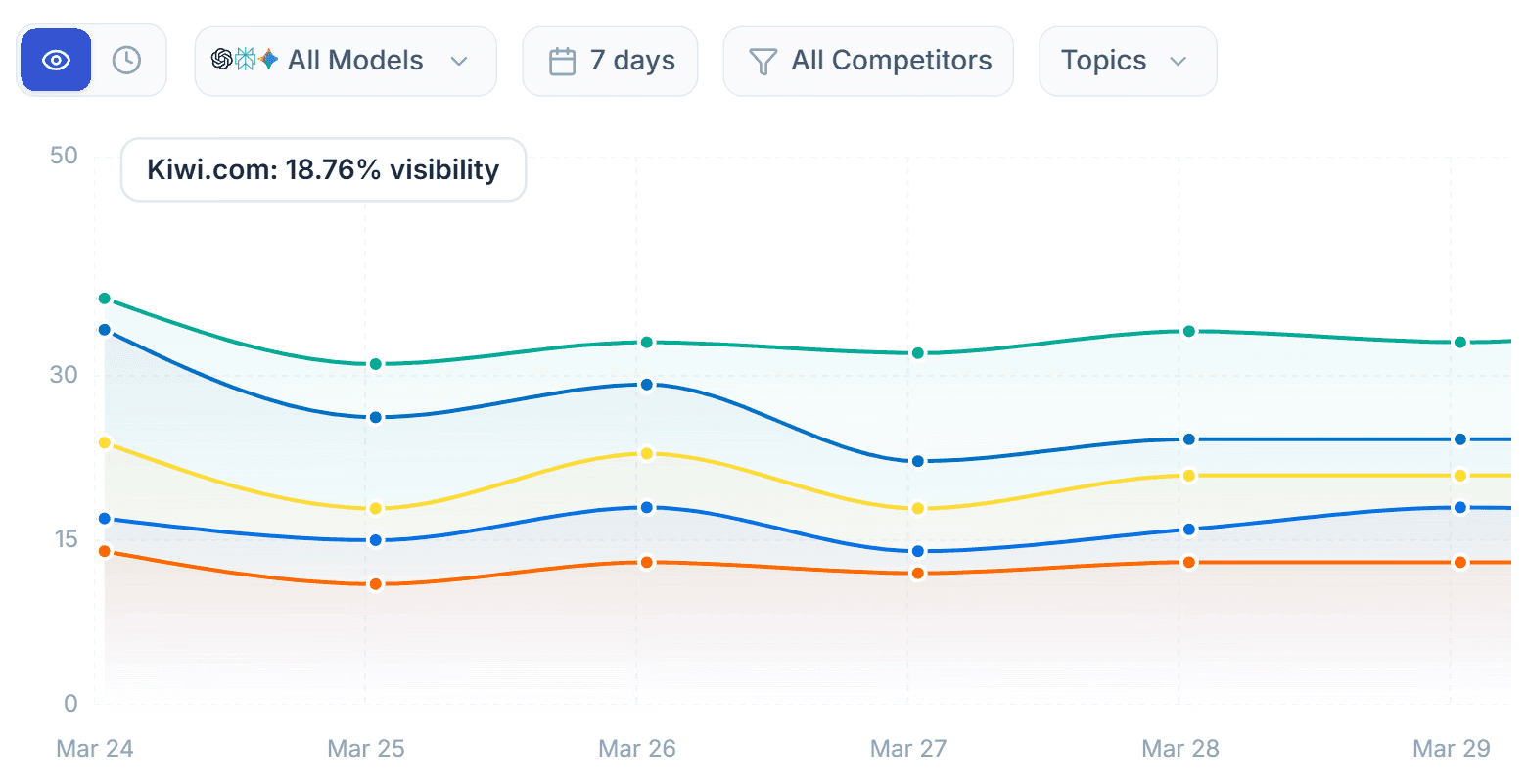
Visibility, share of voice, and position for every brand, filtered by model
Coverage gaps
The exact prompts where a competitor appears and you don't
Uncontested prompts
Questions where nobody is answering consistently yet
Core capabilities
AI competitor monitoring use cases
Six capabilities covering who you're actually up against, where they beat you, and which questions are still open.
1
Competitor Discovery
Suggestions come from brands appearing frequently across your prompts and from ones models treat as semantically similar to you. Add from the list, or search for a competitor that hasn't surfaced yet.
2
Brand Rankings
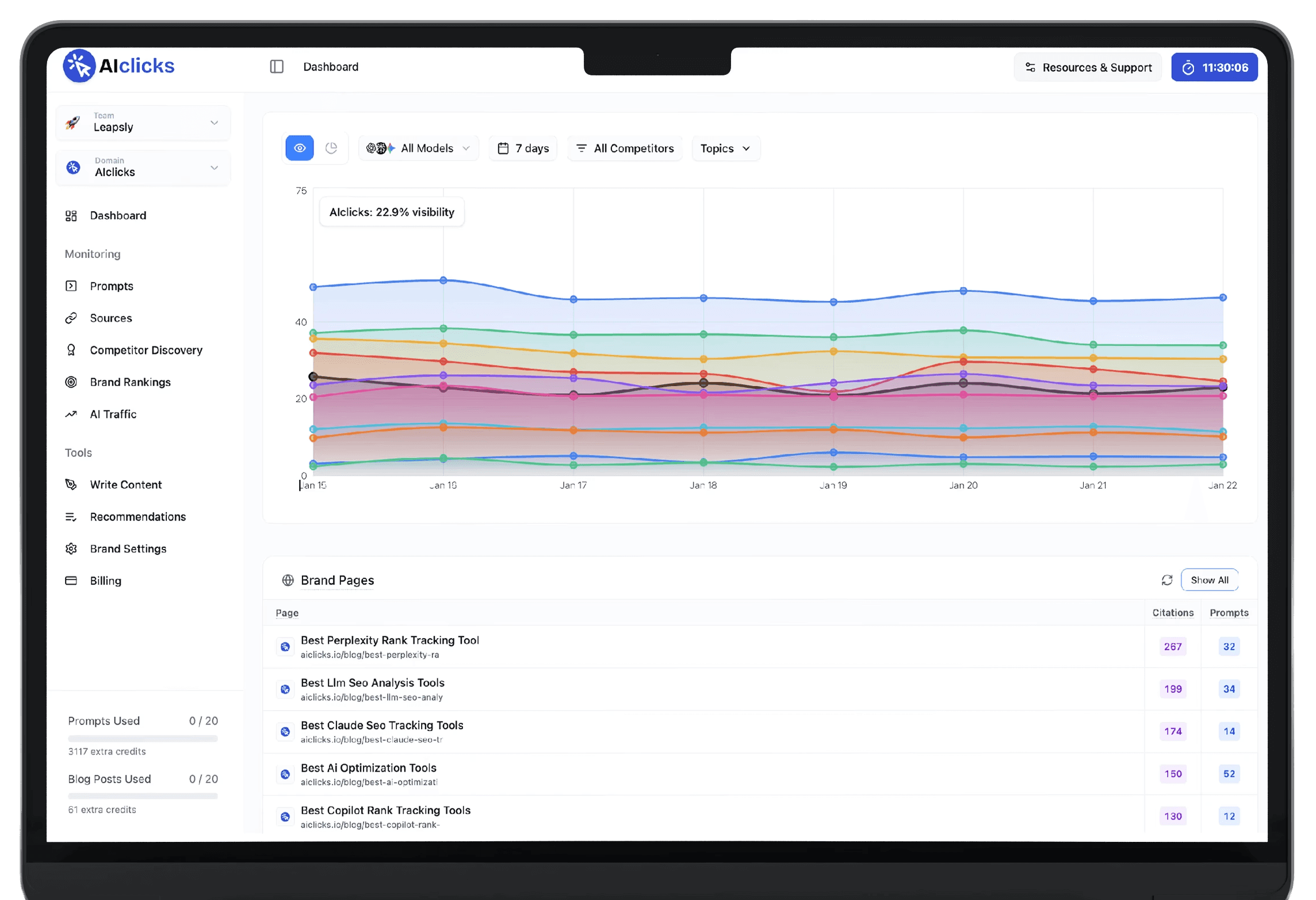
See every tracked brand ranked at industry level on visibility and share of voice, with filters for model and timeframe, so a one-week spike doesn't read like a real shift.
3
Coverage Gap Lists
Prompts mentioned against total prompts shows how wide a competitor's reach is. The prompts where they appear and you don't become your list, with no interpretation needed.
4
Per-Model Breakdown
A competitor dominating one model but not others is a model-specific gap you can close. Your brand strong on one model only, while they're consistent everywhere, means your position is fragile.
5
Uncontested Prompts
Some questions have no clear winner. Where everyone appears inconsistently or in weak positions, there's room to become the default answer, which is cheaper than displacing an incumbent.
6
Position and Mentions
Low visibility with acceptable share of voice usually means you're named but rarely near the front. Position and mention counts tell you which of the two problems you have.
FREE TOOL
Try out our feature using a free tool
How it works
How AI competitor monitoring works?
AIclicks finds the competitive set, ranks it by model, and hands you the prompts you're missing from.
1

Add the brands that already appear
Open Competitor Discovery and add your direct competitors first, then the brands showing up most often in your prompts, even the adjacent ones. Search adds anything missing.
2

Read the rankings by model and prompt
Brand Rankings shows visibility, share of voice, and position across every tracked brand. Filter by model and timeframe to separate a short spike from a durable shift.
3

Pick the prompts worth winning
You'll see prompts where a competitor is strong and you're missing, and prompts where nobody shows up consistently. Start with the second kind, they're easier.
Who it's for
Built for teams who need to know who AI names instead of them
SEO Leads & Managers
01

The prompts you're losing, listed
Agencies & Consultants
02

A ranked competitive set per client
Growth & Marketing Leaders
03

Share of voice, tracked by model
Why AIclicks
Where they beat you, prompt by prompt
Most tools give you a score and leave the interpretation to you. AIclicks names the prompts you're missing from, the models where it's happening, and the questions nobody has claimed yet.
✓
✓
✓
✓
✓
✓
✓
✓
FAQ
What is AI competitor monitoring?
AI competitor monitoring tracks how AI models mention competing brands when they answer the prompts you care about. Rather than analysing what a competitor publishes on their own site, it measures where and how ChatGPT, Perplexity, Gemini, and other models actually surface them, using visibility, share of voice, position, and mention counts.
How do I know which competitors to track?
Competitor Discovery suggests them for you, based on which brands appear frequently across your prompts and which ones models treat as semantically similar to you. Start with your closest direct competitors, then add the brands showing up most often even if they're adjacent rather than direct. That gives you a cleaner baseline.
What if a competitor doesn't appear in the suggestions?
Add it by search. Once added, it's tracked across your full prompt set the same way as any suggested brand, and it starts contributing to rankings and share of voice from that point forward.
What's the difference between visibility and share of voice?
Visibility measures how often models surface a brand across your prompts. Share of voice measures how much of the total attention that brand takes relative to everyone else. Low visibility with acceptable share of voice usually means you're mentioned but not consistently near the front of the answer.
Can I see which specific prompts I'm losing?
Yes, and it's the most useful view in the feature. Prompt-level breakdowns list where a competitor appears and you don't, which gives you a content and outreach target list rather than a score to interpret.
Why does the per-model breakdown matter?
Because models read different sources. A competitor dominating one model and not the others points at a specific gap you can close. If you look strong on one model while competitors are consistent across all of them, your category presence is more fragile than the headline number suggests.
What are uncontested prompts?
Questions where no brand appears consistently, or where everyone shows up in weak positions. They're usually cheaper to win than prompts with an entrenched incumbent, so they're worth separating out from your defensive targets.
Can I remove a competitor later?
Yes. You control which brands affect your metrics, and removing one that's no longer relevant to your market applies to rankings and share of voice going forward.