

Reviewed by:
Matas Kibildis

Head of Growth @ AIclicks
Last updated:
Expert Verified

Free AI visibility audit
Ahrefs Brand Radar is a solid “starter” AI visibility product: it shows how any brand appears across AI responses, plus additional surfaces like YouTube and Reddit, and it’s available to free and paid Ahrefs users.
But if you want deeper AI visibility tracking (more AI platforms, better competitor benchmarking, workflow-level actionable insights, agency multi-client reporting, or enterprise controls), you’ll quickly end up looking for Ahrefs brand radar alternatives.
Below is a shortlist of the best options for tracking brand visibility in AI search, Google AI overviews, and other AI-powered search engines.
Comparison table
Tool | Best For | Coverage | Key Features | Strengths | Limitations | Pricing |
|---|---|---|---|---|---|---|
AIclicks | Teams that want tracking + an execution plan (especially agencies managing multiple brands) | Tracks prompts/mentions in major LLM-style engines (varies by plan/vendor listings) | Prompt discovery + tracking, audits, competitor insights, optimization workflow/action plan | More “do this next” than most visibility tools | Newer platform; plan details can vary by source | From $79/mo |
AI Peekaboo | Lightweight AI visibility monitoring + alerting for marketing teams | ChatGPT, Gemini, Perplexity, Google AI Overviews | Prompt library, daily tracking, visibility index, GEO audit, exports | Captures data from live AI interfaces, not APIs, so results match real user experience. Affordable plans with solid agency reporting features. | No content creation tools. API locked behind Grow plan. One brand per plan. | From $50/mo |
Peec AI | Clean dashboards for brand mentions + benchmarking | ChatGPT, Perplexity, Claude, Gemini (plus broader tracking depending on setup) | Visibility tracking, competitor benchmarking, optimization insights | Simple UX; strong “marketing teams” orientation | Less “guided execution” than some tools | From $89/mo |
Scrunch | Brand/PR teams who want multi-platform coverage + “agent” angle | ChatGPT, Claude, Gemini, Perplexity, Google AI Mode/Overviews, Meta | Prompt manager, citations tracking, page audits, agent traffic monitoring | Broad engine coverage + strong monitoring | Expensive vs. lightweight trackers | From $250/mo |
Profound | Enterprises that want deep research + data scale | Broad “answer engine” analytics (enterprise-focused) | Answer Engine Insights, agent analytics, prompt volumes, workflows | Great for big teams who need depth | Pricing not self-serve; heavier implementation | Custom pricing |
Conductor | Large orgs wanting traditional search + AI search in one platform | Enterprise AEO/SEO platform with AI visibility tracking | Unified SEO+AEO data, reporting, integrations (incl. Google data) | Enterprise workflow + governance | Not a point solution; cost scales | Custom pricing |
Semrush (AI Visibility Toolkit / Semrush One) | Teams already using Semrush who want AI layers on top | Tracks AI visibility + AI Overview metrics and competitive benchmarks | Prompt tracking, AI visibility metrics, competitive research, AI-readiness/site audit | Tight link to SEO workflows; good “one stack” option | Can get pricey at scale; best if you already live in Semrush | AI Visibility Toolkit $99/mo; Semrush One plans start around $199/mo. |
Authoritas (LLM brand visibility tracking) | Technical SEO teams wanting multi-engine tracking + methodology | Tracks “major LLMs and AI search engines” + crawling approach | Competitive insights, citations, reputation monitoring | Very explicit about multi-engine coverage + approach | Pricing not clearly published | Custom |
TL;DR
Best all-around alternative: AIclicks – strongest “track → audit → action plan” flow if your goal is to actually improve AI search visibility, not just measure it.
Best budget-friendly tracker: OtterlyAI – starts at $29/mo and covers the core engines (with add-ons for Gemini + Google AI mode).
Best for clean benchmarking dashboards: Peec AI – great for visibility snapshots and competitor benchmarking across major LLMs.
Best for PR/brand + broad coverage: Scrunch – strong multi-engine coverage + citations/page audits, but priced for serious teams.
Best enterprise stacks: Profound / Conductor / Semrush – pick these when you need scale, governance, integrations, and cross-channel reporting.
Also: if you’re wondering whether this category matters… Google said AI Overviews reached 1.5B+ users per month (as of Q1 2025). That’s a lot of buyer journeys happening within AI-generated answers instead of “10 blue links.” Check out this article to learn how to optimize your website for best AI results.
1) AIclicks: best Ahrefs Brand Radar alternative for teams that want results (not just charts)
If you’re looking at Ahrefs brand radar alternatives because you want to win more mentions (not merely count them), AIclicks is built for that. The positioning is very clear: discover the real prompts people ask, track whether your brand appears in AI responses, then run an audit that turns into a prioritized action plan.
Where AIclicks stands out in the AI visibility tool space is the “execution layer.” Most visibility tools stop at visibility data (mentions, citations, trend lines).
AIclicks leans into: what should we publish, fix, or get cited on next? That makes it especially useful for marketing teams and agencies managing multiple brands who need repeatable workflows: prompt clusters, competitor benchmarking, and practical recommendations to focus optimization efforts.
Strengths
Strong “prompt → mentions/citations → optimization” workflow (more actionable than pure trackers).
Designed around AI search optimization and “answer engine” style discovery (not only traditional search).
Weaknesses
As with many newer platforms, plan/coverage details can vary by listing source; confirm your required engines (e.g., Claude, Meta AI, Grok) in the current plan.
Pricing
AIclicks pricing starts at $79/month, but you can often get it for $39/month.
Check out this video where we share the exact strategy that took AIclicks from zero to #5 in AI visibility rankings in just 90 days:
2) AI Peekaboo: best for simple, affordable AI search visibility tracking
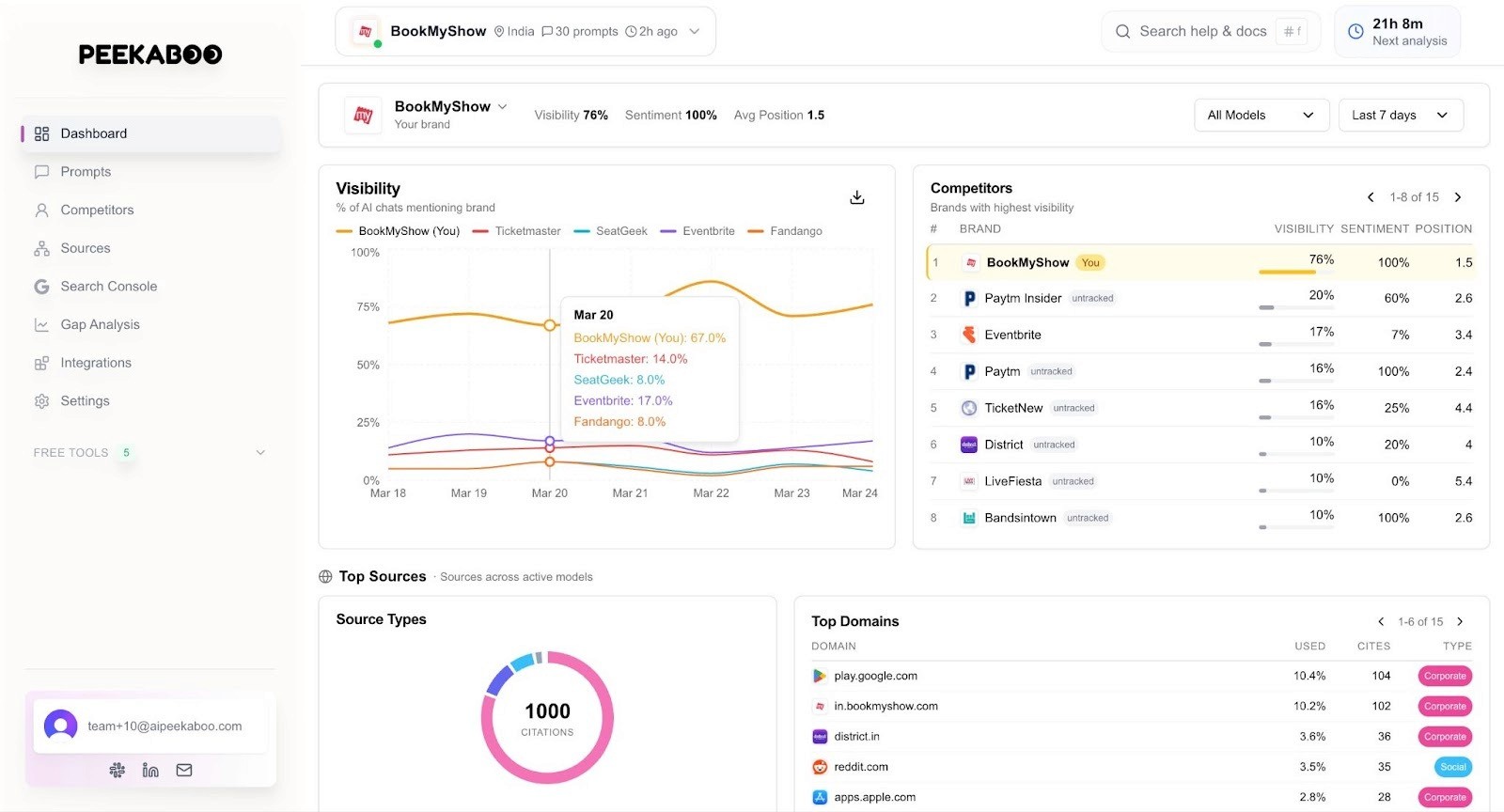
AI Peekaboo takes a different approach to AI search tracking. Instead of pulling data through APIs, it captures responses directly from AI model interfaces, so what you see in the platform matches what real users see in ChatGPT, Gemini, Perplexity, and Google AI Overviews. For brands and agencies that need prompt-level accuracy, that distinction matters.
Strengths
Brand mention tracking across ChatGPT, Gemini, Perplexity, and Google AI Overviews
Response data captured from live AI interfaces, not API simulations
AI Visibility Score with historical trend tracking to measure progress over time
Citation monitoring to identify which sources AI models reference alongside your brand
Competitor benchmarking built in, so you can compare your AI search presence against rivals
White-label reports and Looker Studio integration available on Grow plan and above
API access for connecting to your existing workflows (Grow plan and above)
14-day free trial with no credit card required
Drawbacks
Tracking and intelligence only, no content creation tools included
API access requires upgrading past the Starter plan
Each plan covers one brand, multi-brand management needs custom pricing
Who is it for
Startups, in-house teams, and agencies that want reliable AI visibility data at a price that makes sense. If your goal is to track where your brand shows up in AI responses, benchmark competitors, and report results to clients, Peekaboo delivers what Scrunch AI lacks on reporting depth and data accuracy.
3) Peec AI: best for competitor benchmarking dashboards
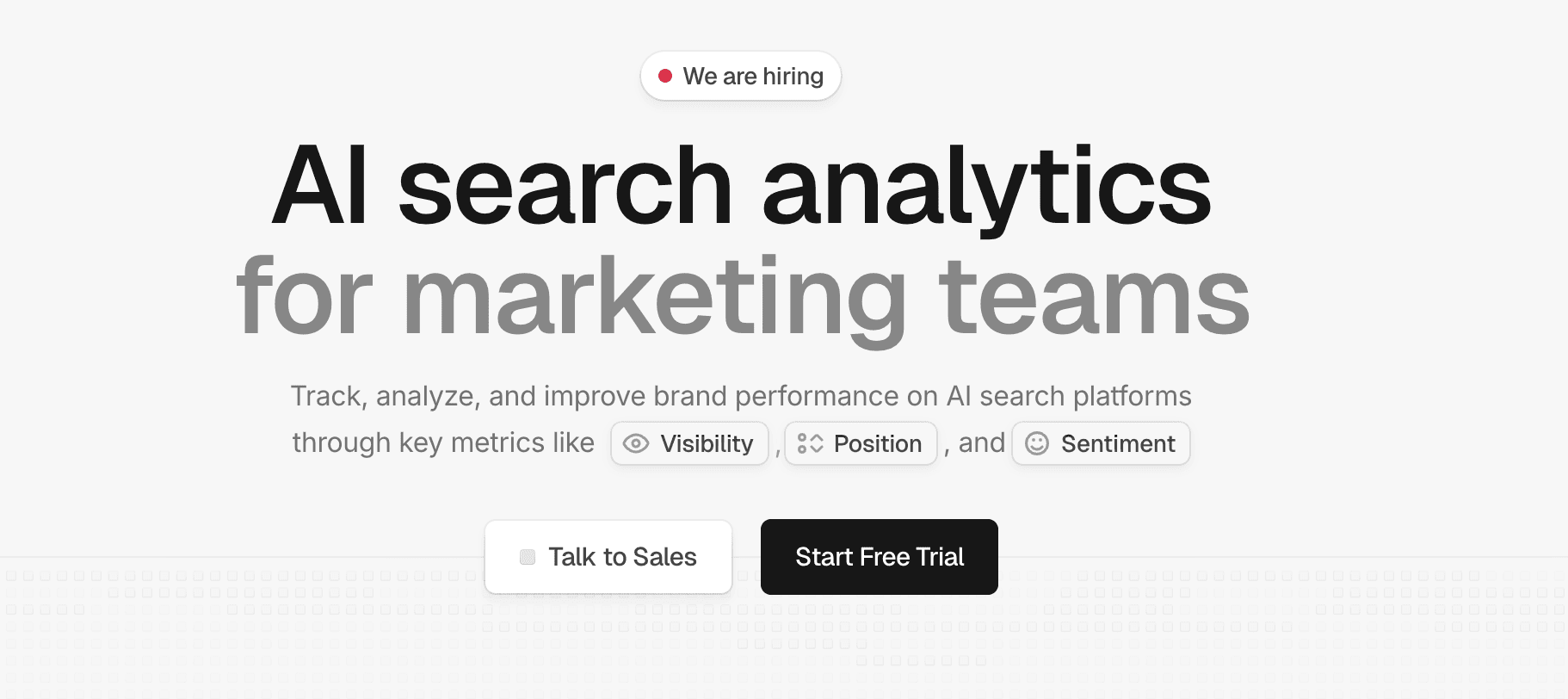
Peec AI is popular with teams who want a crisp view of brand performance across LLM-style engines, with an emphasis on benchmarking and trend tracking.
Their positioning is very “marketing team friendly”: analyze brand performance across ChatGPT/Perplexity/Claude/Gemini, track visibility, benchmark competitors, and optimize presence.
If Ahrefs Brand Radar feels limited (or too tied to Ahrefs), Peec is a strong alternative when your primary need is visibility data, how often your brand appears, which competitors show up instead, and what prompts drive those outcomes.
Strengths
Clear focus on competitor benchmarking and visibility snapshots across major models.
Good fit for teams that already have content/PR execution processes and just need reliable AI tracking inputs.
Weaknesses
If you want a more guided “do this next” layer (content optimization playbooks, prioritized fixes), you may need a separate workflow or tool.
Coverage and prompt limits are plan-dependent; confirm what you need (especially if you’re tracking multiple brands).
Pricing
Entry plans start around $89/mo with higher tiers as prompts scale, but verify current pricing directly (tools in this category change quickly).
4) Scrunch: best for multi-engine monitoring with “agent traffic” visibility
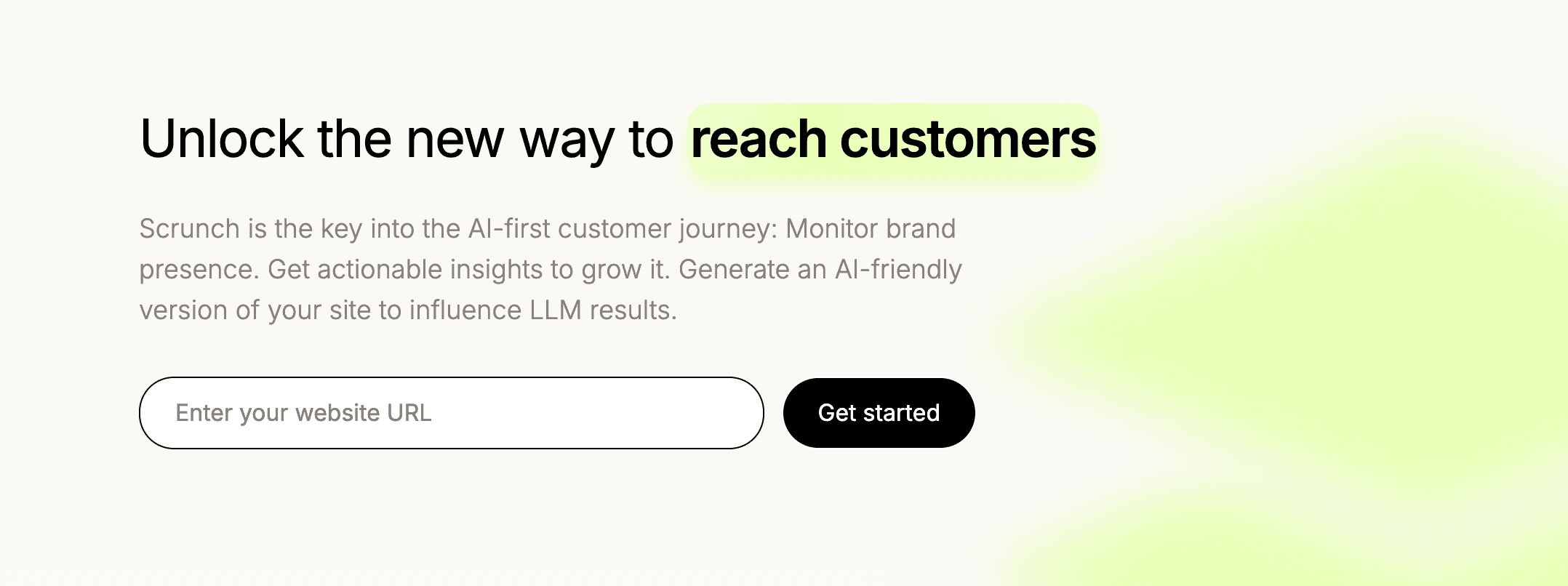
Scrunch is built for teams that care about how they show up across a wide range of AI surfaces, especially when your brand story needs to stay consistent, and you want to understand citations and downstream impact.
Scrunch explicitly lists coverage across ChatGPT, Claude, Gemini, Perplexity, Google AI Mode/Overviews, and Meta, and includes citations tracking, page audits, reporting, and “agent traffic monitoring” (useful if you’re trying to connect visibility to AI traffic).
Strengths
Broad multi-platform coverage with prompt management, plus persona-based monitoring.
Strong monitoring foundation: citations, audits, dashboards, and integrations, good for brand and growth teams.
Weaknesses
Price point is meaningfully higher than that of lightweight trackers.
Like many enterprise tools, the value is highest when you have enough prompts/brands to justify the platform.
Pricing
Starter is $250/mo billed annually (or $300 month-to-month); Growth is $417/$500; Enterprise is custom.
If you're looking for more options that compare to Scrunch, check out the Best Scrunch AI alternatives article.
5) Profound: best for enterprise-grade answer engine analytics
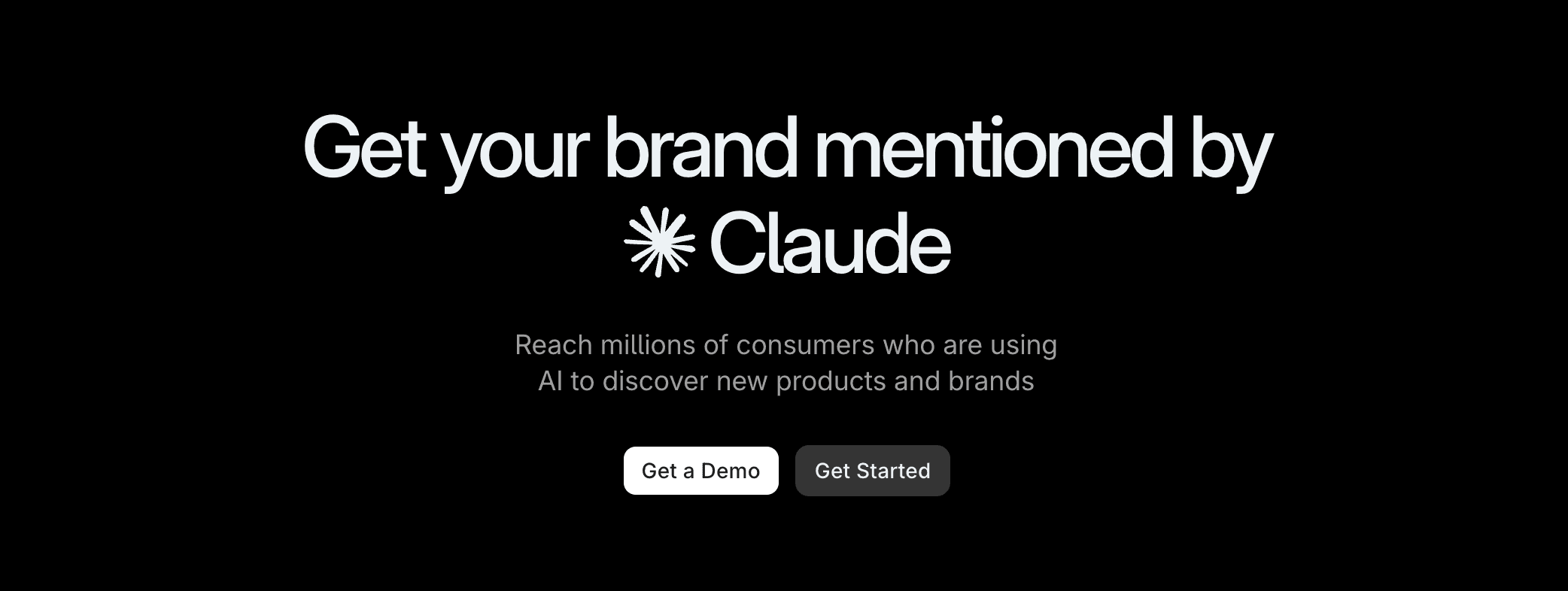
Profound is one of the most enterprise-leaning options in the AI visibility space. If your need goes beyond “are we mentioned?” into deeper research, analytics, and large-scale monitoring, Profound is usually on the shortlist.
They position the platform around monitoring modules like Answer Engine Insights, Agent Analytics, Prompt Volumes, and more.
That’s ideal when multiple stakeholders (SEO, brand, PR, product marketing) all want visibility into why your brand is (or isn’t) present and which sources are driving citations.
Strengths
Deep analytics orientation (better suited to big marketing orgs than solo operators).
Good fit when you need enterprise security/compliance and multi-team workflows.
Weaknesses
Not self-serve pricing; expect a demo and a sales process.
It can be overkill if you only need basic tracking and brand visibility for a small set of prompts.
Pricing
Expect custom/enterprise pricing via demo.
For a deeper look at options that compare to Profound AI, check the Profound alternatives article.
6) Conductor: best if you want AI visibility with classic SEO in one enterprise platform
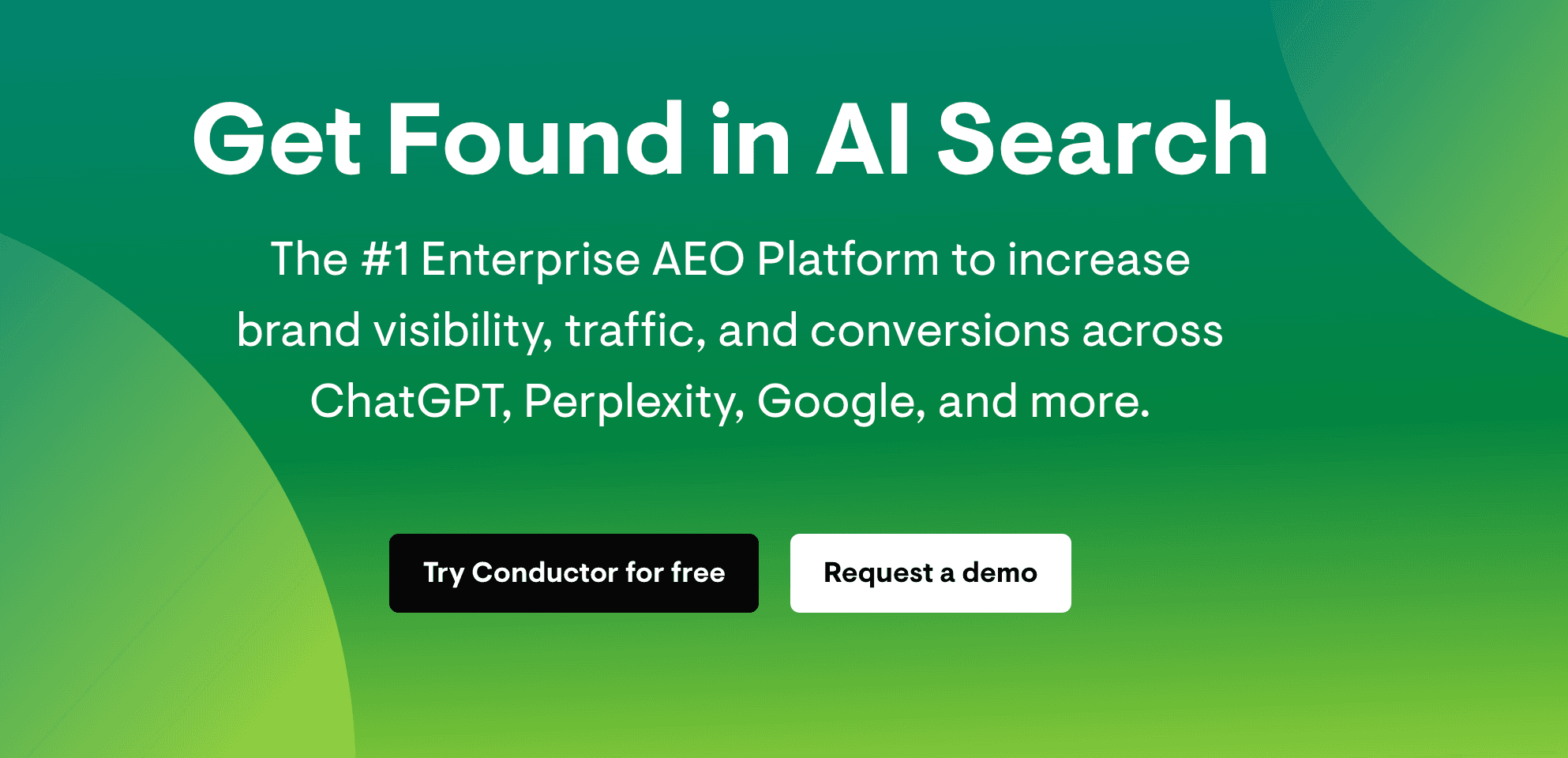
Conductor is positioned as an enterprise AEO platform that also covers traditional SEO and operational monitoring, so it’s less of a “Brand Radar replacement” and more of a full stack if you’re consolidating tools.
Conductor promotes AI search visibility tracking inside a broader platform that includes reporting, competitive insights, and integrations.
If your org wants governance, stakeholder reporting, and workflow integration (instead of stitching together multiple point solutions), Conductor is a serious contender.
Strengths
Enterprise-grade workflows and reporting are useful for large sites and many stakeholders.
Strong fit when AI visibility must tie into broader SEO, content ops, and performance measurement.
Weaknesses
Not “plug-and-play” like smaller tools; implementation and change management matter.
Not priced like a lightweight tracker.
Pricing
Pricing is quote-based.
7) Semrush AI Visibility Toolkit: best if you’re already in the Semrush ecosystem
If you’re already paying for Semrush, the AI Visibility Toolkit can be a logical “next step” because it adds AI visibility metrics, prompt tracking, competitor views, and AI-readiness style audits on top of an existing SEO workflow.
Semrush also provides specific guidance for tracking Google AI overview metrics like mentions and cited pages, which helps teams connect AI presence to keyword sets and competitor domains.
Strengths
Great “single stack” option if you want AI visibility + SEO toolkits together.
Strong for hybrid teams doing keyword tracking, audits, competitor research, and AI visibility in one place.
Weaknesses
Best value if you already use Semrush; otherwise, you may be paying for a broader suite than you need.
The depth of engine coverage can be more limited than specialized platforms (depending on your plan and region/language needs).
Pricing
Semrush states the AI Visibility Toolkit costs $99/month, with Semrush One bundles starting around $199/month.
8) Authoritas: best for teams that want explicit multi-engine coverage and methodology
Authoritas positions its AI Search / LLM tracking around competitive insights across engines like Google AI Overviews, Bing Copilot, SearchGPT, ChatGPT, Gemini, Claude, and more.
They also explicitly describe a dual approach: direct integrations with models plus crawling AI search interfaces to capture “real-world” results.
Strengths
Very clear about tracking “major AI engines” and how data is collected.
Useful for SEO teams who want to understand citations, sources, and reputation risk across engines.
Weaknesses
Less transparent self-serve pricing (compared to prompt-priced tools).
You’ll likely need a sales conversation for the right configuration.
Pricing
Authoritas promotes a free report and sales flow; pricing is typically custom.
Quick note: when Ahrefs Brand Radar is still “enough”
If you mainly need a quick pulse check, “Does our brand show up in AI answers, Reddit, and YouTube?” Ahrefs Brand Radar is genuinely useful, especially since Ahrefs says it’s available to free and paid users.
But once you need multi-engine prompt libraries, alerts, agency workflows, or a tight loop from insights to fixes, the alternatives above will usually outperform it.
Wrapping Up: Which Brand Radar Alternative Should You Choose?
Ahrefs Brand Radar is a useful starting point for monitoring brand mentions in AI, but the real differentiator in 2026 is what you do after you spot a change in AI search results. The best AI visibility tools don’t just show you screenshots of AI mentions; they help you find the visibility gaps, understand which sources drive AI citations, and turn that into a repeatable generative engine optimization plan that actually moves the needle.
That’s why AIclicks is the best Ahrefs brand radar alternative on this list. It goes beyond basic LLM visibility tools by combining practical AI visibility features (prompt discovery and tracking across AI search platforms) with an execution layer that tells your team what to fix next, so you can improve your brand’s AI visibility across multiple AI models and the AI assistants your buyers are actually using. Instead of “nice-to-know” dashboards, you get prioritization that helps protect and grow organic traffic as discovery shifts from traditional search to AI.
The other tools here are still great picks depending on your needs, some shine for enterprise features, some for lightweight monitoring, and others for broader reporting. But if your goal is to go from tracking → action → better presence in AI answers, AIclicks is the most complete choice.
Any questions left?
Book a call here: