" width="14px"><path d="M 13.864 5.629 L 13.3 5.629 L 13.3 5.6 L 7 5.6 L 7 8.4 L 10.956 8.4 C 10.379 10.03 8.828 11.2 7 11.2 C 4.681 11.2 2.8 9.319 2.8 7 C 2.8 4.681 4.681 2.8 7 2.8 C 8.071 2.8 9.045 3.204 9.786 3.864 L 11.766 1.884 C 10.516 0.719 8.844 0 7 0 C 3.134 0 0 3.134 0 7 C 0 10.866 3.134 14 7 14 C 10.866 14 14 10.866 14 7 C 14 6.531 13.952 6.073 13.864 5.629 Z" fill="rgb(255, 193, 7)" height="14px" id="H_YjfTNpn" width="14px"/><path d="M 0 3.742 L 2.3 5.429 C 2.922 3.888 4.429 2.8 6.193 2.8 C 7.264 2.8 8.238 3.204 8.979 3.864 L 10.959 1.884 C 9.709 0.719 8.037 0 6.193 0 C 3.504 0 1.172 1.518 0 3.742 Z" fill="rgb(255, 61, 0)" height="5.428500000000002px" id="PlkthQDhg" transform="translate(0.875 0)" width="10.959199999999996px"/><path d="M 6.232 5.581 C 8.04 5.581 9.683 4.889 10.925 3.764 L 8.758 1.931 C 8.032 2.483 7.144 2.782 6.232 2.781 C 4.411 2.781 2.865 1.62 2.283 0 L 0 1.759 C 1.159 4.026 3.511 5.581 6.232 5.581 Z" fill="rgb(76, 175, 80)" height="5.581099999999999px" id="WlnJ5gngE" transform="translate(0.7 8.4)" width="10.924899999999994px"/><path d="M 6.864 0.029 L 6.3 0.029 L 6.3 0 L 0 0 L 0 2.8 L 3.956 2.8 C 3.68 3.576 3.183 4.254 2.526 4.75 L 2.527 4.749 L 4.693 6.582 C 4.54 6.722 7 4.9 7 1.4 C 7 0.931 6.952 0.473 6.864 0.029 Z" fill="rgb(25, 118, 210)" height="6.589883930775992px" id="x_rSW275p" transform="translate(7 5.6)" width="7px"/></g></svg>)


Reviewed by:
Rokas Stankevicius

Founder @ AIclicks
Last updated:
Expert Verified

AI search has changed what “search” even means. Instead of scrolling through pages of links like traditional search engines, users now ask longer, more specific search queries in natural language, then refine with follow-up questions until they get a single, confident answer.
That shift creates two problems:
For users: picking an AI search engine that gives reliable, source-backed answers fast.
For brands: making sure you show up inside those answers, not just in classic Google search results.
Below are the top AI search engines (and one essential platform for AI search visibility) that are worth your time in 2026.
Comparison table
Tool | Best For | Coverage | Key Features | Strengths | Limitations | Pricing |
|---|---|---|---|---|---|---|
Google AI Mode | A default search engine experience for everyday web search | Google Search with Gemini powered AI Mode | Conversational answers, follow ups, Search Labs experiments, Deep Search | Massive coverage of websites and pages | Still experimental in places, AI responses can be wrong | From $4.99/mo |
Perplexity | Fast “answer engine” style research | Web with citations | Source citations, research workflows, multiple AI models | Great for quick answers and citations | Not built for brand monitoring or SEO workflows | From $20/mo |
ChatGPT Search | Conversational AI search with strong reasoning | Web plus your uploaded data | Web browsing, summaries, long documents support | Great context handling | “Fresh news” depends on browsing and citations vary | From $6/mo |
Copilot Search (Bing) | Microsoft ecosystem search and work research | Bing plus generative answers | Generative search blended with traditional search | Tight integration with Edge and Microsoft tools | Coverage varies by topic, UX changes often | From $9.99/mo |
Kagi | Ad free experience with high quality results | Web (paid, privacy focused) | No ads, customization, lenses, AI assistant options | Cleaner SERPs than many traditional search engines | Paid-only for real use, not built for AI visibility | From $5/mo |
Brave Search | Privacy first search with optional AI | Web | Private search, “Ask Brave”, premium ad-free search | Strong privacy posture | AI depth is lighter than research-first tools | From $3/mo |
You.com | App-style AI search with flexible workflows | Web plus apps | Multiple modes, chat plus search, productivity orientation | Nice balance for creators | Not as “Google-complete” for everything | From $15/mo |
TL;DR
If you mean "best AI search" for everyday searching, Google's AI Mode is the most natural replacement for traditional search, especially if Google is already your default.
If you want an answer engine that's strong for fact-checking and citations, Perplexity is a safe default.
If you want ad-free, high-quality link results, Kagi is the premium "clean web" pick.
If you're a brand trying to figure out whether you actually show up inside any of these tools' answers, that's a different question, covered in the tracking section below.
The best AI search tools (ranked)
1) Google AI Mode (Best default AI search engine for the web)
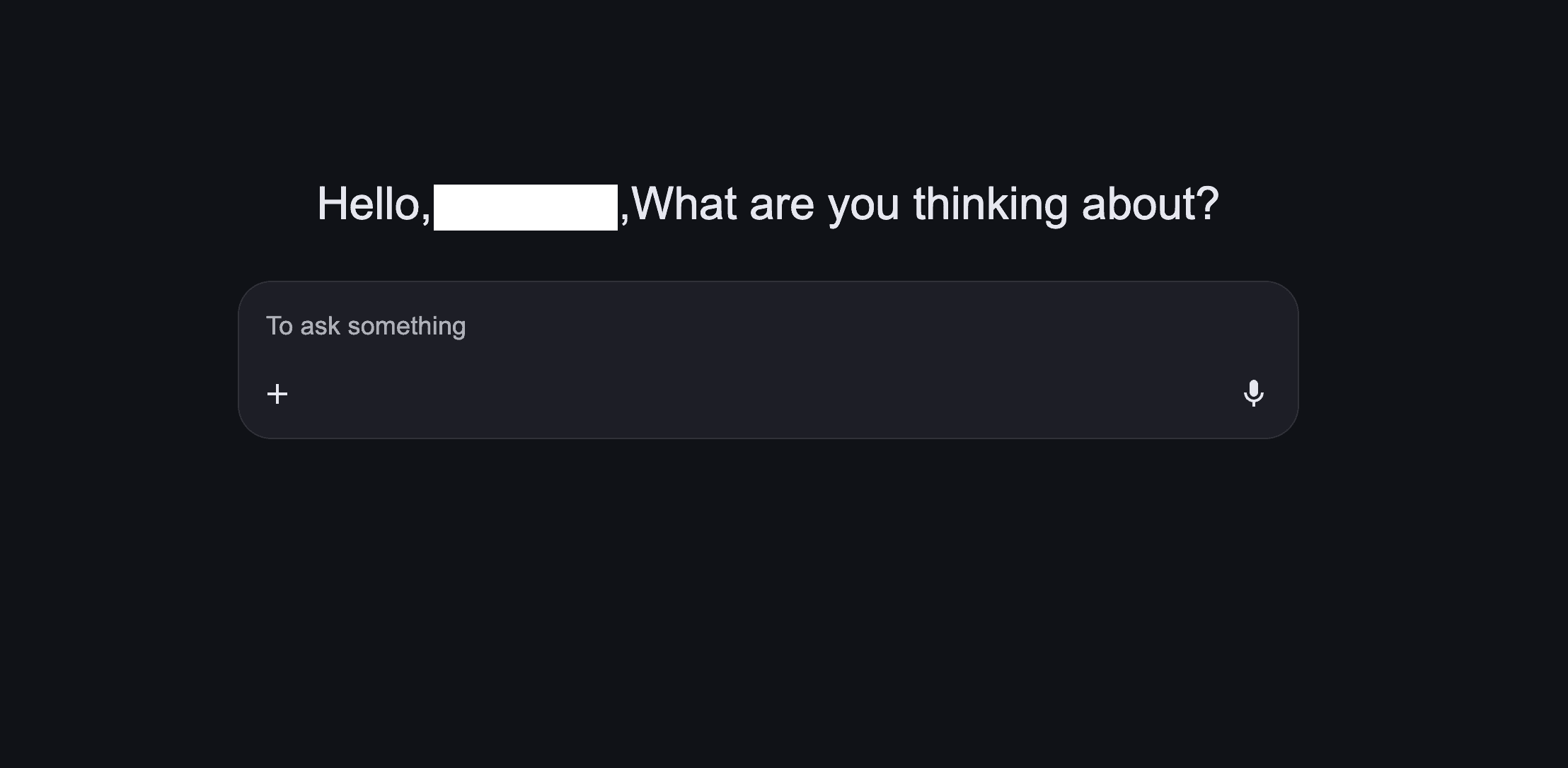
Google’s AI Mode brings conversational AI search directly into Google Search. You ask a question in natural language, get a synthesized answer, and keep refining with follow-up questions. Google positions this as a new way to explore the web, not just a summary box, and it is explicitly experimental through Search Labs.
Strengths:
Breadth. Google still has unmatched coverage of websites, pages, local intent, and “weird long tail” searches that other tools miss.
Familiar workflow. If Google Chrome is where your daily browsing happens, AI Mode feels like an upgrade to your existing habits.
Power-user upgrades. Paid plans increase access and include deeper AI features and higher usage limits.
Weaknesses:
AI Mode can still make mistakes, which matters if you are doing research questions that demand careful verification of sources and workflows. Also, availability and feature depth can vary by region and subscription tier, which makes it harder to standardize for teams.
Pricing: Free tier exists, AI Plus is $4.99/mo, Google AI Pro is $19.99/month, and AI Ultra is $249.99/month (pricing shown on Google’s subscriptions page).
2) Perplexity (Best for source-backed answers and deep research workflows)
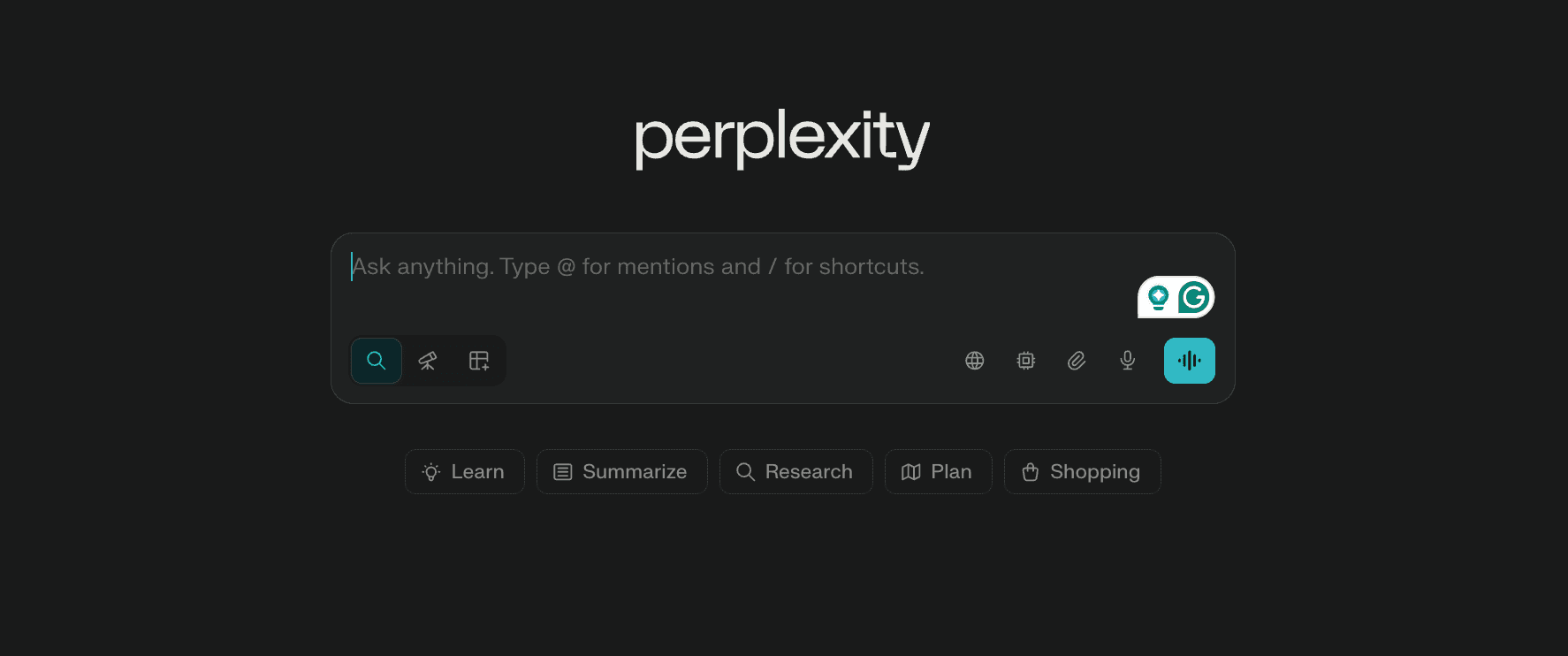
Perplexity is the “answer engine” that many people use as their daily alternative to traditional search engines. It is optimized for fast, readable answers with citations, so you can click through to verify sources and keep moving. If your main goal is to get relevant information quickly, it is one of the most consistent top AI search engines, especially when paired with a curated AI directory for discovering other tools.
Strengths:
Citation-first UX. It encourages fact-checking because links are part of the core experience, not an afterthought.
Great for synthesis. When you want a digestible format summary of a messy topic, Perplexity usually gets you 80 percent of the way there fast.
Good for research. It shines when you want to dive deeper across multiple angles without opening 25 tabs.
Weaknesses:
Like any AI-built system, you still need to sanity check sources and watch for mismatched citations. It also does not solve the “brand visibility in AI” problem: it helps users search, but it does not tell marketers where they appear or why competitors win. That is where AIclicks becomes the practical layer on top. The platform’s Perplexity visibility tracker lets you run a thorough visibility analysis and track performance over time.
Pricing: There is a free plan and paid tiers; paid plans start from $20/mo.
3) ChatGPT Search (Best for conversational search and complex context)
ChatGPT Search is a strong choice when your search intent is messy, multi-step, or requires context. It is less about “ten blue links” and more about iterating: ask, refine, ask again, then ask for a plan or a comparison. It is especially useful when you need the model to hold constraints in memory across multiple turns, or when you are combining web research with internal data you paste in.
Strengths:
Excellent conversational flow. Great for follow-up questions and narrowing a topic without restarting your search queries.
Strong synthesis. Handles long documents well when you are summarizing, extracting, or transforming content.
Flexible output. You can go from answer to outline to draft to checklist in one session.
Weaknesses:
For news-sensitive topics, you need to ensure that it is browsing the web and that citations are present and accurate. It is also not designed as an SEO tool, so it will not tell you how often your brand is mentioned across models or which sources drive citations. You use it to find answers, then you use AIclicks to win the answers market.
Pricing: Free access exists, with premium plans depending on region and offering.
4) Copilot Search in Bing (Best for Microsoft-first users)
Microsoft’s Copilot Search is positioned as a blend of generative and traditional search inside Bing. It is particularly useful if your workflow already lives in Edge and Microsoft tools, where search and “ask an assistant” are increasingly merged.
Strengths:
Hybrid search experience. You can move from AI answers to classic search results without switching tools.
Enterprise-friendly direction. Microsoft has leaned into citations and trusted sources as part of the product direction.
Bundled value. If you already pay for Microsoft 365 subscriptions, AI features are often included.
Weaknesses:
UX and naming change frequently, and coverage quality depends on the topic. Like other general search engines, it does not give you a clean, prompt-level view of where your brand appears in AI answers across multiple models. Also, if your goal is to rank across ChatGPT, Perplexity, Gemini, and more, you will still want a dedicated visibility layer.
Pricing: Microsoft 365 Personal is listed at $9.99/month and includes Copilot.
5) Kagi (Best ad-free search for people tired of SEO spam)
Kagi is the paid search engine for people who want a cleaner web. The big draw is the ad-free experience and user-funded model: you pay, so the incentives shift away from tracking and aggressive monetization. Kagi also offers AI-enhanced features depending on tier, but the core value is “better traditional search.”
Strengths:
Quality control. Results often feel less polluted by low-quality SEO pages.
Customization. You can tune what sources you trust and prioritize.
Fair pricing concept. Plans start low and scale to heavy usage.
Weaknesses:
It is paid, so it is harder to roll out broadly across casual users. Also, while it is great for searching, it is not a system for tracking how you appear in AI answers across platforms. That is a different job than “give me good links,” and AIclicks is purpose-built for that job.
Pricing: After a limited free trial, plans start at $5/month and go up to about $25/month for the top tier.
6) Brave Search (Best privacy-first free option with an upgrade path)
Brave Search is a strong pick if privacy is non-negotiable and you still want a modern search engine experience. Brave also offers AI-adjacent features like “Ask Brave,” and an optional subscription removes ads for a cleaner results page.
Strengths:
Privacy posture. Brave’s brand is built around reducing tracking.
Simple upgrade. If you want a cleaner SERP, Search Premium is straightforward.
Good daily driver. Fast enough for everyday web search.
Weaknesses:
For deep research, academic research, or careful source comparison, dedicated research tools often feel more precise. And for marketers, Brave will not tell you why you are not showing up in AI answers elsewhere, or which prompts you need to win.
Pricing: Brave Search Premium is $3.00/month (ad-free results).
7) You.com (Best “search plus apps” experience)
You.com sits in the middle of search and productivity. It is designed for users who want AI search plus workflows like drafting, summarizing, and exploring topics without leaving the interface. It is also a decent choice if you like switching between modes depending on whether you want links, answers, or creation.
Strengths:
Workflow-friendly. It is easier to move from research to output, like a blog draft or a summary.
Good for creators. Helpful when you are turning web research into content fast.
Feels flexible. Nice balance between classic search and AI answers.
Weaknesses:
It is not the most complete “everything index” compared to Google, and it is not a visibility analytics layer for brands. If your KPI is “show up in AI answers across platforms,” you still need tracking and recommendations, not just a place to search.
Pricing: You.com shows plans starting around $15/month (annual billing shown).
How to track your brand's visibility across these AI search engines
None of the seven tools above are built to answer a different, and increasingly urgent, question: is a brand actually showing up when someone asks ChatGPT, Perplexity, Gemini, or Google AI Overviews about a topic it should be part of? Using an AI search engine and being visible inside one are two separate jobs, and the second one needs its own tooling.
That's the layer AIclicks is built for. Rather than functioning as a search engine itself, it tracks the real prompts people ask across AI platforms, then shows where a brand appears, where competitors are winning instead, and what to fix. Coverage spans ChatGPT, Perplexity, Gemini, Google AI Overviews, and Claude, among other tracked engines.
A few things worth knowing about how it works in practice:
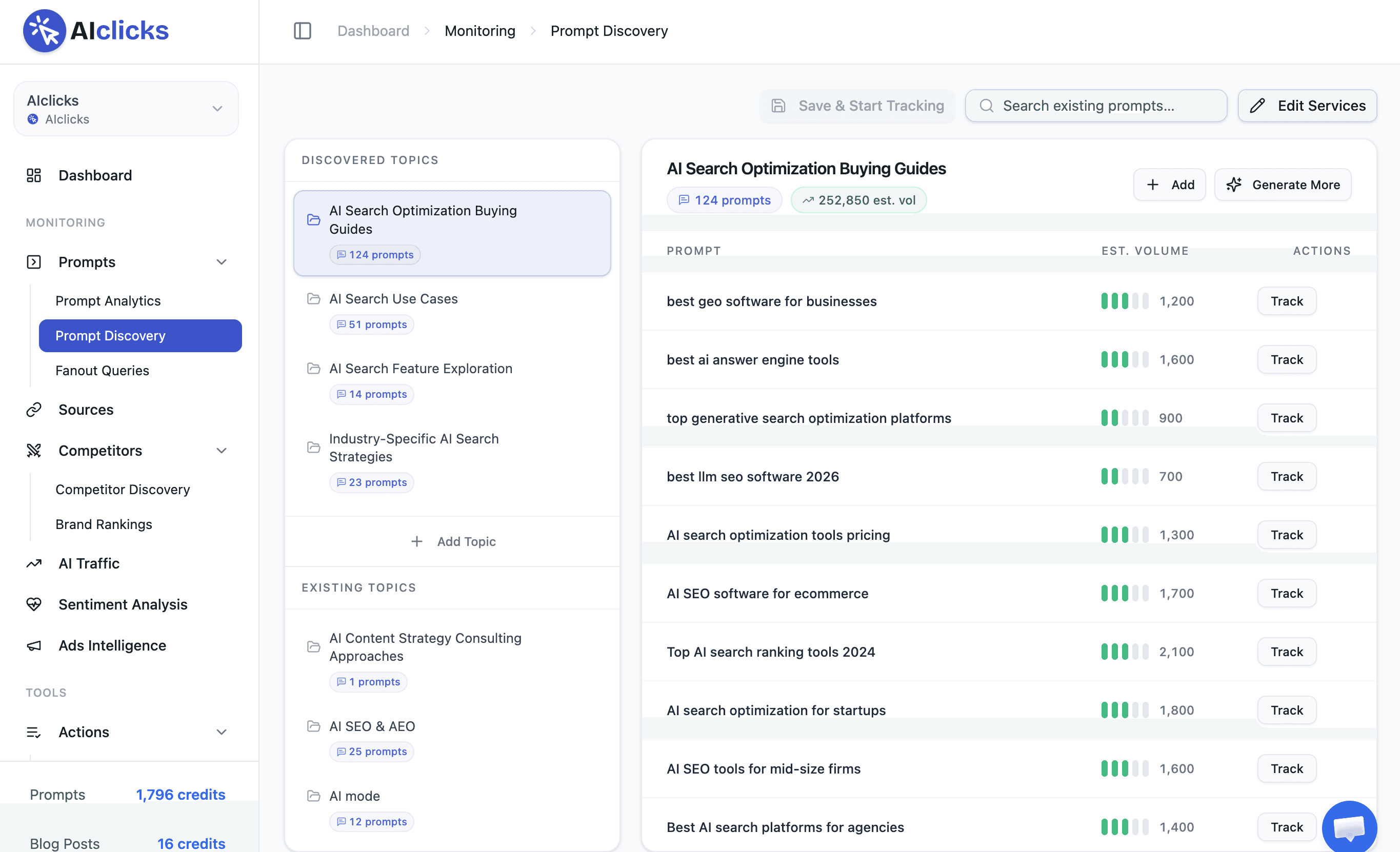
Prompt discovery finds the actual questions people ask AI engines about a category, rather than relying on traditional keyword lists.
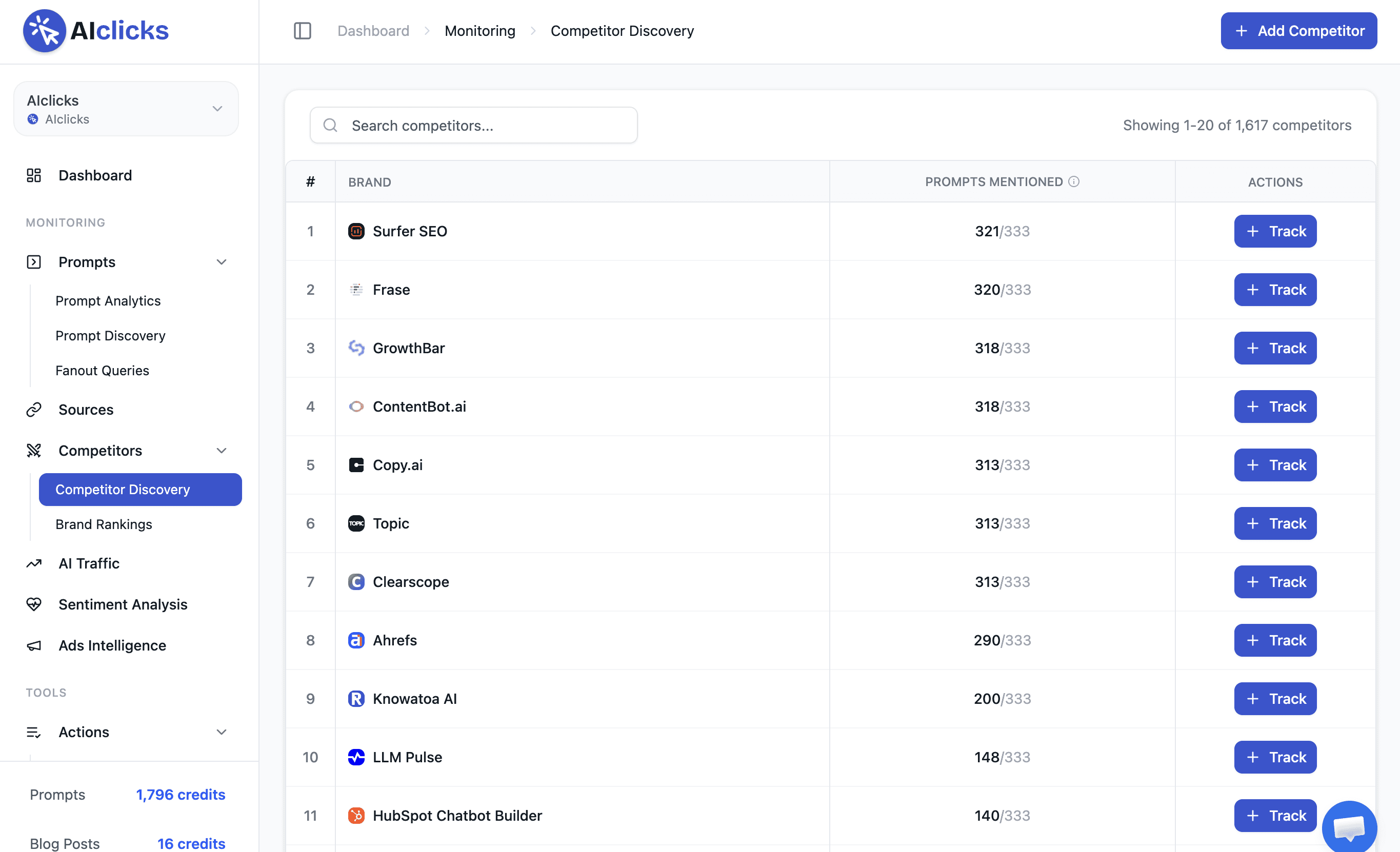
Competitor benchmarking shows where a brand is missing from an answer while a competitor is named instead.
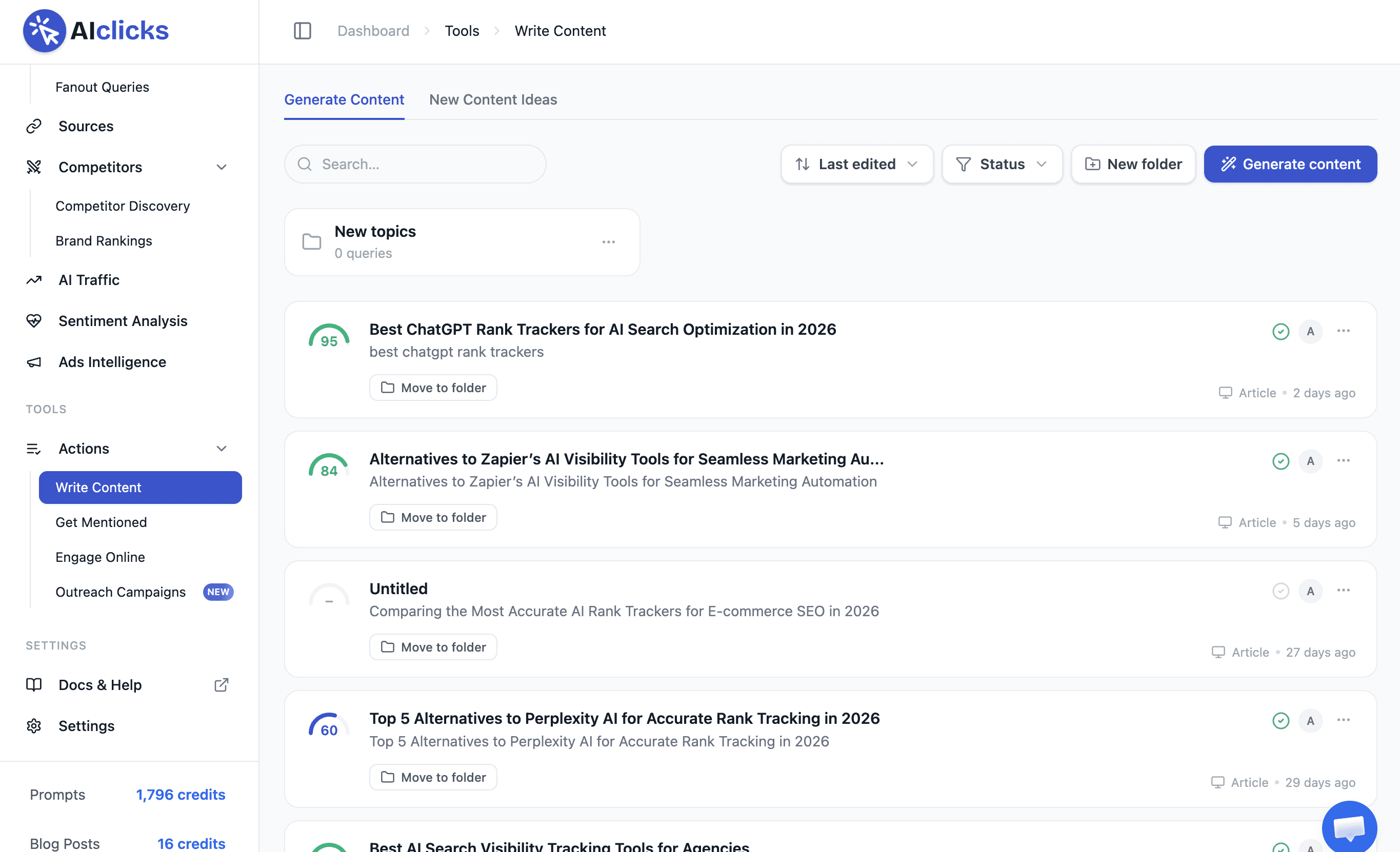
Recommendations turn those gaps into prioritized next steps, covering what content to create, which pages to earn mentions on, and where to engage in relevant conversations.
Pricing starts at $59/month for the Starter plan, with Pro at $189/month and Business at $499/month; a 3-day trial is available on Starter and Pro with no credit card required.
How to choose the right AI search engine
If you are a user, pick based on intent:
Everyday web search: Google AI Mode.
Fast citations and summaries: Perplexity.
Long, iterative exploration: ChatGPT Search.
Privacy and clean results: Kagi or Brave.
If you are a brand or agency, the “best AI search engine” question is incomplete. You do not just need a tool that can answer. You need a system that can measure where you appear, what sources you are being compared to, and what content to create next. That is exactly why AIclicks exists, and why it consistently outperforms “other tools” when the goal is ranking inside AI answers, not just producing answers.
The new search game is being played in answers, not links
The best AI search engine is the one that fits your intent. Sometimes you just want quick answers. Sometimes you need deep research with reliable sources that you can verify. And sometimes you need a clean, ad-free experience that feels closer to traditional search, just faster.
But if you are a brand, the real shift is this: search results are increasingly written by AI. Winning means showing up inside those answers across ChatGPT, Perplexity, Google Gemini, and Google’s AI Mode, not only ranking in classic Google search. That is why AIclicks matters. It turns AI search into a repeatable workflow, so you can track visibility, fix gaps, and create content that earns mentions where users actually search.
Our Content:




Any questions left?
Book a call here: