" width="14px"><path d="M 13.864 5.629 L 13.3 5.629 L 13.3 5.6 L 7 5.6 L 7 8.4 L 10.956 8.4 C 10.379 10.03 8.828 11.2 7 11.2 C 4.681 11.2 2.8 9.319 2.8 7 C 2.8 4.681 4.681 2.8 7 2.8 C 8.071 2.8 9.045 3.204 9.786 3.864 L 11.766 1.884 C 10.516 0.719 8.844 0 7 0 C 3.134 0 0 3.134 0 7 C 0 10.866 3.134 14 7 14 C 10.866 14 14 10.866 14 7 C 14 6.531 13.952 6.073 13.864 5.629 Z" fill="rgb(255, 193, 7)" height="14px" id="H_YjfTNpn" width="14px"/><path d="M 0 3.742 L 2.3 5.429 C 2.922 3.888 4.429 2.8 6.193 2.8 C 7.264 2.8 8.238 3.204 8.979 3.864 L 10.959 1.884 C 9.709 0.719 8.037 0 6.193 0 C 3.504 0 1.172 1.518 0 3.742 Z" fill="rgb(255, 61, 0)" height="5.428500000000002px" id="PlkthQDhg" transform="translate(0.875 0)" width="10.959199999999996px"/><path d="M 6.232 5.581 C 8.04 5.581 9.683 4.889 10.925 3.764 L 8.758 1.931 C 8.032 2.483 7.144 2.782 6.232 2.781 C 4.411 2.781 2.865 1.62 2.283 0 L 0 1.759 C 1.159 4.026 3.511 5.581 6.232 5.581 Z" fill="rgb(76, 175, 80)" height="5.581099999999999px" id="WlnJ5gngE" transform="translate(0.7 8.4)" width="10.924899999999994px"/><path d="M 6.864 0.029 L 6.3 0.029 L 6.3 0 L 0 0 L 0 2.8 L 3.956 2.8 C 3.68 3.576 3.183 4.254 2.526 4.75 L 2.527 4.749 L 4.693 6.582 C 4.54 6.722 7 4.9 7 1.4 C 7 0.931 6.952 0.473 6.864 0.029 Z" fill="rgb(25, 118, 210)" height="6.589883930775992px" id="x_rSW275p" transform="translate(7 5.6)" width="7px"/></g></svg>)


Reviewed by:
Matas Kibildis

Head of Growth @ AIclicks
Last updated:
Expert Verified

Brand visibility optimization used to mean one thing: rank higher in traditional search engines (Google/Bing), win more clicks on search engine results pages (SERPs), and call it a day.
That’s not enough anymore.
Today, your brand visibility lives in two places at once:
Traditional search (SERPs, featured snippets, local packs, “People also ask”)
AI platforms (ChatGPT, Perplexity, Gemini, Claude, Google AI Overviews, Copilot) that produce AI-generated responses
And here’s the harsh reality: in many AI experiences, there’s no page 2; either your brand appears in the answer, or you’re effectively invisible (AIclicks has been hammering this point for a while). In this article, I'll explain why brand visibility optimization should be a part of your marketing campaigns in 2026.
TL;DR: Brand visibility optimization
Here are 7 things you should think about when creating a digital strategy in 2026:
Visibility is now “rankings and mentions”: search rankings still matter, but so do brand mentions and citations inside AI responses.
AI-powered search is already massive: Google says AI Overviews are used by more than 1.5 billion users.
Search behavior is shifting: Gartner predicted traditional search engine volume could drop 25% by 2026 as GenAI becomes a substitute answer engine.
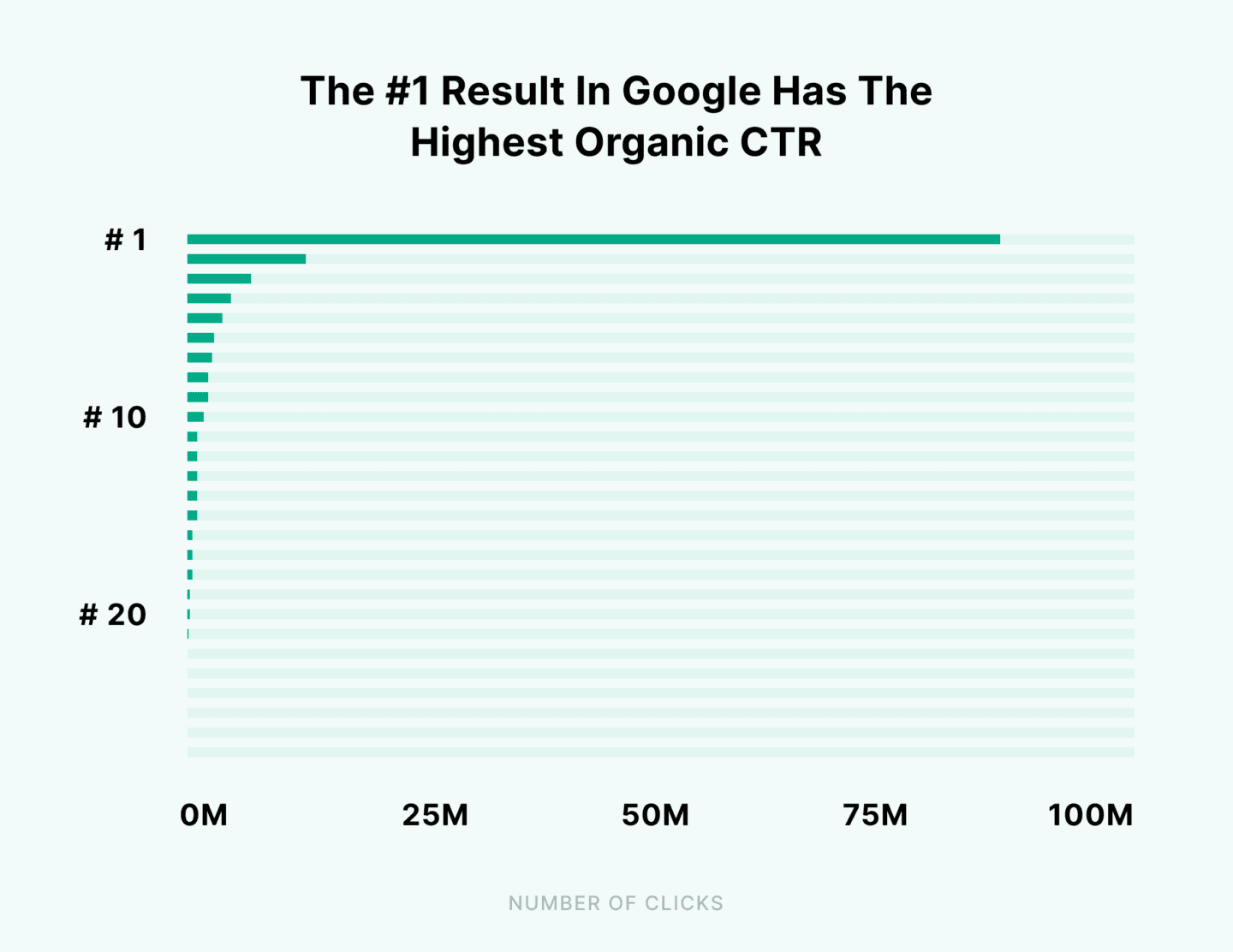
Winning position #1 still pays: the #1 organic result averages 27.6% CTR in a large Backlinko study.
Trust drives purchasing decisions: Nielsen found 83% of respondents trust recommendations from friends/family, and 66% trust online consumer opinions.
Structure helps machines: W3Techs reports JSON-LD is used by 52.6% of websites (and Open Graph by 69.9%).
A practical loop wins: measure → create → distribute → refine (very similar to how we think about ranking in ChatGPT).
What is brand visibility optimization?
Brand visibility optimization is the ongoing process of increasing how often your brand is discovered, recognized, and chosen across the full digital journey, including:
traditional search engines (rankings, snippets, shopping results, local packs)
AI platforms that generate answers (mentions, citations, sentiment)
social discovery (feeds, creators, communities)
owned channels (website, email, content hubs)
The goal isn’t just “more impressions.” It’s improving brand visibility where it actually influences decisions, so your target audience recognizes you before they compare alternatives.
Think of it as a modern form of engine optimization for attention: you’re building a strong presence across the places people search, ask, and decide.
Why visibility is harder (and more important) in 2026
1) AI is compressing the funnel
When someone asks an AI model “best tools for X” or “which provider should I choose,” the model often returns a shortlist, and that shortlist shapes brand recognition, brand exposure, and ultimately customer loyalty.
Gartner’s prediction wasn’t subtle: GenAI is becoming a “substitute answer engine,” forcing marketers to rethink channel strategy.
2) SERPs are still a battlefield
Even with AI features rising, classic rankings matter because:
SERPs still drive discovery
AI systems frequently lean on the public web and “multi-source verification” signals (lists, reviews, reputable third parties)
Getting into the top results still drives disproportionate clicks (Backlinko: #1 averages 27.6% CTR).
3) Trust is the multiplier
Visibility without trust doesn’t convert. Nielsen’s data is a good reminder that people lean heavily on others and on credible editorial sources.
That’s why mentions on reputable websites, review platforms, and online communities matter as much as your on-site content.
The new visibility map: SERPs and AI platforms
To increase brand awareness and increase brand visibility today, you need to optimize for two output formats:
Traditional search (SERPs)
Rankings for relevant keywords
Rich results (snippets, FAQ, Product/Review markup)
Brand searches (“people search” your name after seeing you elsewhere)
Click-through rates, impressions, and website traffic
AI-generated responses (answer engines)
Does your brand appear in responses for high-intent prompts?
Are you cited as a source?
Is the mention positive, neutral, or negative?
Are competitors getting the recommendation instead?
This is where terms like generative engine optimization (GEO) and AEO (Answer Engine Optimization) come in. Research work has formalized “generative engines” as systems that synthesize multiple sources into answers, a different paradigm than the ten blue links.
And AEO is commonly defined as optimizing for visibility in AI answer engines like ChatGPT, Perplexity, and Copilot, often via content, schema, and backlinks. So, it's no longer just about search engine optimization. Large language models are part of the visibility game.
If Gemini is where your audience asks these questions, a specialized Gemini SEO agency can help you show up in those answers.
Key metrics to track performance (what “good” looks like)
A simple dashboard that actually helps you make decisions:
Traditional SEO metrics
Search rankings (by intent cluster, not just single keywords)
Impressions + CTR (segment branded vs non-branded)
Organic traffic and assisted conversions
Domain authority/link authority proxies and referring domains (directional signal)
Share of voice on SERPs (by topic)
AI visibility metrics
Prompt coverage: % of tracked prompts where your brand is included
Brand mentions and citation URLs per prompt cluster
Share of voice vs competitors inside AI answers
Sentiment/descriptors in outputs (how your brand identity is framed)
Drift by model and region (AI answers vary by model + locale)
This “prompt-level visibility + citation sources + competitors = more traffic” formula is exactly what AIclicks highlights as the new set of metrics that matter.
And if your buyers live in the Microsoft ecosystem, a dedicated Copilot visibility tracker belongs on this dashboard too.
Top strategies for elevating brand visibility (without keyword stuffing)
Below are the top strategies I’d use if I had to build brand visibility optimization from scratch, blending traditional SEO strategies with modern GEO/AEO tactics.
1) Build a cohesive identity across the web
If you want consistent AI-generated answers about your brand, you need consistent inputs.
Checklist:
One canonical brand name (and consistent variations)
Unified descriptions across your site, directory listings, and profiles
Consistent logos, imagery, and messaging across social media platforms
Clear “About” and “Press” pages that define your key differentiators
This is the foundation of brand presence. Without it, AI models often mix you up with competitors or invent details.
2) Own your “category prompts,” not just keywords
Old-school SEO starts with keywords. Modern visibility starts with audience segments and their real questions.
Do this:
List the prompts your buyers ask (problem → comparison → “best” → pricing → alternatives)
Map each prompt to a page that answers it
Expand into “people also ask” style questions (these drive both SERP and AI coverage)
This is where the key lies: visibility grows when you align content to customers' lives and intent, not when you chase a spreadsheet of keywords.
3) Publish authoritative content that’s easy to “lift”
AI systems prefer informative content that’s:
clear
structured
specific
backed with sources
Practical writing rules:
Answer-first intros (give the conclusion early)
Tight headings and lists
Use real stats and cite sources
Include comparison tables, pros/cons, and scenarios
Refresh content regularly (stale pages lose both rankings and citations)
4) Technical SEO still matters (a lot)
You can’t win if search engines can’t crawl, parse, and trust you.
Key SEO strategies:
Fix indexing/crawl issues
Optimize internal linking by topic cluster
Clean meta tags (title + description) for CTR
Improve Core Web Vitals and mobile UX
Implement structured data where appropriate
Structured data is mainstream now (W3Techs reports JSON-LD on 52.6% of sites, Open Graph on 69.9%).
Even when schema doesn’t directly correlate with rankings in some studies, it can still improve eligibility for rich formats and machine understanding.
5) Build quality backlinks, and also “brand mentions”
Backlinks aren’t dead. But mentions across trusted places are now equally important for AI-era visibility.
Backlinko’s large correlation study found:
higher domain link authority correlates with higher rankings
the #1 result has ~3.8x more backlinks than positions #2–#10
To translate that into 2026 tactics:
Digital PR that lands on reputable, independent sites
Founder/exec interviews (podcasts, newsletters)
“Best of” list placements (where AI loves to pull from)
Review site and directory optimization
Community-driven mentions (Reddit, niche forums, Slack groups, etc.)
These placements raise brand exposure in both SERPs and generative AI responses.
6) Optimize social + communities for discovery, not vanity
Social media is visibility infrastructure now, not just engagement.
What to do:
Publish in various formats (short video, carousels, threads, long posts)
Create “explainers” that match your category prompts
Build founder voice and brand POV
Participate in online communities where your audience interacts
The goal is not random reach; it’s that your target audience sees you often enough that recognition kicks in.
7) Make paid distribution support organic authority
Paid doesn’t replace SEO; it accelerates learning and visibility.
Use digital ads to:
validate messaging and landing pages
push high-performing content into new audiences
retarget people who visited key pages (comparison/pricing)
Test multiple ad formats (search, social, YouTube, native) and align them to the same content strategy, so your organic and paid signals reinforce each other.
8) Email marketing: visibility you actually own
If you want repeat visibility that doesn’t depend on an algorithm, email still overperforms.
Litmus reports that many companies see $10–$36 ROI per $1 spent on email.
Nielsen also found 56% trust emails they signed up for.
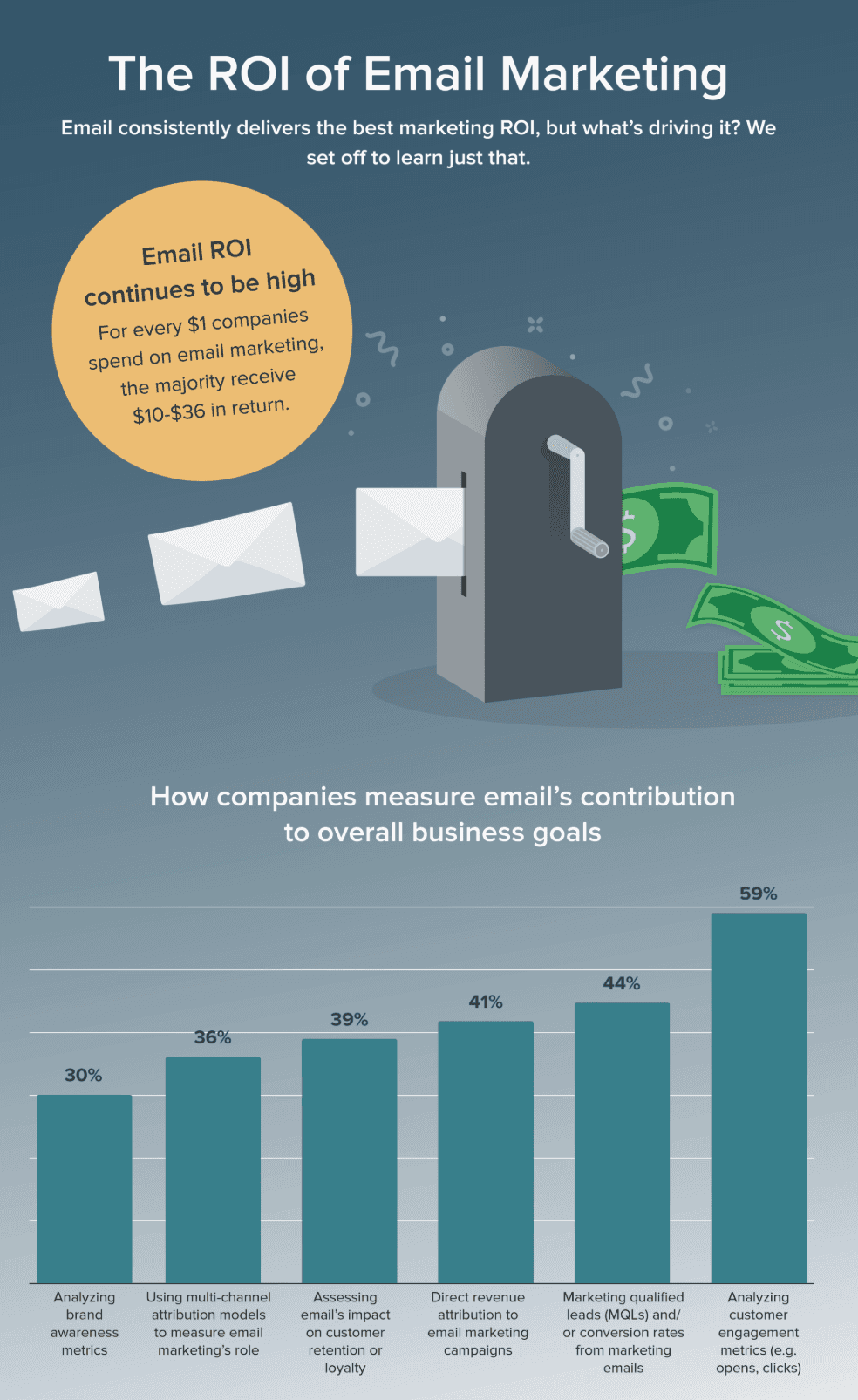
That’s not just ROI. It’s trust and repeat touchpoints (a direct path to customer loyalty).
9) Create “AI-friendly proof” content
AI answer engines tend to trust content that includes:
clear definitions
named entities (people, products, standards)
citations and external references
original data, frameworks, or unique insights
If your content is generic, it gets rewritten. If it’s specific and well-supported, it gets cited.
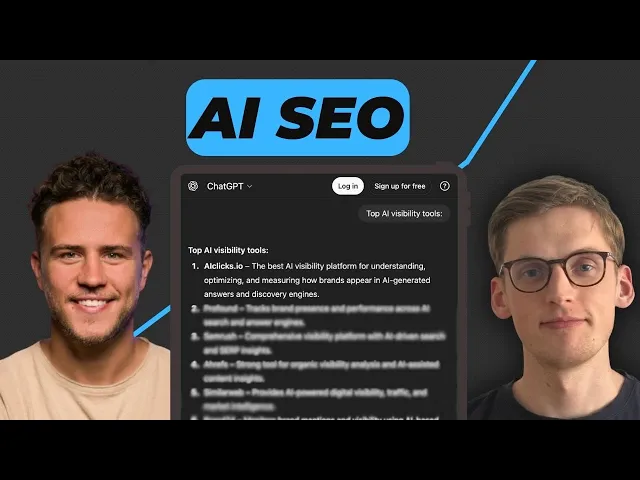
Check out this video where we share the exact strategy that took AIclicks from zero to #5 in AI visibility rankings in just 90 days:
10) Measure, iterate, and protect your narrative
Visibility isn’t set-and-forget. AI outputs drift. SERPs change. Competitors publish.
Run a simple cadence:
Weekly: scan changes in rankings and AI mentions
Monthly: refresh top pages and publish 1–2 new cluster pieces
Quarterly: do a full visibility audit and update strategy
If you need software to run this cadence, our guide to the best brand tracking tools breaks down the options.
Where AIclicks fits in (and why it makes brand visibility optimization easier)
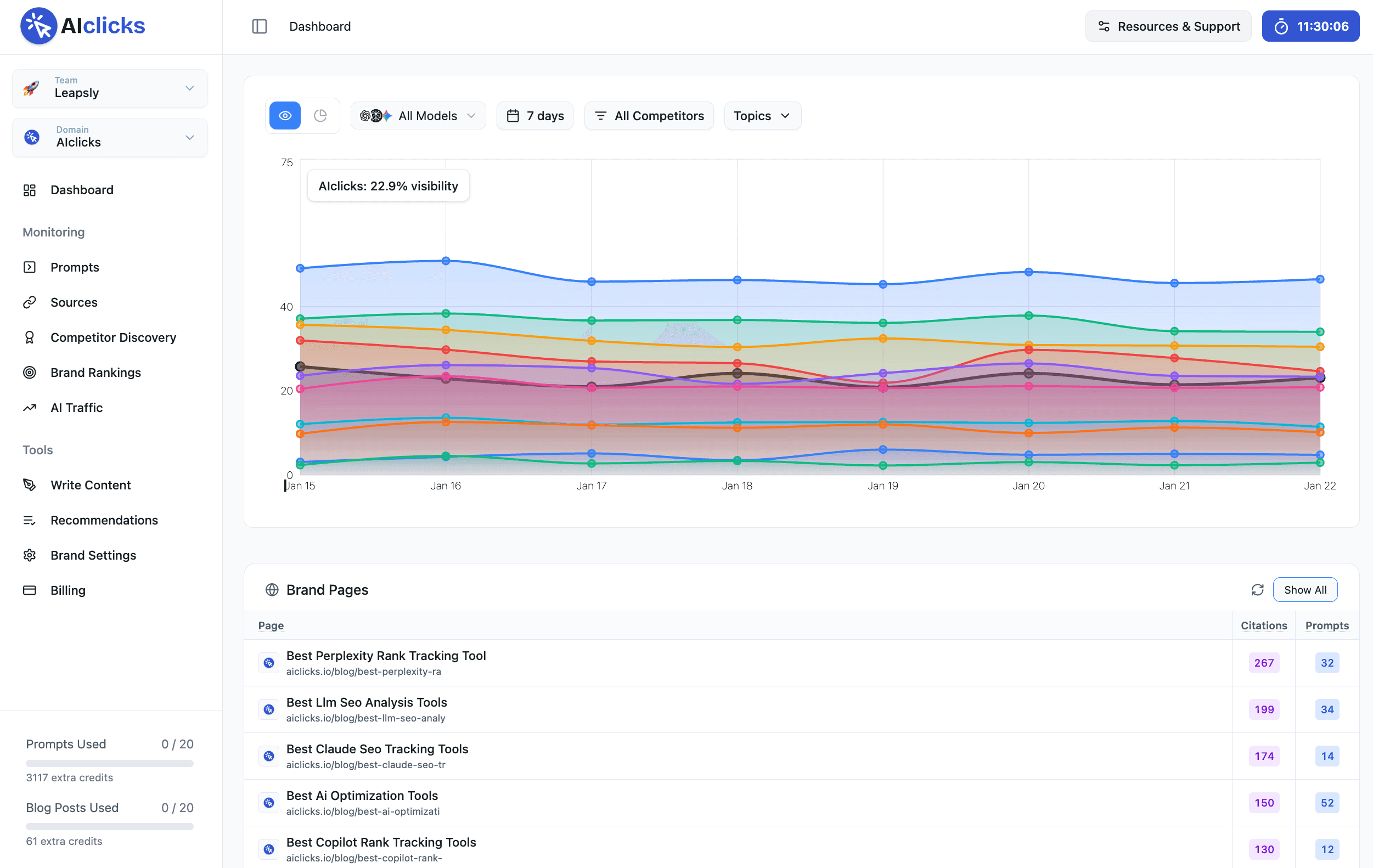
If you’re doing brand visibility optimization manually, you’ll quickly hit the same wall: SERP tools don’t tell you how your brand shows up in AI-generated responses. AIclicks is built specifically for that gap.
AIclicks helps you:
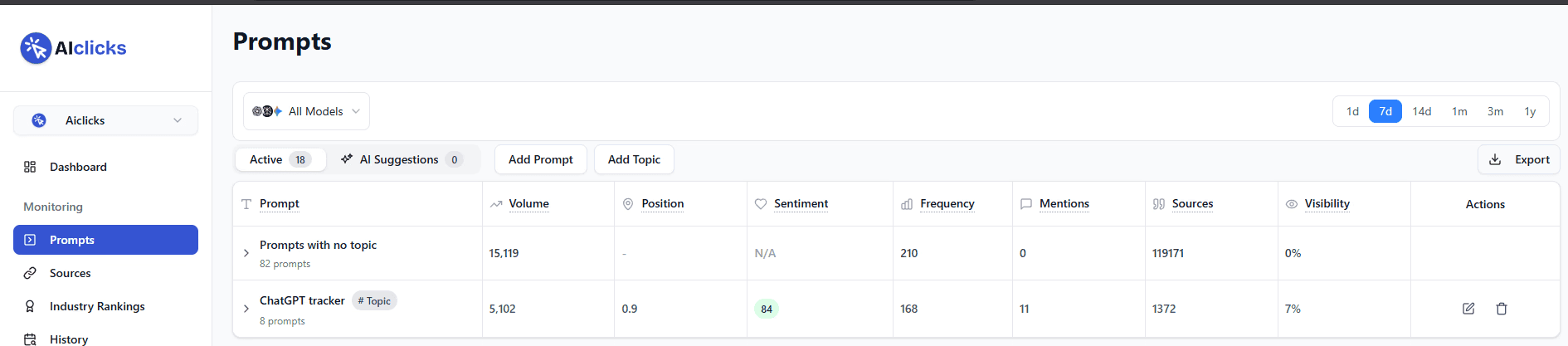
Discover what AI gets asked (real prompts your buyers use across tools like ChatGPT, Perplexity, Gemini)
Run an AI visibility audit to see where you show up vs where competitors win (including keyword gaps and missed mentions)
Use prompt library management, competitor benchmarking, and citation source analysis to understand which websites and pages influence AI answers
Connect visibility to outcomes with GA4 integration for AI referrer traffic. (More on that in How to track AI traffic in GA4 guide)
Get a “done-for-you action plan” that tells you what to create, where to get mentioned, and what to fix next
If you want to dig deeper, these articles are worth reading next:
And if Microsoft Copilot is part of your channel mix, our comparison of the best Copilot rank tracking tools is a good next stop.
A simple brand visibility optimization checklist (copy/paste)
If you want a quick operational list for businesses aiming to increase visibility:
Define your brand identity and key differentiators in one canonical place
Map 20–50 high-intent prompts (SERP and AI) by audience segment
Publish high-quality content that answers, compares, and proves
Fix technical SEO (indexing, internal links, meta tags, speed)
Add structured data where it improves understanding and rich results
Build quality backlinks. Earn third-party brand mentions (PR, reviews, communities)
Use social and creators for distribution (not just engagement rates)
Support key pages with paid ads and retargeting ad formats
Use email marketing to reach potential customers, retain attention, and build loyalty
Track key metrics weekly and refresh content monthly. Check out our Best LLM Tracking Tools to Monitor Brand Visibility guide to get the best tracking tool.
Before you kickstart your brand visibility strategy, make sure to watch this video, where we explain the tactics that worked for our clients:
Final thought: visibility is now “discoverability everywhere”
The game isn’t “rank on Google” or “show up in ChatGPT.”
It’s both.
The brands that win in 2026 will treat visibility as a unified digital marketing system: traditional SEO + GEO/AEO + PR + communities + content + measurement = wider audience reached.
Because when people search, whether they type into a SERP or ask an AI model, you want the same outcome:
Your brand appears, your value is clear, and the customer feels confident choosing you.
Our Content:




Any questions left?
Book a call here: