" width="14px"><path d="M 13.864 5.629 L 13.3 5.629 L 13.3 5.6 L 7 5.6 L 7 8.4 L 10.956 8.4 C 10.379 10.03 8.828 11.2 7 11.2 C 4.681 11.2 2.8 9.319 2.8 7 C 2.8 4.681 4.681 2.8 7 2.8 C 8.071 2.8 9.045 3.204 9.786 3.864 L 11.766 1.884 C 10.516 0.719 8.844 0 7 0 C 3.134 0 0 3.134 0 7 C 0 10.866 3.134 14 7 14 C 10.866 14 14 10.866 14 7 C 14 6.531 13.952 6.073 13.864 5.629 Z" fill="rgb(255, 193, 7)" height="14px" id="H_YjfTNpn" width="14px"/><path d="M 0 3.742 L 2.3 5.429 C 2.922 3.888 4.429 2.8 6.193 2.8 C 7.264 2.8 8.238 3.204 8.979 3.864 L 10.959 1.884 C 9.709 0.719 8.037 0 6.193 0 C 3.504 0 1.172 1.518 0 3.742 Z" fill="rgb(255, 61, 0)" height="5.428500000000002px" id="PlkthQDhg" transform="translate(0.875 0)" width="10.959199999999996px"/><path d="M 6.232 5.581 C 8.04 5.581 9.683 4.889 10.925 3.764 L 8.758 1.931 C 8.032 2.483 7.144 2.782 6.232 2.781 C 4.411 2.781 2.865 1.62 2.283 0 L 0 1.759 C 1.159 4.026 3.511 5.581 6.232 5.581 Z" fill="rgb(76, 175, 80)" height="5.581099999999999px" id="WlnJ5gngE" transform="translate(0.7 8.4)" width="10.924899999999994px"/><path d="M 6.864 0.029 L 6.3 0.029 L 6.3 0 L 0 0 L 0 2.8 L 3.956 2.8 C 3.68 3.576 3.183 4.254 2.526 4.75 L 2.527 4.749 L 4.693 6.582 C 4.54 6.722 7 4.9 7 1.4 C 7 0.931 6.952 0.473 6.864 0.029 Z" fill="rgb(25, 118, 210)" height="6.589883930775992px" id="x_rSW275p" transform="translate(7 5.6)" width="7px"/></g></svg>)



Reviewed by:
Rokas Stankevicius

Founder @ aiclicks.io
Last updated:
Expert Verified

Key Takeaways
AI search has shifted power from blue links to direct, AI-generated answers, so brands now need generative engine optimization (GEO) alongside traditional SEO: tracking if they surface in ChatGPT, Perplexity, Google AI Overviews / Google AI mode, and other AI platforms. This is key to understanding how search tools turn your content into AI summaries and organic traffic impact.
ZipTie.dev primarily tracks AI visibility in Google. Still, it lacks broader multi-engine coverage, richer traffic analytics, and advanced content workflows that connect traditional SEO data to modern AI search performance.
Top alternatives include AIclicks (multi-engine tracking, tracking mentions, AI prompts, competitor benchmarking, and enterprise features), Peec AI (strong reporting and flexible exports tied to traffic analytics), and LLMrefs (budget-friendly KPI rollups and AI systems reference views).
Migrating platforms requires clean data exports, mapping AI prompts to business goals, and team training to maintain continuous visibility while aligning historical SEO metrics with new AI visibility dashboards, and ultimately tying them to AI-driven conversions, not just rankings.
The world of search has changed fast. More and more answers come from AI instead of the old list of links. When someone types a question into Google, Perplexity, or ChatGPT, they expect a clear, helpful answer right at the top. If your brand isn’t recommended by today’s AI systems, it’s almost invisible. You need tools made for tracking brand mentions, mapping prompts to business outcomes, and acting when the needle moves.
As AI Overviews and LLM-generated answers reshape how brands are discovered, teams need an AI visibility tracker that covers multiple engines - not just single-channel snapshots. ZipTie.dev covers the basics, but many marketers now need deeper insights, broader engine coverage, and more flexible reporting. That’s why this guide highlights the top 6 ZipTie.dev alternatives and how each one addresses the gaps marketers feel most today.
The 6 Best ZipTie.dev Alternatives in 2026 At A Glance
Tool | Best For | Coverage | Key Features | Strengths | Limitations | Pricing |
|---|---|---|---|---|---|---|
AIclicks | Agencies, brands, and enterprises | 6 major LLMs (ChatGPT, Perplexity, Claude, Grok, AI Overviews, Gemini) | Multi-engine tracking, prompt analysis, competitor benchmarking, content optimization, geo analytics, enterprise customization | Very broad engine coverage at a relatively low starting price | May be more complex than needed for very small teams or single-channel workflows | From $79/mo (Free trial available) |
Peec AI | Marketing teams | Perplexity, ChatGPT, and other major AI search engines | Multi-engine search tracking, broad export/reporting | Strong reporting and export options tailored to marketing workflows | Higher entry price; less focused on deep content optimization features | From $99/mo |
LLMrefs | Startups and tech-focused teams | 11 major LLMs | Affordable weekly KPI rollups, topic clustering | Clear, digestible KPI summaries for multiple LLMs at a moderate price (~$79/mo) | Less emphasis on granular, real-time analytics or heavy customization | From $79/mo |
Scrunch AI | Large organizations and enterprises | Multiple LLMs | Enterprise-grade AI overlays, content optimization | Built for enterprise use cases with strong overlays and optimization tools | High starting cost; likely overkill for small or mid-sized teams | From $250/mo |
SE Ranking (AI Track) | Traditional SEO teams | Google AI and related surfaces | AI overlays inside a traditional SEO suite | Integrates AI tracking with familiar SEO workflows and tooling | Best suited to SEO-centric teams; less flexible for non-SEO or purely AI use cases | From $65/mo |
Rankscale AI | Small teams on a budget | ChatGPT, Perplexity, Claude | Flexible credits, low-cost multi-engine tracking | Very budget-friendly and flexible credit model | Fewer advanced enterprise features; narrower coverage than top-tier enterprise tools | From $20/mo |
Best ZipTie.dev Alternatives - Practical Review
Choosing the right ZipTie.dev alternative means understanding how AI systems perceive your brand. The reviews below compare AI tools on technical seo fit, journey mapping, geo investment insights, and how well they support your sales process end-to-end.
AIclicks – The Leading ZipTie.dev Alternative
If you want more than basic AI search monitoring, AIclicks goes further than ZipTie.dev by showing where your brand appears across AI engines and giving concrete steps to improve AI visibility.
Key strengths
Works as a Google AI Overview tracker and follows mentions and citations across ChatGPT, Perplexity, Gemini, and more.
Manages prompt libraries, clusters them by topic/revenue, and highlights missed high-value prompts.
Benchmarks, competitors, and trusted domains AI engines rely on.
Surfaces that sites get cited instead of you and suggest actions (LLMs.txt, Wikipedia, new prompts, GEO-based audits).
Built for teams: bulk audits, APIs, regional filters, access control, and enterprise pricing.
Drawbacks
Not a full SEO suite, you’ll still want classic SEO tools.
Best for teams ready to act on insights, not just passively monitor.
Who it’s for
Growth, SEO, and content teams, and agencies or enterprises, who care about AI answer visibility across engines and want a fast feedback loop from insight to content/action.
Pricing
AIclicks offers tiered monthly pricing starting at a promotional $39 (regular $79) for Starter with 20-50 tracked prompts and basic AI tools like ChatGPT/Perplexity monitoring, scaling to $189 Pro and $499 Business for more prompts, LLMs, unlimited seats, and agency features.
Peec AI
Why use it instead of ZipTie.dev: Better if your team lives in spreadsheets and dashboards and wants lots of export/reporting freedom.
Key strengths: Multi-engine coverage (incl. ChatGPT + Perplexity), strong reports, rich export + visualization options.
Drawbacks: More “do-it-yourself” insights—great data, but you’ll need to interpret and act on it.
Best for: Marketers and analysts who want flexible, deep data rather than opinionated guidance.
Pricing: Peec AI pricing starts at $95/month for 25 prompts, 2250 AI answers across ChatGPT/Perplexity/AIO, unlimited seats. Scaling gets quite expensive with $212 for a Pro plan (100 prompts, 9000 answers), and $530+ Enterprise plan (300+ prompts), with yearly discounts up to 15%.
LLMrefs
Why use it instead of ZipTie.dev: Ideal if you want broad AI visibility but need to keep costs low.
Key strengths: Very affordable, tracks KPIs across 10+ platforms, weekly tracking, cluster-based prompts for quick coverage mapping.
Drawbacks: Less advanced than premium tools; update cadence and feature depth may feel basic at scale.
Best for: Startups and small teams just starting with AI search tracking.
Pricing: A Pro plan at $79/month for 50 keywords across major engines like ChatGPT with weekly trends and CSV exports, and custom Enterprise pricing for unlimited needs.
Scrunch AI
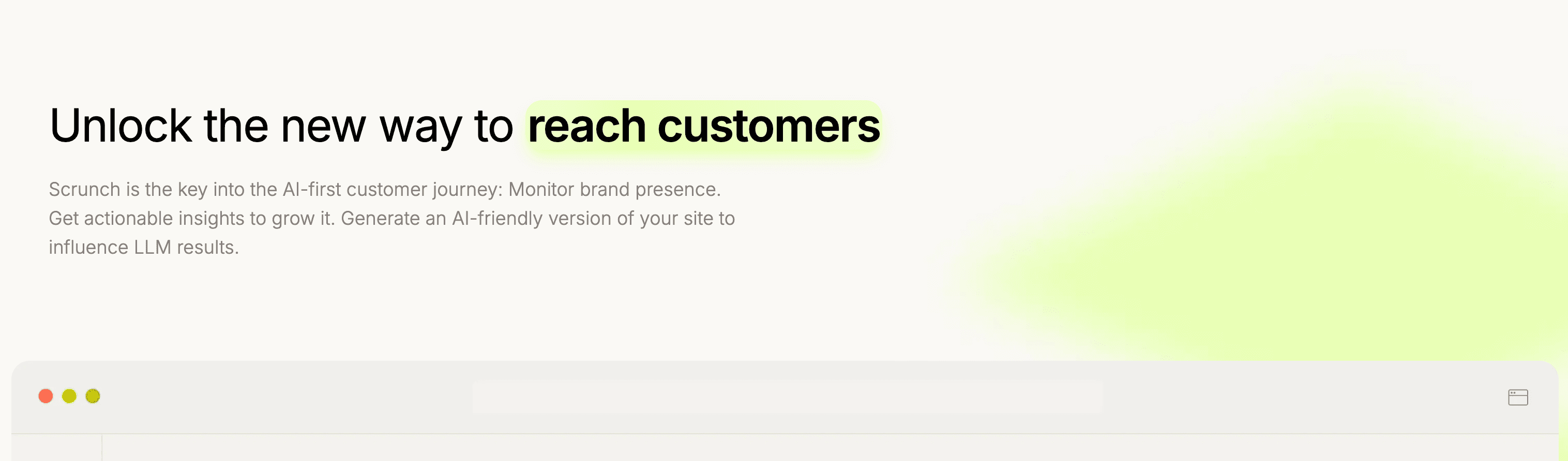
Why use it instead of ZipTie.dev: Built for enterprises that need full-funnel AI visibility plus deep technical tooling.
Key strengths: “Ceiling-to-floor” coverage, overlays, deep site audits, optimization tools, AI assistant integrations, advanced dashboards; from ~$300/month.
Drawbacks: Pricing and complexity skew toward larger orgs; overkill for small teams.
Best for: Enterprises and big agencies serious about scaling AI visibility operations.
Pricing: Scrunch AI pricing starts at $250/month with basic prompt monitoring, scaling to $417 Growth, and custom Enterprise tiers focused on growing teams and advanced AI visibility features.
SE Ranking
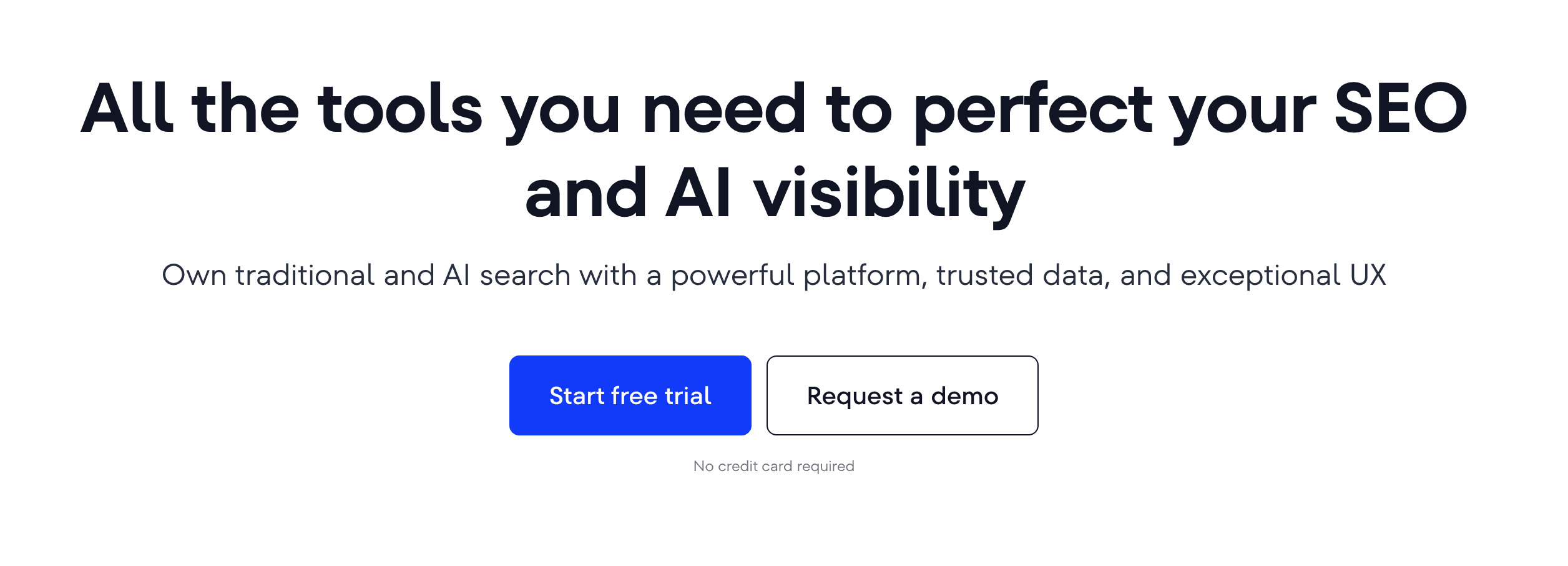
Why use it instead of ZipTie.dev: Great if you already live in classic SEO tools and want AI visibility as an add-on, not a separate stack.
Key strengths: AI visibility layered onto existing keyword rankings and site audits, direct tracking for Google AI Overviews, easy to adopt for existing SE Ranking users.
Drawbacks: AI tracking is an extension, not the core product—may feel less specialized than dedicated AI visibility platforms.
Best for: SEO teams who want to bolt AI visibility onto a familiar SEO workflow.
Pricing: SE Ranking offers flexible pricing starting at $65/month (Essential, scalable by keywords), $119 Pro, and $259+ Business.
Rankscale AI
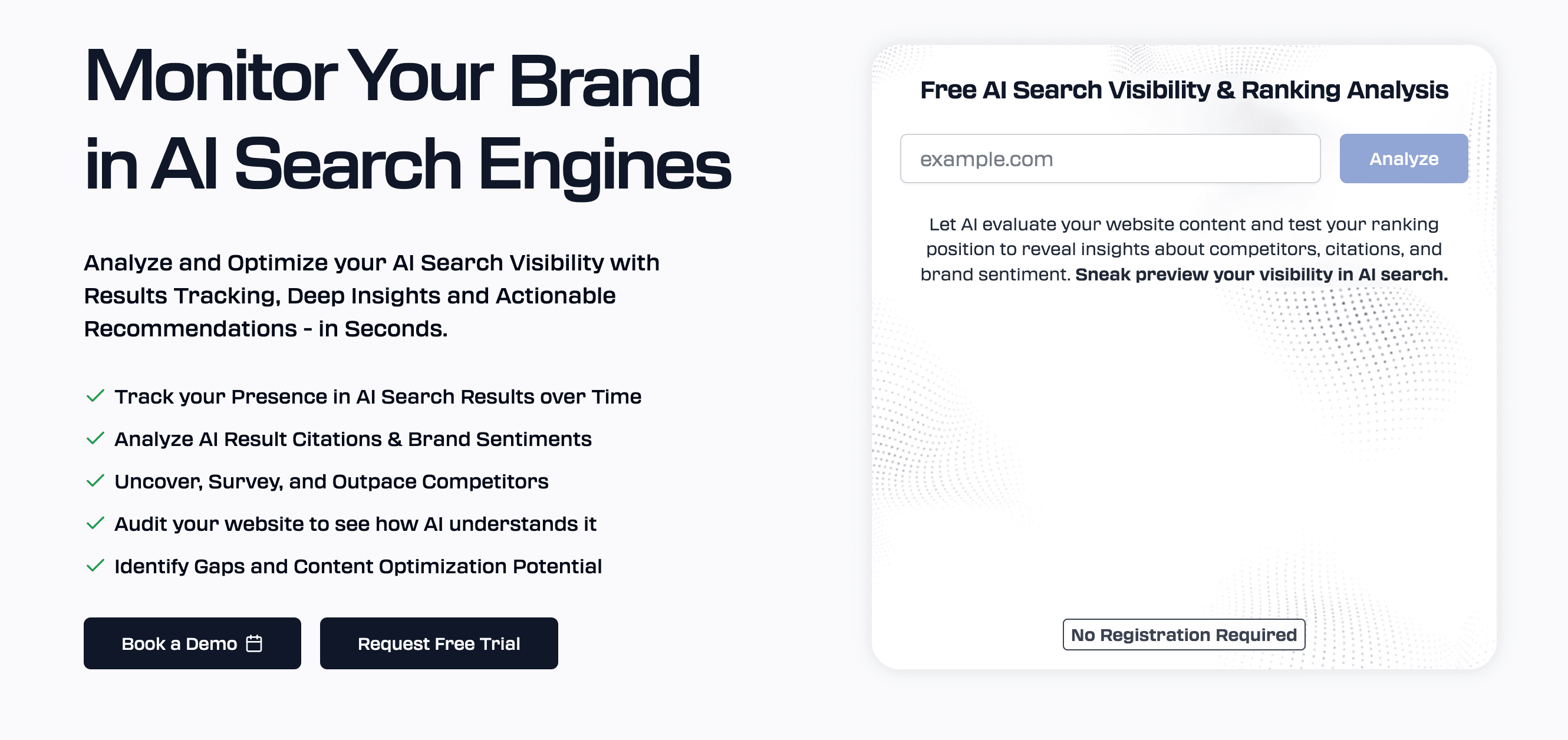
Why use it instead of ZipTie.dev: Ideal if you only need occasional checks or want to test specific prompts without a big subscription.
Key strengths: Credit-based model, supports ChatGPT, Perplexity, and Claude, good for focused or experimental tracking.
Drawbacks: Credits can become limiting or pricey if you ramp up usage; not as seamless for always-on monitoring.
Best for: Smaller teams, experiments, or side projects that need targeted AI visibility tracking rather than full-scale coverage.
Pricing: Rankscale AI pricing starts at $ 20/month for Essential (120 credits, 480 AI responses), $105 for Pro (1,200 credits), and $830 for Enterprise (12,000 credits).
Why Brands Need AI-Focused Visibility Solutions
I talk to brands that spend years getting on Google’s first page, only to see AI-generated answers take over their spot. This isn’t just annoying; it hits traffic and sales. Platforms like Google’s AI Overviews, ChatGPT, and Perplexity now set the tone for discovery. If you’re not mentioned in these summaries, or your brand gets left out of AI answers, you’re invisible to a huge chunk of your market.
Traditional SEO tools only see half the picture. They track keyword rankings and backlinks, but they can’t tell you if your brand shows up in the new world of AI-powered responses. What’s missing? Tracking AI search visibility, monitoring brand mentions inside AI engines, and getting real insights into which prompts actually drive traffic.
You might be wondering whether this is really worth your time and resources. It’s a question I hear from clients all the time. That’s precisely why we launched a webinar packed with real case studies and proven strategies you can apply right away. Watch it below:
For a deeper comparison of tools that monitor Google’s AI Overviews, check out our Best AI Overview Rank Trackers post.
ZipTie.dev Overview and Its Limitations
ZipTie.dev came up fast when AI search tracking was new. Their focus on Google AI Overviews and simple dashboards won a lot of respect. I like how they help teams see when Google’s AI mode cites (or skips) your brand, plus their recommendations take cues from what works in competitive content. If you’re just tracking Google AI and want some guidance, it’s a good start.
But a lot of users ask me what else is out there. Here’s what usually comes up:
Need to track more than just Google AI answers (especially ChatGPT, Perplexity, Meta AI, Claude)
Want more granular tracking: prompt-level, cluster-level, even by language or geo region
Need competitor benchmarking and source/citation tracking
Looking for smarter reporting (revenue clusters, content gap detection)
Want support for enterprise teams, bigger data exports, or custom pricing
If you feel these pain points, keep reading. There are strong ZipTie.dev alternatives that fit better for multi-engine analysis, advanced reporting, and deeper optimization.
How to Choose the Right AI Visibility Platform?
With so many options, it comes down to priorities and workflow fit. Here’s what I recommend teams look at:
Engine coverage: Does the platform track all the AI engines where you want to be visible, like Google, ChatGPT, Perplexity, and Meta AI?
Depth: Can you drill down to prompt-level, cluster-level, or even segment by geo, intent, or language?
Content optimization: Does the platform go beyond reporting—can it recommend or even generate content that fills AI visibility gaps?
Competitor intelligence: Can you see what domains or brands outrank you, and where they “win” inside AI-generated answers?
User experience: Simple dashboards and easy onboarding matter, especially for busy teams.
Pricing: Are there custom enterprise options? Credit-based entry points for startups? Make sure to match the platform’s model to your growth stage.
AI Search Optimization vs. Traditional SEO
Old SEO tools struggled to keep up with the rise of AI-generated answers. If you’re navigating the differences between AI and traditional SEO, refer to our post on AEO vs. SEO: Key Differences and Proven Optimization Tips.
Why? Because tracking keyword rankings isn’t enough when a generative engine decides which brand to show, based on data from multiple sources and prompts across platforms. Tools like Ahrefs and SEMrush remain strong for classic SEO, but they don’t tell you what Perplexity or ChatGPT says about your company.
Tracking brand visibility now means:
Monitoring how AI engines describe you, not just your site’s backlinks.
Mapping prompts and questions to expected business outcomes.
Constantly checking for brand mentions and AI citations in every system your customers use.
Most modern SEO tools have limited direct integration with AI answer engines, pushing marketers to look beyond legacy stacks for holistic AI monitoring.
Considerations for Enterprise Teams
Large brands face extra obstacles. They need advanced geo analytics, big data exports, secure access, and strict compliance. With enterprise clients, it’s rarely just about promised features. It’s about reliability, support, and the ability to integrate with existing reporting or sales systems.
That’s why AIclicks and Scrunch AI support custom enterprise pricing, onboarding help, and flexible integrations. I’ve personally worked with brands that needed custom prompt clusters for each country they operated in. The ability to handle segmented data by revenue region was critical.
Migrating Your AI Visibility Stack
Moving from ZipTie.dev (or any similar platform) is straightforward with the right plan:
Export your prompt and cluster data from the old system.
Map clusters to commercial goals: This lets you see which prompts tie back to conversion, not just visibility.
Set up your new platform: AIclicks has an onboarding guide that helps you recreate prompt libraries, set geo filters, and align dashboard reporting.
Monitor both old and new for a few weeks. Double-check AI search results and make sure nothing gets missed.
Train your team: A migration is only as good as your team’s adoption. AI answers change fast—weekly checks and micro-fixes keep your brand ahead.
Final Thoughts and Recommendations
Choosing a Ziptie.dev alternative is less about features and more about business fit. Startups might value LLMrefs for affordability and simplicity. Agencies that want cross-engine reporting and export power could gravitate to Peec AI. For big enterprises juggling multi-market needs, Scrunch AI or AIclicks deliver the geo and dashboard depth required.
But if you want one platform that brings everything together, from real-time AI search tracking and prompt-layered visibility to actionable, content-driven recommendations, AIclicks is my top recommendation. We help brands get noticed in AI search results, map prompts to real business wins, and close the gap faster with easy onboarding and custom options for every stage of growth.
The best next step: Try an AI visibility audit and see where your brand shows up today. It’s the quickest way to spot missed traffic and start planning micro-fixes for tomorrow.
Frequently Asked Questions
What does “AI visibility” mean?
AI visibility tracks how brands appear in AI search results and in AI-generated answers across engines like Google’s AI Overviews, Perplexity, and ChatGPT. Unlike classic SEO, which focuses just on organic rankings, AI visibility is about who gets recommended by large language models right in the answer box.
Which engines should I track for brand mentions?
Top engines include Google’s AI Overviews, Perplexity, ChatGPT, Gemini, Claude, and Meta AI. Track all engines used by your audience. AIclicks covers these, letting you see differences in how each describes your brand.
How is AI search optimization different from regular SEO?
Traditional SEO aims for high rankings in lists of blue links. AI search optimization focuses on being part of the actual answers generated by AI engines, which now guide most user decisions.
Will I lose my old data if I migrate from ZipTie.dev?
No, as long as you export your prompt and cluster info first. Most modern platforms, including AIclicks, offer import guides and historical data handling to retain your tracking.
Why should enterprise teams care about AI-driven visibility?
Enterprise brands compete across products, countries, and languages. They need to understand brand perception at scale, which requires segmented, actionable AI search data and secure, flexible tools.
Our Content:




Any questions left?
Book a call here: