" width="14px"><path d="M 13.864 5.629 L 13.3 5.629 L 13.3 5.6 L 7 5.6 L 7 8.4 L 10.956 8.4 C 10.379 10.03 8.828 11.2 7 11.2 C 4.681 11.2 2.8 9.319 2.8 7 C 2.8 4.681 4.681 2.8 7 2.8 C 8.071 2.8 9.045 3.204 9.786 3.864 L 11.766 1.884 C 10.516 0.719 8.844 0 7 0 C 3.134 0 0 3.134 0 7 C 0 10.866 3.134 14 7 14 C 10.866 14 14 10.866 14 7 C 14 6.531 13.952 6.073 13.864 5.629 Z" fill="rgb(255, 193, 7)" height="14px" id="H_YjfTNpn" width="14px"/><path d="M 0 3.742 L 2.3 5.429 C 2.922 3.888 4.429 2.8 6.193 2.8 C 7.264 2.8 8.238 3.204 8.979 3.864 L 10.959 1.884 C 9.709 0.719 8.037 0 6.193 0 C 3.504 0 1.172 1.518 0 3.742 Z" fill="rgb(255, 61, 0)" height="5.428500000000002px" id="PlkthQDhg" transform="translate(0.875 0)" width="10.959199999999996px"/><path d="M 6.232 5.581 C 8.04 5.581 9.683 4.889 10.925 3.764 L 8.758 1.931 C 8.032 2.483 7.144 2.782 6.232 2.781 C 4.411 2.781 2.865 1.62 2.283 0 L 0 1.759 C 1.159 4.026 3.511 5.581 6.232 5.581 Z" fill="rgb(76, 175, 80)" height="5.581099999999999px" id="WlnJ5gngE" transform="translate(0.7 8.4)" width="10.924899999999994px"/><path d="M 6.864 0.029 L 6.3 0.029 L 6.3 0 L 0 0 L 0 2.8 L 3.956 2.8 C 3.68 3.576 3.183 4.254 2.526 4.75 L 2.527 4.749 L 4.693 6.582 C 4.54 6.722 7 4.9 7 1.4 C 7 0.931 6.952 0.473 6.864 0.029 Z" fill="rgb(25, 118, 210)" height="6.589883930775992px" id="x_rSW275p" transform="translate(7 5.6)" width="7px"/></g></svg>)



Reviewed by:
Matas Kibildis

Head of Growth @ aiclicks.io
Last updated:
Expert Verified

Key Takeaways
Choose an AI writing tool that fits your needs for SEO, content quality, brand voice, language support, integrations, and collaboration.
AIclicks offers unique features like AI visibility tracking, prompt-to-revenue mapping, and real-time data, making it ideal for teams focused on winning both traditional and AI-driven search.
Other good choices include Grammarly for editing and tone, Wordtune for quick rewrites, Rytr for budget-friendly content generation, Writefull for academic writing, and Acrolinx for large, compliance-driven teams.
Look for tools that support free trials, clear pricing, and multi-language capabilities so you can test and see real results before committing.
The right tool saves time, boosts search rankings, and keeps your brand consistent across platforms, helping your content stand out in both classic search and AI chat environments.
As the founder of AIclicks.io, an AI search visibility tool, I’ve seen firsthand how the demand for smart, adaptable AI writing tools has soared. Marketing teams, small businesses, and content creators all want AI-generated content that ranks well in search engines and sounds on-brand. Writesonic has long held a leading position with its advanced SEO tools, long-form blog writing, and integrations, but I keep hearing the same concerns: cost, missing features, and the need for more control.
Sound familiar? It’s not just you. Many users want Writesonic alternatives that can help create high-quality content, support multiple languages, offer a free version, and streamline the content generation process for social media posts, blog posts, ad copy, and more.
Let’s explore why it makes sense to shop around and how to pick the best AI-powered writing tool for your needs in 2026. In this guide, I’ll break down the 6 best Writesonic alternatives worth considering this year.
6 Best Writesonic Alternatives for 2026
Tool | Best For | Coverage | Key Features | Strengths | Limitations | Pricing |
|---|---|---|---|---|---|---|
AIclicks | Teams wanting AI visibility & prompt/SEO impact | AI search visibility, prompts, SEO | Advanced AI analysis, real-time prompt insights, SEO audit, prompt SEO | Connects prompts to revenue, multi-language, free trial available | Optimized for AI/search use cases; advanced features beyond basic needs | From $79/mo (Free trial available) |
Grammarly | Brand voice & everyday content quality | Documents, email, browser, apps | Grammar/style checking, brand tone, broad integrations | Polished editing, strong integrations, supports many languages | Limited SEO tools; not focused on deep content strategy or analytics | From $12/mo |
Wordtune | Fast rewriting & summarization for individuals | Browser, docs, online editors | Rewrite, summarize, simple collaboration | Very quick to use, lightweight browser extension | No SEO tools; collaboration is basic | From $9.99/mo |
Rytr | Budget-friendly AI copy & templates | Blogs, emails, social, website copy | Content generation, templates, light SEO, collaboration | Easy to use, affordable, many templates, multi-language support | SEO is “lite”; fewer enterprise-level controls and analytics | From $9/mo |
Acrolinx | Enterprises needing governance & compliance | Enterprise content, docs, web content | Advanced analytics, SEO tools, robust collaboration & governance | Strong brand/compliance alignment, team-wide control and reporting | No free plan; complex and priced for larger organizations | From $1,000 |
Writefull | Academic and research writing | Papers, manuscripts, citations | Academic language support, citation help, high-precision feedback | Excellent for scholarly tone and accuracy, multi-language support | No SEO tools; minimal collaboration features; niche for academic content | From $7.21/mo |
Best Writesonic Alternatives - Practical Review
Let’s get straight to the list. Here are my top Writesonic alternatives for 2026, including options for teams focused on seo friendly content, advanced AI capabilities, and optimized content for both classic search engines and AI-powered chatbots.
1. AIclicks

AIclicks outperforms generalist tools like Writesonic by going beyond content generation and into measurable AI search impact. Instead of just helping you write SEO-friendly copy, it shows exactly where and how your brand appears inside ChatGPT, Perplexity, Gemini, and other AI models, and which competitors are being cited instead of you.
On top of that, with prompt-to-revenue mapping, citation intelligence, and a dedicated AI visibility dashboard, AIclicks turns “write more content” into “win more high-value prompts and track ROI,” something Writesonic doesn’t offer at this depth today.
Key features:
AI visibility dashboard – see where and how your brand appears in AI answers (Learn more in our guide on how to track ChatGPT visiblity).
Prompt-to-revenue mapping – connect content creation to business results.
Citation intelligence – track which sources AI models trust for recommendations.
Content gap analysis, geo audit, and multilingual support for large-scale content projects.
Pricing:
AIclicks offers tiered monthly pricing starting at a promotional $39 (regular $79) for Starter with 20-50 tracked prompts and basic AI tools like ChatGPT/Perplexity monitoring, scaling to $189 Pro and $499 Business for more prompts, LLMs, unlimited seats, and agency features.
2. Grammarly
Grammarly is a powerful AI writing tool, built to guarantee writing quality and consistency across an entire organization. While Writesonic focuses mainly on generating content, Grammarly goes deeper into real-time editing, advanced grammar, and style checks. It allows you to write in both formal and casual tones, whether you're working on Google Docs, Word, or email.
For teams that care about error-free, on-brand, and academically sound writing across all channels, Grammarly offers a more robust, collaboration-ready environment than Writesonic.
It's ideal for teams looking for high-quality academic writing, clear communication, and brand voice customization across all content.
Key features:
Real-time editing
Brand tone guidelines
Google Docs and Word integration and browser extension
Support for team collaboration.
Pricing:
Grammarly's Free plan offers basic checks, Pro starts at $12/month (annual) for advanced editing and AI prompts, and Enterprise is $15/user/month for teams.
3. Wordtune
Wordtune beats Writesonic when you already have something written and need it to sound sharper, clearer, and more natural. While Writesonic is mostly about churning out new AI text, Wordtune focuses on high-quality rewrites, multiple phrasing options, and tone control at the sentence level. So it keeps your ideas, but say them in a way that’s more persuasive, on-brand, and human.
It's great for writers who want quick options for marketing copy, social media, or easy-to-use content optimization.
Key features:
Sentence-level suggestions
Multi-language support
Browser extension
Concise summaries.
Pricing:
Wordtune offers a Free plan with basic rewrites, Premium at $9.99/month (annual) or $19.99/month for unlimited rewrites, advanced styles, and 20 summaries/day, and Teams/Enterprise from $12.50/user/month with collaboration and analytics.
4. Rytr
Rytr stands out from Writesonic by prioritizing affordability and simplicity without sacrificing core use cases. It gives solo creators and small teams an easy way to spin up blog posts, ad copy, and product descriptions using straightforward templates, with a generous free plan that makes ongoing use realistic on a tight budget.
Where Writesonic can feel heavier and more feature-packed than some users need, Rytr keeps the experience fast and minimal. It's ideal if you just want to generate solid drafts quickly, and avoid overpaying for bells and whistles you won’t use.
Rytr is suitable for small businesses, startups, or anyone facing writer’s block with big writing tasks on a tight budget.
Key features:
Free plan
Supports multiple languages
Content templates for blog posts, ad copy, product descriptions
Pricing:
Rytr offers a Free plan with basic AI writing, a Premium plan at $9/month (annual) for unlimited characters and 40+ use cases, and Teams/Enterprise from $29/user/month with collaboration and custom templates.
5. Acrolinx
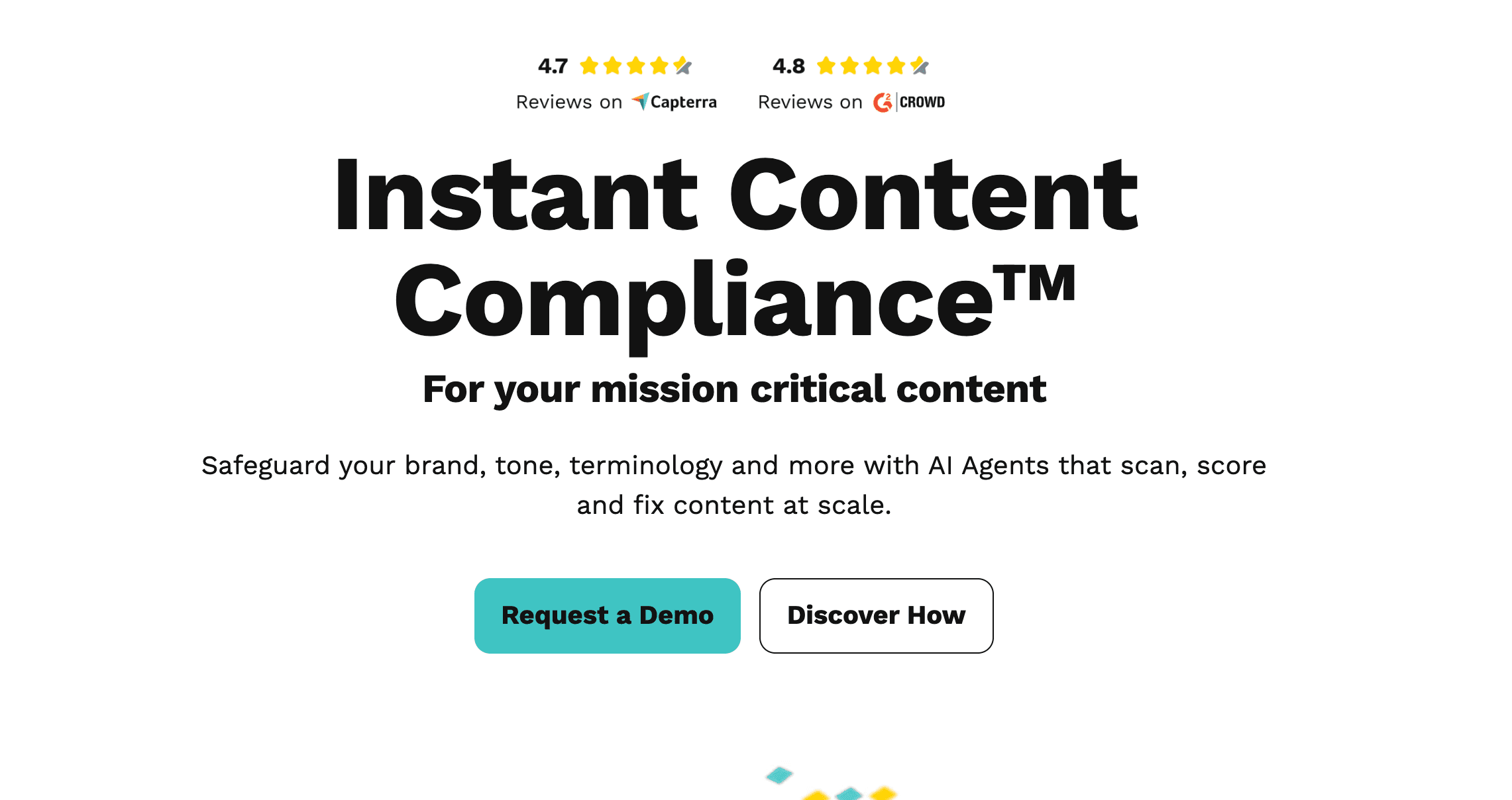
Acrolinx is a solid Writesonic alternative when you need good-quality content. While Writesonic is built to quickly generate copy, Acrolinx is built to govern it: enforcing brand, regulatory, and inclusivity standards at scale across thousands of pages and contributors.
For enterprises that can’t risk off-brand, non-compliant, or inconsistent messaging, Acrolinx offers far deeper control, analytics, and alignment than a general-purpose AI writer like Writesonic.
Key features:
Brand-aligned content controls
Advanced analytics
Team collaboration features
Pricing:
Acrolinx provides custom enterprise pricing, often starting around €25,000 as a one-time fee or quote-based monthly plans from $1,000+, tailored for large organizations needing content governance, compliance, and AI-powered editing across teams. No free plan or standard tiers exist; contact sales for demos and specifics.
6. Writefull
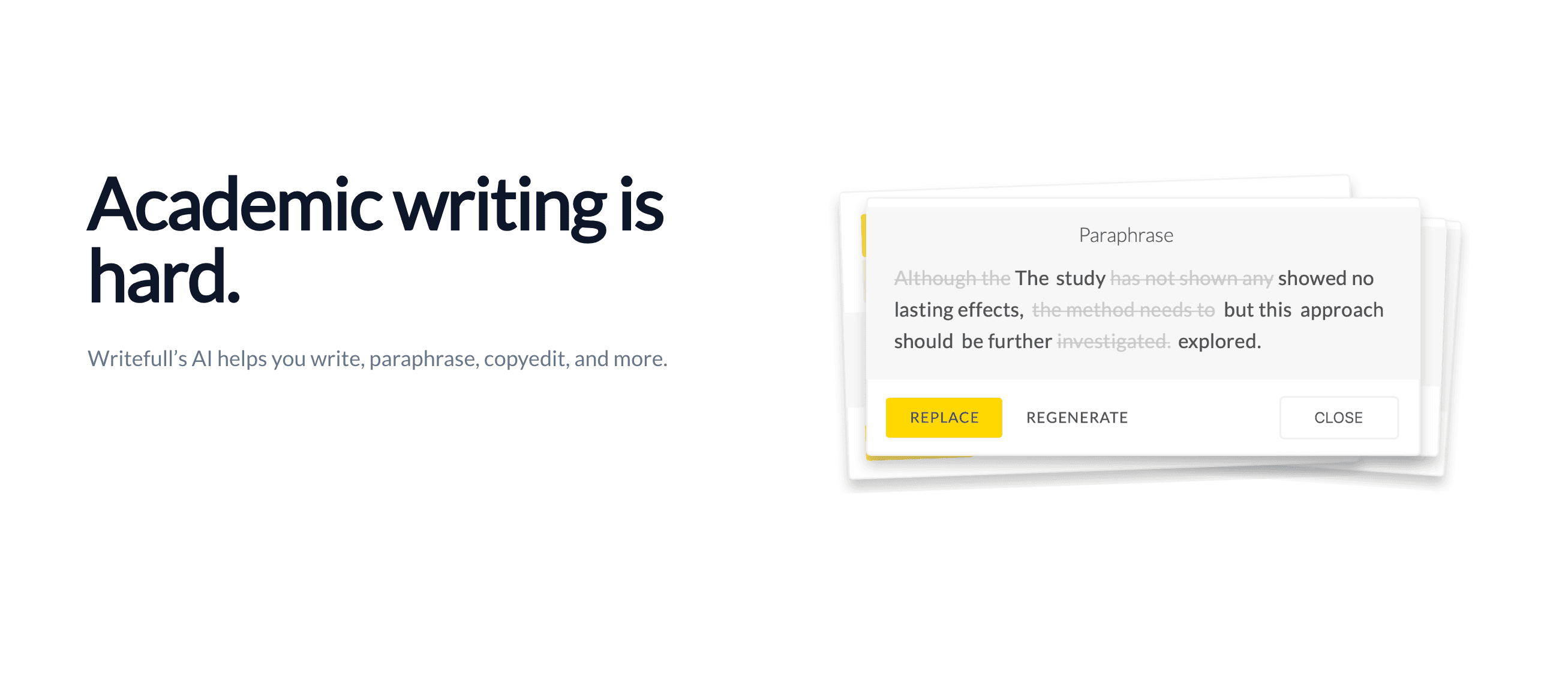
Writefull is a strong contender for choice over Writesonic for anyone doing serious academic or technical writing because it’s built specifically for that world, not just generic marketing copy. Beyond basic grammar help, it understands formal style and citation-heavy writing.
It offers templates tailored to research papers and journals. That helps researchers, students, and publishers produce precise, publication-ready text that goes far beyond what a general-purpose AI writer like Writesonic is designed to handle.
Key features:
Grammar correction
Paraphrasing
Citation support
Academic writing templates
Pricing:
Writefull provides a free plan with daily quotas for basic tools like language edits and Overleaf/Word integration. Premium starts at $7.21/month (individual) or $150/year for unlimited access, with group/institution plans from $2.57/user/month.
Why Consider Writesonic Alternatives?
Writesonic covers key needs for today’s content teams: an AI article writer for long-form content, a strong set of SEO tools, and easy integration with platforms like WordPress or Google Docs. Its AI-powered writing assistant helps users overcome writer’s block and generate marketing copy or social media posts in minutes. But no tool is perfect.
Based on feedback I’ve heard from agencies and startups, the most common reasons to look for Writesonic alternatives include:
Feature trade-offs: Some tools work better for specific writing styles, like concise summaries, formal or casual tones, or academic writing.
Pricing and points: Teams may find the free plan too limited or want more value from paid plans.
Brand voice and workflow: Businesses need better brand voice customization and team collaboration features.
SEO and AI visibility: Writesonic focuses on SEO optimization, but not all AI tools are equally visible to AI search engines and chatbots, which are reshaping search engine rankings and traffic sources. For tips on boosting your content’s visibility in AI-driven search, check out our How to Rank in AI Search Results guide.
Integration roadblocks: Not every AI tool fits seamlessly into workflows across multiple platforms or supports collaboration at scale.
Sometimes you just want a writing process that feels easier, with more advanced features, collaboration options, or support for multiple languages.
What to Look for in an AI Writing Tool
When businesses ask me for advice on upgrading their AI writing tools, I share a simple checklist. Here are the criteria that matter most today:
Content Quality & Versatility:
Can the tool generate diverse content? Think social media, blogs, long-form articles, optimized product descriptions.
Are outputs creative and factually reliableAdvanced Features: Brand voice customization, predictive analytics, data-driven insights, and real-time writing suggestions.
Team collaboration features, a user-friendly interface, seamless integration with tools (like a Chrome extension or Google Docs).SEO Optimization & AI Visibility:
Built-in seo optimization workflows, keyword suggestions, and compatibility with search engines and LLMs.
Predictive performance score to help improve search engine rankings.Usability & Support:
Is there a learning curve? Easy onboarding?
Good documentation, support, and clear pricing (including a free plan or demo).Multi-Language & Platform Support:
Multi-language support for global teams.
Tools should work well across multiple platforms—web, browser extensions, and plugins.Value & Trust:
Security, privacy, source transparency.
Free version or trial, and clear upgrade paths for paid plans.
Think of it like buying a new coffee machine: you want great taste, consistency, easy cleaning, and a price that makes sense for your kitchen, not just a fancy brand sticker.
SEO, Content Quality, and Brand Voice Control: Why Does it Matter in 2026?
AI writing tools are everywhere, but being everywhere isn’t enough. Search engines now crawl, rank, and recommend content differently. Meanwhile, AI-powered chatbots and search assistants pull their answers from whatever they see as most trustworthy, up-to-date, and visible. Brands that only optimize for classic SEO are already missing out on AI-driven traffic.
Content strategy in 2026 means thinking past Google and into the world of AI recommendations. You want to:
Be cited as the authority in AI-generated answers (just as you’d want a top spot in Google).
Keep your brand voice strong and your content quality consistent across platforms.
Support multiple languages and platforms so your message carries worldwide.
Adapt your writing process to work smoothly with browser extensions, Google Docs, and seamless integrations.
The right AI-powered writing assistant saves time but also builds brand loyalty and boosts search rankings if you can measure, manage, and improve your AI visibility. This is what we built AIclicks to do, based on real feedback from teams struggling with limited features or a lack of data insight in other tools.
Final Thoughts: Maximizing Value with the Right Writesonic Alternative
Choosing the right AI-powered writing tool goes beyond chasing fancy features. Start by clarifying your must-haves: SEO tools, AI content generation, brand voice, collaboration features, or visibility in AI-driven search. My advice? Always pilot your top two choices. Use their free plan, test real-time writing suggestions, and measure which fits your brand’s workflow and target audience best.
Suppose AI visibility and prompt-level tracking are priorities for your business. In that case, AIclicks is built for you, especially if you want a writing process closely tied to both classic and AI search engine rankings.
Tired of struggling with limited features or losing track of where your brand is cited? Try AIclicks or another top-listed alternative today. A better content strategy, streamlined content creation, and improved search rankings are just a few clicks away. My team uses these same steps internally, and it always pays off in growth.
Frequently Asked Questions About AI Writing Tools in 2026
What is the alternative to Writesonic AI?
There are several Writesonic alternatives, each catering to unique needs. AIclicks leads for AI visibility tracking and prompt analysis, while tools like Grammarly, Rytr, and Wordtune offer solutions for editing, rewriting, and quick content creation. Acrolinx and Writefull target professional and academic requirements.
How do AI writing tools improve SEO optimization?
They provide keyword suggestions, seo optimization workflows, and predictive performance scores that help improve search engine rankings. Some, like AIclicks, go further by revealing where your content appears in AI-powered search and chat answers.
Are there AI writing assistants with free plans and multi-language support?
Yes. Rytr, Wordtune, Writefull, and Grammarly offer a free version or trial, and most support multiple languages. AIclicks provides a trial so you can track AI visibility before upgrading.
Which tools help with brand voice customization or predictive analytics?
AIclicks, Acrolinx, and Grammarly Business all focus on controlling brand voice with various advanced features. AIclicks and Acrolinx add data-driven insights and team collaboration features.
What’s the difference between editing-focused and content-generation-focused tools?
Editing tools like Grammarly and ProWritingAid improve grammar, style, and tone. Content-generators like AIclicks, Rytr, and Wordtune focus on creating new content for various tasks: blog posts, social copy, and product descriptions.
How easy is it to switch from Writesonic?
Most alternatives allow for fast onboarding, easy-to-use tools, and offer tutorials or browser extensions. It usually takes just a few hours to adjust team workflows when moving between reputable AI writing tools.
Our Content:





Any questions left?
Book a call here: