" width="14px"><path d="M 13.864 5.629 L 13.3 5.629 L 13.3 5.6 L 7 5.6 L 7 8.4 L 10.956 8.4 C 10.379 10.03 8.828 11.2 7 11.2 C 4.681 11.2 2.8 9.319 2.8 7 C 2.8 4.681 4.681 2.8 7 2.8 C 8.071 2.8 9.045 3.204 9.786 3.864 L 11.766 1.884 C 10.516 0.719 8.844 0 7 0 C 3.134 0 0 3.134 0 7 C 0 10.866 3.134 14 7 14 C 10.866 14 14 10.866 14 7 C 14 6.531 13.952 6.073 13.864 5.629 Z" fill="rgb(255, 193, 7)" height="14px" id="H_YjfTNpn" width="14px"/><path d="M 0 3.742 L 2.3 5.429 C 2.922 3.888 4.429 2.8 6.193 2.8 C 7.264 2.8 8.238 3.204 8.979 3.864 L 10.959 1.884 C 9.709 0.719 8.037 0 6.193 0 C 3.504 0 1.172 1.518 0 3.742 Z" fill="rgb(255, 61, 0)" height="5.428500000000002px" id="PlkthQDhg" transform="translate(0.875 0)" width="10.959199999999996px"/><path d="M 6.232 5.581 C 8.04 5.581 9.683 4.889 10.925 3.764 L 8.758 1.931 C 8.032 2.483 7.144 2.782 6.232 2.781 C 4.411 2.781 2.865 1.62 2.283 0 L 0 1.759 C 1.159 4.026 3.511 5.581 6.232 5.581 Z" fill="rgb(76, 175, 80)" height="5.581099999999999px" id="WlnJ5gngE" transform="translate(0.7 8.4)" width="10.924899999999994px"/><path d="M 6.864 0.029 L 6.3 0.029 L 6.3 0 L 0 0 L 0 2.8 L 3.956 2.8 C 3.68 3.576 3.183 4.254 2.526 4.75 L 2.527 4.749 L 4.693 6.582 C 4.54 6.722 7 4.9 7 1.4 C 7 0.931 6.952 0.473 6.864 0.029 Z" fill="rgb(25, 118, 210)" height="6.589883930775992px" id="x_rSW275p" transform="translate(7 5.6)" width="7px"/></g></svg>)


Reviewed by:
Rokas Stankevicius

Founder @ aiclicks.io
Last updated:
Expert Verified

Key Takeaways
AthenaHQ now offers a free Essential includes a $25 free credit, while its full Starter plan begins at $295 per month. The Starter tier includes visibility tracking across nine AI models, unlimited members, source analysis, competitor insights, and content recommendations.
AthenaHQ’s strongest advantage is the breadth of its workflow. It combines AI visibility monitoring, source intelligence, recommendations, and action-oriented features in one product. That depth also makes it more expensive than many self-serve monitoring tools.
Teams usually consider alternatives because they need a lower entry price, more predictable prompt-based pricing, stronger content production, simpler agency reporting, or a platform that fits naturally into an existing SEO workflow.
The alternatives fall into several distinct groups. AIclicks, AirOps, and some enterprise platforms focus on turning visibility findings into work. Peec AI and PromptMonitor lean more heavily toward monitoring and analysis. Semrush and Atomic AGI combine AI visibility with broader SEO capabilities.
No single alternative is better for every buyer. The right choice depends on whether your team needs monitoring, content execution, agency reporting, revenue attribution, or wider SEO functionality.
AthenaHQ is one of the more complete platforms in AI search optimization. It does not stop after showing whether your brand appears in ChatGPT, Perplexity, Gemini, Claude, or Google’s AI results. It also analyses the sources influencing those answers, identifies competitors gaining visibility, and recommends work that may improve your position.
That breadth is exactly why many teams consider AthenaHQ in the first place. It is also why some eventually start comparing alternatives.
This guide compares ten AthenaHQ alternatives based on their current pricing, available AI engine coverage, execution features, review history, and the type of team each platform is designed to serve.
Why Teams Look Beyond AthenaHQ
1. The team is not ready to commit $295 per month
AthenaHQ now has a free plan, which makes initial evaluation easier than it was previously. The free credit allowance is still better suited to testing than to ongoing multi-brand monitoring. Once a team needs regular tracking across its full model set, the practical entry point remains the $295 Starter plan.
That price may be reasonable for an established e-commerce, SaaS, or enterprise marketing program. It is harder to defend for a small business that is still trying to determine whether AI search generates meaningful traffic, leads, or revenue.

2. The credit system makes costs hard to predict
The $295/mo Starter plan buys a credit allowance, but how quickly those credits deplete depends on which features you use, how many prompts you run, and how often. Multiple G2 reviewers flag data opacity around prompt volumes and credit usage as a persistent frustration. "I would like more visibility on prompt volume data," one verified reviewer notes. For agencies trying to model client costs or teams with variable usage month to month, that uncertainty compounds.

3. The product moves fast and that creates friction
AthenaHQ ships updates frequently, which means the platform you evaluated last quarter may look meaningfully different today.

How I Will Evaluate the Alternatives
Each platform will be assessed against five practical questions.
AI engine coverage: Which AI platforms are genuinely included in the advertised self-serve price? I will distinguish between engines available on the entry plan, engines requiring a higher plan, and engines available only through an enterprise agreement.
Action after measurement: Does the product provide prioritized recommendations, content briefs, publishing workflows, or executable tasks? A dashboard that identifies a visibility problem is different from a platform that helps the team resolve it.
Realistic pricing: The comparison will include prompt limits, project limits, seats, regions, response credits, add-ons, and annual-billing conditions. Promotional prices will not be presented as normal prices unless they remain publicly available.
Fit for the buyer: Tools designed for solo marketers, agencies, enterprise data teams, and high-volume content operations will be judged according to the audience they actually serve.
Independent customer feedback: G2 ratings and screenshots will be included where verified reviews exist. Platforms without a meaningful G2 presence will be labelled clearly rather than supported with first-party testimonials presented as independent evidence.
10 Best AthenaHQ Alternatives
Tool | Best for | Starting price | Coverage/scope | Standout feature |
AIclicks | Teams wanting actions, not only charts | $59/mo | ChatGPT, Perplexity, Gemini, AI Overviews, AI Mode, Claude, Grok, DeepSeek, Meta AI, Copilot | Ranked recommendations |
Peec AI | Clean analytics and multilingual teams | $95/mo | ChatGPT, AI Mode, AI Overviews, Microsoft Copilot, Perplexity, Gemini | Unlimited users on the Starter plan |
AirOps | Enterprise content teams | Quote needed | Solo plan only has ChatGPT, then Gemini, Perplexity, and AI Mode comes in | Workflows and CMS publishing |
Profound | Enterprise AI search programs | $99/mo | ChatGPT (Starter); + Perplexity, AI Overviews (Growth); + Gemini, Copilot, Meta AI, Grok, DeepSeek, Claude, AI Mode (Enterprise) | Prompt Volumes and Agents |
Rankability | SEO agencies | $99/mo | ChatGPT, Perplexity, Google Gemini, Google AI Overviews (AIO), Google AI Mode, Microsoft Copilot, Claude | White label agency stack |
Atomic AGI | SEO+ AI attribution | Free;$20/mo paid | ChatGPT (Starter) + Claude, Gemini Perplexity (Agentic) + AI Mode, Grok, Copilot (Team) | Agents and GA4/GSC context |
Mentions.so | Simple brand monitoring | $49/mo | ChatGPT, Gemini, Perplexity (Starter) + Claude, Llama, Google AI, Grok, DeepSeek (Pro and Business) | Low friction monitoring |
PromptMonitor | Affordable outreach led GEO | $29/mo | ChatGPT, Claude, Gemini, DeepSeek, Grok, Perplexity (Plus AI Mode and AI Overviews in Pro plan) | Publisher contact extraction |
Semrush | Existing Semrush users | $199/mo | ChatGPT, Google AI, Gemini, and Perplexity | Integrated SEO context |
Passionfruit Labs | Early stage GEO testing | $19/mo for lite; $49/mo for starter | ChatGPT (Lite) + Gemini, Perplexity (Starter) + Claude (Pro) | Low cost action first pitch |
1. AIclicks: Best for teams that want a clear action plan at a lower entry price
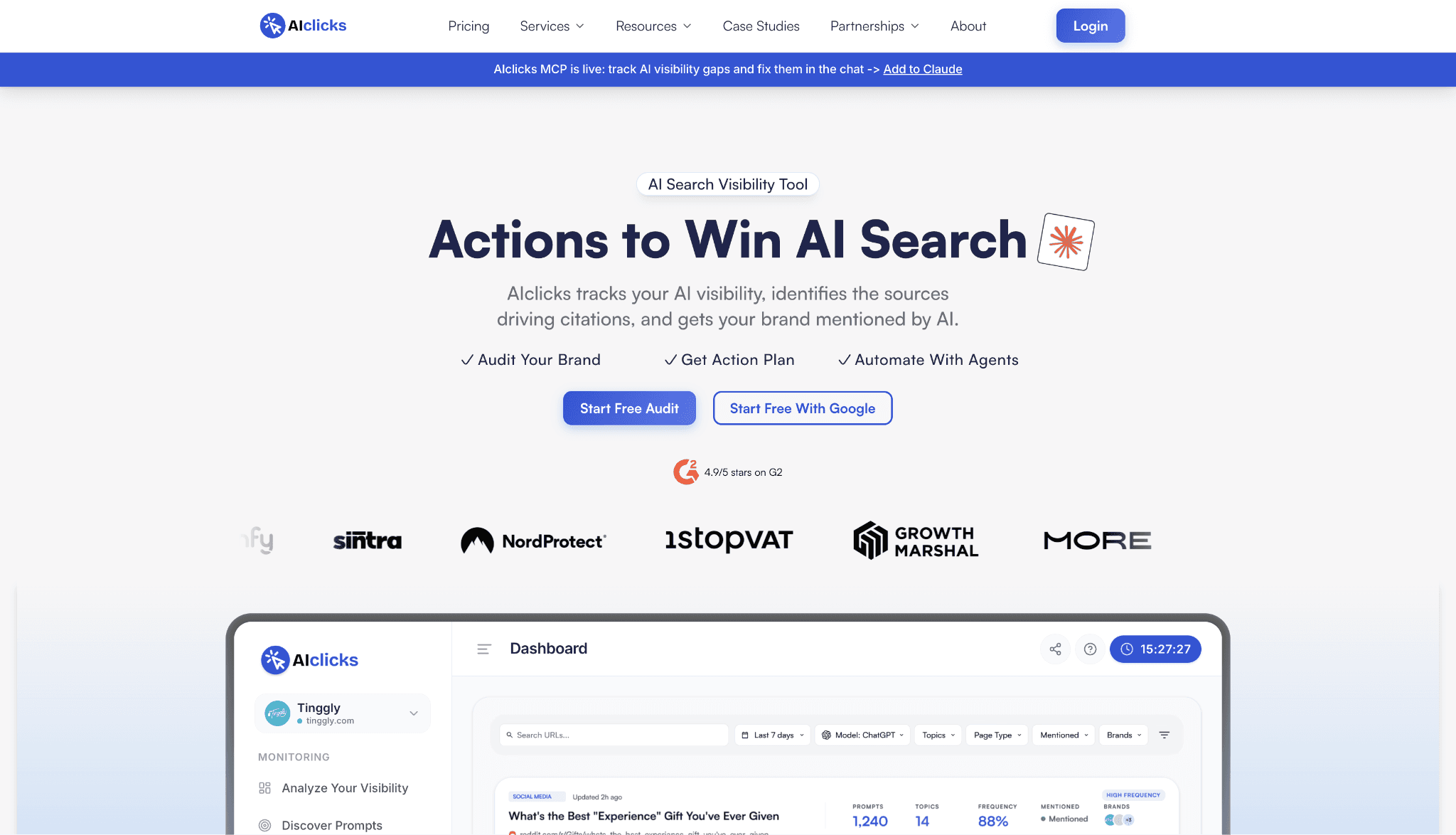
AIclicks is an AI search visibility tool and the most direct alternative for teams that like AthenaHQ's action-oriented philosophy but do not want to begin at an enterprise-style price. The platform tracks prompt-level visibility, citations, competitors, and sources, then converts the findings into recommended work.
The important comparison is what happens after the dashboard loads. AIclicks is built to show which prompts you are absent from, which competitors are being recommended, and which sources influence those results. That makes it useful for teams that need a weekly work list rather than a reporting layer alone.
Key features
10+ AI platforms tracked through real user interfaces: ChatGPT, Perplexity, Gemini, Google AI Overviews, AI Mode, Claude, Grok, DeepSeek, Meta AI, and Microsoft Copilot.
Real-UI querying capturing what actual users see, not API approximations that return different answers from what buyers encounter.
Actions tab converting every visibility finding into a ranked, scored action list across three types: content to create, sources to earn mentions on, and communities to engage.
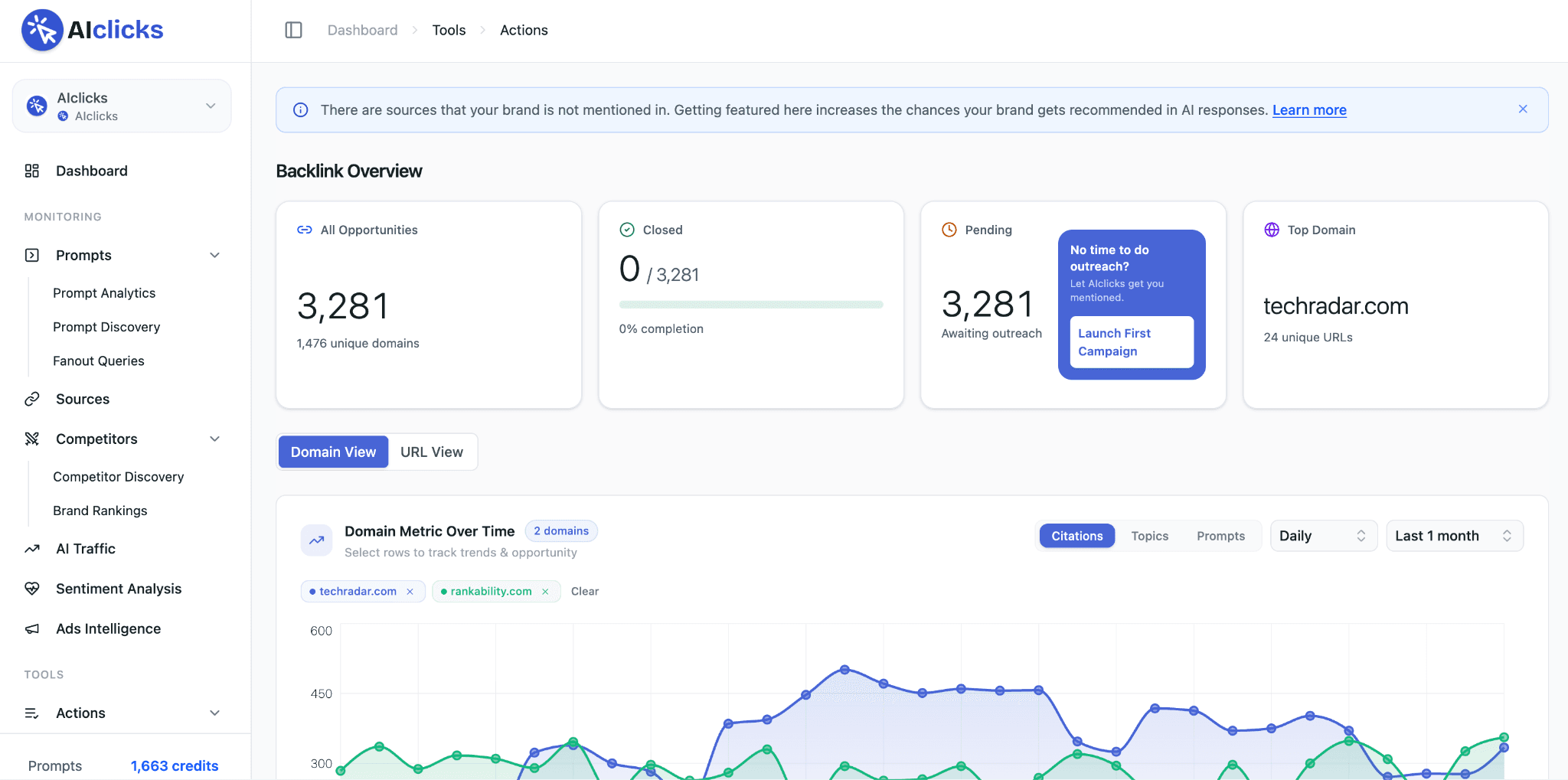
Competitors tab tracing which specific sources power competitors' AI visibility, so outreach and content targets are concrete rather than directional.
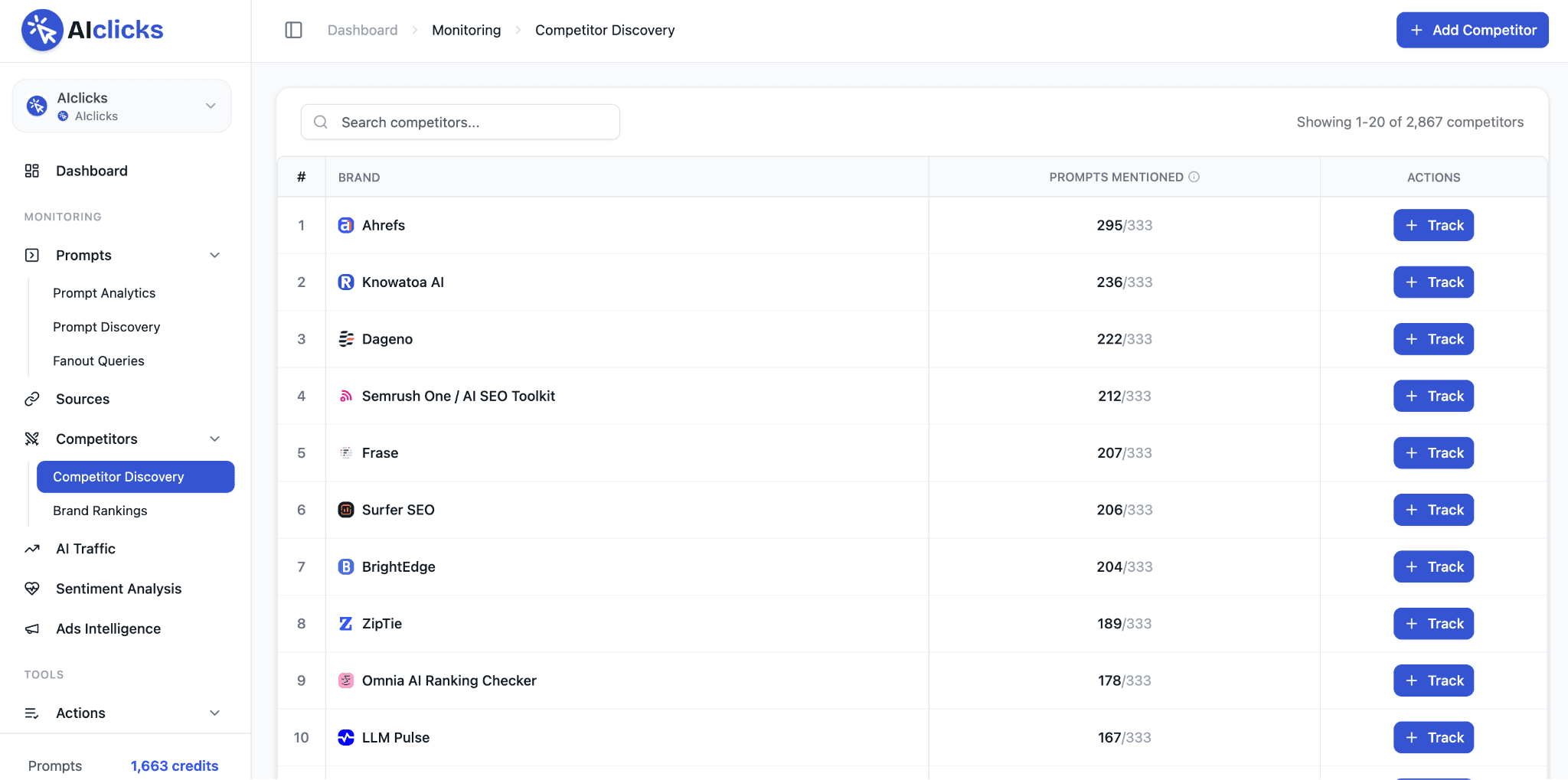
Sources analysis showing exactly which domains feed AI answers in your category and where you're absent.
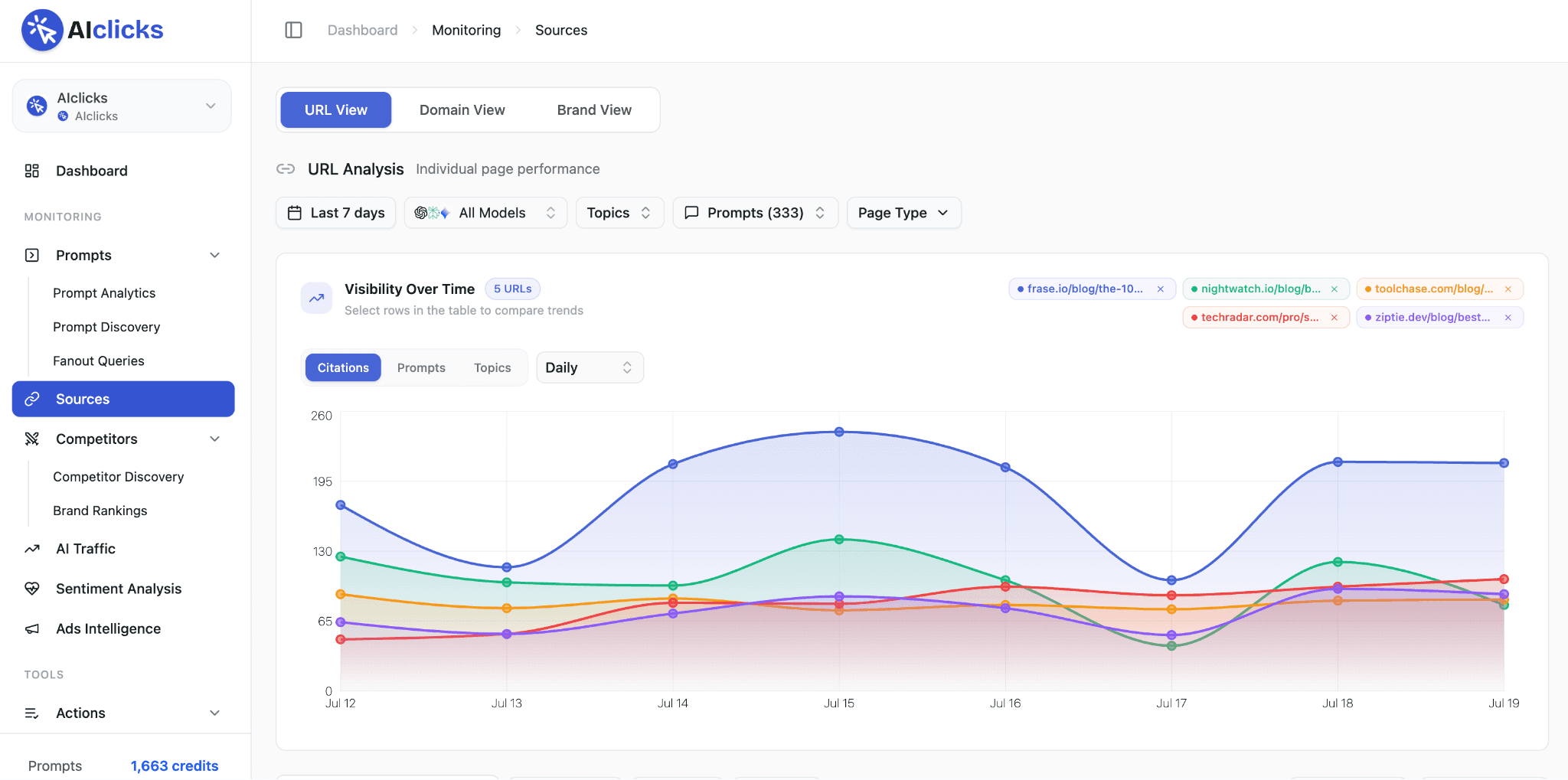
Google Analytics integration tying AI visibility to actual site traffic, with daily refreshes segmented by model and country.
Write Content module for producing AI-optimized content directly inside the platform.

Pros and cons
Pros
Lower verified starting price than AthenaHQ.
Clear progression from measurement to action.
Strong G2 rating and a growing set of verified reviews.
Cons
The three-day trial is short for evaluating trend quality.
Teams that only want a simple rank checker may not use the full feature environment.
G2 rating: 4.9/5
Pricing: Starter $59/mo (30 prompts, 1 website, 3 selected platforms) | Pro $189/mo (150 prompts, 4 platforms) | Business $499/mo (300+ prompts, 6 platforms) | Custom available | 3-day trial.
Verdict
AIclicks is the best overall AthenaHQ alternative for teams that want to spend less without giving up an action layer. The main constraint is plan-based engine coverage. Compare the exact three or four platforms you need before choosing a tier.
For a small agency or in-house content team, the $59 entry point makes it much easier to prove whether AI visibility work belongs in the weekly marketing process.
Here’s a step-by-step guide to setup your dashboard:
EMBED: AIclicks Tutorial: Quick Setup Guide
2. Peec AI: Best for marketing teams that prioritize clean analytics and multilingual tracking
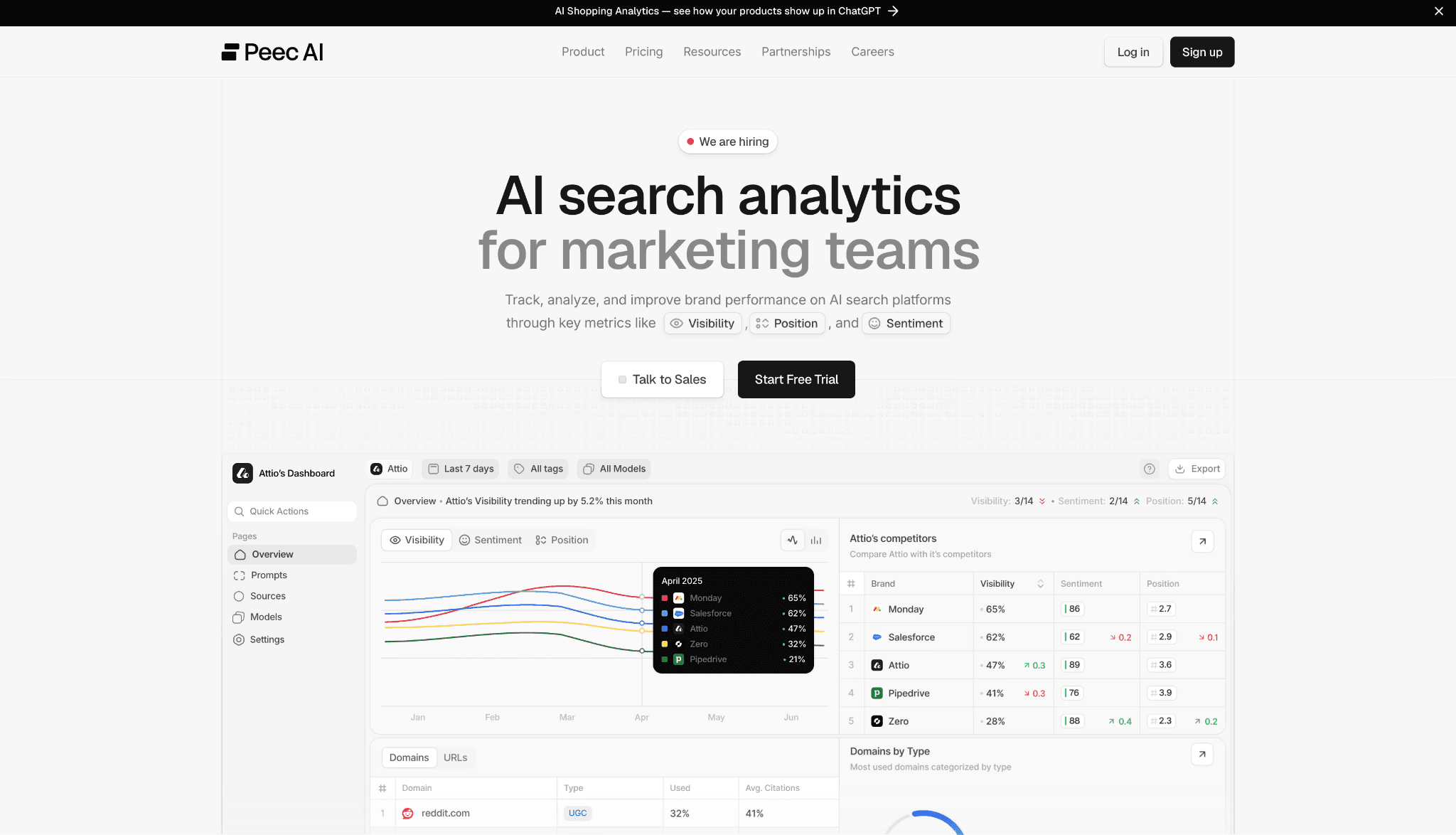
Peec AI is one of the strongest choices for teams that want an analytics product with a clean interface and less workflow overhead. Its value is clarity: visibility, position, sentiment, prompt performance, competitor benchmarking, and citation sources are presented in a format that marketing teams can understand without a dedicated data analyst.
Compared with AthenaHQ, Peec is more comfortable stopping at measurement. That is an advantage for teams with a strategist who already knows how to turn visibility data into content, PR, and technical work. It is a limitation for teams that expect the platform to produce and manage the execution plan.
Key features
Visibility, position, sentiment, citations, sources, and competitor analysis.
Prompt allocation can be shared across brands and projects.
Country and language support is not priced as a separate regional add-on.
Clean dashboards and exports designed for marketing reporting.
Pricing scales with prompt and model usage.
Pros and cons
Pros
Fast onboarding and a widely praised interface.
Good fit for global and multilingual monitoring.
Unlimited-seat positioning can reduce collaboration costs.
Cons
Execution remains mostly outside the platform.
More value is often extracted through exports and manual filtering.
Model-based pricing requires careful planning for broad coverage.

G2 rating: 4.9/5
Pricing: Starter $95/mo | Pro $245/mo | Higher-volume and agency options scale by prompts and models | Annual billing discounts may apply.
Verdict
Choose Peec when your team wants reliable, clean visibility analytics and already has a content or SEO strategist. It is less suitable when the missing piece is a ranked action backlog.
For international brands, the combination of multilingual support and simple reporting may matter more than having content generation inside the same platform.
3. AirOps: Best for mature content teams that want AI visibility connected to publishing workflows
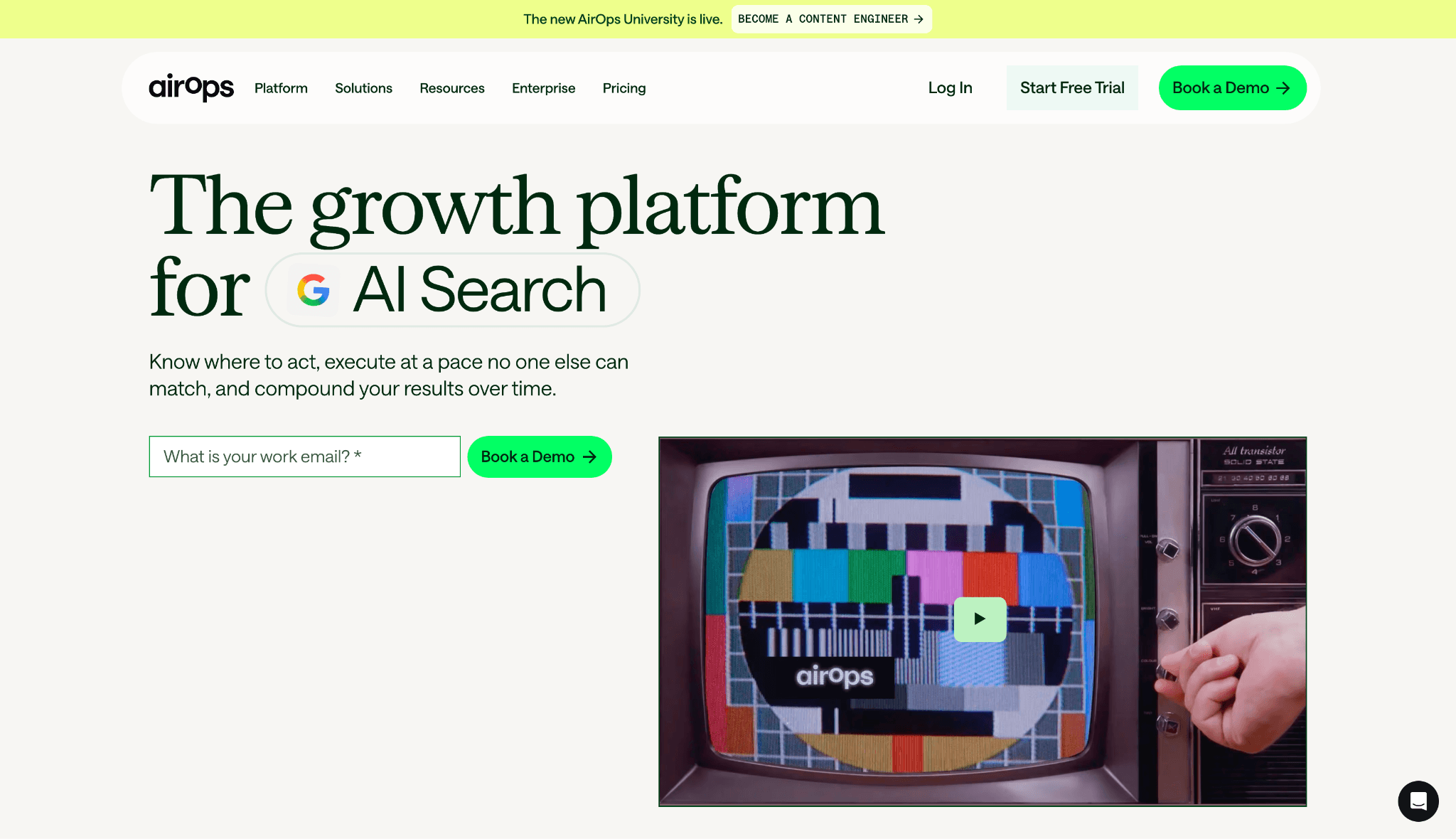
AirOps approaches AI search from the content operations side. Its platform combines visibility insight with Grids, Workflows, Power Agents, brand controls, and CMS publishing. The product is designed for teams that already produce content at scale and want AI-search findings to flow into an established editorial process.
The strongest case for AirOps is not basic tracking. It is governed by execution. A team can identify a citation or content gap, create a workflow around it, apply brand rules, and publish through connected systems. That can replace several handoffs, but it is heavier than what a small team needs for weekly monitoring.
Key features
AI search visibility and citation analysis across major surfaces.
Grids, Workflows, and Power Agents for repeatable content operations.
Brand kits and governance controls.
CMS connections including common enterprise publishing systems.
Research and operational resources focused on AI search.
Pros and cons
Pros
Strongest content-operations workflow in this comparison.
Useful for teams already publishing at scale.
Reduces the gap between insight, brief, production, and CMS delivery.
Cons
No simple, stable public self-serve price for the complete platform.
Can be excessive for a team that only wants monitoring.
The learning curve is real and consistently mentioned across G2 reviews.

G2 rating: 4.7/5
Pricing: Quote needed.
Verdict
AirOps is a better AthenaHQ alternative for a content operations team than for a small SEO team. Its value increases with publishing volume, workflow complexity, and the number of people involved in review and approval.
Before buying, map the exact workflows you expect to move into AirOps. Without that preparation, the platform can become an expensive layer around work that still happens elsewhere.
4. Profound: Best for enterprise teams that treat AI visibility as a major marketing dataset
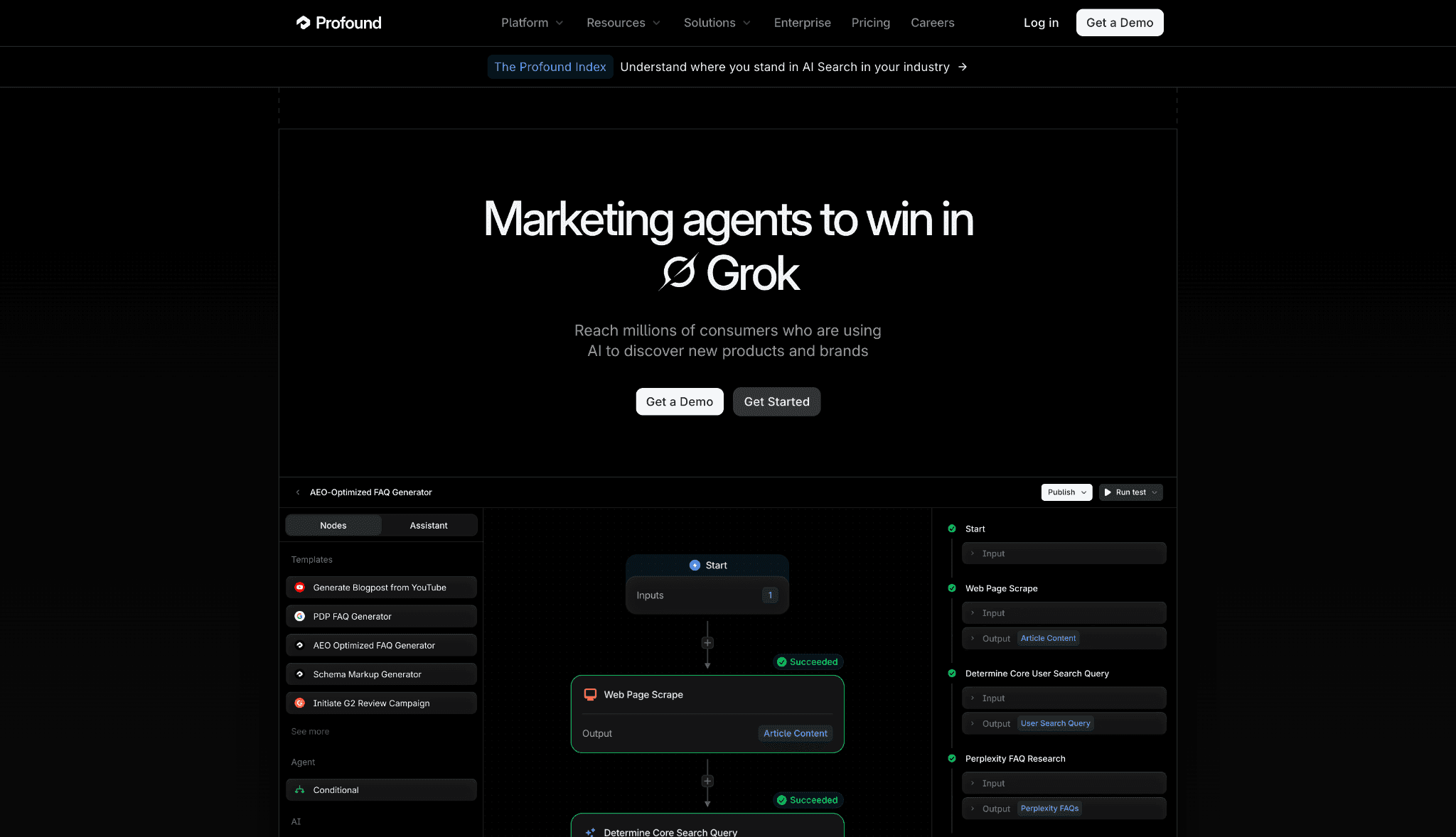
Profound has become the enterprise benchmark in this category. It combines answer-engine visibility, citation and sentiment analysis, agent analytics, prompt intelligence, and content agents. Its strongest differentiator is Prompt Volumes, a dataset intended to show how often real users ask different types of questions across AI experiences.
Profound is not automatically better because it has more data. It is better when a team has the analysts, strategists, and content operators to use that data. For a small marketing team, the learning curve and price can turn depth into unused complexity, which is why smaller teams often compare Profound alternatives before committing.
Key features
Answer Engine Insights for mentions, citations, sentiment, and share of voice.
Prompt Volumes for AI query demand intelligence.
Profound Agents for briefs, refreshes, and new content.
Agent Analytics for AI crawler and bot behavior.
Enterprise security and integration options.
Pros and cons
Pros
Deepest enterprise dataset in the category.
Strong customer support and content workflow reviews on G2.
Broad engine-by-engine analysis for large organizations.
Cons
Meaningful capabilities sit above the entry tier.
Large feature set creates a learning curve.
Cost is difficult to justify for light or occasional monitoring.

G2 rating: 4.5/5
Pricing: Starter commonly listed at $99/mo | Growth $399/mo | Agency and Enterprise configurations scale higher | Verify current credit and engine limits before purchase.
Verdict
Profound is the right choice when AI visibility has already become an executive metric and the organization can assign people to operate the platform. It is not the sensible first purchase for a team that is still proving the channel.
Compared with AthenaHQ, the decision is less about feature count and more about data depth, enterprise process, and whether Prompt Volumes will materially change prioritization.
5. Rankability: Best for SEO agencies that want AI visibility inside a repeatable client workflow
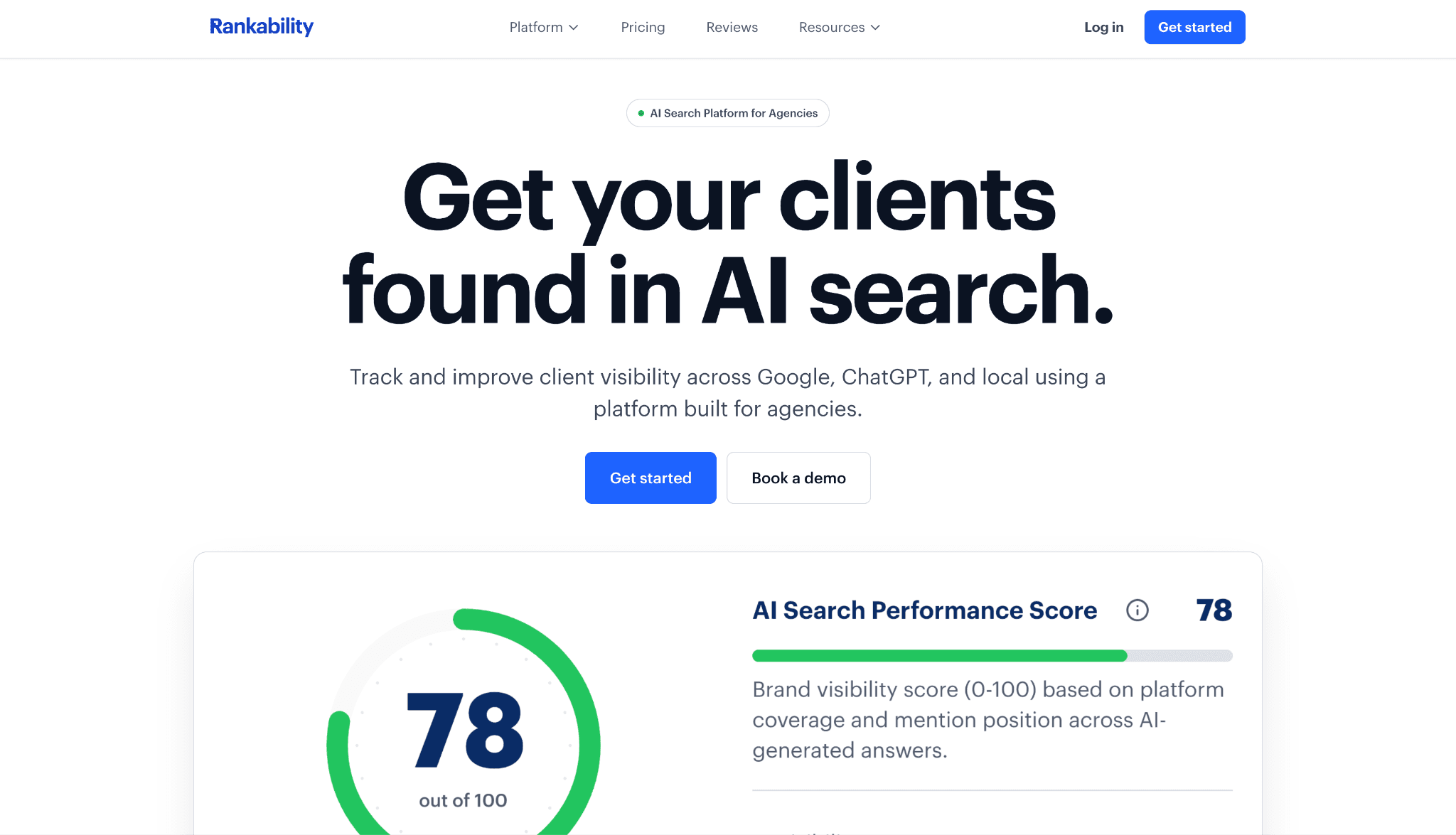
Rankability is broader than a standalone GEO tracker. It combines keyword research, content optimization, reporting, advising, and AI visibility in an agency-oriented system. This makes it relevant for teams that do not want AI search to become a separate service line with a separate tool stack.
The AI Analyzer is useful when client conversations still need to connect AI visibility with traditional rankings, content quality, and deliverables. The trade-off is that Rankability's identity is still SEO-agency-first, so teams seeking the deepest prompt and citation dataset may prefer a GEO-native product.
Key features
AI Analyzer alongside keyword, content, and SEO workflow tools.
White-label reporting and API access across public plans.
Multi-client structure designed for agencies.
Content optimization and advisor-style recommendations.
Credits that can be allocated across the broader product.
Pros and cons
Pros
Strong fit for packaged agency services.
Consolidates several SEO and AI-search tools.
5.0/5 G2 rating in the current small review set.
Cons
The credit system means that heavy usage across multiple clients and workflows can deplete your monthly allocation faster than expected, and credit costs per action are not always visible before you run something.
AI visibility is one component of a broader suite. Teams that primarily need prompt tracking and citation analysis will pay for keyword research, content optimization, and advisory tools they may not use.
Some reviewers flag that credit opacity makes it difficult to forecast monthly spend accurately before running automations.

G2 rating: 5/5
Pricing: Starter $99/mo (10,000 credits) | Growth $199/mo (30,000 credits) | Scale $399/mo (75,000 credits)
Verdict
Rankability makes the most sense for an agency that already sells SEO and wants to add AI visibility without building a separate operating model. The white-label and multi-client structure are more important here than raw engine count.
6. Atomic AGI: Best for teams that want AI search, traditional SEO, attribution, and automation together
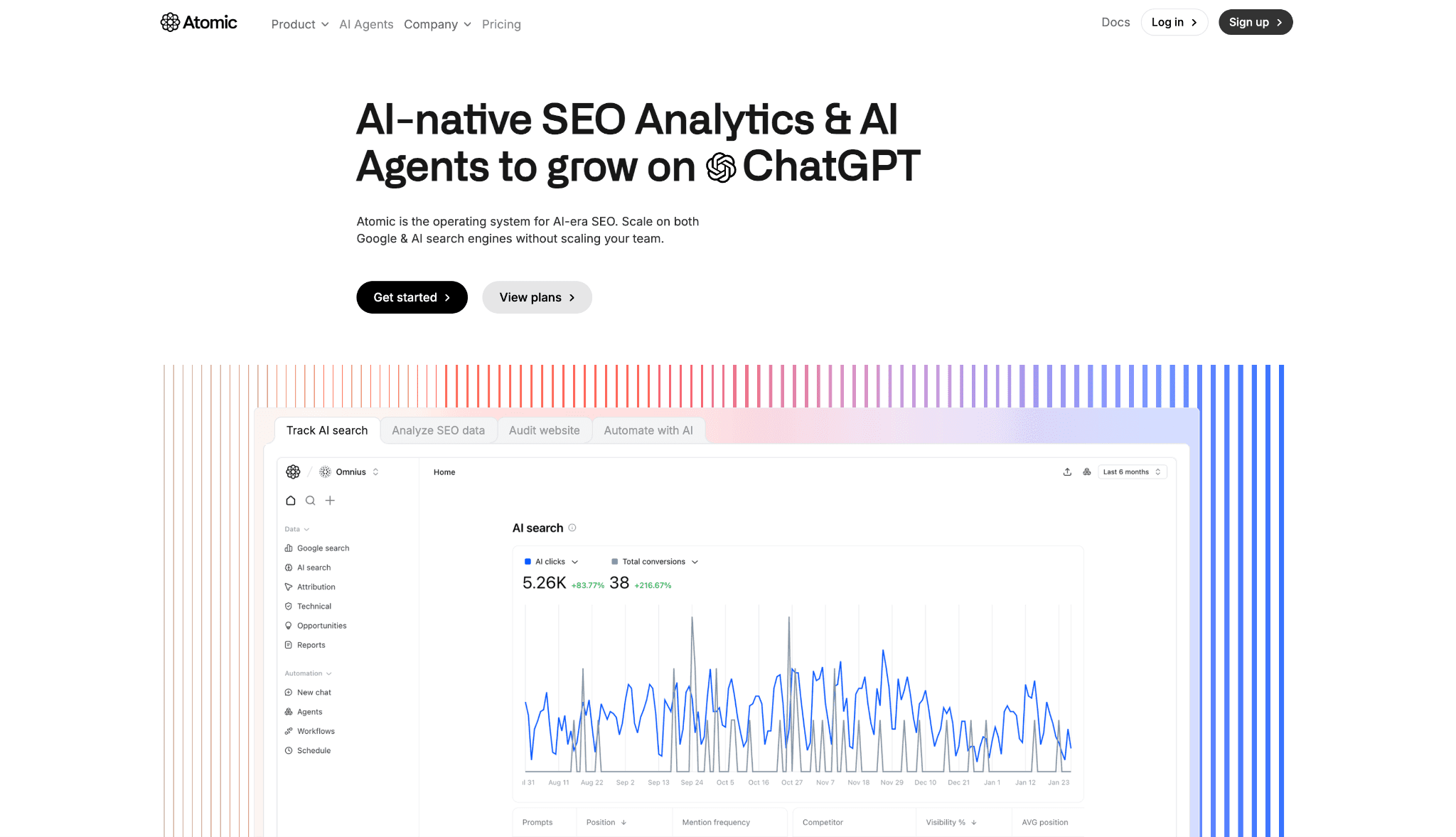
Atomic AGI is positioned as an AI-native SEO operating system rather than a pure visibility tracker. It combines AI search monitoring with Google Search Console, GA4, technical audits, site opportunities, attribution, and agents that can act on detected issues.
This pricing is unusually accessible, but the tiers differ substantially. The $20 plan should not be described as broad multi-engine tracking. The meaningful AthenaHQ comparison begins at Agentic or Team, depending on the engines and automation required.
Key features
AI search visibility, citations, sentiment, and LLM audits.
GSC and GA4 integration with traffic and conversion context.
Technical SEO and AI crawlability diagnostics.
Agents and workflows for recurring optimization tasks.
Tiered coverage that expands from ChatGPT to seven named AI surfaces.
Pros and cons
Pros
Low public entry price and free plan.
Connects visibility to real search and analytics data.
Automation can reduce repetitive SEO operations.
Cons
Entry plan is ChatGPT-only.
Per-project pricing must be modeled carefully for agencies.
Broader platform requires more setup than a simple monitor.
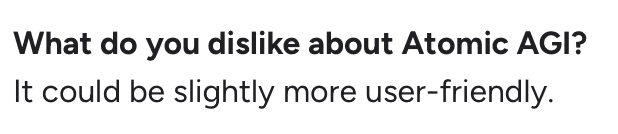
G2 rating: 4.9/5
Pricing: Free | Starter $20/mo per project | Agentic $40/mo per project | Team $100/mo | Team Max $200/mo | Enterprise custom
Verdict
Atomic AGI is a strong alternative when the buyer wants one search analytics system for Google and AI rather than a GEO command center alone. It is especially attractive for teams that care about attribution and technical issues.
Compare the Agentic and Team tiers, not only the free or $20 headline, because engine coverage changes materially between plans.
7. Mentions.so: Best for small teams that want simple multi-model brand monitoring
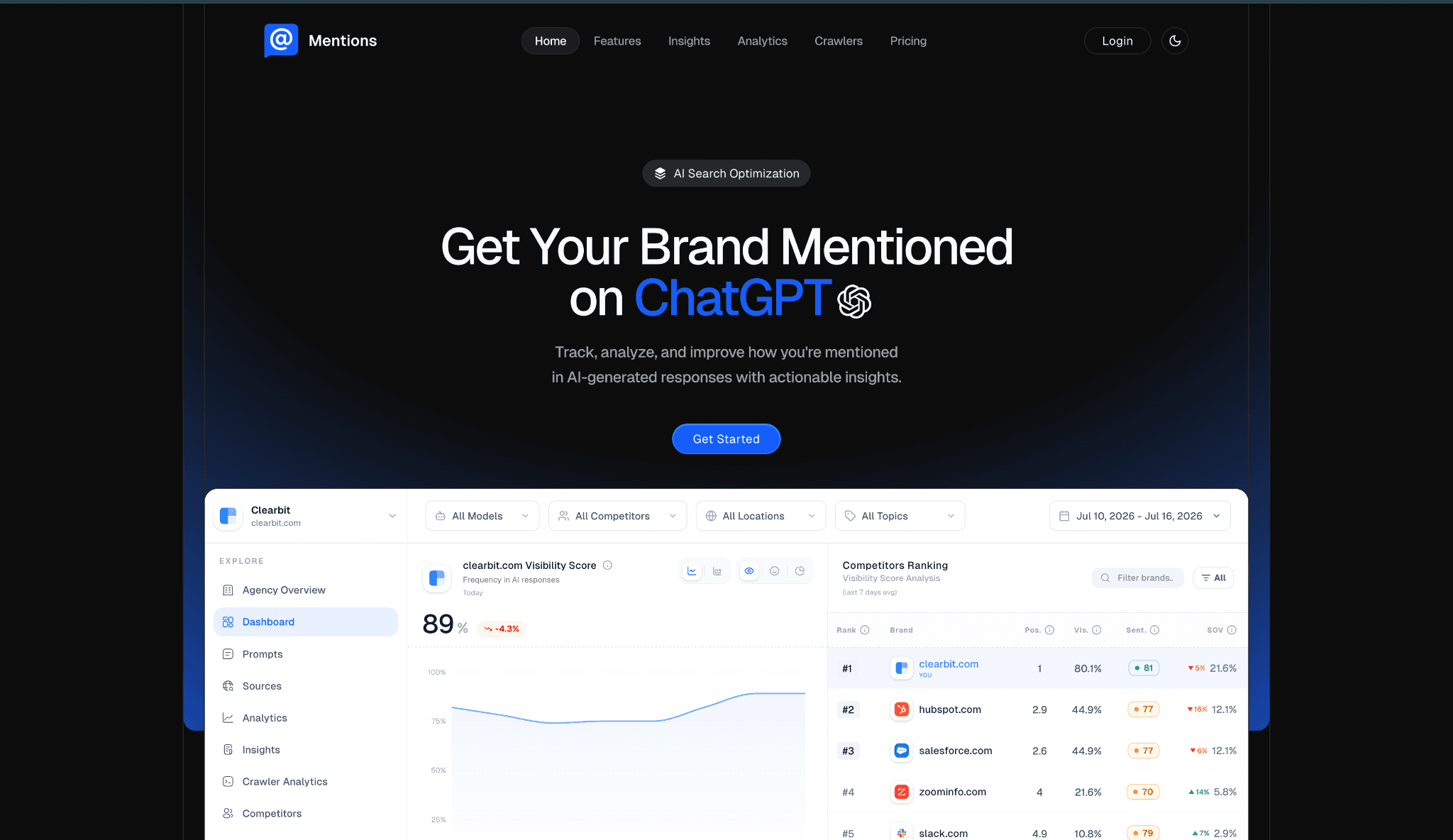
Mentions.so focuses on a narrower question: how AI systems talk about your brand. The official site currently names ChatGPT, Perplexity, Claude, Grok, Gemini, DeepSeek, Google AI Overview, and Llama as supported models, with visibility and sentiment analysis presented as the core workflow.
The product is easier to understand than a full GEO suite. That simplicity suits founders and small marketing teams that need a regular brand-presence check rather than a content operating system. It is less compelling for teams that need deep source intelligence, task management, or sophisticated revenue attribution.
Key features
Brand visibility and sentiment analysis.
Eight named AI models on the official product page.
Competitor and prompt-level monitoring.
Simple interface aimed at quick setup.
Agency-oriented positioning and multiple-brand use cases.
Pros and cons
Pros
Broad named model list for a lightweight product.
Low learning curve.
Useful for basic brand and competitor monitoring.
Cons
Less workflow depth than AthenaHQ.
No independent review evidence compared with larger platforms.
G2 rating: No reliable G2 rating was confirmed during this review.
Pricing: Starter $49/mo (25 prompts, 1 site, 3 LLMs) | Pro $99/mo (50 prompts, 5 sites, all LLMs, tailored insights) | Business $199/mo (100 prompts, 10 sites, all LLMs)
Verdict
Mentions.so belongs on the shortlist when ease of use matters more than advanced execution. It should not be presented as a full replacement for AthenaHQ's action and attribution layers.
8. PromptMonitor: Best for budget-conscious teams that want monitoring plus outreach targets
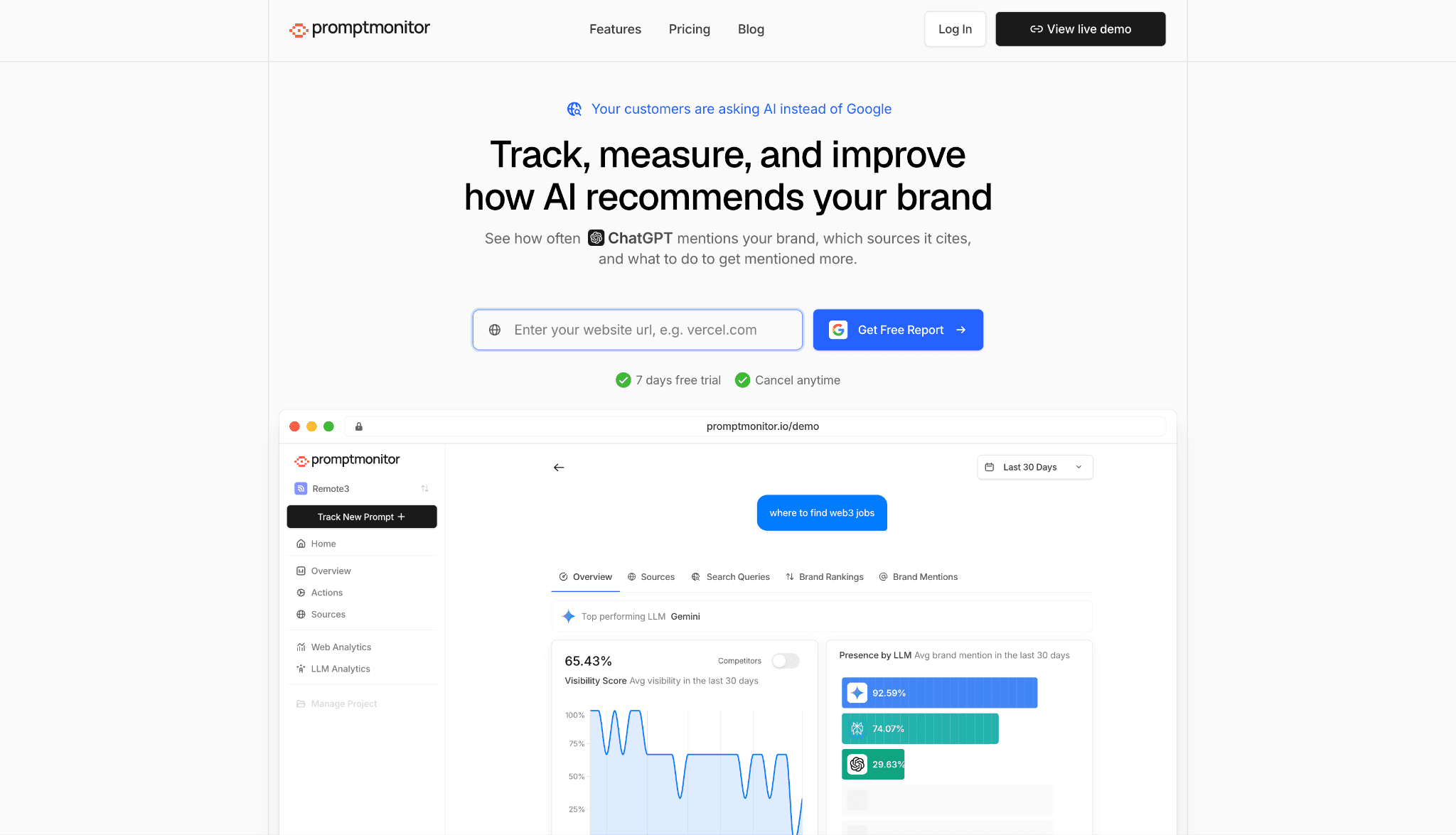
PromptMonitor competes by making AI visibility affordable and by turning citation data into outreach research. Its publisher contact feature identifies the authors and contact details behind sources that AI systems cite, helping teams move from 'this domain matters' to 'this is the person we should contact.'
Compared with AthenaHQ, PromptMonitor is narrower and much cheaper. It does not try to replace a full content and optimization workflow. Its strongest use case is a team that believes source outreach is the most practical lever for improving citations.
Key features
Brand, competitor, prompt, source, and citation monitoring.
Publisher contact extraction from cited sources.
AI crawler and website analytics on higher tiers.
Six models on Starter; AI Mode and AI Overview on Pro.
Unlimited team seats from Growth.
Pros and cons
Pros
Very low verified entry price.
Distinct outreach workflow.
Clear self-serve limits and seven-day trial.
Cons
Prompt limits become restrictive for multi-market programs.
No broad content production system.
G2 presence is limited.
G2 rating: No rating available on G2.
Pricing: Starter $29/mo (1 project, 25 prompts, 6 models) | Growth $39/mo (2 projects, 50 prompts, unlimited seats) | Pro $129/mo (5 projects, 150 prompts, 8 models) | 7-day trial.
Verdict
Promptmonitor is the best budget alternative in this list for teams that want actionable source outreach rather than a full action center. It provides enough data to run a focused GEO program without enterprise pricing. The planning constraint is prompt volume. A broad product catalog or multiple countries can outgrow the entry tiers quickly.
9. Semrush AI Visibility Toolkit: Best for SEO teams that already work inside Semrush
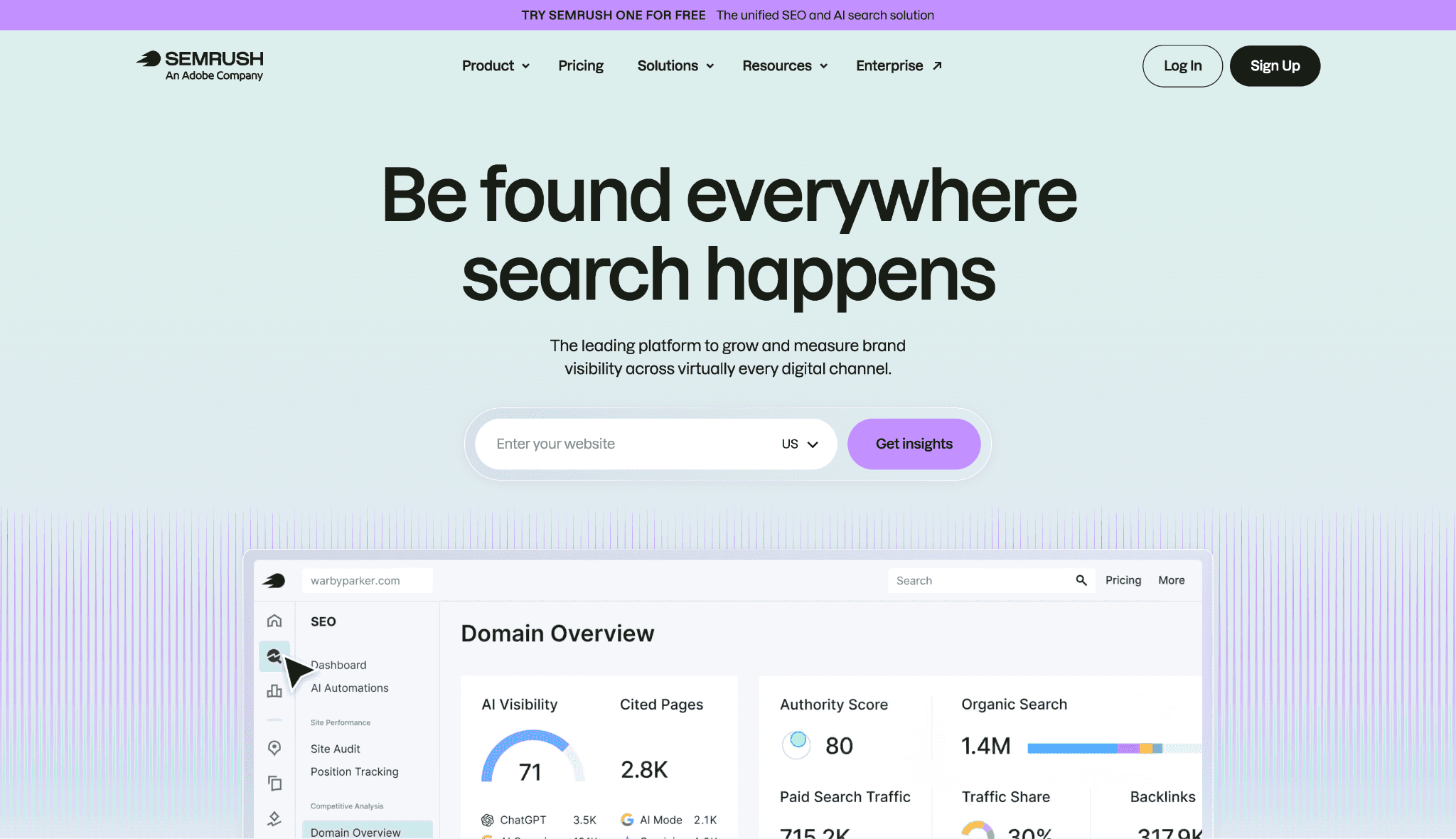
Semrush is the practical alternative when AI visibility should sit beside keyword research, technical audits, backlinks, content optimization, and recurring SEO reports. Buyers can use the $99 per month AI Visibility Toolkit or move to the combined Semrush One plans that bundle SEO and AI search capacity.
Official documentation lists the standalone AI Visibility Toolkit at $99 per month. It includes one folder, one Brand Performance domain, twenty-five tracked prompts, AI Search Checks for up to one hundred audited pages, and daily query and export limits. Additional domains cost $99 per month and fifty more tracked prompts cost $60 per month.
Key features
Brand Performance, prompt tracking, sentiment, and competitive visibility.
AI Search Checks inside Site Audit.
Prompt Research and AI analysis reports.
Direct connection to Semrush's SEO, keyword, backlink, and reporting ecosystem.
Semrush One bundles for teams that want one subscription.
Pros and cons
Pros
Best integration with a mature SEO dataset.
Easy adoption for existing Semrush teams.
Strong G2 review base for the parent platform.
Cons
Additional domains, users, and prompts can become expensive.
Action features are less specialized than GEO-native tools.
Standalone buyers may pay for more traditional SEO functionality than they need.

G2 rating: 4.5/5
Pricing: AI Visibility Toolkit $99/mo | Additional domain $99/mo | +50 prompts $60/mo | Semrush One Starter $199/mo, Pro+ $299/mo, Advanced $549/mo | Annual discounts available.
Verdict
Semrush is the safest choice for a team that already lives in Semrush and wants AI visibility without adding another vendor. It is less attractive when GEO is the main channel and the team wants a more opinionated action workflow.
10. Passionfruit Labs: Best for teams testing an action-first GEO platform at a low advertised price
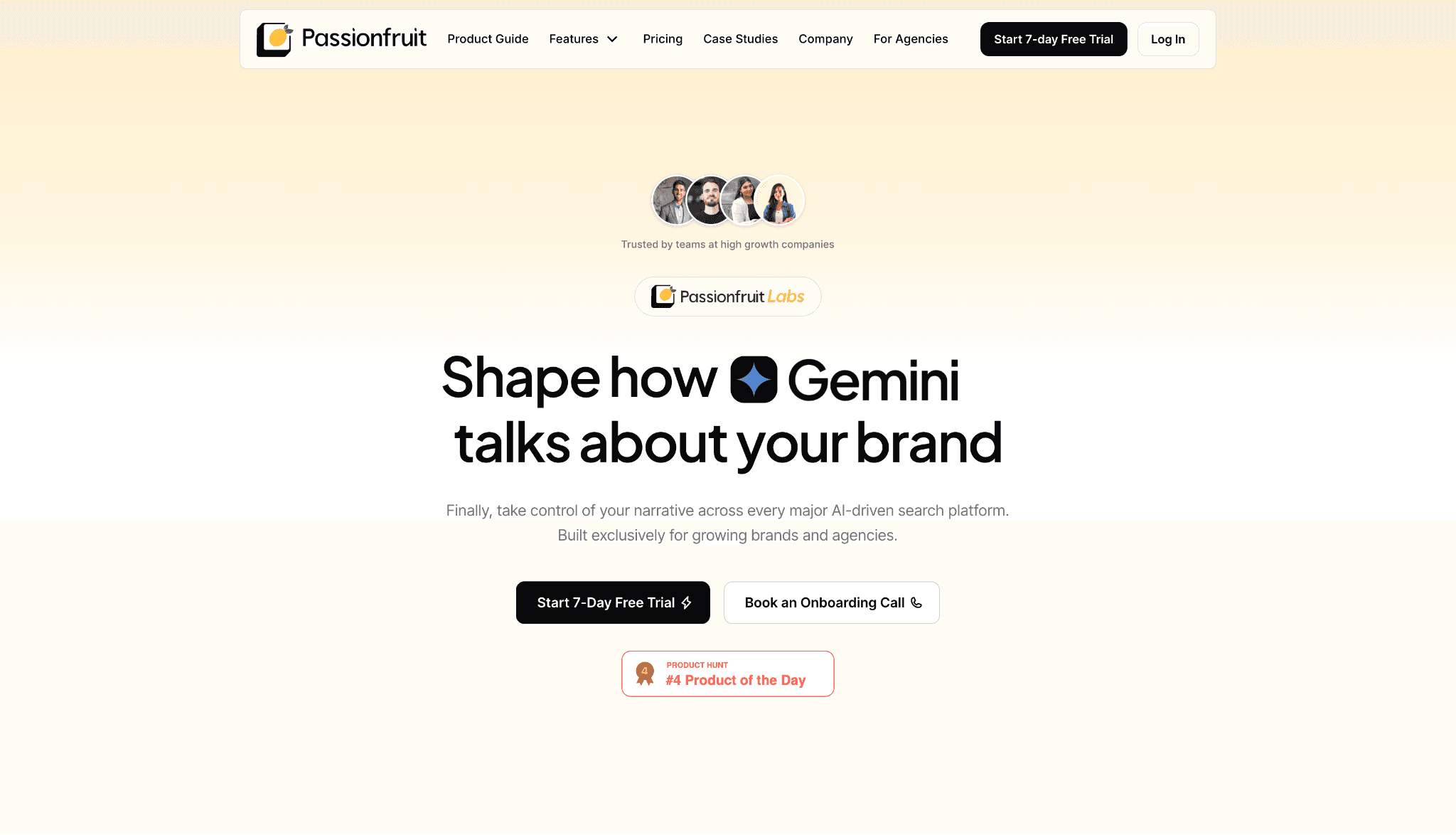
Passionfruit Labs is positioned as a lower-cost, action-first GEO platform with prompt monitoring, share of voice, sentiment, citation analysis, and content strategy guidance.
Lite is $19/mo for 20 daily prompts and ChatGPT tracking only, with a 7-day free trial. Starter is $49/mo for 70 daily prompts across ChatGPT, Perplexity, and Gemini, with Slack support and content strategy guidance included. Pro is $99/mo for 150 daily prompts across ChatGPT, Perplexity, Claude, and Gemini, with 1-1 support and revenue-level AI search analytics. Engine coverage scales with plan: Lite covers one engine, Starter covers three, Pro covers four.
Key features
Prompt-level AI visibility and share-of-voice positioning.
Sentiment, citations, and competitor analysis.
Content strategy and gap recommendations.
Multi-country and multi-model marketing claims.
Lower-cost positioning aimed at growing brands.
Pros and cons
Pros
Attractive price-to-feature ratio.
Action-oriented rather than monitoring-only.
Designed for marketers rather than enterprise analysts.
Cons.
Limited G2 and third-party review history.
Product scope and integrations require a live demo check.
G2 rating: Limited G2 ratings.
Pricing: Lite $19/mo (20 prompts daily, ChatGPT only, 7-day free trial) | Starter $49/mo (70 prompts daily, ChatGPT, Perplexity, Gemini) | Pro $99/mo (150 prompts daily, ChatGPT, Perplexity, Claude, Gemini, 1-1 support)
Verdict
Passionfruit Labs is worth serious consideration for growing brands and small marketing teams that want AthenaHQ-style recommendations without the $295/mo commitment. The trade-off is engine coverage: Lite tracks ChatGPT only, Claude doesn't enter until Pro, and teams whose buyers are active across multiple engines need to account for that before committing to the lower tiers.
How to Choose the Right AthenaHQ Alternative
Decide whether the missing piece is measurement or execution. A clean tracker will not solve a workflow problem, and a full action platform is wasteful when a strategist already handles execution.
Write down the five AI surfaces that actually influence your buyers. Compare those surfaces with each plan's included engines, not the vendor's total platform list.
Calculate a realistic monthly scenario using your prompts, brands, countries, users, refresh frequency, exports, and required add-ons.
Run the same twenty high-intent prompts through two finalists for at least one complete reporting cycle. Compare consistency, source quality, competitor identification, and how quickly the output becomes useful work.
Check the review evidence for the product feature you care about. A high parent-platform rating does not automatically validate a newly launched GEO module.
Go With the Best AthenaHQ Alternative for Your Actual Workflow
AIclicks is the strongest general recommendation because it preserves the part of AthenaHQ that many teams value most: the movement from visibility data to a prioritized action plan. Its $59 verified entry price is accessible enough for a small team to test, and its higher tiers create a clear path for agencies and larger programs.
However, that does not make it the default for every buyer. Choose Peec AI for clean analytics and multilingual reporting. Choose AirOps when the content operation is the center of the project. Choose Profound for enterprise data depth. Choose Rankability for an agency SEO workflow. Choose Atomic AGI or Semrush when traditional SEO, attribution, and AI search need to live together. Choose PromptMonitor when outreach and affordability matter more than a full action center.
The most expensive mistake is not choosing the second-best tool. It is buying a platform whose operating model does not match the team that has to use it every week.
Frequently Asked Questions
1. What is AthenaHQ?
AthenaHQ is a generative engine optimization platform for monitoring and improving how brands appear in AI search and answer engines. Its product combines visibility, competitors, sources, recommendations, and workflow features.
2. What is the cheapest verified AthenaHQ alternative in this list?
Atomic AGI has a free plan and a $20 per-project Starter plan, although broad multi-engine coverage begins on higher tiers. Promptmonitor is the cheapest verified dedicated multi-model tracker at $29 per month.
3. Which alternative is best for agencies?
Rankability is strongest for agencies that want white-label SEO and AI-search delivery in one system. AIclicks is a better fit for agencies that want a GEO-native recommendation engine, while Promptmonitor offers a lower-cost multi-project path.
4. Which tool has the deepest enterprise data?
Profound has the strongest enterprise data proposition, particularly through Prompt Volumes, answer-engine insights, agent analytics, and content agents.
5. Do I need a dedicated GEO tool if I already use Semrush?
Not necessarily. Semrush's AI Visibility Toolkit and Semrush One plans may be the lowest-friction option for an existing Semrush team. A dedicated platform becomes more attractive when AI visibility is a primary channel and the team needs a specialized action workflow.
6. How should G2 reviews be used in this article?
Use G2 to validate recurring strengths and limitations, not to replace official pricing or product documentation. Each screenshot should show enough context to prove the rating, reviewer type, date, and exact feedback.
Our Content:




Any questions left?
Book a call here: