" width="14px"><path d="M 13.864 5.629 L 13.3 5.629 L 13.3 5.6 L 7 5.6 L 7 8.4 L 10.956 8.4 C 10.379 10.03 8.828 11.2 7 11.2 C 4.681 11.2 2.8 9.319 2.8 7 C 2.8 4.681 4.681 2.8 7 2.8 C 8.071 2.8 9.045 3.204 9.786 3.864 L 11.766 1.884 C 10.516 0.719 8.844 0 7 0 C 3.134 0 0 3.134 0 7 C 0 10.866 3.134 14 7 14 C 10.866 14 14 10.866 14 7 C 14 6.531 13.952 6.073 13.864 5.629 Z" fill="rgb(255, 193, 7)" height="14px" id="H_YjfTNpn" width="14px"/><path d="M 0 3.742 L 2.3 5.429 C 2.922 3.888 4.429 2.8 6.193 2.8 C 7.264 2.8 8.238 3.204 8.979 3.864 L 10.959 1.884 C 9.709 0.719 8.037 0 6.193 0 C 3.504 0 1.172 1.518 0 3.742 Z" fill="rgb(255, 61, 0)" height="5.428500000000002px" id="PlkthQDhg" transform="translate(0.875 0)" width="10.959199999999996px"/><path d="M 6.232 5.581 C 8.04 5.581 9.683 4.889 10.925 3.764 L 8.758 1.931 C 8.032 2.483 7.144 2.782 6.232 2.781 C 4.411 2.781 2.865 1.62 2.283 0 L 0 1.759 C 1.159 4.026 3.511 5.581 6.232 5.581 Z" fill="rgb(76, 175, 80)" height="5.581099999999999px" id="WlnJ5gngE" transform="translate(0.7 8.4)" width="10.924899999999994px"/><path d="M 6.864 0.029 L 6.3 0.029 L 6.3 0 L 0 0 L 0 2.8 L 3.956 2.8 C 3.68 3.576 3.183 4.254 2.526 4.75 L 2.527 4.749 L 4.693 6.582 C 4.54 6.722 7 4.9 7 1.4 C 7 0.931 6.952 0.473 6.864 0.029 Z" fill="rgb(25, 118, 210)" height="6.589883930775992px" id="x_rSW275p" transform="translate(7 5.6)" width="7px"/></g></svg>)


Reviewed by:
Matas Kibildis

Head of Growth @ AIclicks
Last updated:
Expert Verified

Agency life is a constant tradeoff: you want higher output across multiple channels, but you don’t want your human team spending their best hours on repetitive tasks, messy manual data, and last-minute “can you make this in 30 minutes?” requests.
The fastest agencies I see right now don’t replace people with artificial intelligence; they standardize the work, then use AI tools as an AI co-pilot: drafting, summarizing, analyzing, automating, and turning campaign data into actionable insights (without losing the agency’s edge: taste, strategy, relationships).
Below is a no-fluff stack of the best AI for agencies tools to boost productivity across strategy, reporting, content, SEO, creative, and delivery.
Comparison table
Tool | Best For | Coverage | Key Features | Strengths | Limitations | Pricing |
|---|---|---|---|---|---|---|
AIclicks | AI search visibility + client-ready reporting | 6 major LLMs (ChatGPT, Perplexity, Claude, Grok, AI Overviews, Gemini) | Real-time AI visibility tracking, citation-level sentiment analysis, prompt-based brand auditing | Bridges “AI mentions” → business impact; built for agencies reporting | Not a deep internal dev tracing tool | From $79/mo (Starter promo $39/mo) |
ChatGPT Business | Agency-wide drafting + analysis | General-purpose across writing, analysis, ideation | Drafting, analyzing data, research help, summaries, custom workflows | Massive time-saver for briefs, client reports, meeting notes | Needs good process to avoid generic AI generated content | $25/user/mo billed annually |
Notion (with AI) | Knowledge base + SOPs + briefs | Docs, wikis, tasks, databases | Notion AI/agents, writing + summarizing, structured workspaces | Great for process + past conversations/context living in one place | Can become messy without strong taxonomy | From $10/user/mo |
ClickUp Brain | Project management tool with AI | Tasks, docs, timelines + AI layer | AI writing, project updates, summaries, agent-like workflows | Strong for capacity + resource allocation + status automation | AI value depends on clean task hygiene | Brain AI $9/user/mo (annual) or $18/user/mo (monthly) |
Zapier | Automation across your stack | 6,000+ app integrations (Zapier ecosystem) | Workflow automation, AI-assisted Zaps, routing | Eliminates glue work between tools, forms, sheets, CRMs | Can get complex; needs governance | From $19.99/mo (annual) |
HubSpot Marketing Hub + Breeze AI | CRM + marketing automation platforms | CRM, email, ads, landing pages, automation | AI tools (“Breeze”), automation, lead mgmt, reporting | Strong for customer data, lifecycle, client relationships | Can get expensive as you scale contacts/seats | Starter $9/seat (annual); Pro $800/seat (annual); Enterprise $3,600/mo |
Supermetrics | Automated reporting + dashboards | Connectors for ad + analytics platforms | Pull data to dashboards/warehouses, scheduled refresh | Huge win for recurring reporting and fewer spreadsheet fires | Connector limits vary by plan | From $47/mo billed monthly (Starter) |
Jasper | On-brand copy at scale | Blog, email, ads, social | Brand Voice, marketing apps, “marketing Agents” | Better brand consistency than generic AI writing | Still needs human editing for nuance | From $69/mo/seat monthly |
Surfer SEO | SEO content + optimization | Google + AI search visibility workflows | Content editor, optimization suggestions, integrations (Docs/WordPress) | Faster briefs + updates for long form content | Not a full SEO suite like Semrush/Ahrefs | From $99/mo monthly |
Originality.ai | QA for originality + fact risk | Text checks + site scans | AI detection, plagiarism, readability, fact-checking aid | Helpful for editorial QA across freelancers | False positives can happen; needs policy | From $14.95/mo |
Descript | Video editing + repurposing | Podcasts, video, clips | Transcription, clip creation, AI video tools, “Underlord” | Great for turning one recording into many social assets | Team workflows require consistent templates | From $35/person/mo |
Canva | Fast creative for social + ads | Design + brand kits | Magic design/AI features, templates, team collaboration | The quickest way to ship “good enough” creatives | AI design is template-driven; brand nuance still matters | Pro/Teams vary by region |
TL;DR
Best overall for agencies in 2026: AIclicks, because agencies now need to prove visibility not only in search engines, but inside AI answers. It’s the cleanest way to track and report brand presence across major LLMs.
Best “everyone uses it daily” productivity boost: ChatGPT Business for briefs, ad copy, analysis, and rapid first drafts.
Best for operations and delivery: ClickUp Brain (project ops) and Zapier (automation).
Best for reporting: Supermetrics (data pipelines) and AIclicks (AI visibility reporting).
Best for content teams: Jasper (brand voice at scale) and Surfer SEO (SEO briefs and updates).
Best QA layer: Originality.ai for originality, AI detection, and fact-risk workflows.
The best AI tools for agencies (ranked)
1) AIclicks: Best for agency leaders who need AI visibility + client-ready reporting
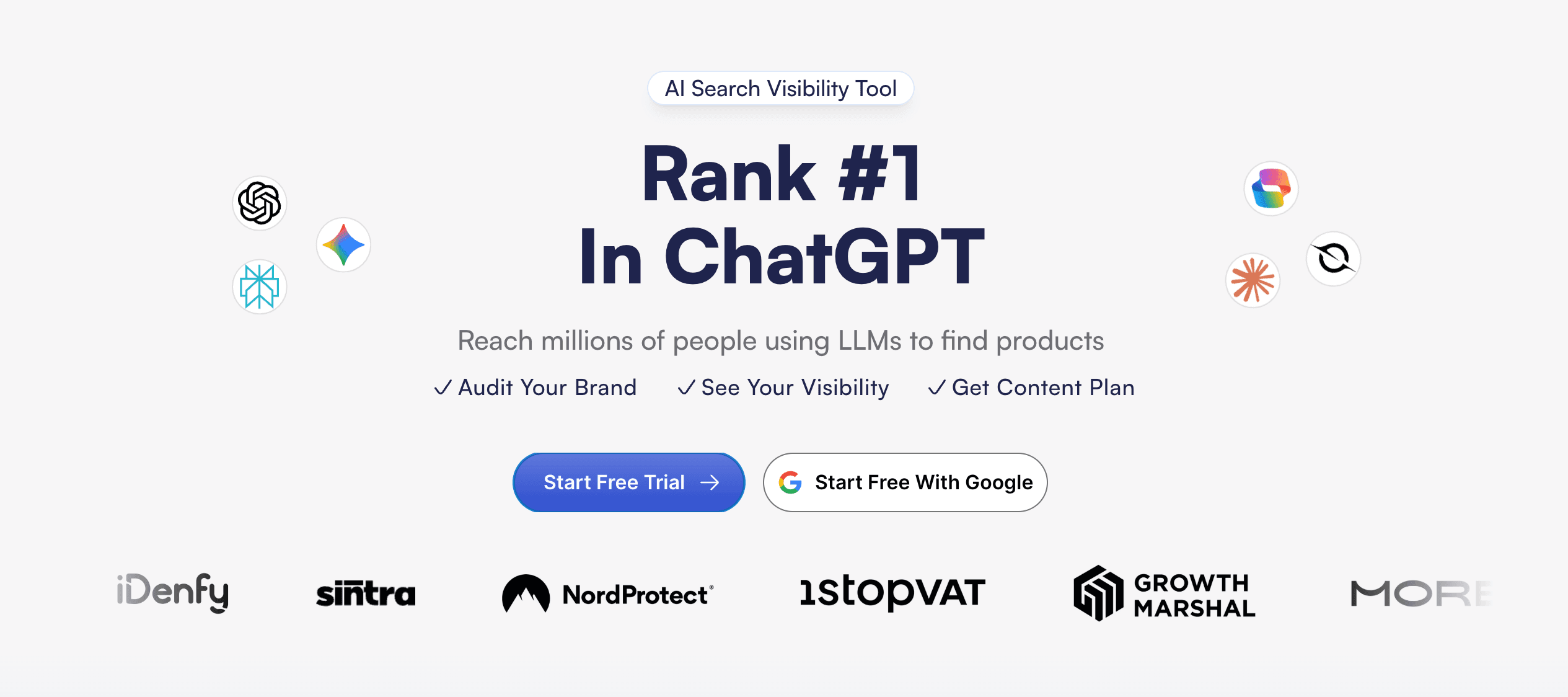
If your agency still reports only on Google rankings, you’re missing the fastest-growing “discovery layer”: AI answers. AIclicks is an AI search visibility tool and one of the best AI marketing tools, built to track how brands appear across major platforms. It does so in a way marketing teams can actually operationalize: prompts, citations, visibility trends, and citation-level sentiment analysis. In other words, it helps you turn “we think we’re visible in AI” into measurable, repeatable reporting.
Where this becomes a real productivity win: client meetings and monthly client reports. Instead of manually checking ChatGPT/Perplexity, screenshotting, and arguing over anecdotes, you can standardize the prompts, monitor changes, and show progress over time (including where competitors are getting pulled in). AIclicks also covers 6 major LLM destinations (including AI Overviews), so you’re not optimizing for a single platform.
Strengths
Real-time tracking across major AI answer engines (huge for modern marketing agencies).
Designed around business outcomes, not just raw “LLM observability.”
Weaknesses
Not meant to replace internal tracing tools for developers (different job).
Pricing: From $79/mo (Starter promo $39/mo).
Check out this video where we share the exact strategy that took AIclicks from zero to #5 in AI visibility rankings in just 90 days:
https://www.youtube.com/watch?v=QTorh2RXX28
2) ChatGPT Business: Best general AI for drafting, analysis, and faster decision-making
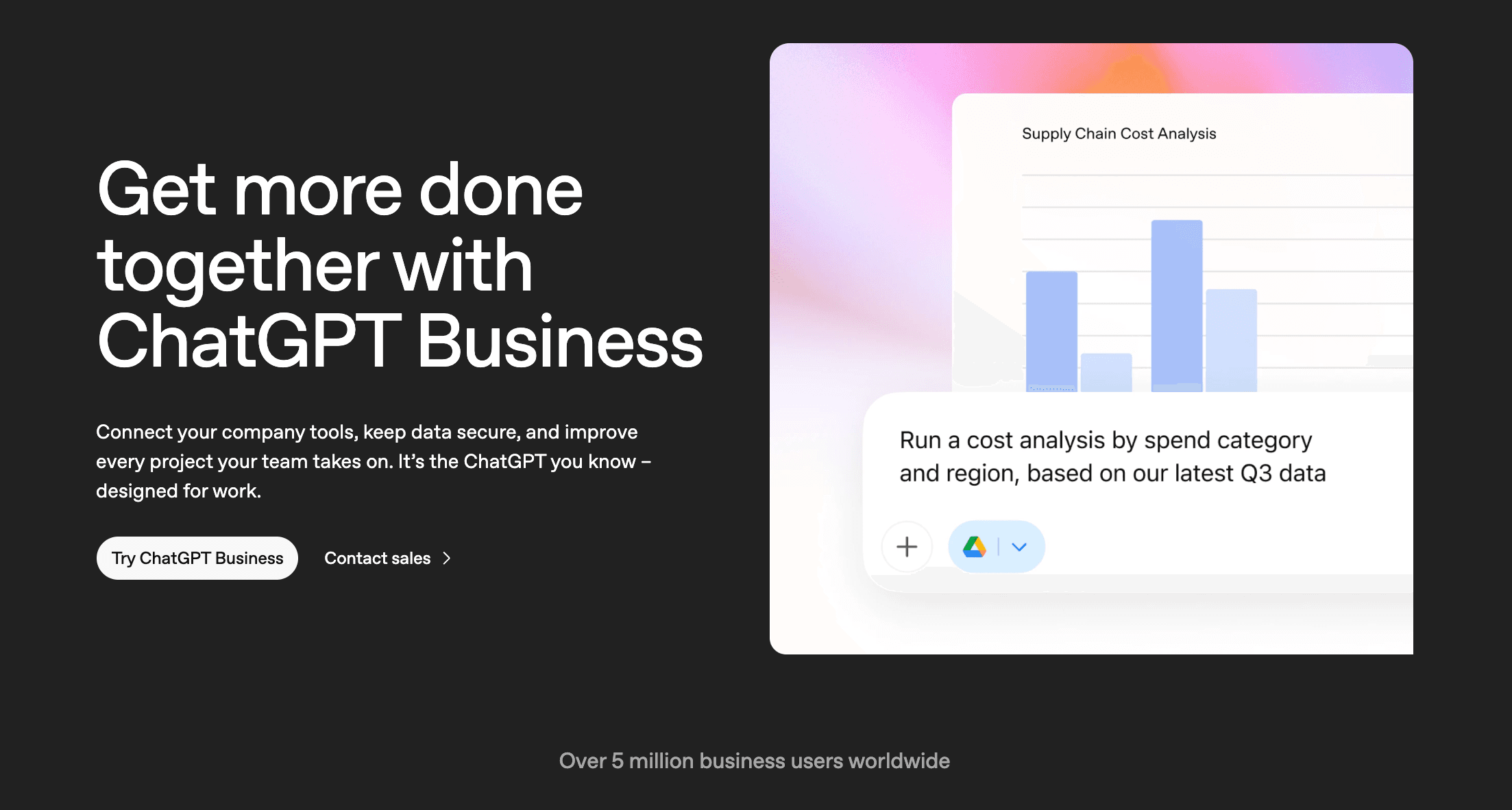
If you want one tool that helps every role (strategy, accounts, creative, ops), it’s ChatGPT Business. Agencies use it as an always-on virtual assistant for: generating initial ideas, rewriting briefs, summarizing calls, drafting SOPs, producing outlines for content strategy and content marketing, and turning rough notes into structured deliverables in Google Docs.
The productivity gains compound when you standardize prompts. For example:
A “client onboarding” workflow that converts discovery notes into a first-pass marketing strategy.
A “weekly performance” workflow that turns raw social media marketing metrics into narrative insights (with clear next steps).
A “Google Ads” workflow that creates variations of ad copy aligned to a target audience (then your humans refine it).
This is also where you keep healthy human intervention: use AI for the first 60–80%, and let your team of human writers handle judgment, positioning, and originality.
Strengths
Great at summaries, drafting, and analyzing data quickly.
Weaknesses
Without guardrails, the output can feel generic (especially for brand voice).
Pricing: $25/user/month billed annually.
3) Notion AI: Best for turning agency knowledge into reusable systems
Notion is where agency productivity either dies slowly… or becomes a competitive edge. With Notion AI, your wiki stops being a static graveyard and becomes an active operating system: searchable briefs, reusable templates, SOPs, and client context that new team members can understand in days (not weeks).
The best use cases:
A centralized “Client Hub” (strategy, positioning, assets, meeting notes – especially needed for the sales team).
A content creation database (topics, briefs, approvals, status, owners).
A lightweight CRM for smaller agencies who don’t want a heavy platform yet.
AI-assisted summarization for call notes and long docs, plus agent-like features baked into the workspace (Notion is explicitly leaning into “AI” inside the product experience).
Strengths
Great for process documentation and shared context (huge for scaling AI adoption).
Helps reduce “Where is that doc?” blockers.
Weaknesses
Without governance, it turns into “Notion sprawl” fast.
Pricing: Paid plans start around $10/user/month billed annually (plan details vary).
4) ClickUp Brain: Best AI-powered project management for agency delivery
ClickUp is a strong project management tool already; ClickUp Brain adds AI layers that make it easier to keep delivery clean: generating task descriptions, summarizing threads, producing status updates, and turning project chatter into structured output. That’s a big deal when your PMs are drowning in status pings, and your creatives just want clear next actions.
Where it shines for agencies and digital marketing teams:
Auto-summaries for client workstreams (less manual reporting).
Faster handoffs between roles (strategy → copy → design).
Better consistency across repeatable deliverables (launch checklists, content pipelines, audit workflows).
Emerging “agentic” features (ClickUp even markets “Super Agents”) are useful when you’re coordinating lots of moving pieces.
Strengths
Strong operational backbone for delivery + collaboration.
Weaknesses
AI isn’t magic if your tasks are messy or incomplete.
Pricing: Brain AI $18/user/mo monthly or $9/user/mo billed annually.
5) Zapier: Best for eliminating glue work between software platforms
Zapier is still the king of “make tools talk to each other.” For agencies, this is where you stop wasting time on tedious tasks like moving leads, copying fields, emailing status updates, and syncing deliverables across systems.
High-impact agency automations:
New lead → CRM + Slack alert + onboarding email.
Form submission → create ClickUp tasks + Notion page + assign owner.
Approved creative → auto-upload to drive + notify client channel.
Campaign goes live → pull key metrics weekly → draft report outline.
Zapier’s value isn’t flashy, it’s AI makes the boring work disappear. That frees your team to focus on creativity and strategy.
Strengths
Massive integration ecosystem and fast time-to-value.
Weaknesses
Complex workflows need documentation and ongoing ownership.
Pricing: Free plan available; Professional starts at $19.99/month billed annually.
6) HubSpot Marketing Hub with Breeze AI: Best for agencies running lifecycle marketing at scale
If your agency manages lifecycle, automation, and retention (not just top-of-funnel), HubSpot is the workhorse. The productivity win comes from centralizing customer data, capturing intent, and automating follow-ups across email, landing pages, and CRM. HubSpot’s AI layer (“Breeze”) is positioned as integrated AI tooling inside the platform, including “AI agents” and contextual assistance, which matters because the AI can actually use your CRM context (instead of working in a vacuum).
This is where you connect marketing to revenue outcomes: lead gen, pipeline influence, and performance visibility. It’s also a realistic base for predictive analytics-style workflows when you have enough data volume.
Strengths
Strong for full-funnel ops, automation, and reporting in one ecosystem.
Weaknesses
Costs scale quickly with seats, contacts, and add-ons.
Pricing: Free tier; Starter $9/seat (annual); Professional $800/seat (annual); Enterprise $3,600/mo.
7) Supermetrics: Best for automated dashboards and always-on client reporting
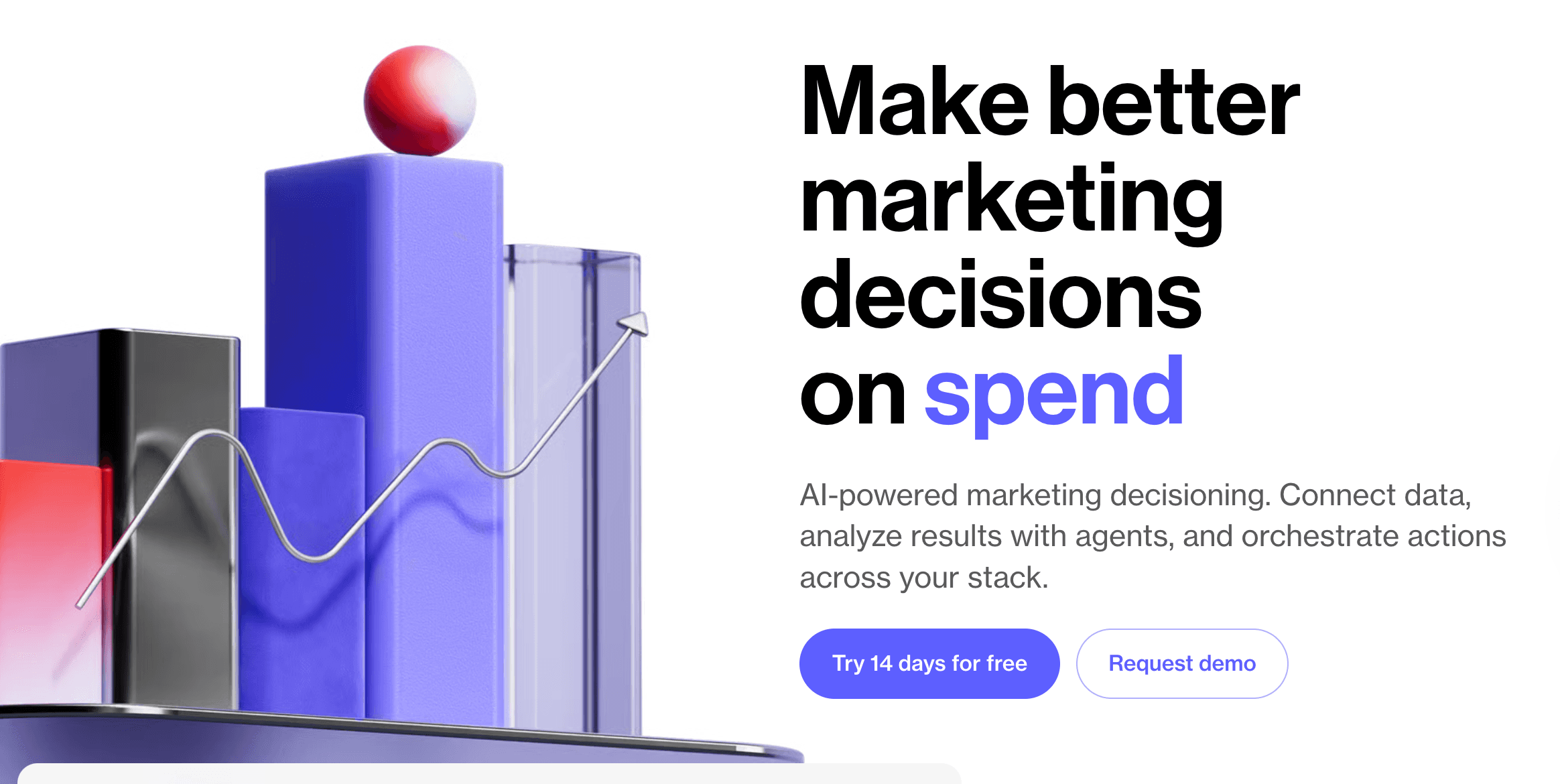
If your analysts are still exporting CSVs and stitching spreadsheets, Supermetrics is the productivity upgrade. It connects your marketing sources to dashboards/warehouses so reporting becomes scheduled and repeatable. For agencies juggling many clients, that’s the difference between “reporting week chaos” and calm.
Use cases that matter:
Weekly performance dashboards on market trends without manual pulls.
Cleaner cross-channel reporting (paid + organic + email).
Fewer mistakes from manual data handling.
Faster QA when clients question metrics (you can trace the source).
Supermetrics is also leaning into “AI-first marketing intelligence” positioning, but even without that, the base value is rock-solid: reduce time spent on reporting, and increase time spent interpreting results and planning marketing campaigns.
Strengths
Big time savings for reporting and consolidation.
Weaknesses
Plan limits can force upgrades as you add clients/sources.
Pricing: Starter from $47/month billed monthly.
8) Jasper: Best AI content writing tool for teams that need a consistent brand voice
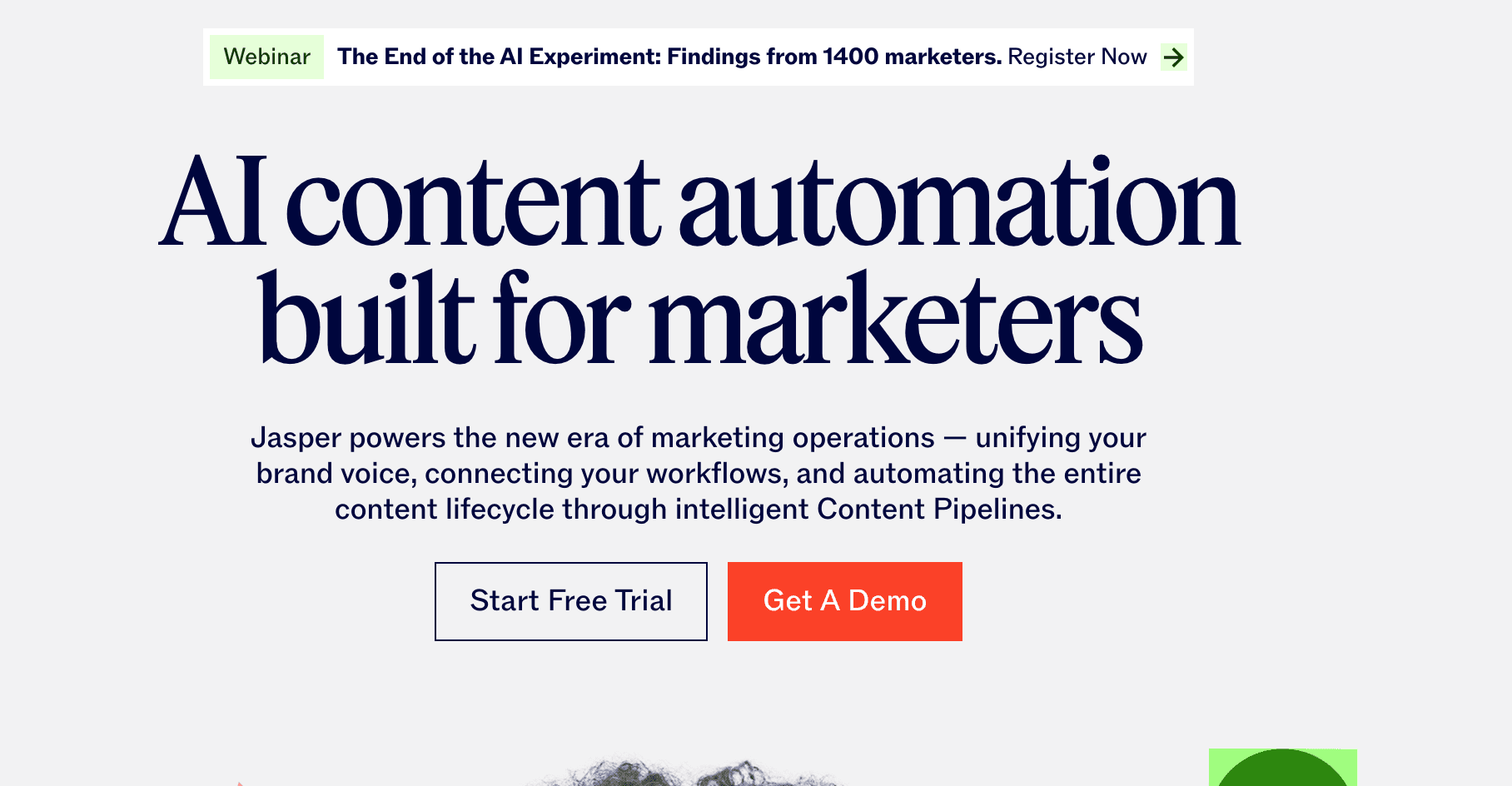
Jasper is one of the most agency-friendly AI writing tools because it’s built around brand consistency. Instead of “random good copy,” you get workflows that emphasize brand voice, reusable marketing apps, and multi-language support. Jasper also explicitly offers marketing-focused “Agents,” which is useful when you’re producing lots of variants (emails, landing pages, social, ads) and want fewer rewrites.
Where Jasper fits best:
Content teams producing at volume across many clients/brands.
Agencies that need a tighter guardrail than generic chatbots.
Fast iteration on campaign messaging (headlines, hooks, CTAs).
You still want human editors, but Jasper cuts the “blank page” time dramatically, especially for structured deliverables.
Strengths
Brand voice tooling + marketing-specific workflows.
Weaknesses
Still needs QA for originality and real-world nuance.
Pricing: Pro $69/month per seat (monthly) or $59/month billed yearly.
9) Surfer SEO: Best for SEO briefs, optimization, and content refresh cycles
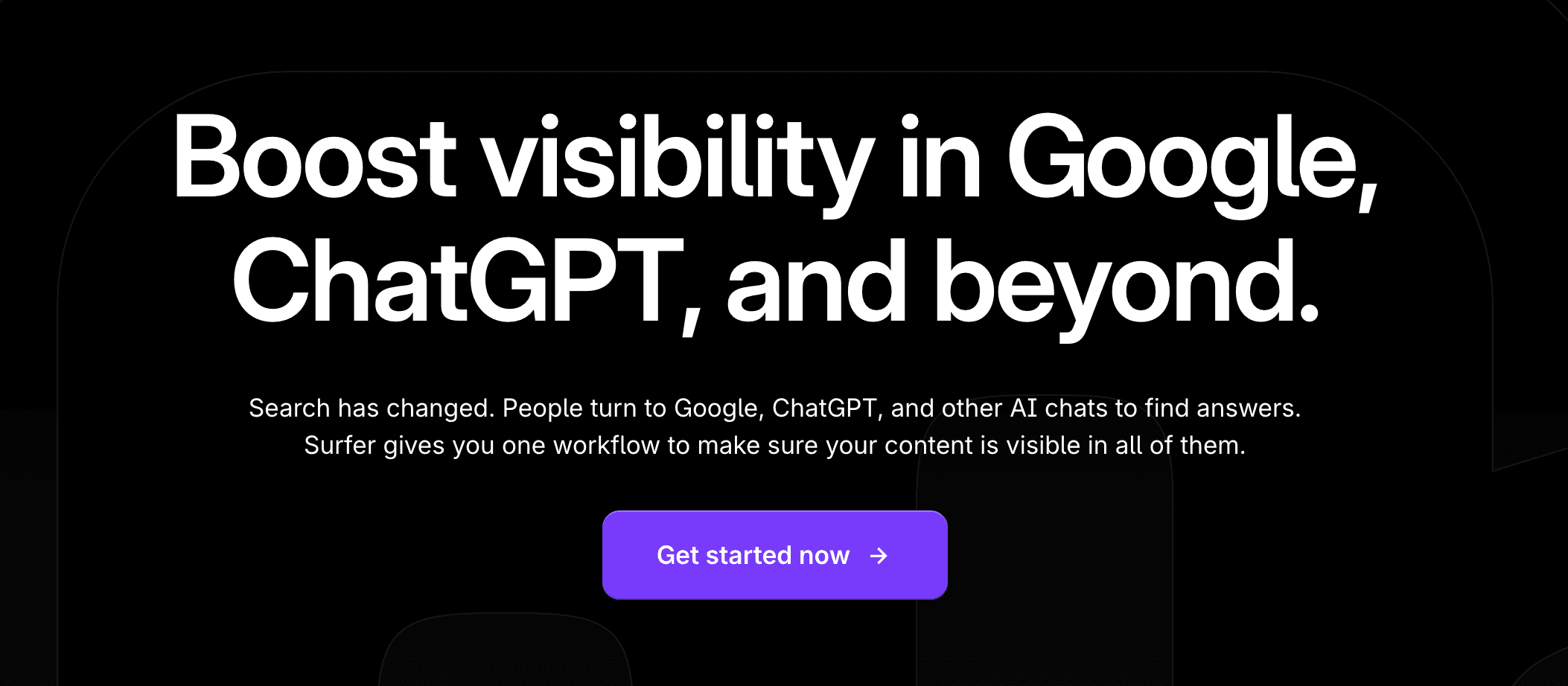
Surfer SEO is the practical choice when you want your content team shipping SEO work faster without guessing. It’s especially helpful for:
Turning a keyword/topic into a clear brief.
Editing drafts with concrete optimization guidance.
Keeping older pages fresh (a common agency retainer task).
Integrating with workflows like Google Docs and WordPress.
For agencies, Surfer often sits between strategy and execution: it gives writers direction, helps editors QA, and reduces the back-and-forth that kills throughput. It also increasingly references AI search visibility workflows (not just traditional rankings), which aligns with where discovery is going.
Strengths
Strong for consistent SEO delivery and refresh programs.
Weaknesses
Not a full SEO platform; you’ll still need research tooling elsewhere.
Pricing: Essential $99/month (or $79/month billed annually); Scale $219/month (or $175/month billed annually).
10) Originality.ai: Best for editorial QA (originality, plagiarism, fact-risk)
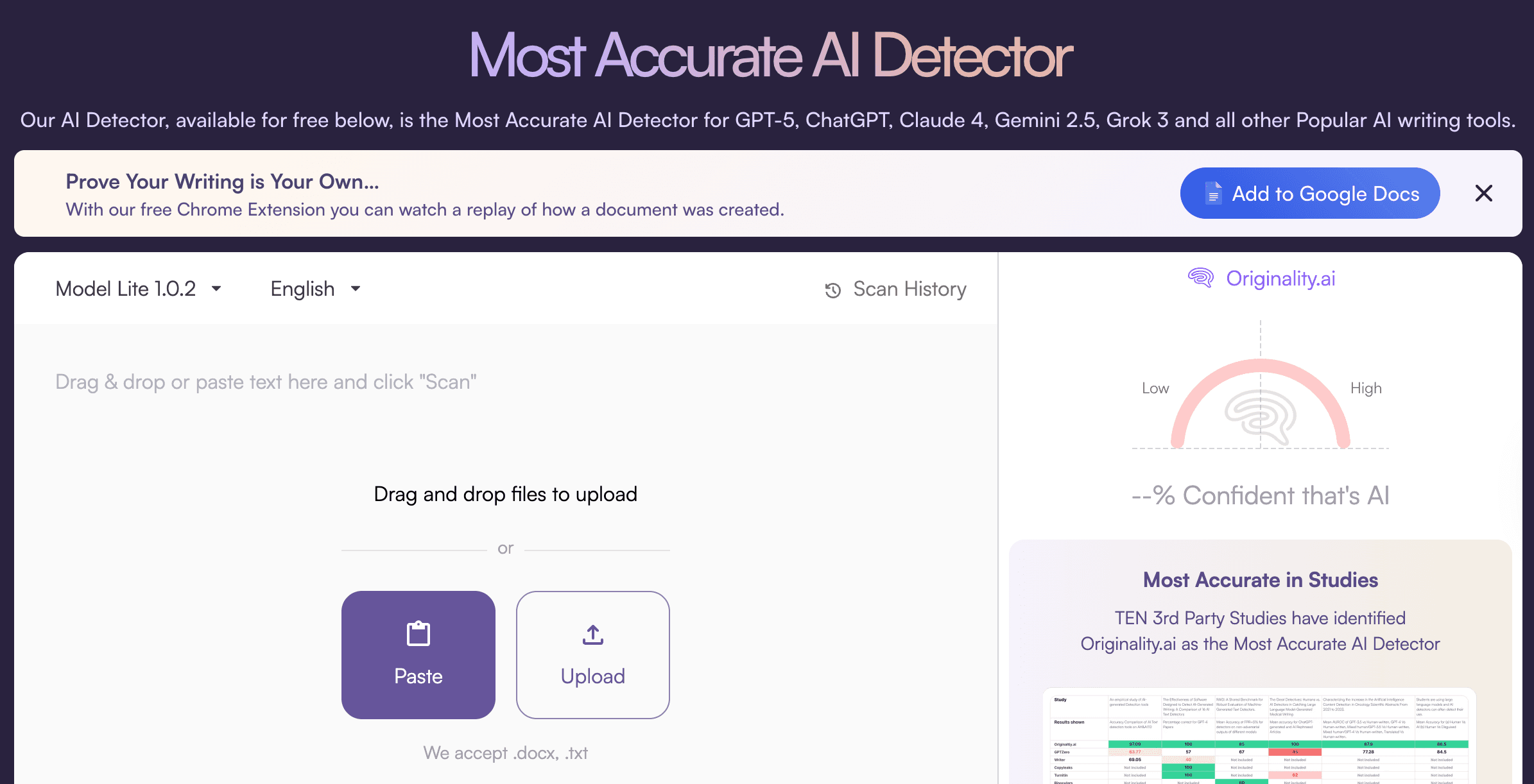
Agencies are producing more content than ever, often with freelancers and AI assistance mixed together. That’s where Originality AI marketing software becomes a productivity tool: it standardizes QA so editors don’t have to rely on vibes. It offers AI detection, plagiarism checks, and even a fact-checking aid, helpful when you’re publishing at speed and want fewer “we need to fix this” emergencies.
It’s also relevant if you’re managing “AI policy” across clients: what’s allowed, what must be reviewed, and how you document it. Pair it with strong guidelines (“AI can draft, humans must finalize”) and it supports safer scaling.
Strengths
Clear QA layer for agencies and publishers; shareable reports.
Weaknesses
Detection is not perfect; you need human judgment and a defined process.
Pricing: Pay-as-you-go $30; Pro $14.95/month (or $12.95/month billed annually).
11) Descript: Best for video editing and turning one recording into many assets
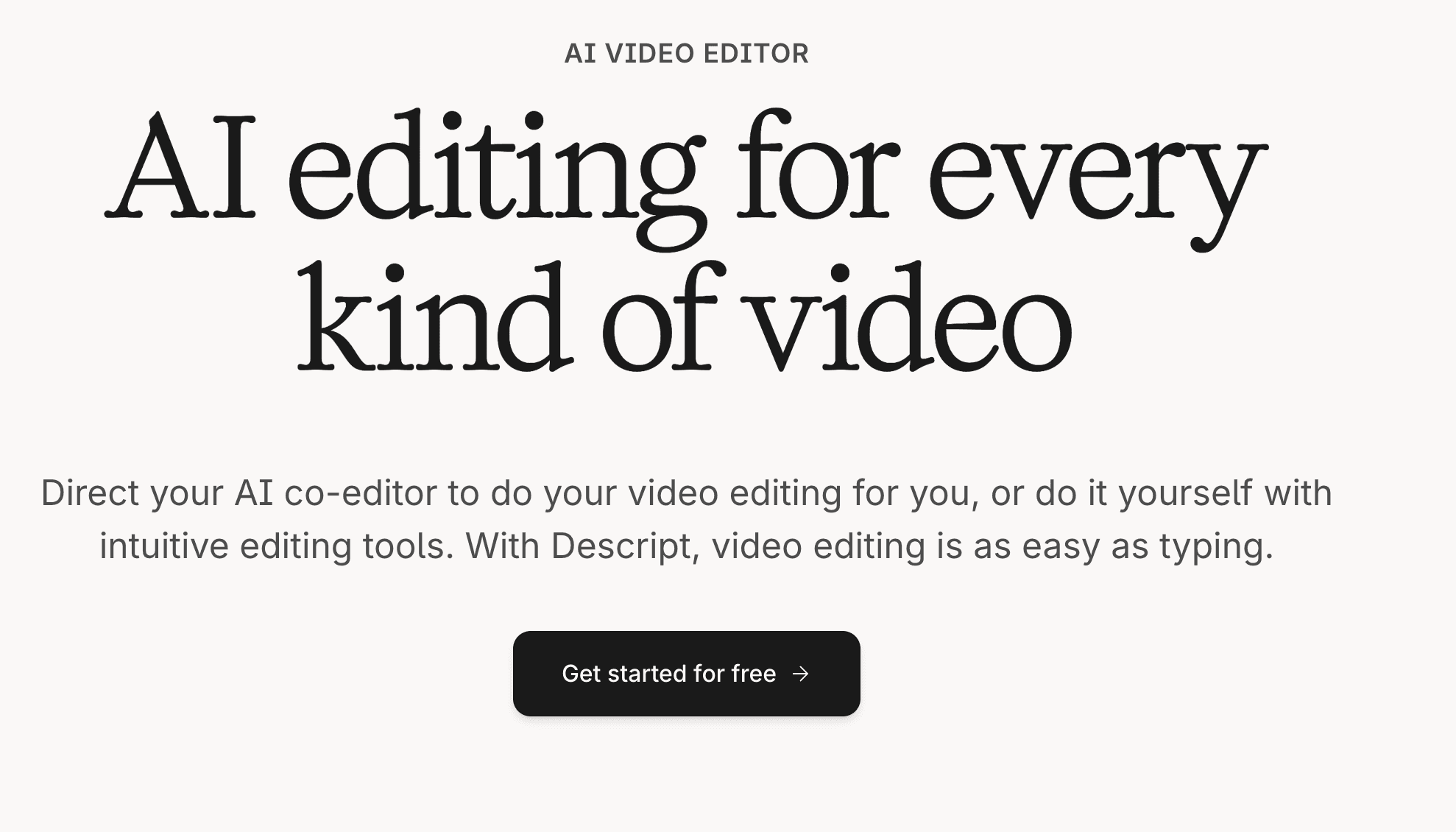
If your agency does social, podcasts, or founder-led content, Descript is a major time saver. It combines transcription, text-based editing, and a growing set of AI production features — including an AI “co-editor” called Underlord, clip creation, and translation/dubbing options.
The productivity play is repurposing:
One webinar → multiple short clips → captions, titles → social media posts.
One podcast → highlights, quotes, summaries.
One client interview → case study draft, email sequence, landing page outline.
This is how agencies produce more content without adding headcount, while keeping enhance creativity on the human side (story, hooks, pacing).
Strengths
Strong for fast repurposing and editing workflows.
Weaknesses
Teams need templates and consistency to avoid “random output.”
Pricing: Free; Creator $35/person/month (or $24/person/month billed annually); Business $65/person/month (or $50 annual).
12) Canva: Best for fast creative across social and ads
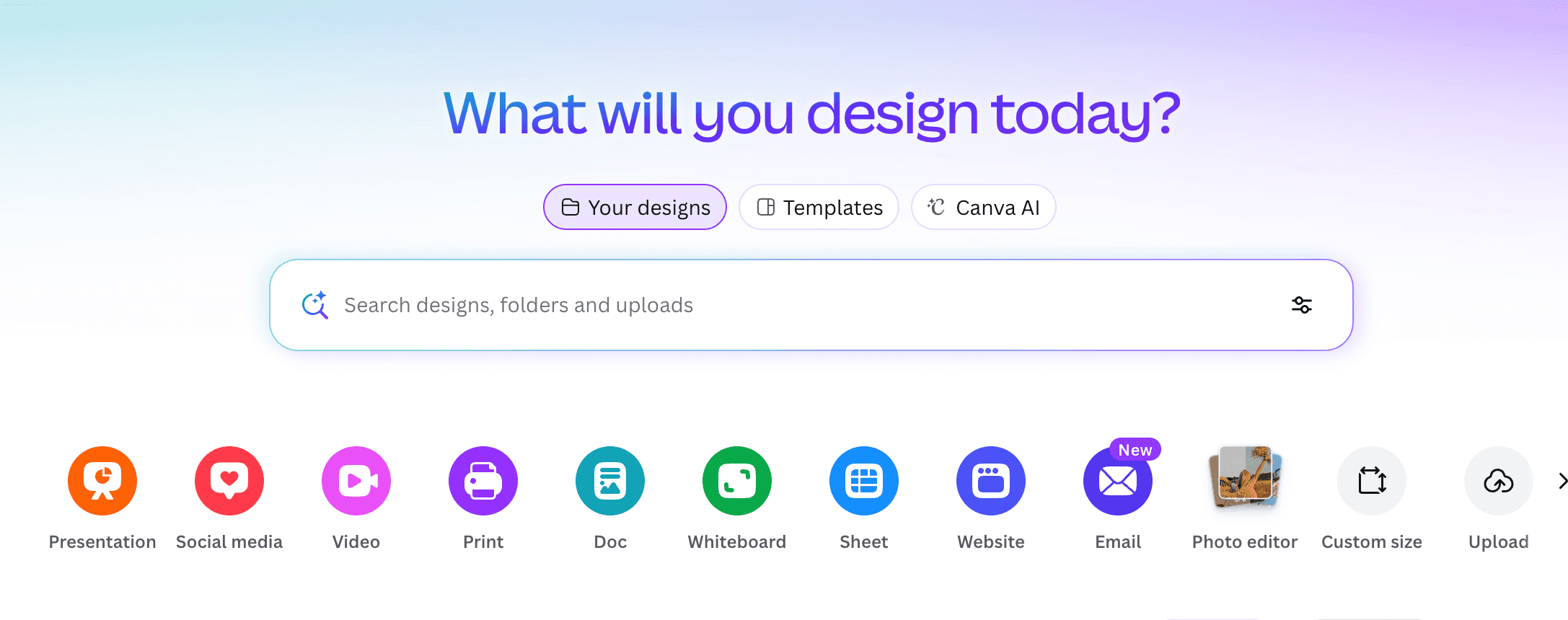
Canva is the “ship it” tool for agencies that need speed. It’s ideal for turning copy into design quickly: social templates, pitch visuals, ad creatives, simple landing graphics, and keeping a consistent look with brand kits.
AI features help you move faster, but the real win is reducing production friction: fewer design bottlenecks, more iteration, and faster approvals. Canva’s plan names and pricing can vary by region and packaging, but it typically offers Free plus paid tiers for individuals and teams.
Strengths
Fastest path from idea → finished asset.
Great for collaboration and quick turnaround.
Weaknesses
Template-heavy output; premium brand work still needs senior design oversight.
Pricing: Free + paid (Pro/Teams pricing varies; commonly reported starting points are ~$10/mo for Pro and ~$8.33/user/mo for Teams, region-dependent).
Build an AI Tech Stack That Actually Scales Agency Output
The best agency setup isn’t about chasing shiny machine learning features. It’s about choosing the right tech stack for your workflows and measuring real outcomes: faster delivery, clearer reporting, and better marketing performance.
That’s why AIclicks is a must-have: it turns AI visibility into something you can track, optimize, and confidently explain in client reporting, so your AI usage stays tied to business impact, not guesswork.
With the right mix of intelligence tools, you’ll spend less time wrangling dashboards and more time improving results like smarter ad spend, stronger lead generation, and more consistent personalized content that meets client expectations and reflects real customer behavior.
Our Content:




Any questions left?
Book a call here: