" width="14px"><path d="M 13.864 5.629 L 13.3 5.629 L 13.3 5.6 L 7 5.6 L 7 8.4 L 10.956 8.4 C 10.379 10.03 8.828 11.2 7 11.2 C 4.681 11.2 2.8 9.319 2.8 7 C 2.8 4.681 4.681 2.8 7 2.8 C 8.071 2.8 9.045 3.204 9.786 3.864 L 11.766 1.884 C 10.516 0.719 8.844 0 7 0 C 3.134 0 0 3.134 0 7 C 0 10.866 3.134 14 7 14 C 10.866 14 14 10.866 14 7 C 14 6.531 13.952 6.073 13.864 5.629 Z" fill="rgb(255, 193, 7)" height="14px" id="H_YjfTNpn" width="14px"/><path d="M 0 3.742 L 2.3 5.429 C 2.922 3.888 4.429 2.8 6.193 2.8 C 7.264 2.8 8.238 3.204 8.979 3.864 L 10.959 1.884 C 9.709 0.719 8.037 0 6.193 0 C 3.504 0 1.172 1.518 0 3.742 Z" fill="rgb(255, 61, 0)" height="5.428500000000002px" id="PlkthQDhg" transform="translate(0.875 0)" width="10.959199999999996px"/><path d="M 6.232 5.581 C 8.04 5.581 9.683 4.889 10.925 3.764 L 8.758 1.931 C 8.032 2.483 7.144 2.782 6.232 2.781 C 4.411 2.781 2.865 1.62 2.283 0 L 0 1.759 C 1.159 4.026 3.511 5.581 6.232 5.581 Z" fill="rgb(76, 175, 80)" height="5.581099999999999px" id="WlnJ5gngE" transform="translate(0.7 8.4)" width="10.924899999999994px"/><path d="M 6.864 0.029 L 6.3 0.029 L 6.3 0 L 0 0 L 0 2.8 L 3.956 2.8 C 3.68 3.576 3.183 4.254 2.526 4.75 L 2.527 4.749 L 4.693 6.582 C 4.54 6.722 7 4.9 7 1.4 C 7 0.931 6.952 0.473 6.864 0.029 Z" fill="rgb(25, 118, 210)" height="6.589883930775992px" id="x_rSW275p" transform="translate(7 5.6)" width="7px"/></g></svg>)


Reviewed by:
Matas Kibildis

Head of Growth @ aiclicks.io
Last updated:
Expert Verified

Answer Engine Optimization, or AEO, is now a must for modern brands that care about AI search, search visibility, and how they show up across AI-powered search engines. If you’ve been working in SEO, you’ll notice the ground shifting under your feet. More people are asking questions on platforms like ChatGPT or Perplexity rather than digging through Google or other traditional search engines.
Back in late 2024, I started noticing our client’s organic traffic tooling didn’t match where their leads were coming from. We’d ask ChatGPT, “What’s the best VPN?” or “Who offers reliable SaaS accounting?”, and our clients either didn’t show up, or worse, the answers pointed to competitor reviews and listicles. I knew traditional SEO tools and basic keyword tracking just weren’t covering this ground. That’s what drove me to build AIclicks, an AI search visibility tool, and why I keep pushing for better AI visibility tracking and always-on AI visibility monitoring today.
If you’re trying to understand which AEO tracking tools actually work in 2026, this guide is for you. I break down the best AEO tracking tools of 2026, how they measure your brand’s share of AI-generated answers, and what my hands-on testing across multiple industries has shown about what really moves visibility in AI search.
16 Best AEO Tracking Tools in 2026: in Short
Tool | Best For | Key Features | Pricing |
|---|---|---|---|
AIclicks | All-around AI visibility | Dashboard, prompt clusters, citations, GEO Audit | From $59/mo (3-day free trial) |
AirOps | Content production, enterprise | ChatGPT, Gemini, Perplexity, Google AI | Free for 100 prompts, 20k tasks |
Cognizo | Organic AI visibility + ChatGPT Ads | UI scraping, AI content studio, Prompt Volumes, unlimited seats | From $149/mo |
Promptwatch | Crawl-to-citation tracking | Crawler logs, gap analysis, auto-publish | From $95/mo |
Gauge | Data-driven insights | Prompt monitoring, integrations | Custom |
Surfer AI Tracker | TrackerTeams that want SEO and AI visibility tracking in one platform | Daily monitoring across 5 AI platforms, citation sources, fan-out subqueries | From $99/mo |
Rank Prompt | Budget/agency multi-projects | Schema, prompt tracking, multi-client | From $49/mo |
Track My Visibility | AI visibility tracking for brands and agencies | Multi-AI tracking, citations, competitor analysis, actionable insights | From $89/mo (Trial available) |
Qwairy | AI search visibility & GEO optimization | Multi-LLM tracking, citation monitoring, GEO insights | From $79/mo |
SE Ranking | SEO + AI search | AI toolkit, SEO integrations | $89+/month |
JetOctopus | AI bot tracking + technical AI readiness | Log tracking of 40+ AI bots, AI funnel dashboard, JS rendering gap analysis | From $349/mo (Free trial available) |
ProductRank.ai | Quick, free checks | Multi-model, brand visibility | Free |
Gumshoe | Persona analytics | Segment visibility, optimization | Custom |
AI SEO Tracker | Real-time alerts | Slack, feedback | From $79/mo |
Scrunch | Enterprise brands, agencies, end-to-end optimization | Deep monitoring across major LLMs, AI-first content delivery via Agent Experience Platform (AXP) | From $100/month |
Ahrefs Brand Radar | Free competitor check | Huge database, free features | Free |
16 Best AEO Tracking Tools for 2026: Practical Review
Here are the 16 best AEO tools I’ve tried in 2026 and recommend to others, starting with the one we built and trust every day.
1. AIclicks
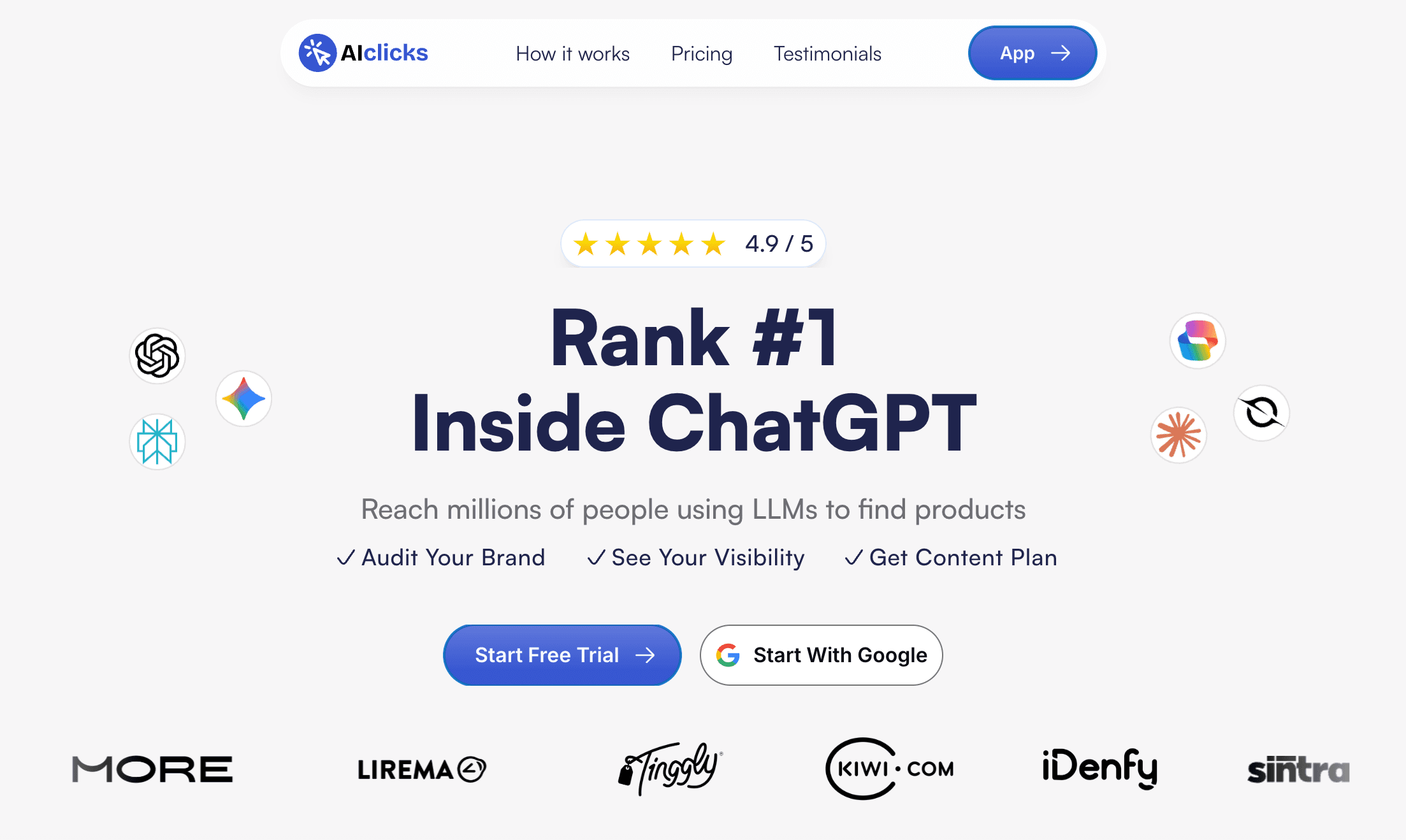
Best for: All-around AI visibility optimization, actionable improvement, and prompt-level management
As the founder, I designed AIclicks to fill the AEO gap for marketers, agencies, and brands. What sets it apart? One standout feature is its combination of prompt-level analytics with practical, marketer-friendly workflows.
AI Search Visibility Dashboard: See at a glance how often your brand shows up in ChatGPT, Gemini, Perplexity, and Copilot answers. Not just mentions, but actual AI citations and brand positions.
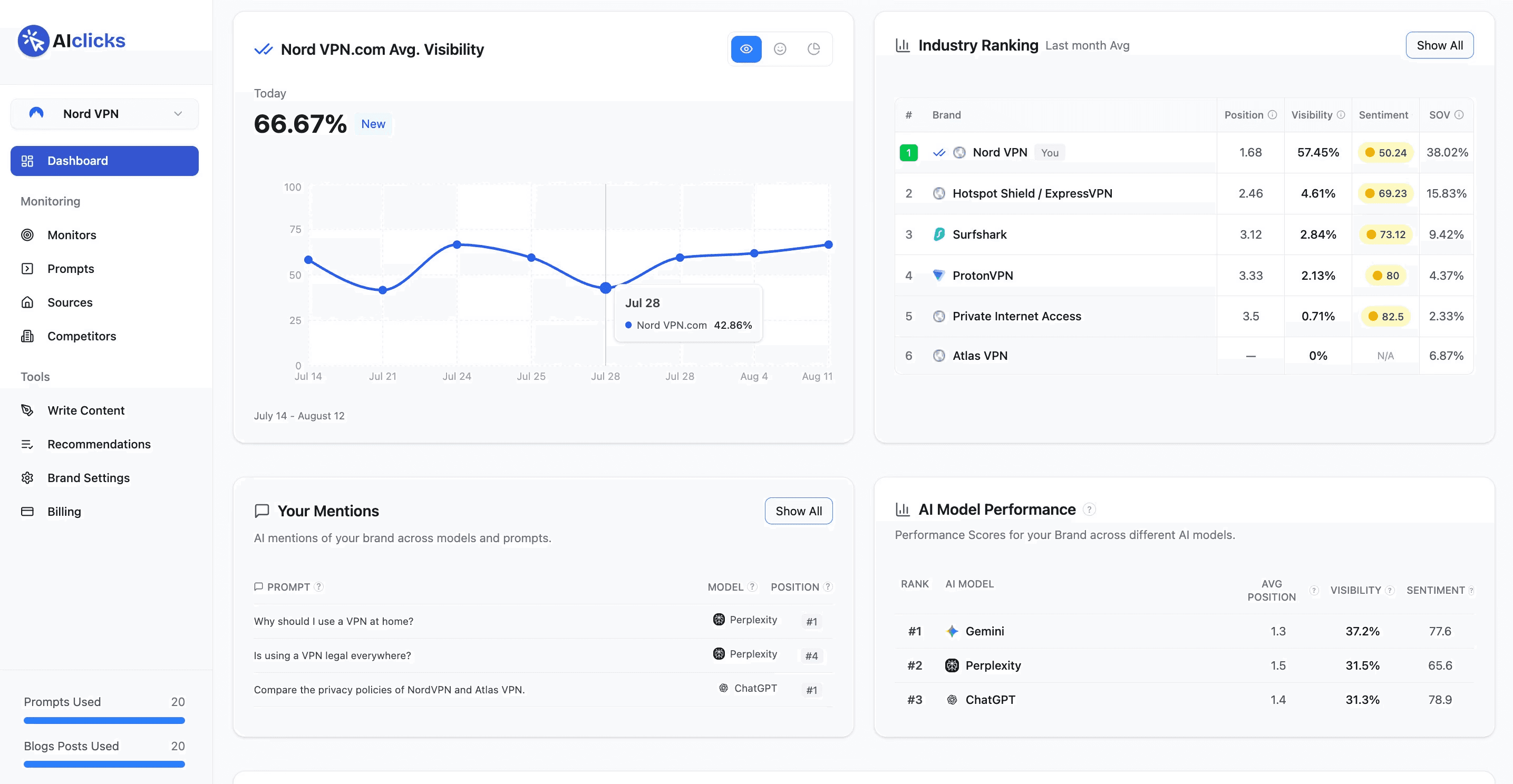
Prompt Cluster Mapping: Map prompts to revenue-driving topics, so you can track clusters, not just single keywords, and tie them back to classic keyword research.
Citation Intelligence: Understand which sources AI engines “trust” and why (great for planning outreach and content optimization).
Competitor Benchmarking: Spot which rivals show up more often than you, then compare citation deltas over weeks and visibility trends over time.
GEO Audit: Test region/language-specific AI visibility. This is how we fixed low visibility for a client in Lithuania, simply by shifting references and building local authority.

Actionable Recommendations: Get prioritized to-dos, like “add a Wikipedia page,” “improve structured data,” or “publish for these missing prompts,” so you can optimize AI visibility without guessing.
Simple Pricing: from $59/month, with a full refund if you’re not satisfied.
Multilingual Support & Source Tracking: Works for any market, any AI mode.
AIclicks lets our team track performance, spot new opportunities, and adapt fast. And yes, every function is built with security and transparent data attribution in mind, so seo teams and marketing teams can collaborate easily.
If Microsoft’s ecosystem is where your buyers ask questions, our dedicated Copilot visibility tracker breaks that channel out on its own.
2. AirOps
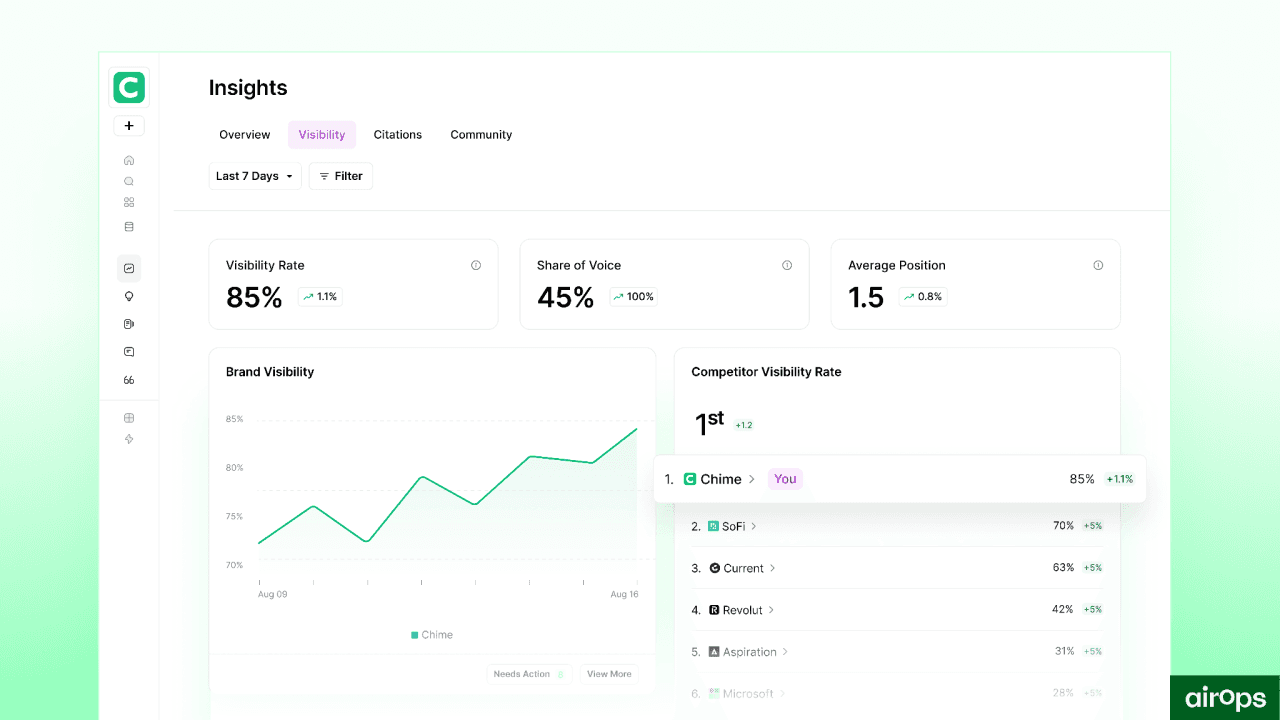
Best for: Enterprise SEO teams that want AEO and LLM visibility tied directly to execution
AirOps connects AI search visibility data to repeatable content workflows, so when competitors show up in prompts and you don’t, you can immediately create or refresh content at scale. It blends tracking (mention rate, share of voice, citations, sentiment, rankings across ChatGPT, Gemini, Perplexity, and Google AI) with execution (bulk workflows, CMS publishing), while Brand Kits and human review keep everything consistent and accurate.
Key strengths: LLM visibility at the URL level for enterprise teams, grid-based bulk content updates across hundreds of pages, direct CMS publishing, and strong governance (Brand Kits + human review) for maintaining quality at scale.
Pricing: Free plan (100 prompts, limited insights, 20k tasks), Pro (multi-engine tracking, reports, 75k tasks, unlimited seats), and Enterprise (custom limits, regions, personas, onboarding, and support).
3. Cognizo
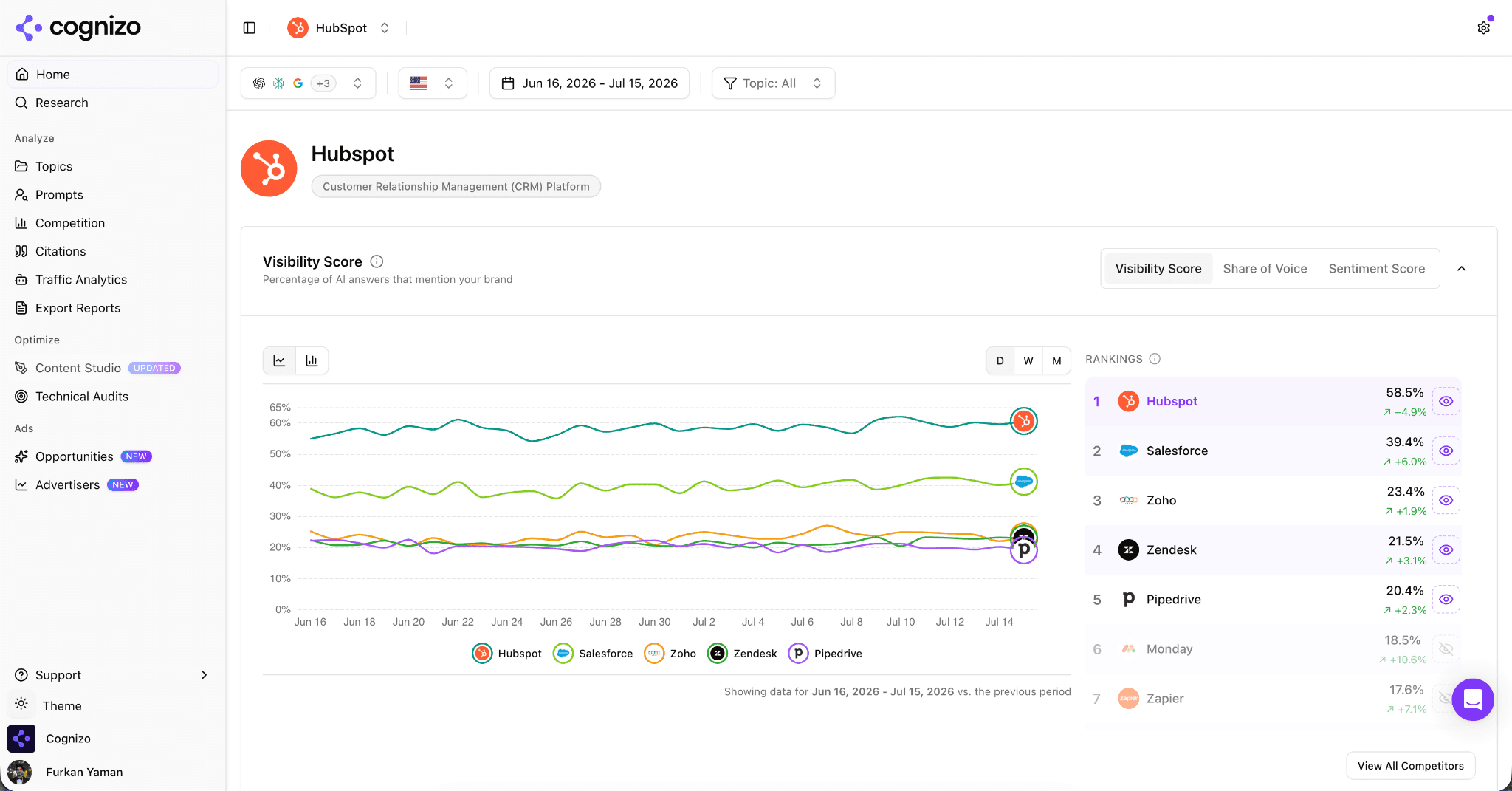
Best for: Combining organic AI visibility tracking with ChatGPT paid advertising in one platform
Cognizo monitors your brand across every major AI platform (ChatGPT, Google AI Overviews, Google AI Mode, Gemini, Perplexity, Copilot, Meta AI, Claude, Grok, and DeepSeek) and pairs that visibility data with a built-in content engine that tells you exactly what to publish next. Instead of scraping API responses alone, it uses UI scraping to capture the actual rendered answer a real user would see, which improves accuracy over API-only monitoring.
Cognizo also stands apart with unlimited users and seats on every plan, including the entry tier, so growing teams never hit a per-seat pricing wall. And as a secondary layer, its ChatGPT Ads integration lets you run paid placements alongside organic visibility, with competitor ad copy insights and unified attribution through the OpenAI Conversions API.
Key strengths: UI scraping for real rendered answers across 10+ AI platforms, an AI content studio that turns visibility gaps into ready-to-publish content, Prompt Volumes powered by billions of signals, unlimited seats on all plans, and organic AEO plus ChatGPT Ads in a single platform.
Pricing: Core ($149/mo annual, 3 platforms, 50 prompts), Growth ($499/mo annual, 5 platforms, 150 prompts, ChatGPT Ads, AI Traffic Analytics), and custom Enterprise (10+ platforms, dedicated AEO strategist, SSO/SAML, API access).
4. Promptwatch
Best for: Teams that want AI crawler activity tied directly to what actually gets cited, then turned into a content fix.
Promptwatch tracks the path from AI crawl to citation to published content across ChatGPT, Perplexity, Google AI Overviews, Claude, Gemini, and six more platforms. It logs GPTBot, ClaudeBot, and PerplexityBot activity, connects that to which pages actually get cited, then routes the gaps to a content agent that drafts and publishes the fix.
The dashboard covers Visibility Score, sentiment, share of voice, and competitor heatmaps across 11 platforms, refreshed daily. Content Gap Analysis maps tracked prompts against the site's own indexed pages using the same semantic retrieval AI models use.
Key strengths: Crawler-to-citation logging (not just crawl detection), semantic gap mapping against the client's own site, one-click publishing to Webflow, Framer, and WordPress, and off-site tracking for Reddit and YouTube mentions.
Pricing: Essential ($95/mo: 1 project, 50 prompts, 6,000 responses, 5 AEO articles), Professional ($245/mo: 2 projects, 150 prompts, 18,000 responses, 15 AEO articles, plus Agent Analytics and state/city tracking), and Business ($579/mo: 5 projects, 350 prompts, 42,000 responses, 30 AEO articles, demo required). Custom pricing for enterprise and agencies.
5. Gauge
Best for: Data-driven AEO insights
Gauge monitors hundreds of prompts daily, generates optimization actions, and integrates with major analytics platforms. It leans into agent analytics and AI assistants–style workflows, making it a fit for both startups and enterprises looking for specific improvement actions based on how AI systems actually respond.
Gauge offers custom enterprise pricing for its AI visibility platform tracking ChatGPT, Gemini, Perplexity, and Google AI Overviews, with features like gap analysis, citation intelligence, daily monitoring, and prioritized content recommendations, no public starter plans listed, contact sales for demos
6. Surfer AI Tracker
Best for: combining SEO and AEO into one workflow
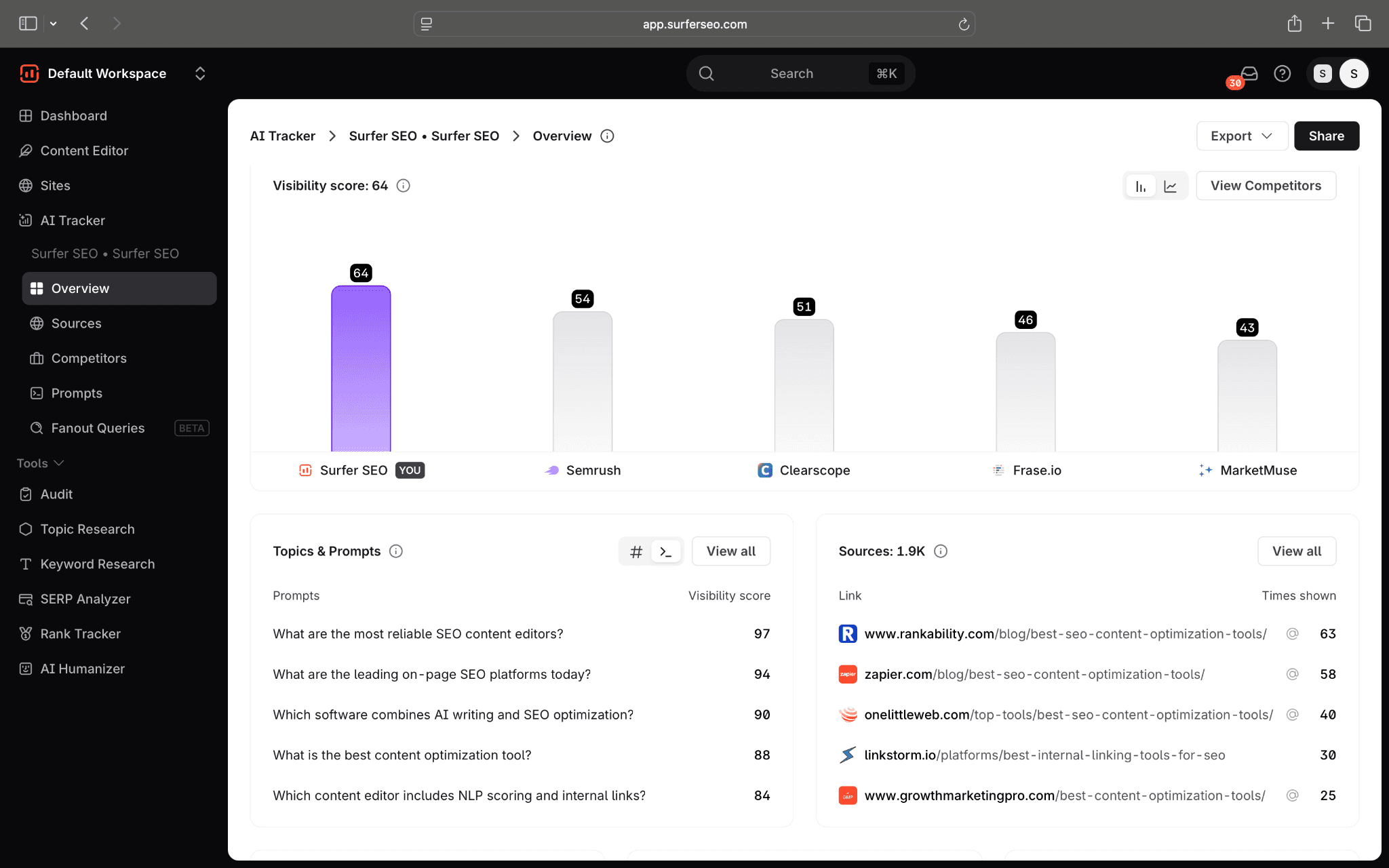
Surfer AI Tracker includes AEO tracking inside a full SEO and content optimization platform. Instead of treating AI visibility as a separate channel, it integrates it with traditional on-page optimization into a single workflow for both blue-link search and AI-generated answers.
Surfer’s AI tool monitors your brand daily across 5 AI platforms, showing visibility scores, citations, average position, and fan-out subqueries. You can drill into actual AI-generated responses, see which sources drove them, and view the fan-out subqueries models used internally.
The Sources dashboard highlights which domains LLMs cite most for your prompts and surfaces mention gaps, pages already cited by AI models that reference competitors but not you.
Competitor benchmarking, sentiment tracking, mention gap analysis, and a Sources dashboard showing which domains LLMs cite most are all built in.
Pricing: Pricing begins at $99/month for ChatGPT, with the Pro plan at $182/month, which includes 50 prompts across 5 AI platforms, 360 pages of optimization, keyword and prompt research, AI content detection, 5 team seats, and CMS integration. Enterprise starts at $999/month.
7. Rank Prompt
Best for: Affordable all-round tracking
Rank Prompt tracks prompt visibility across multiple engines, schema optimization, and supports multi-client management. It’s ideal for agencies juggling multiple brands and domains that need practical AEO tracking, basic AI search optimization, and simple reporting across them.
Rank Prompt offers a Starter plan at $49/month (150 credits for 5-6 AI reports across 150 prompts on ChatGPT, Gemini, Perplexity), Pro at $89/month (500 credits for 17-20 reports), and Agency at $149/month (1000 credits for 35-40 reports with multi-brand support).
8. Track My Visibility
Best for: Marketing teams, SEO professionals, and agencies that want to track AI visibility, competitor mentions, and optimization opportunities.
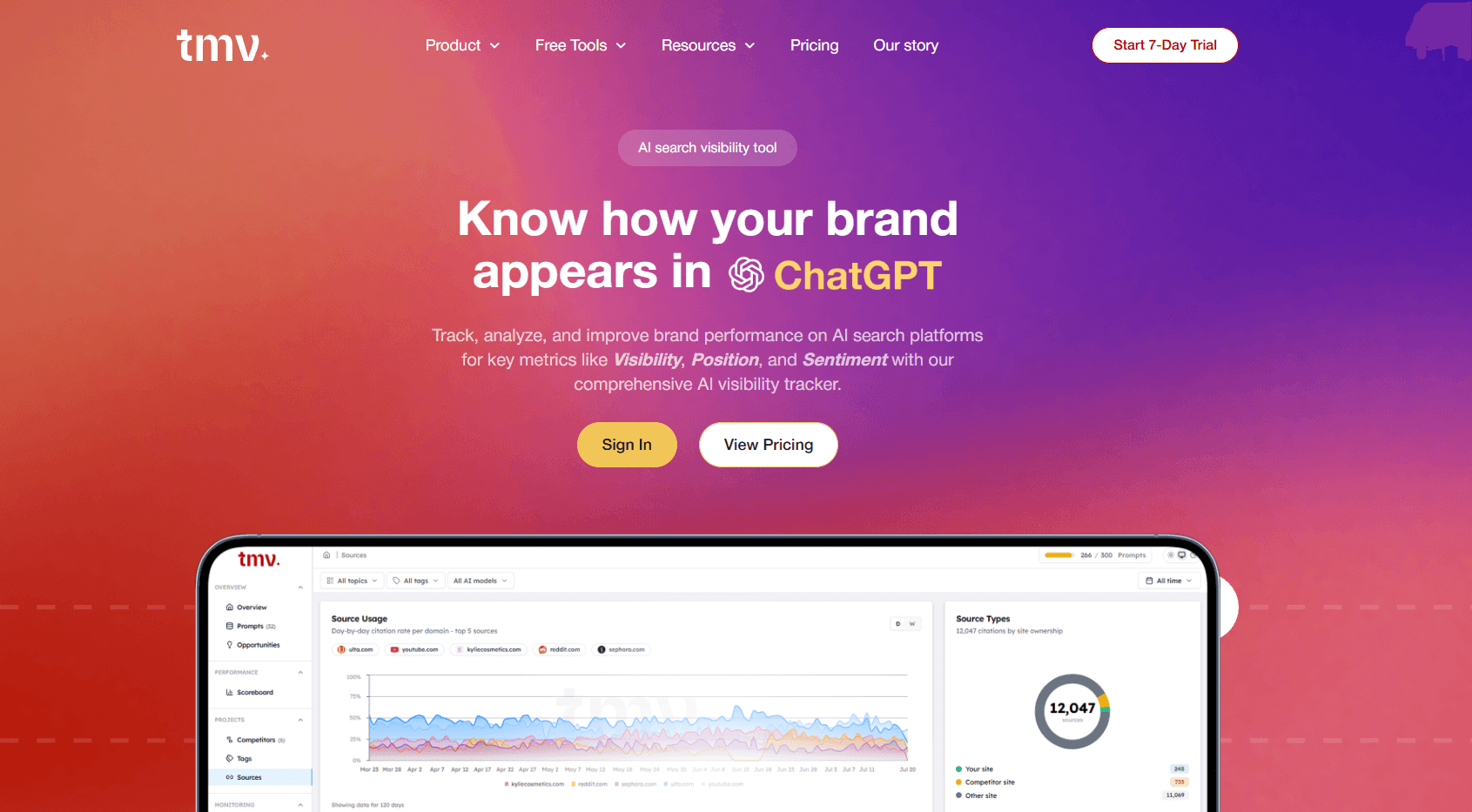
Track My Visibility tracks how brands and competitors appear across AI-generated answers and connects that visibility data to the pages and sources influencing those responses. It monitors tracked prompts, brand mentions, citations, competitor performance, and share of voice so teams can see where they are visible and where opportunities are being missed.
The platform goes beyond basic mention tracking by analyzing prompt-level results and citation sources to identify gaps that may be limiting a brand’s visibility. Its content opportunity insights highlight where existing pages can be improved, giving teams more actionable direction on what to optimize for stronger AI mentions, citations, and recommendations.
Key strengths: Multi-platform AI visibility tracking, prompt-level brand and competitor analysis, citation and source tracking, share-of-voice reporting, content opportunity insights, actionable page-level recommendations, and an AI visibility dashboard designed specifically for GEO and AI search monitoring.
Pricing: Trial ($5 one-time, 15 prompts, 1 website, 1 AI platform), Discover ($89/mo, 50 prompts/day, 2 websites, 3 AI platforms), Growth ($219/mo, 150 prompts/day, 4 websites, unlimited team members), Pro ($429/mo, 300 prompts/day, 8 websites, 4 AI platforms), and custom Agency pricing. Annual plans include 2 months free.
9. Qwairy
Best for: Teams that want multi-LLM visibility tracking and crawler analytics bundled with GEO guidance in one platform
Qwairy is a Generative Engine Optimization (GEO) platform that helps brands understand and improve how they appear in AI-generated answers across platforms like ChatGPT, Perplexity, Gemini, and Claude.
The platform tracks brand mentions, citations, and rankings across thousands of AI prompts, giving marketing teams a clear view of their visibility in AI-driven search.
Beyond monitoring, Qwairy helps identify opportunities to increase AI visibility by uncovering prompts where competitors are cited but your brand is missing, detecting trusted sources used by AI models, and highlighting content gaps and backlink opportunities that can improve your chances of being referenced in AI answers.
With built-in competitor benchmarking, AI crawler analytics, and GEO optimization insights, Qwairy enables teams to turn AI search data into actionable growth strategies.
10. SE Ranking AI Search Toolkit
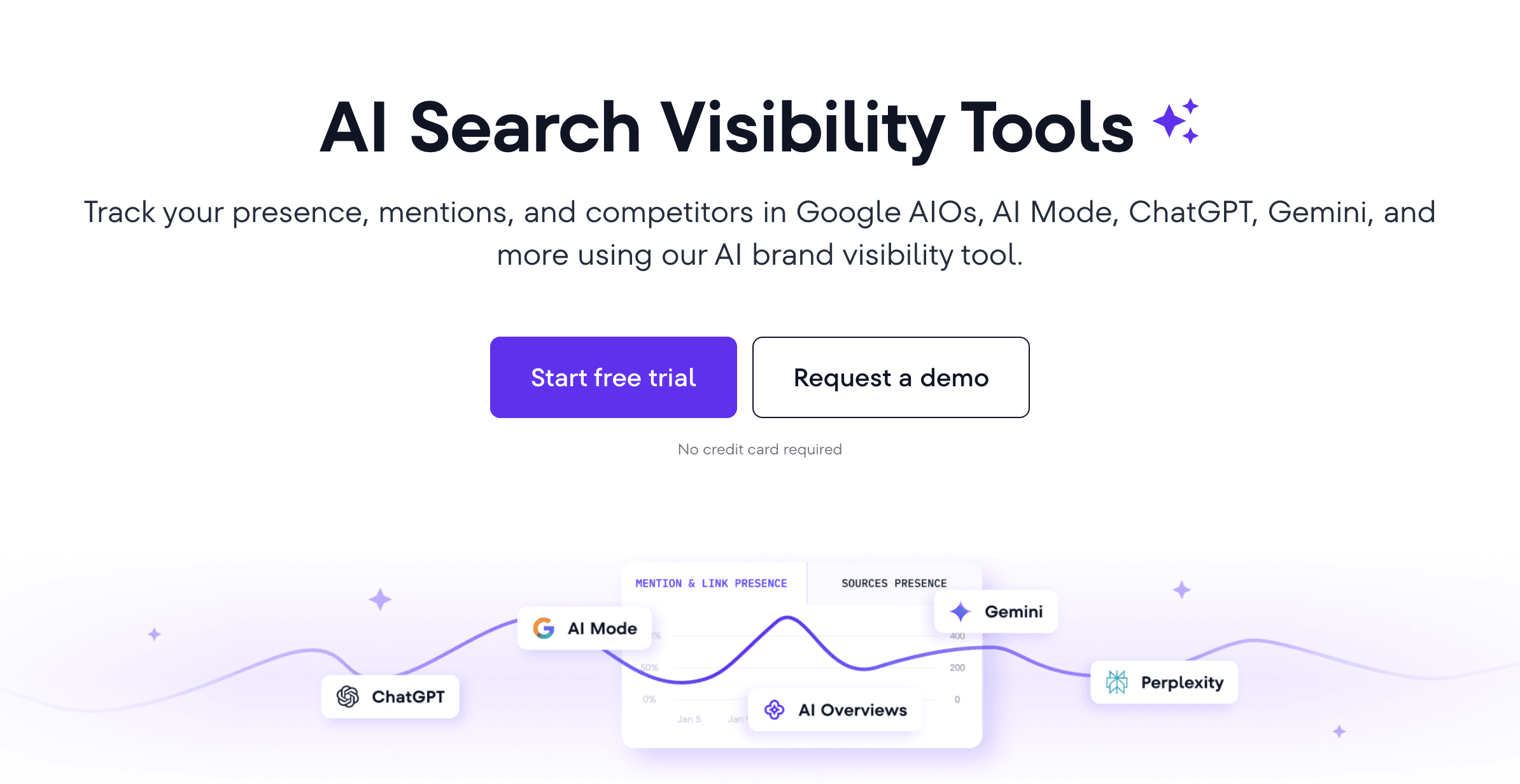
Best for: Combining SEO with AI search
The SE Ranking AI Search Toolkit tracks visibility across Google AI overviews, Gemini, ChatGPT, and more, with period-to-period competitor analysis. It’s ideal for existing SE Ranking users who want to connect classic rank tracking with AI search visibility and keep a single view for both traditional SEO and AEO workflows.
If client reporting is your bottleneck, my roundup of the best SEO ranking report software covers that side in depth.
SE Ranking offers flexible pricing starting at $65/month (Essential, scalable by keywords), $119 Pro, and $259+ Business.
11. JetOctopus
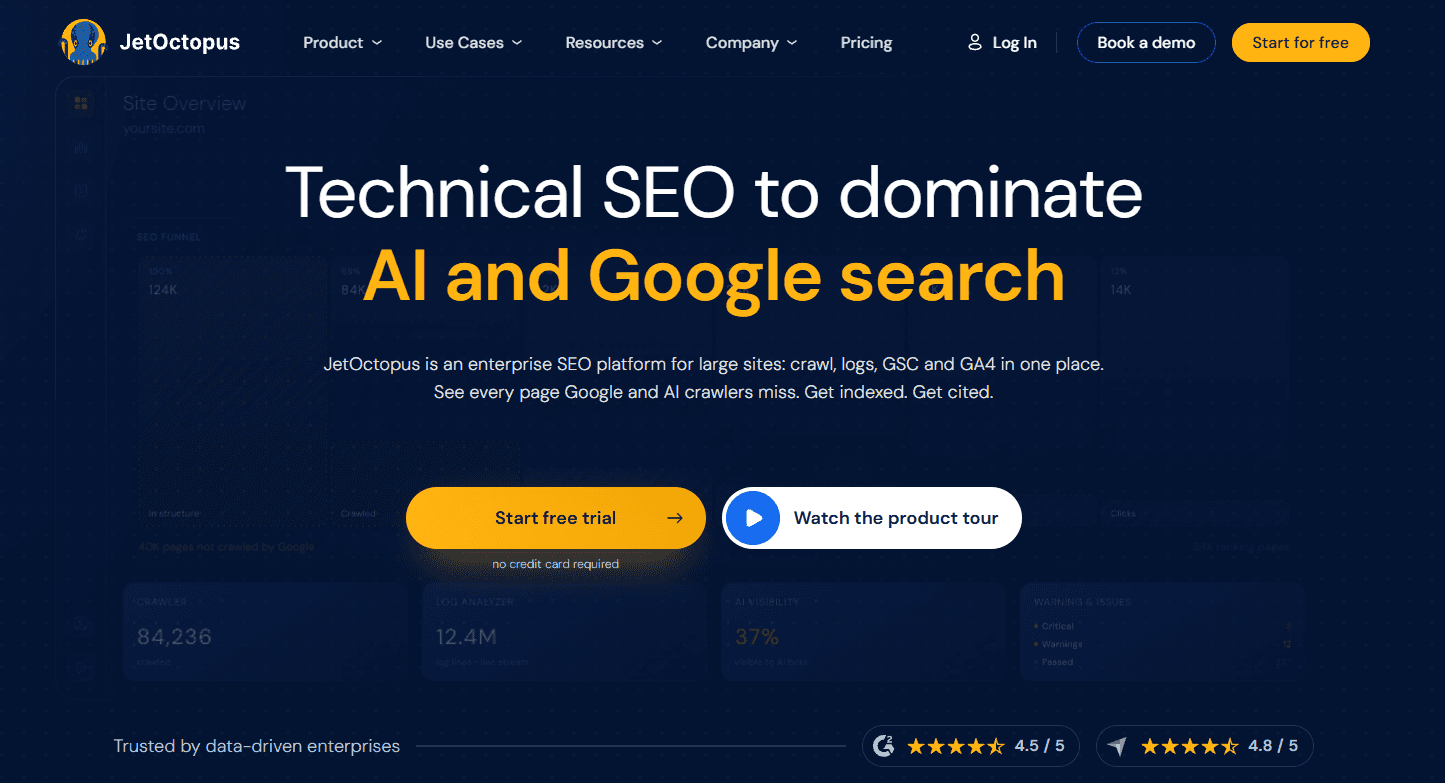
JetOctopus is a cloud-based technical SEO platform built for large websites, e-commerce catalogs and the agencies that manage them. It covers the layer most tools in this list leave out: before an AI assistant can cite you, its crawlers have to reach and read your pages, and that is exactly what JetOctopus monitors. The log analyzer tracks 40+ bots, from GPTBot and ClaudeBot to PerplexityBot, and shows which pages they visit, which they skip and where they hit errors, all from your real server logs rather than estimates.
Two reports do the heavy lifting for AEO work. AI Efficiency visualizes how much of your site is actually visible to AI bots, and the AI Dashboard turns that into a funnel view of your website's path from crawlable to citable. Since AI crawlers do not render JavaScript, JetOctopus also compares your rendered pages against raw HTML to show exactly what content stays invisible to them. Crawl, server logs and Search Console data sit in one place, so the diagnosis comes with the context needed to fix it.
Key strengths: log-based tracking of 40+ AI bots including GPTBot, ClaudeBot and PerplexityBot, an AI funnel dashboard from crawlability to citation readiness, JS vs raw HTML comparison that shows what AI bots cannot see, crawl, logs and GSC joined in one platform, unlimited seats and projects on every plan.
Pricing: Full-featured plans from $349/mo with unlimited seats and projects on every tier. All prices are public and there is a 7-day free trial, no credit card required.
12. ProductRank.ai
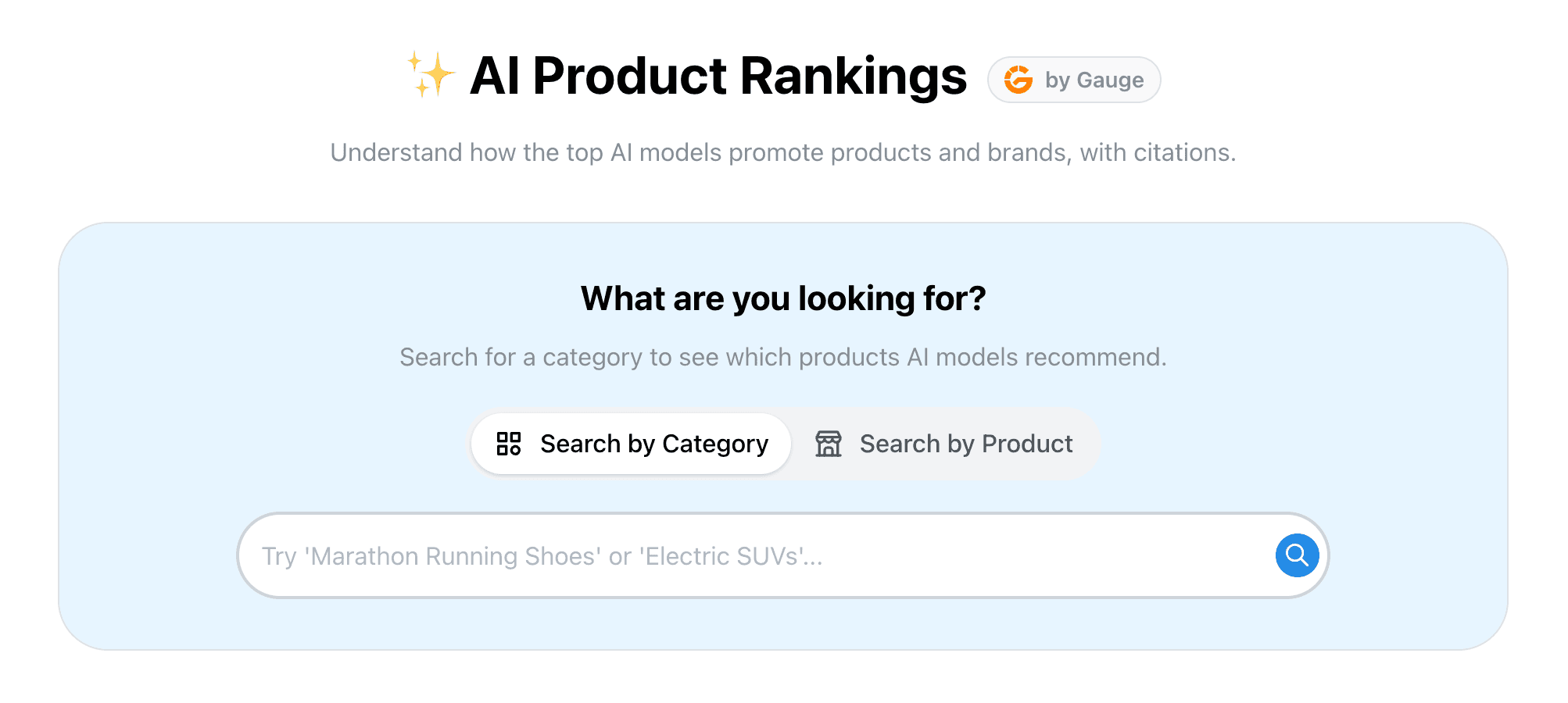
Best for: Fast, free brand checks
ProductRank.ai is a simple tool for viewing how LLMs “rank” brands and citations. It’s a great starting point for newcomers who need a no-cost assessment of their AI presence before investing in more advanced AEO platforms.
13. Gumshoe

Best for: Persona-focused AEO tracking
Gumshoe analyzes how different buyer segments engage with AI answers. It’s useful for persona-driven optimization strategies where you care which persona sees which AI-generated responses and which content paths they follow next.
Gumshoe's Pay as You Go plan costs $0.10 per conversation and scales with usage, adding features like reports and AI content generation. Enterprise offers custom pricing with full features and dedicated support.
14. AI SEO Tracker
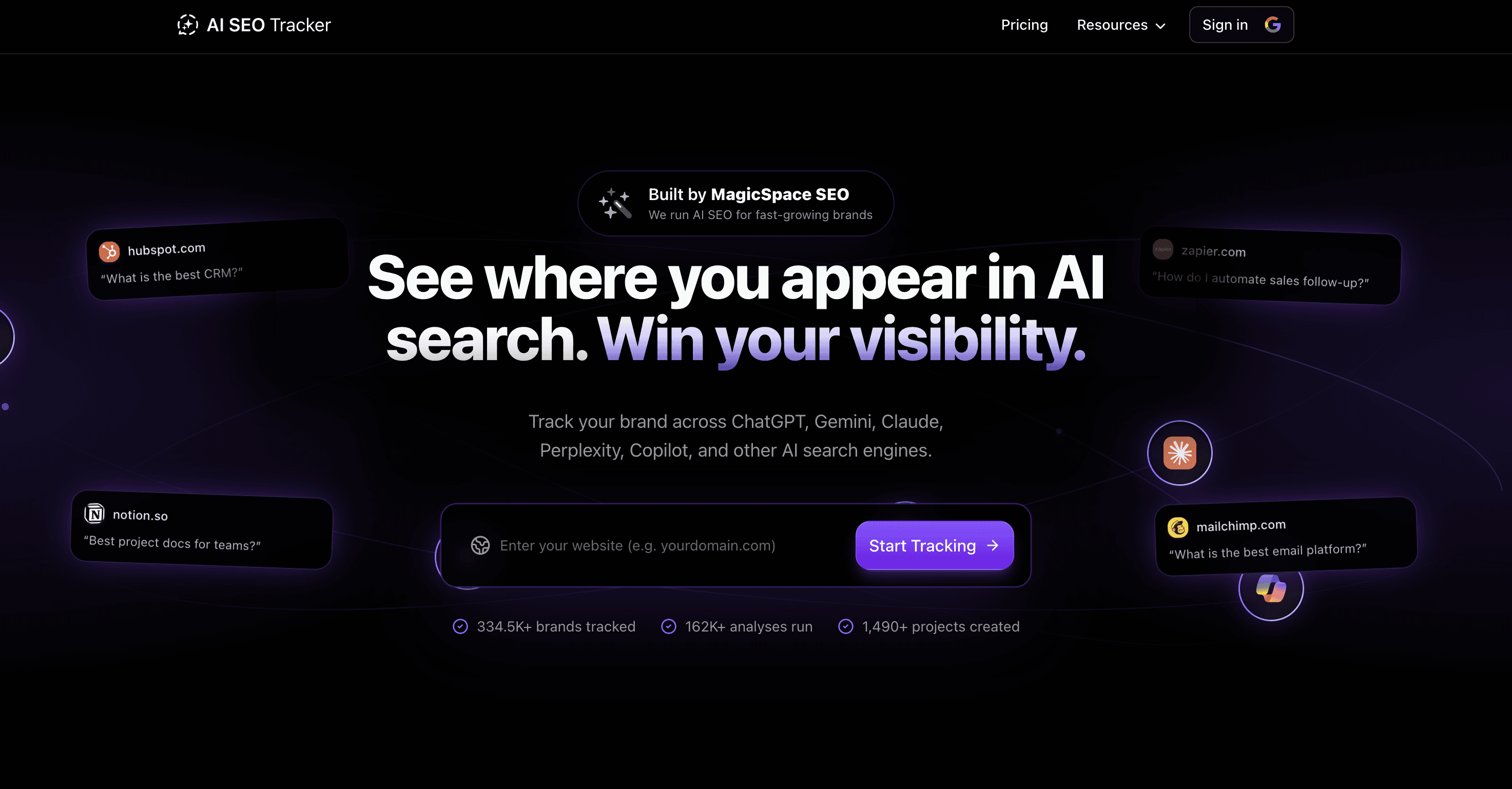
Best for: SaaS and agency teams that want a fast, outcomes-focused view of where they rank across AI engines
AI SEO Tracker shows you exactly where your brand appears in ChatGPT, Gemini, Claude, Perplexity, and Copilot, then hands you a personalized roadmap to fix the gaps. You enter a URL and get a full AI visibility report in 60 seconds, track competitors across 2,288+ brands, and discover the exact prompts your customers are actually asking. It also ships agent skills (Competitor Gap Analysis, Citation Outreach, Brand Voice Audit, Weekly Visibility Brief) that plug into Cursor, Claude Code, Codex, Windsurf, GitHub Copilot, and Gemini via MCP, so you can run visibility playbooks directly inside your AI agent.
Key strengths: Free 60-second AI SEO scan, prompt-level visibility across all major AI engines, competitive gap analysis on 2,288+ brands, MCP-ready agent skills, and an action plan tied to outcomes instead of just dashboards.
Pricing: Basic ($79/month, 50 prompts, 250 responses, 1 seat, weekly refresh) and Pro ($199/month, 500 prompts, 5,000 responses, unlimited seats, email writer, page inspector, competitor analysis, email + Slack support). 7-day free trial on paid plans.
15. Scrunch
Best for: Enterprise brands, agencies, and end-to-end optimization.
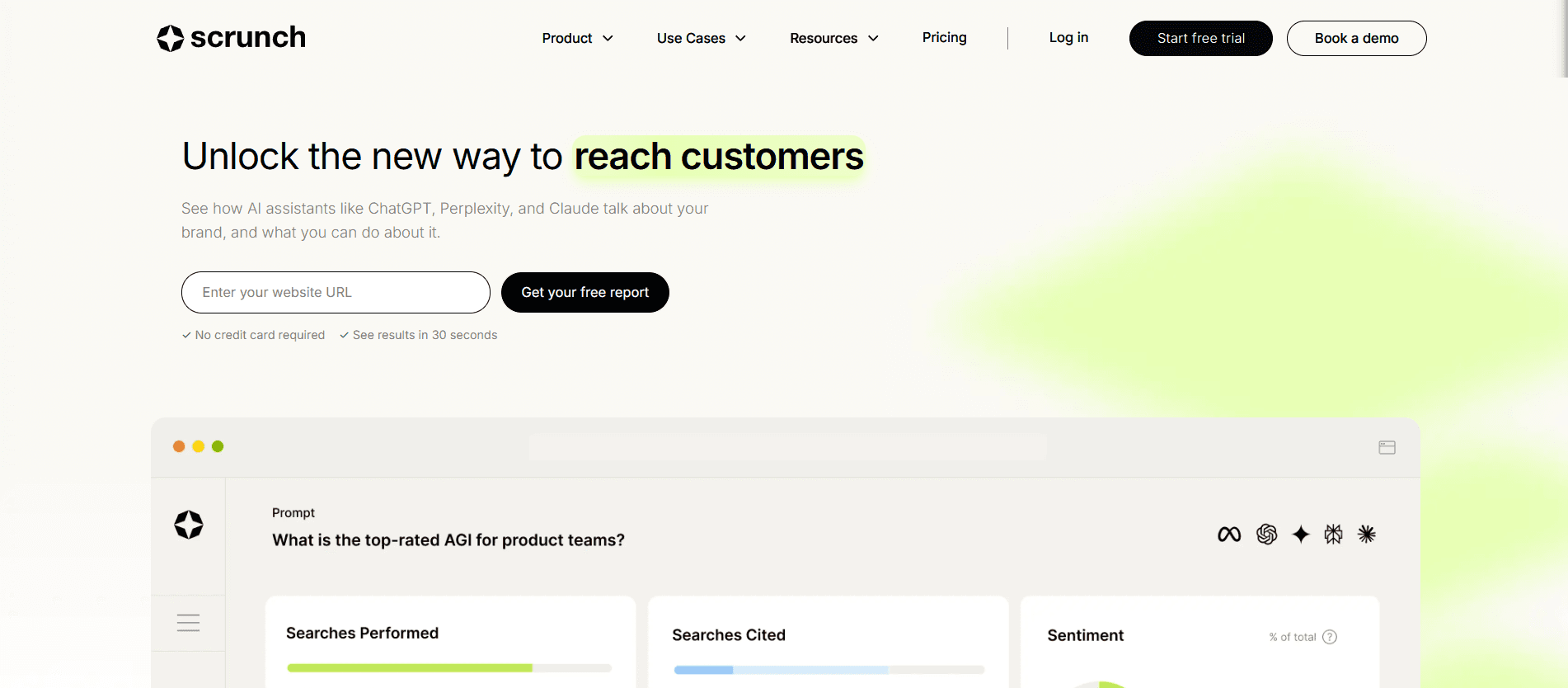
Scrunch provides deep monitoring and analytics across every major LLM (ChatGPT, Google AI Overviews, Gemini, Perplexity, etc.), with a special focus on enterprise brands and agencies. It also offers numerous tools designed to improve AI search performance, including website mapping, page auditing, content optimization, and AI-first content delivery via its Agent Experience Platform (AXP).
Scrunch pricing starts at $100/month for Explorer (ChatGPT tracking only, 100 prompts, 1 license), $500/month for Growth (monitoring for all LLMs, 700 prompts, 5 personas tracked, 10 page audits, 5 user licenses), and custom Enterprise pricing with expanded capabilities and support.
16. Ahrefs Brand Radar
Best for: Free AI crawler traffic and competitor monitoring
Ahrefs Brand Radar tracks millions of AI prompts, quickly checks brand positioning across major models, and offers a free tier for basic features. It’s a handy companion if you already use Ahrefs for backlink analysis and traditional seo, and you want quick checks on AI search results too.
What Makes a Good AEO Tracking Tool?
Not all tools are created equal. You should look for a few critical key features:
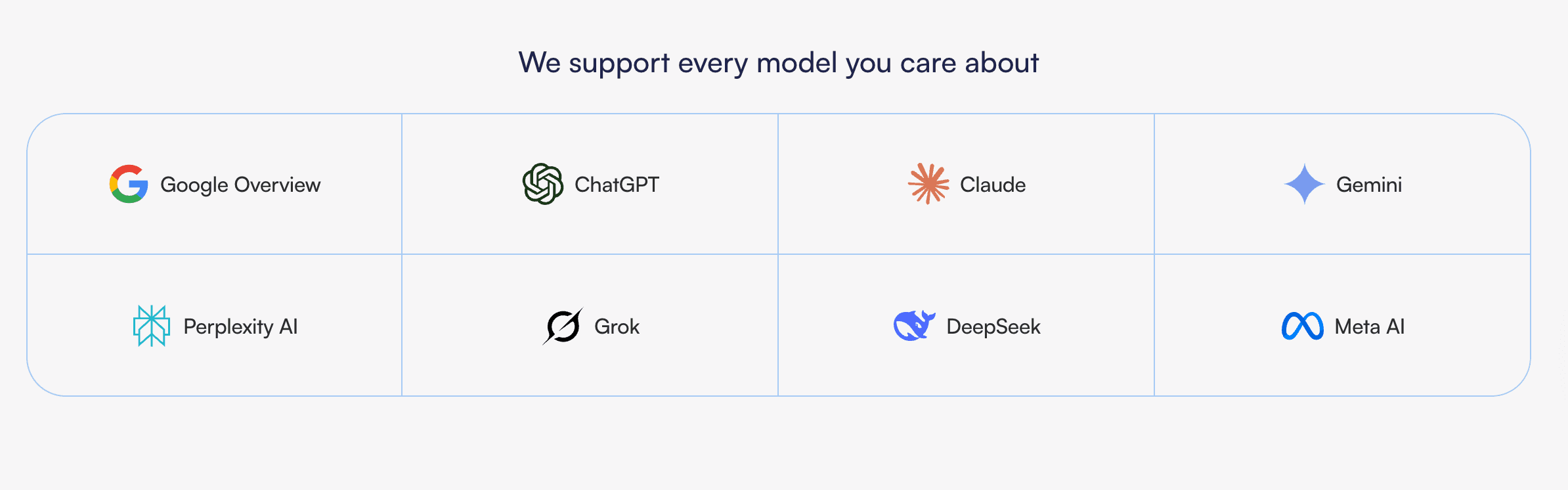
Coverage of all major AI engines (ChatGPT, Gemini, Perplexity, Claude, Copilot, plus other AI engines)
Prompt-level visibility tracking (so you know which questions and search queries matter)
Real-time AI visibility monitoring and visibility tracking dashboards
Competitor benchmarking and citation analysis/source analytics
Multilingual and geo-audit capabilities (since AI answers vary by region/language)
Built-in integrations for traffic analysis (think GA4 segments for AI referrals, plus search volume and search volume data where useful)
Simple, secure workflow and clear data attribution
A few tools also let you manage prompt libraries, map clusters to commercial keywords, and ship content optimization recommendations for easy wins.
The more advanced platforms offer content optimization features, keyword research tools, and even basic sentiment analysis of AI-generated content to indicate whether brand mentions are positive or negative.
What is Answer Engine Optimization (AEO), and Why Does Tracking AI Visibility Matter?
Let’s keep it simple. Answer Engine Optimization (AEO) focuses on making sure your brand is found, recommended, and cited in AI-generated answers, not just blue links on a search results page (learn more about generative engine optimization here).
Unlike “old school” traditional seo, which primarily targets Google’s rankings, AEO targets conversational engines (like ChatGPT, Gemini, Perplexity, Copilot, Claude, and their cousins). These AI search engines and search tools choose sources by trust, authority, freshness, and clarity. If your site isn’t in their “knowledge map,” you get left out of visibility in AI.
Monitoring AEO means tracking:
Which AI engines mention your brand
How often you’re cited, and whether your links show up as AI citations
Whether you’re losing out to competitors in AI responses and AI-generated responses
For agencies, e-commerce brands, SaaS startups, and even public sector teams, tracking this new AI visibility is not just “nice to have.” According to Gartner, CMOs are ramping up investment in content and talent to adapt to GenAI-powered search, and are urged to create unique branded research so their brands surface in GenAI results and AI overviews.
How to Choose the Right AEO Tracking Platform
Different tools fit different needs. Here’s how I think about it:
Solo marketers/founders: Start lean. Use AIclicks or Ahrefs Brand Radar to get quick answers and weekly visibility checks.
Agencies: Focus on prompt-level tracking, competitor benchmarking, and multi-client support. AIclicks, Rank Prompt, and Peec AI fit here.
Enterprise brands: You’ll want full dashboards, multilingual support, SOC 2 compliance, and integration with analytics platforms. Profound and Gauge cater to this level.
Before picking, ask yourself:
Do you need deep analytics or fast alerts?
Does your market span multiple languages or regions?
Are integrations with GA4, Slack, or export APIs must-haves?
What’s your workflow: heavy team collaboration, or just a few strategic reports each month?
And if one engine dominates your funnel, start narrower: I’ve reviewed the best Copilot rank tracking tools in a separate roundup.
Best Practices for Maximizing AI Search Visibility
Getting visibility in answer engines isn’t just about the tool. You also need to:
Build topic clusters based on commercial keywords. Don’t chase single prompts. Track clusters and map them to pages and revenue.
Monitor both the mention volume and citation quality. It’s not enough to be listed. Being cited as an authority counts for much more and feeds into your AI visibility score.
Pair AEO with technical SEO. Ensure your site is crawlable for AI bots and crawlers, uses server-side rendering, and has a clean content structure and structured data.
Win corroboration. Get placed in reviews, directories, and authentic forums like Reddit. AI engines “lift” those sources often, and they influence AI-generated content and search visibility.
Keep a monitoring cadence. Weekly dashboard scans, micro-fixes (like rewriting intros or adding structured tables), and monthly pillar content.
If you sell physical products, keep an eye on emerging metrics such as ChatGPT shopping visibility, especially as more AI-powered search engines experiment with shopping-first layouts and AI mode interfaces.
Check out this video for more advanced tactics:
E-E-A-T Considerations for AEO
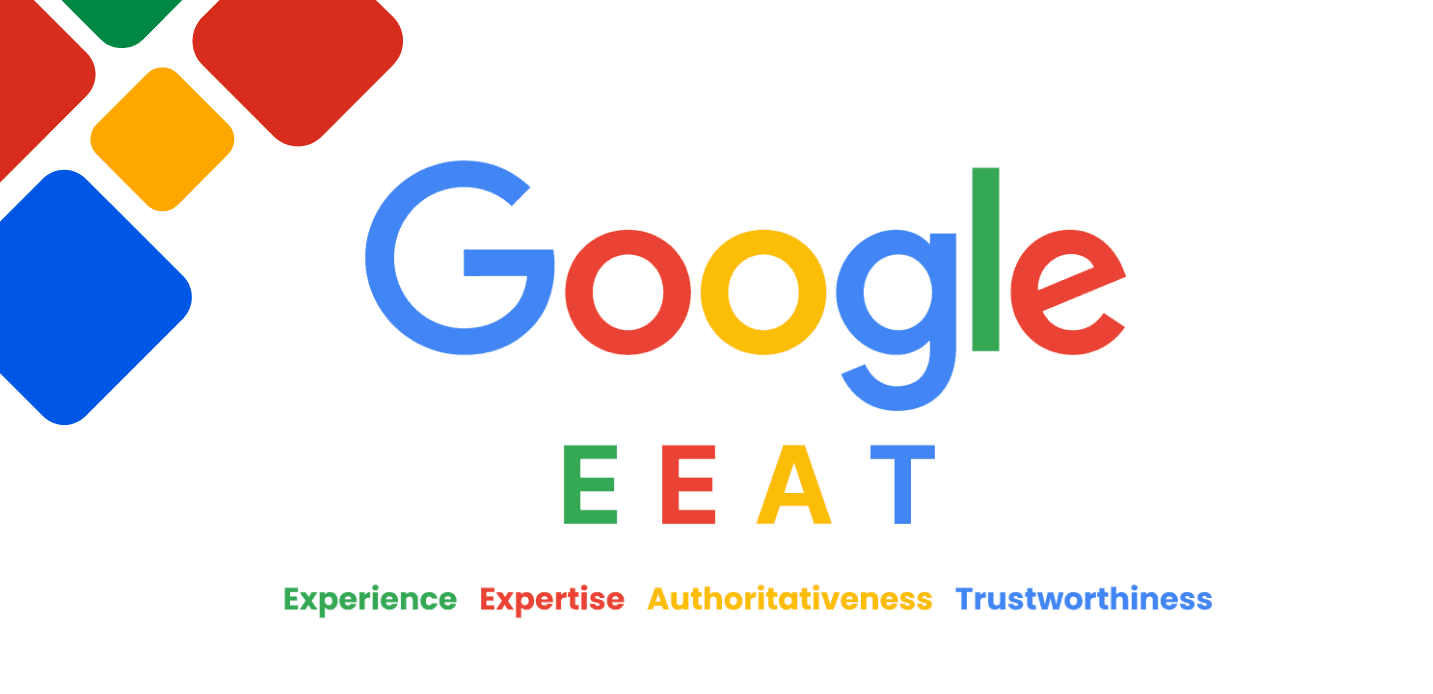
Strong AEO means showing your brand as trustworthy and authoritative. That means:
Regularly updating your external citations.
Making sure your answer-first content is clear and supported by reliable data.
Tracking and reporting transparently for us means audit logs and clear attributions on every dashboard.
Modern AEO platforms can also fold in AI visibility metrics like an AI readiness score, answer engine insights, and even simple sentiment analysis, so you see not just if you show up but how you show up. Over time, this gives you a repeatable framework to optimize AI visibility, guide content optimization, and refine which AEO tracking and optimization tools you actually need.
For the analysis side of that stack, I’ve compared the best LLM SEO analysis tools in their own guide.
Conclusion & Action Steps
AI-driven answer engines are the new front door for digital discovery, and tracking your brand’s performance inside them is now as vital as traditional Google rankings. From building prompt libraries to monitoring weekly visibility shifts and mapping clusters to revenue, dedicated AEO tools are a must. Start by auditing your own AI search visibility: where your brand appears, which AI models surface your content, and how often AI engines mention you in AI-generated results.
Try out a platform like AIclicks for precision and flexibility, or use the summary table above to find the right fit for your needs. The sooner you start, the faster you’ll grow your share of tomorrow’s AI-powered answers and keep competitors from getting the first click.
FAQs
Will AEO replace SEO?
Think of AEO not as a replacement for SEO, but as its natural evolution. Just like SEO moved beyond simple keyword stuffing to focus on user intent, AEO is the next big step. For us marketers, this means a dual approach is essential, where seo teams keep improving classic rankings while AEO teams focus on visibility in AI.
How do you optimize for AEO?
To optimize for AEO, write clear, concise content using natural language and related semantic keywords. Add FAQ and Q&A sections answering specific questions directly. Implement schema markup for rich results. Publish expert, trustworthy resources and tailor pages for voice search and conversational, question-based queries across devices like smartphones and speakers.
What metrics are used to measure AEO success?
What Metrics Should We Track for AEO Success? Use a repeatable scorecard for each AEO cluster: coverage of mapped questions, non-brand visibility, and SERP CTR, on-page engagement, sourced & influenced pipeline, and operational velocity/quality.
What is replacing SEO?
GEO enables organizations to future-proof their digital presence by adapting content strategies to meet the changing expectations of AI-powered platforms. By focusing on content clarity, semantic dept,h and relevance, GEO-ready content is more adaptable to shifts in how AI systems retrieve and share information.
Is SEO still relevant in 2026?
Yes, SEO is still relevant and essential in 2026, but it is rapidly evolving due to AI and changing search behaviors. The focus is shifting from old tactics like keyword stuffing to user experience, creating high-quality content, and adapting to new technologies like AI-powered search results.
Why SEO remains relevant?
SEO remains essential because people still rely on search engines to find information, products, and services. Organic search drives over half of web traffic, and users trust organic results more than ads, boosting conversions. Strong SEO builds long-term, sustainable visibility and credibility that continues delivering value beyond any paid campaign.
How SEO is evolving in 2026?
In 2026, SEO is about working with AI-driven search, not against it. Success depends on fast, user-friendly experiences, deeply satisfying search intent, and publishing authoritative content over high volumes. Marketers must stay adaptable, blending proven technical foundations with new AI features and evolving search behaviors to stay visible and competitive.



Any questions left?
Book a call here: