" width="14px"><path d="M 13.864 5.629 L 13.3 5.629 L 13.3 5.6 L 7 5.6 L 7 8.4 L 10.956 8.4 C 10.379 10.03 8.828 11.2 7 11.2 C 4.681 11.2 2.8 9.319 2.8 7 C 2.8 4.681 4.681 2.8 7 2.8 C 8.071 2.8 9.045 3.204 9.786 3.864 L 11.766 1.884 C 10.516 0.719 8.844 0 7 0 C 3.134 0 0 3.134 0 7 C 0 10.866 3.134 14 7 14 C 10.866 14 14 10.866 14 7 C 14 6.531 13.952 6.073 13.864 5.629 Z" fill="rgb(255, 193, 7)" height="14px" id="H_YjfTNpn" width="14px"/><path d="M 0 3.742 L 2.3 5.429 C 2.922 3.888 4.429 2.8 6.193 2.8 C 7.264 2.8 8.238 3.204 8.979 3.864 L 10.959 1.884 C 9.709 0.719 8.037 0 6.193 0 C 3.504 0 1.172 1.518 0 3.742 Z" fill="rgb(255, 61, 0)" height="5.428500000000002px" id="PlkthQDhg" transform="translate(0.875 0)" width="10.959199999999996px"/><path d="M 6.232 5.581 C 8.04 5.581 9.683 4.889 10.925 3.764 L 8.758 1.931 C 8.032 2.483 7.144 2.782 6.232 2.781 C 4.411 2.781 2.865 1.62 2.283 0 L 0 1.759 C 1.159 4.026 3.511 5.581 6.232 5.581 Z" fill="rgb(76, 175, 80)" height="5.581099999999999px" id="WlnJ5gngE" transform="translate(0.7 8.4)" width="10.924899999999994px"/><path d="M 6.864 0.029 L 6.3 0.029 L 6.3 0 L 0 0 L 0 2.8 L 3.956 2.8 C 3.68 3.576 3.183 4.254 2.526 4.75 L 2.527 4.749 L 4.693 6.582 C 4.54 6.722 7 4.9 7 1.4 C 7 0.931 6.952 0.473 6.864 0.029 Z" fill="rgb(25, 118, 210)" height="6.589883930775992px" id="x_rSW275p" transform="translate(7 5.6)" width="7px"/></g></svg>)


Reviewed by:
Matas Kibildis

Head of Growth @ aiclicks.io
Last updated:
Expert Verified

How well is your brand showing up in AI-generated answers and AI-generated responses? Not just Google results or Bing blue links, but actual replies from AI search engines like Microsoft Copilot? This is the question every marketer and business should be asking in 2026.
AI search is not on the horizon; it’s right here, reshaping how users find products, make decisions, and interact with brands, and it’s redefining search visibility far beyond classic SERPs. I know, because I watch it happen every single day at AIclicks.io, our AI search visibility tool.
Traditional SEO had us tracking rankings, building links, and praying for organic traffic in traditional search engines, obsessing over classic search engine rankings. But today, conversational AI tools like Copilot, powered by Bing, control how brands are recommended and cited, and these AI tools quietly decide your AI visibility and overall AI search performance. The same applies across the broader ecosystem of tools for tracking LLM visibility, from ChatGPT to Gemini and beyond. Understanding how to rank in AI search is no longer optional for brands that want to stay visible.
In this article, I’ll break down what makes the best Copilot rank tracking tools and broader AI search visibility platforms essential, what features you need to look for, and how to choose one that fits your business alongside your existing SEO tools and AI SEO workflows. And yes, I’ll share honest insights from the front lines on what’s working right now for companies both big and small.
9 Best Copilot Rank Tracking Tools 2026
AIclicks.io - Best Copilot rank tracking tool in 2026
Otterly AI - Best for budget-conscious brands tracking Copilot visibility
Keyword.com AI - Best for solopreneurs and small businesses
Advanced Web Ranking (AWR) - Best for unified traditional and Copilot tracking
LLMrefs - Best for small agencies tracking Copilot across multiple AI platforms
Rankability Analyzer - Best for agencies focused on citation tracking and competitor reporting
Nozzle.io - Best for enterprise-level data depth on Copilot SERP features
Hall AI - Best for deep AI agent monitoring and brand citation tracking
Peec AI - Best for structured prompt-level Copilot reporting
Best Copilot Rank Trackers 2026 - Practical Review
Below are my reviews of the best Copilot rank tracking tools on the market for 2026. The guide reflects what you get today, but features evolve, so always double-check the latest updates, especially as multiple AI search platforms roll out new capabilities.
1. AIclicks (Our platform)
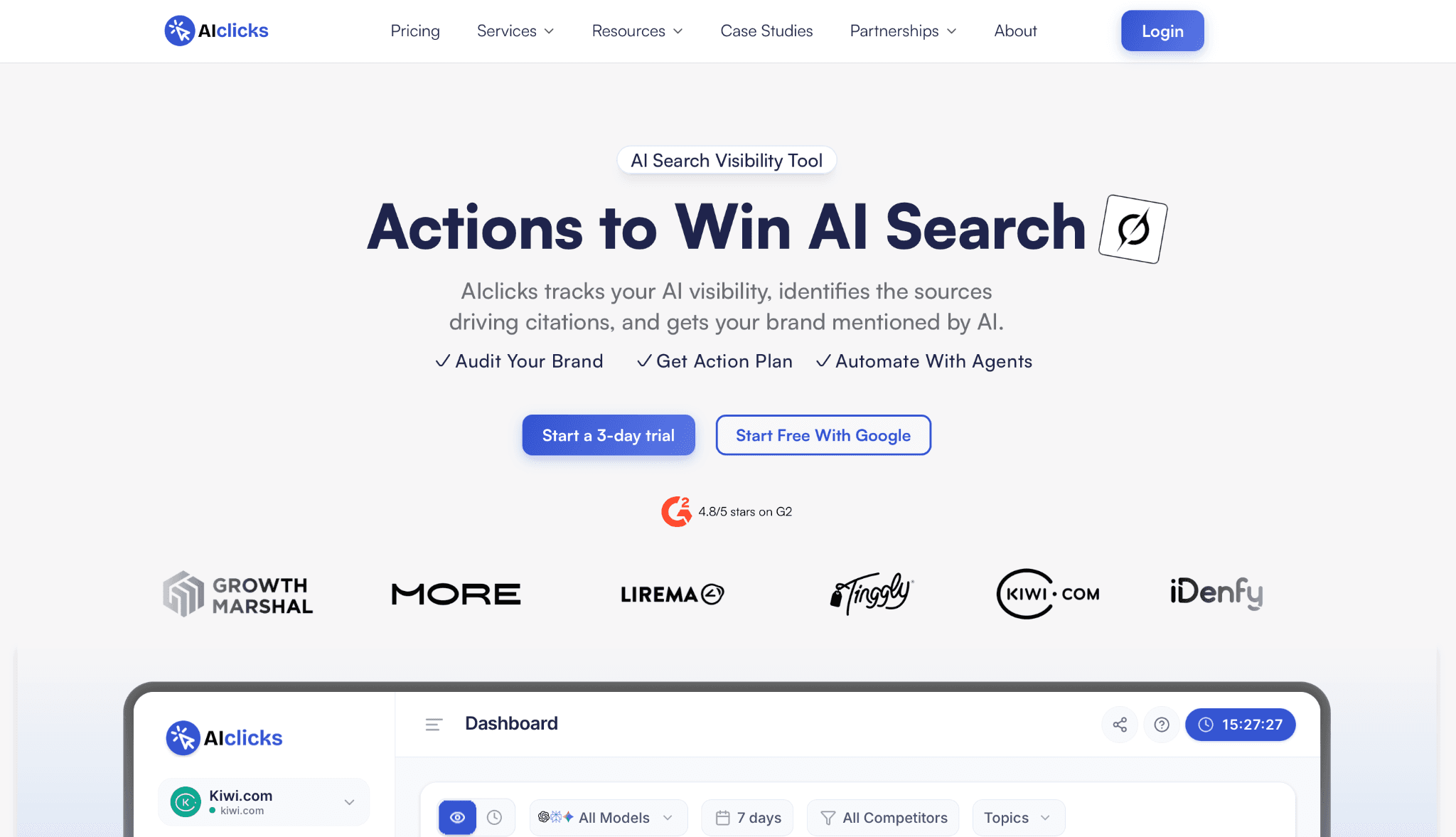
AIclicks was built to solve what existing Copilot rank trackers miss. Legacy SEO tools can't reliably detect AI search results or the signals behind Copilot citations, so we engineered a platform that can.
For Copilot rank tracking specifically, AIclicks monitors how your brand appears in Copilot's AI-generated answers at the prompt level, meaning you can see exactly which questions trigger your brand, which competitors get cited instead, and which external sources Copilot relies on when forming its responses.
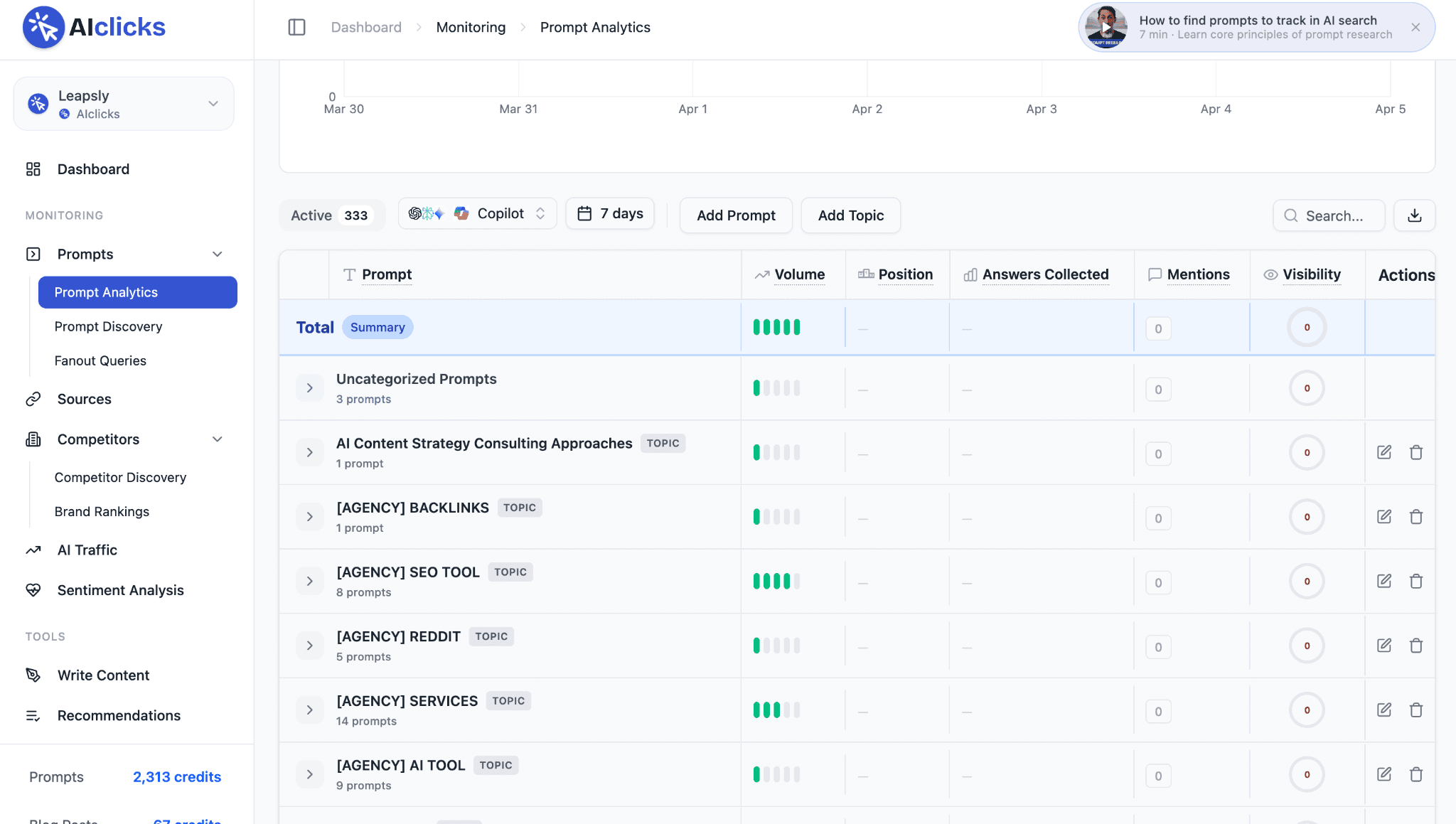
The Citation Intelligence feature is particularly useful here: it surfaces every URL Copilot cites for your tracked prompts, so you can identify which third-party domains are shaping your brand's visibility in Copilot answers and build a strategy around earning those citations.
The GEO Audit goes a step further, letting you test how Copilot responds to your prompts across different regions and languages, critical for brands targeting multiple markets. And unlike most tools on this list, AIclicks connects Copilot referral traffic back to GA4, so you can tie AI visibility to actual business outcomes rather than just mention counts.
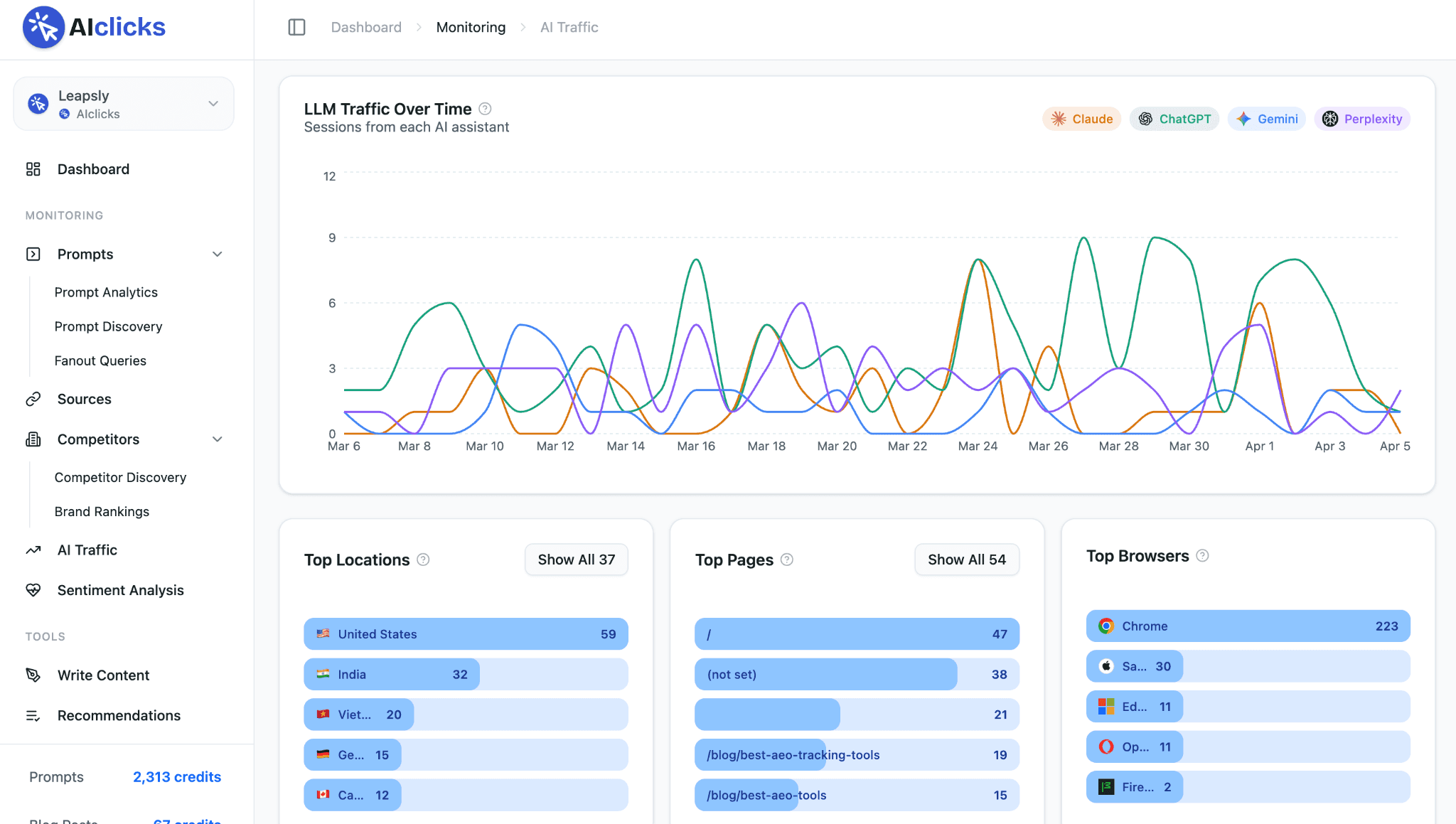
For teams looking beyond Copilot, AIclicks also ranks among the best AI mode tracking tools available, covering ChatGPT, Gemini, Claude, Perplexity, Grok, DeepSeek, Meta AI, and Mistral from a single dashboard.
Strengths:
Comprehensive tracking across multiple AI engines, including Copilot, ChatGPT, Gemini, and Perplexity
Dedicated AI overview visibility dashboards showing brand mentions in AI-generated content
Citation intelligence to identify external sources used by Copilot
Prompt library management for optimizing brand mentions in Copilot
Competitor benchmarking capabilities across AI search engines
Detailed reporting with exportable data
Considerations:
Primarily focused on AI search results rather than traditional SEO
Newer to the market compared to some other tools
Suitable use cases:
Brands beginning their journey tracking brand visibility in Copilot
Companies wanting a comprehensive AI overview tracking with Copilot as a priority
Enterprise clients needing single-source-of-truth dashboards for performance across AI search engines
Teams focused specifically on winning in Bing Copilot
Pricing:
AIclicks offers tiered monthly pricing starting at $59/month for Starter with 20-50 tracked prompts and basic AI tools like ChatGPT/Perplexity monitoring, scaling to $189 Pro and $499 Business for more prompts, LLMs, unlimited seats, and agency features.
2. Otterly AI
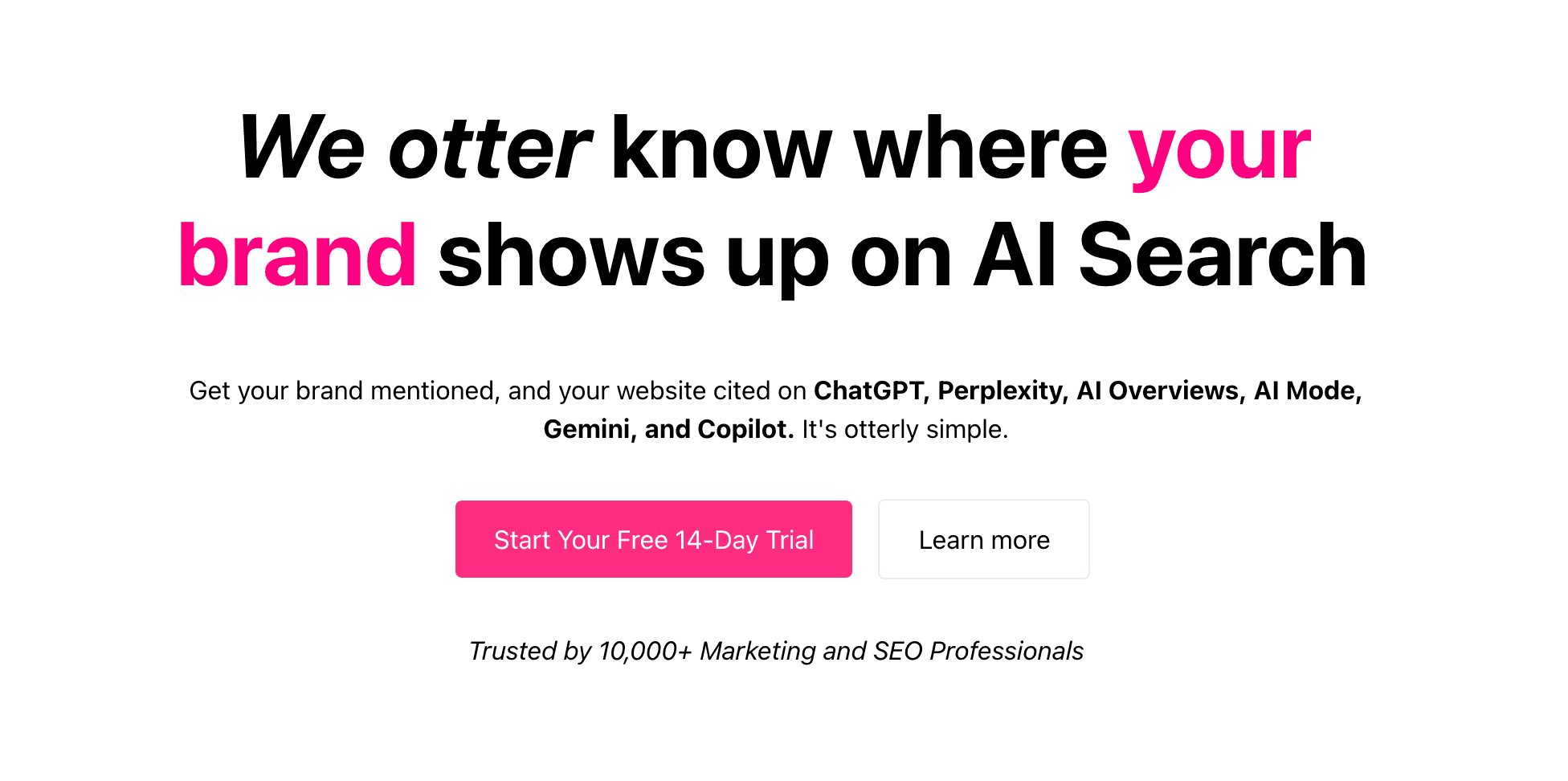
Otterly AI is a solid entry point for brands that want reliable Copilot visibility tracking without a heavy investment. Microsoft Copilot is included on all base plans by default alongside ChatGPT, Google AI Overviews, and Perplexity. It runs tracked prompts daily and captures full Copilot responses including cited sources, so you can see exactly what Copilot said rather than just whether you were mentioned.
Its Share of AI Voice metric quantifies what percentage of relevant Copilot responses mention your brand versus competitors, and multi-country support across 50+ countries makes it useful for brands that need to track how Copilot responds differently by geography.
Strengths:
Coverage across multiple AI search engines, including Copilot
Budget-friendly pricing for tracking brand visibility
Monitors AI-generated content mentions
Considerations:
Less detailed information available in the source text
May not have all the advanced features of premium options
Suitable use cases:
Budget-conscious brands needing Copilot AI overview tracking
Teams needing basic visibility monitoring across AI search engines
Pricing:
Otterly.ai pricing starts at $29/month for Lite (15 prompts across ChatGPT/Perplexity/AIO), $189 for Standard (100 prompts), $489 for Premium (400 prompts).
3. Keyword.com AI
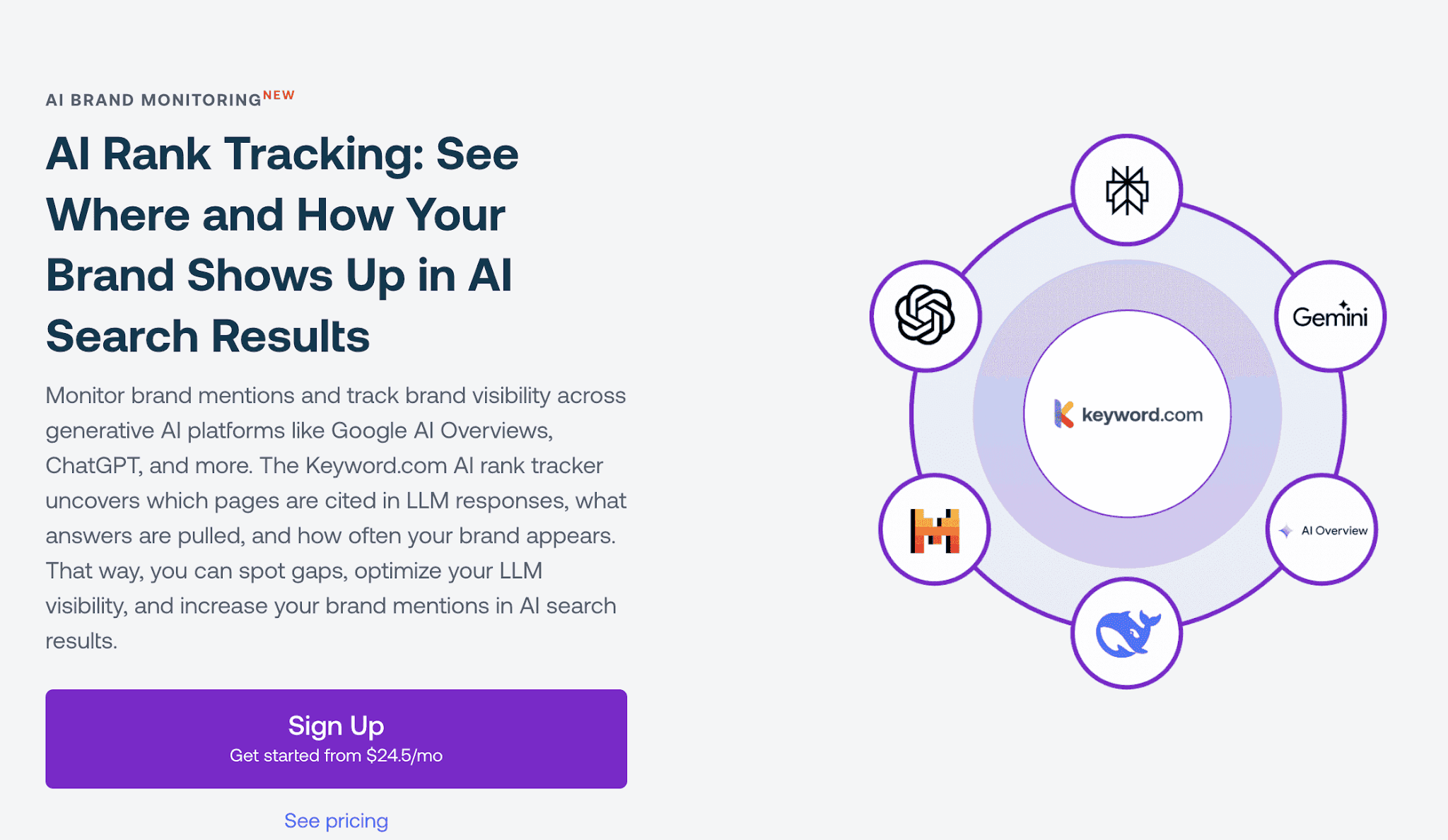
Keyword.com is primarily a traditional SERP rank tracker that has added AI visibility features including Copilot tracking. For teams already using it for classic SEO, it's a practical consolidation option, Copilot monitoring sits alongside traditional rank data without needing a separate tool. It tracks both linked citations and unlinked mentions in Copilot responses, and Competitor Sheets let you compare Copilot visibility against rivals side by side.
The tradeoff is depth: prompt-level workflows and citation diagnostics are shallower than dedicated Copilot trackers. It's best suited to solopreneurs and small businesses who need basic Copilot visibility data without enterprise complexity.
Strengths:
Accessible for beginners to AI rank tracking focuses
Entry-level functionality for monitoring AI-generated content
Basic tracking of brand visibility in Copilot
Considerations:
Likely has more limited features compared to more robust platforms
May not offer the depth needed for larger organizations
Suitable use cases:
Solopreneurs needing basic visibility data across AI search engines
New brands just beginning to track AI responses
Small businesses with basic needs
Pricing:
Keyword.com AI pricing uses a flexible model with keyword-based plans (starting around $24/month for basic tracking), add-on credits for AI visibility monitoring across platforms like AI Overviews, Perplexity, and ChatGPT, plus premium features like competitor benchmarking and sentiment analysis, custom solutions available via support.
4. Advanced Web Ranking
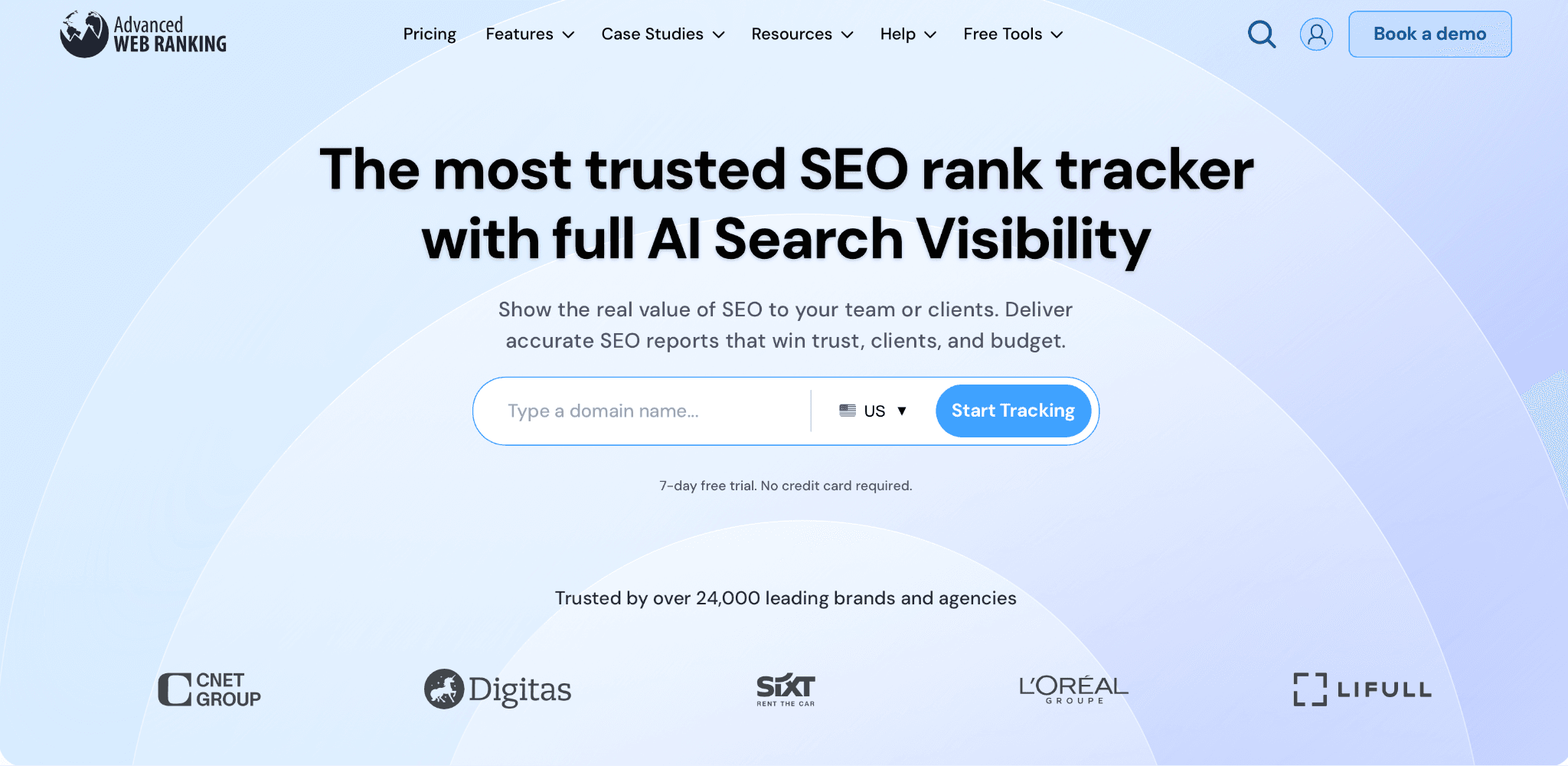
Advanced Web Ranking is one of the most established tools for teams that need to bridge the gap between traditional Bing rankings and modern Copilot visibility in a single, high-data environment. In 2026, AWR successfully layered AI monitoring over its high-volume rank tracking infrastructure, offering location targeting down to city-level coordinates, a massive advantage for local brands tracking how Copilot's answers vary by market.
For Copilot specifically, AWR allows you to add the AI assistant as a selectable "search engine" within your standard projects, providing daily updates on whether your brand appears in the generated response or the "Sources" links. Its reporting suite is widely considered the gold standard for agencies, allowing you to present Copilot visibility data alongside classic SERP metrics in a clean, professional format that is easy for clients to digest.
Strengths:
Hybrid approach covering both Copilot AI responses and traditional Bing/Google SEO
Highly granular local tracking down to specific city or coordinate levels
Professional-grade white-label reporting and Looker Studio integration
Considerations:
The interface has a steep learning curve for users who only want AI metrics
Less focus on conversational sentiment compared to niche AI tools
Suitable use cases:
Agencies managing global SEO and AI programs for multiple clients
Enterprise teams that need to maintain historical rank data alongside AI visibility
Brands with a heavy focus on local SEO and regional AI recommendations
Pricing: Advanced Web Ranking pricing starts at $139/month for the Pro plan (7,000 keywords, unlimited projects), scaling to $279/month for Agency (custom dashboards) and $699/month for Enterprise (Big Query and 3rd-party integrations).
5. LLMrefs
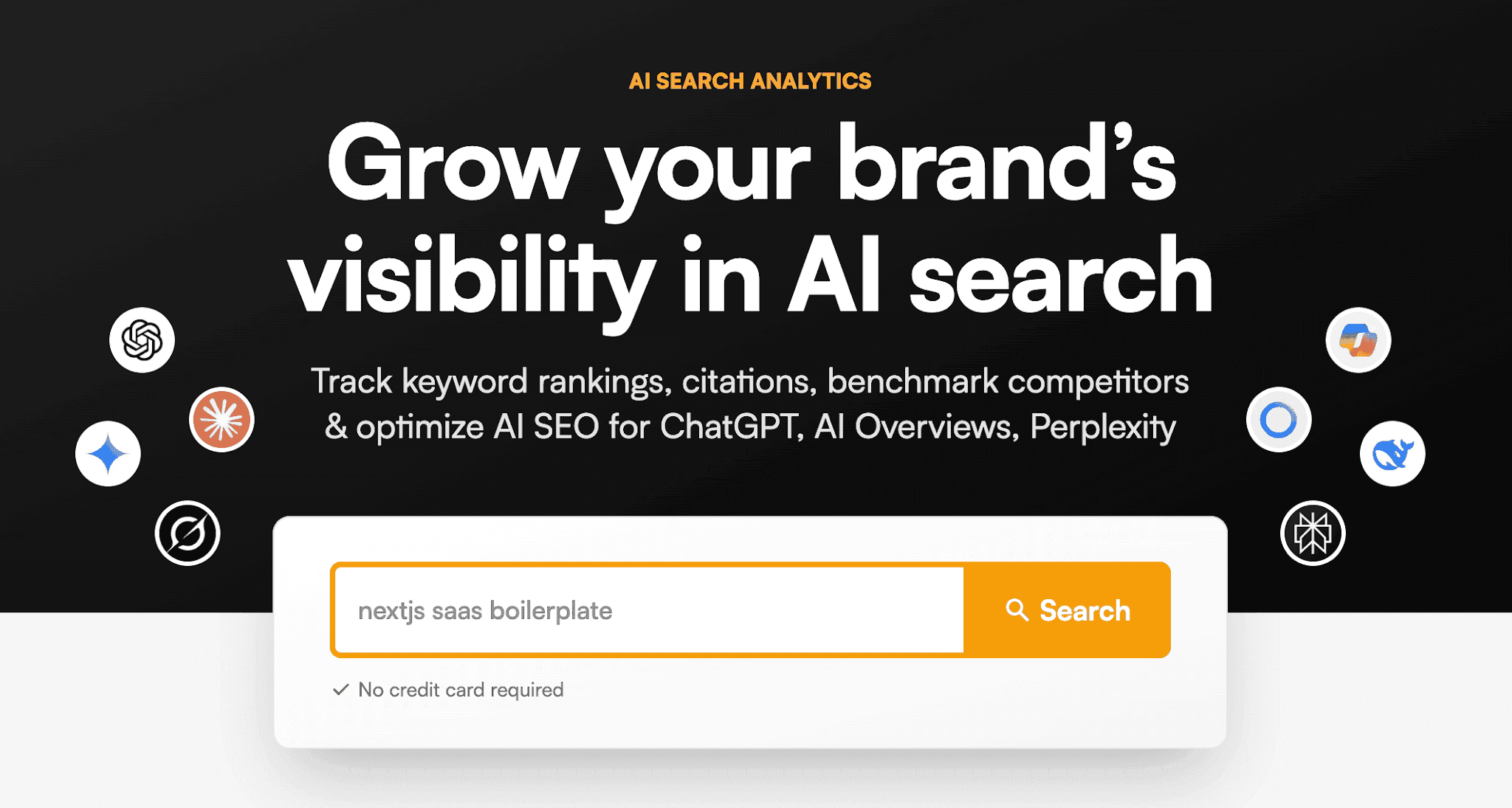
LLMrefs tracks how often AI models including Copilot mention or cite your brand, providing a cross-platform view that lets you compare your Copilot presence against ChatGPT, Claude, Gemini, and others simultaneously. Its LLMrefs Score gives you a unified AI visibility metric that makes it straightforward to track progress over time and present benchmarks to clients without managing separate dashboards per platform.
For smaller agencies that need clean, simple Copilot visibility data across multiple clients at a reasonable cost, LLMrefs is a practical choice. It's less diagnostic than tools like AIclicks or Rankability but solid for teams wanting a unified cross-platform view.
Strengths:
Tracking across multiple Ai platforms including Copilot
Cost-conscious approach to monitoring AI responses
Simple, user-friendly interface for AI overview tracking
Considerations:
May lack some of the advanced features of enterprise solutions
Focused specifically on agency needs
Suitable use cases:
Smaller agencies monitoring client performance in AI generated content
Teams preferring simple interfaces for tracking across AI search engines
Cost-conscious organizations needing multi-engine tracking
Pricing:
LLMrefs offers a free plan for one keyword with limited models and monthly reports, a Pro plan at $79/month for 500 prompts across major AI engines with weekly trends and CSV exports, and custom Enterprise pricing for unlimited tracking.
6. Rankability Analyzer
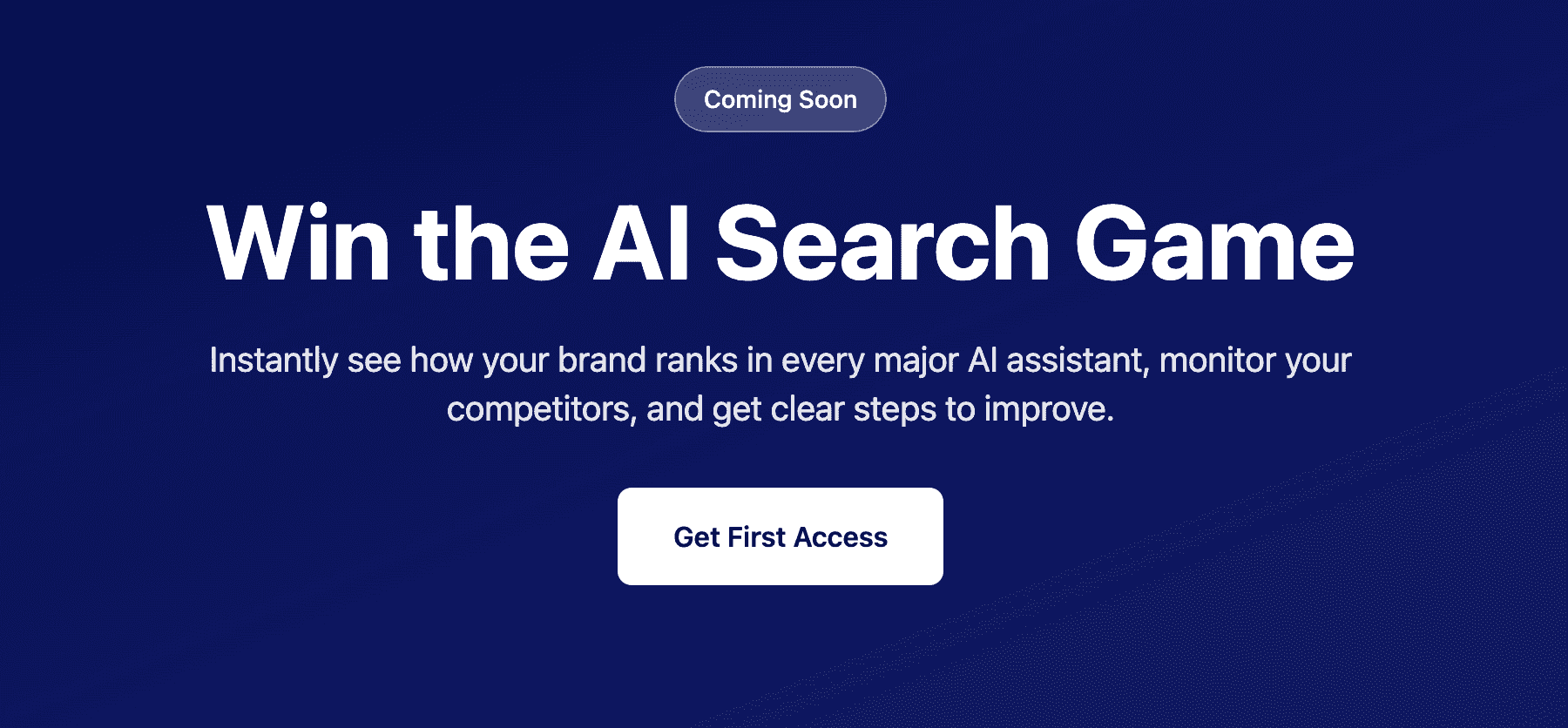
Rankability approaches Copilot rank tracking with a focus on citation pattern analysis. It doesn't just tell you whether you appear, it maps how you're referenced. Whether Copilot links directly, describes you as an "official source," or mentions you in passing, Rankability captures that context and tracks how it shifts after follow-up queries like "risks?" or "alternatives?", edge cases most tools miss entirely. Its white-label reporting makes it a practical choice for agencies managing multiple clients' Copilot visibility.
Strengths:
Advanced alerting systems for changes in AI search results
Comprehensive integrations for tracking across multiple AI engines
Support for multi-market monitoring of AI responses
Works across both AI and traditional search
Considerations:
Likely higher price point
May have a steeper learning curve due to advanced features
Suitable use cases:
Enterprise organizations needing sophisticated tracking across AI search engines
Global brands operating in multiple markets
Companies requiring advanced integration capabilities for AI overview visibility
Pricing:
Rankability pricing starts at $199/month for Core (3 users, 5 clients), $249/month for Team (5 users, 15 clients), and $799/month for Agency (15 users, 50 clients).
7. Nozzle.io
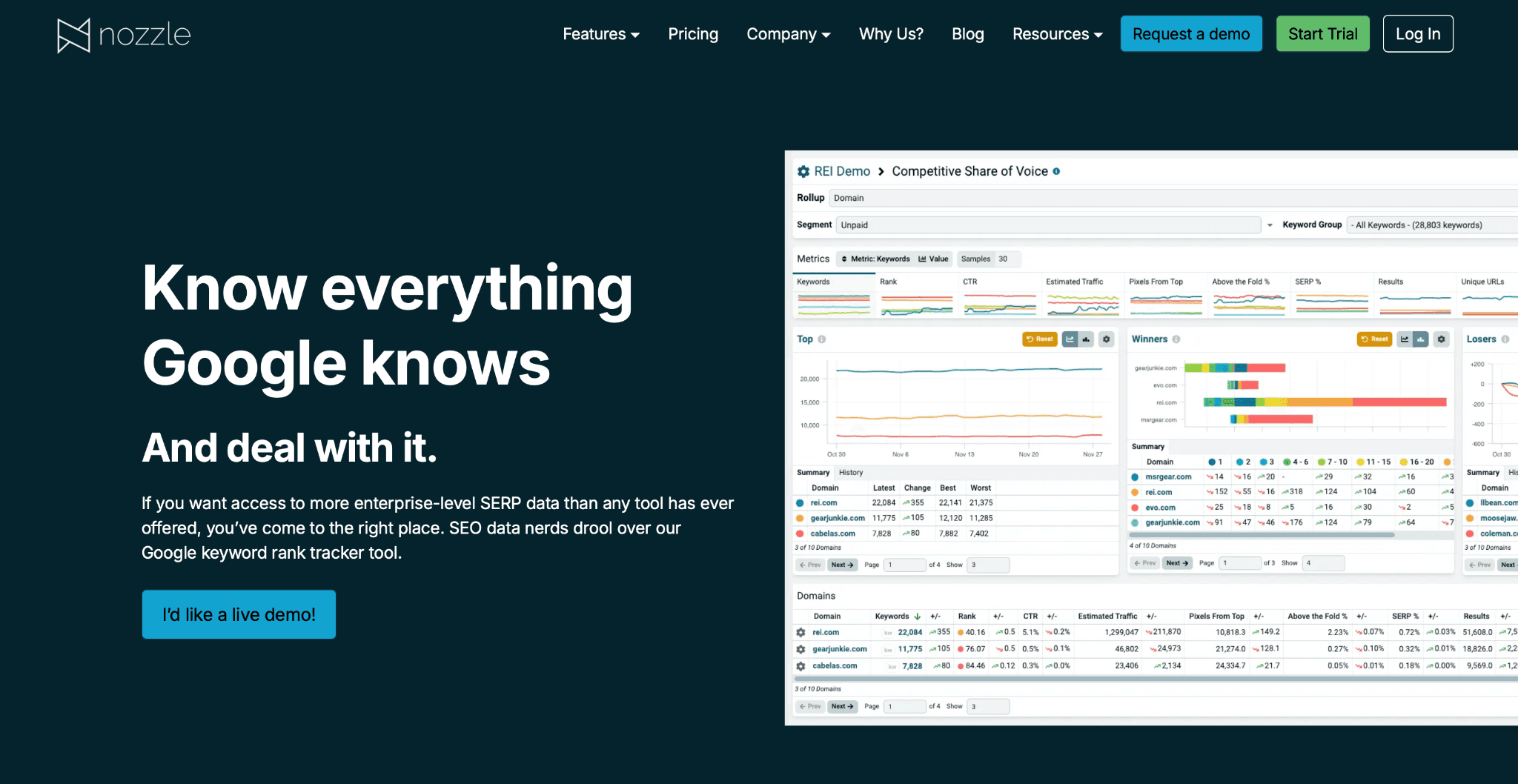
Nozzle.io is the top choice on this list for enterprise data teams that want full transparency into the entire Copilot interface, capturing 100% of the data available on a Bing AI results page. By treating the AI response as an extension of the SERP, Nozzle allows you to track not just brand mentions, but the specific "pixel position" of your brand within the Copilot feature block, including citations, "learn more" links, and related questions.
For Copilot specifically, Nozzle provides a raw data feed of every source the model cites for a given prompt, allowing you to see which competitors are winning the most "real estate" in the conversation. This level of granularity is unmatched for technical teams that want to build custom dashboards or perform deep-dive data analysis into how Copilot’s answers are evolving day by day across different geographic markets.
Strengths:
Enterprise-level data depth capturing every link and citation in the Copilot UI
Unlimited competitor tracking and historical data storage for deep analysis
Powerful API and integration options for custom data visualization
Considerations:
Does not provide optimization suggestions; it is a data-only tool
One of the more expensive options for teams only doing basic tracking
Suitable use cases:
Data-heavy enterprise teams that build their own internal reporting tools
Advanced SEO professionals who need to see "the full picture" of the SERP
Large organizations tracking competitive share of voice across thousands of prompts
Pricing: Nozzle.io pricing starts at $49/month for the Basic plan, which covers 10,000 keyword pull credits, Advanced plan is $99&month, Pro plan is $249/month, and Pro Plus plan is $499/month.
8. Hall AI
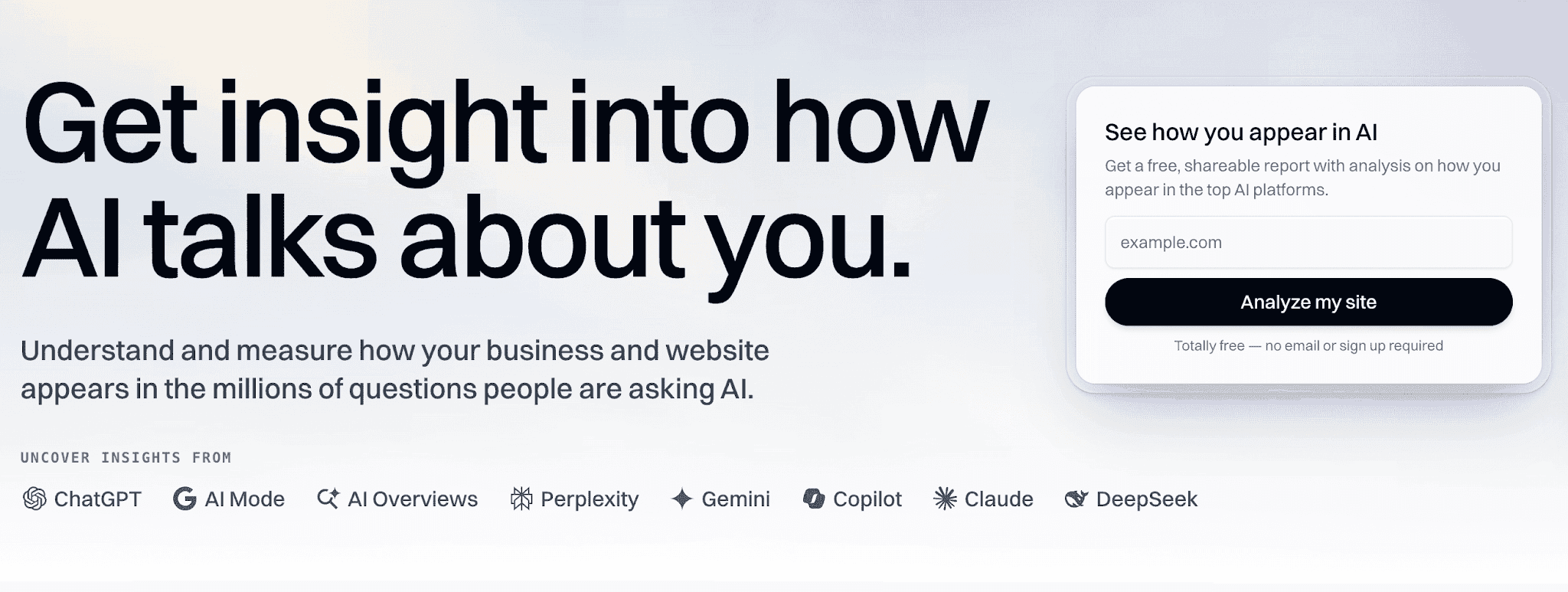
Hall AI is a visibility intelligence platform focused on understanding exactly what Copilot and other AI models say about your brand, which pages they cite, and how AI agents interact with your site. Where most tools stop at mention tracking, Hall goes deeper, it monitors how AI crawlers access, reference, and reuse your content, connecting Copilot mentions to downstream site behavior. For brands focused on understanding how Copilot perceives and distributes their brand information over time, this depth of agent monitoring is genuinely hard to find elsewhere.
Strengths:
Specialized reporting capabilities for AI responses
Focus on specific AI engines, including Copilot
Niche metrics for AI-generated content
Considerations:
Richer analytics features like API access and multi-brand tracking sit behind higher-tier plans
Better suited as a complementary tool than a standalone primary tracker for smaller teams
Suitable use cases:
Organizations with very specific reporting needs for AI search results
Teams needing to supplement broader tools with specialized insights
Companies focusing on particular aspects of AI responses
Pricing:
Hall AI has a free option for 1 project and 25 tracked questions. Starter plan is $239/month with 20 projects and 500 tracked questions, while Business plan is $599/month with 50 projects and 1000 questions.
9. Peec AI
Peec AI is a structured reporting tool for teams that want reliable Copilot visibility data with clean dashboards and prompt analytics. It tracks branded and unbranded prompts across Copilot, ChatGPT, Perplexity, Google AI Overviews, and other platforms, with competitive benchmarking built into the core feature set. Unlimited seats on all plans is a practical advantage for agencies managing multiple clients.
Strengths:
Specialized reporting capabilities for AI responses
Focus on specific AI engines, including Copilot
Detailed metrics for AI-generated content
Considerations:
Narrow focus compared to more comprehensive tools
May not be suitable as a primary tool for general AI overview tracking
Suitable use cases:
Organizations with very specific reporting needs for AI search results
Teams needing to supplement broader tools with specialized insights
Companies focusing on particular aspects of AI responses
Pricing:
For brands: Starter $95/month, Pro $245/month, Advanced $495/month
For agencies: Essential $245/month, Growth $495/month, Scale $795/month, and Comprehensive plan is custom pricing.
Best Copilot Rank Tracking Tools Compared
Tool | Best For | Coverage | Key Features | Pricing |
AIclicks | Overall AI search visibility & Copilot optimization | Copilot, ChatGPT, Perplexity, Claude, Grok, AI Overviews, Gemini, Mistral, DeepSeek, Meta AI | • Prompt tracking on Claude • Brand mentions on Claude • Sentiment analysis • Claude optimization • Competitor analysis | From $59/mo (Free trial available) |
Otterly AI | Budget-conscious brands | Copilot, ChatGPT, Google AIO, Google AI Mode, Gemini, Perplexity | • Basic AI visibility metrics | From $29/mo |
Keyword.com | Solopreneurs & small businesses | Copilot, Claude, ChatGPT, Gemini, Google AIO, Perplexity, DeepSeek | • Entry-level visibility tracking | From $24.5/month |
AWR | Unified SEO/AI | Copilot, Bing, Google, ChatGPT | • City-level local tracking • Agency Reports | From $139/mo |
LLMrefs | Small agencies | Copilot, Claude, ChatGPT, Gemini, DeepSeek, Perplexity, xAI, Meta AI | • Simple user interface | From $79/mo |
Rankability Analyzer | Enterprise multi-market operations | Copilot, Claude, ChatGPT, Perplexity, Google AIO, Google AI Mode, xAI, Brave Search, DeepSeek | • Advanced alerting systems | From $199/mo |
Nozzle.io | Enterprise data | Copilot, Bing, Google | • Full SERP feature analysis | From $49/mo |
Hall AI | Specialized AI reporting needs | Copilot, ChatGPT, AI Mode, AI Overviews, Perplexity, Gemini, Claude, DeepSeek | • Niche reporting capabilities | From $239/mo |
Peec AI | Specialized AI reporting needs | Copliot, ChatGPT, Google AIO, Claude, DeepSeek, Perplexity, Gemini, Grok, Llama | • Niche reporting capabilities | From $95/mo |
Why Copilot Rank Tracking Matters in 2026
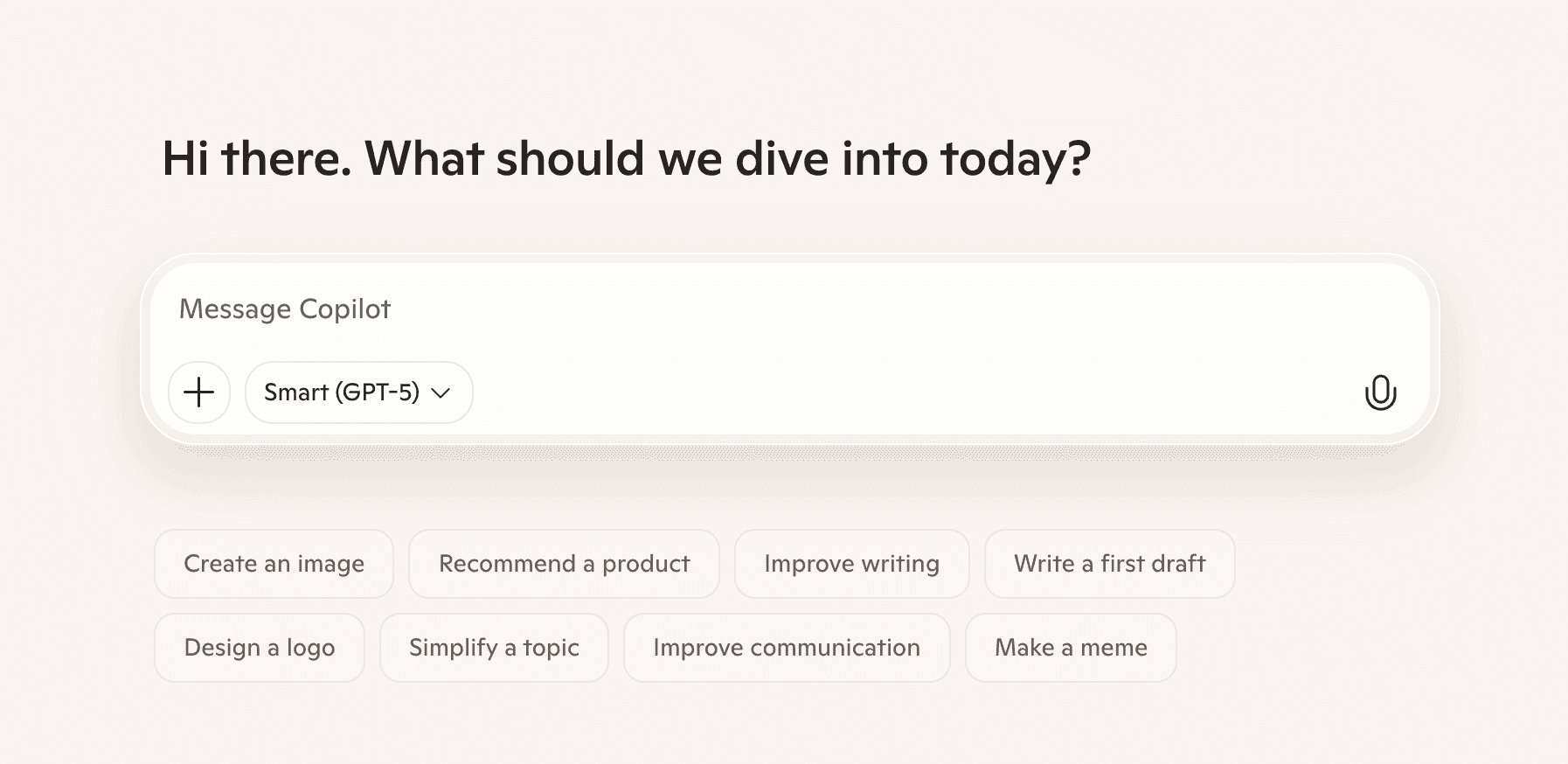
A few years back, we obsessively checked our “position 1” or “featured snippet” on Google Search and other major search engines. Now, much of our traffic is coming from the answers produced by Microsoft Copilot and a new wave of AI-powered search engines built on top of major AI models.
I remember running a simple experiment: we asked Copilot, “Best tools for remote teams?” Not only did it cite websites straight from our industry, but the order of those AI-generated search results shifted every week, sometimes even daily.
Here’s what changed since classic SEO days:
Users get summarized, conversational answers, not cluttered search results.
Brand recommendations happen mid-conversation, often without a single blue link, and subtle brand mentions can matter more than raw position.
Copilot and other LLMs pick up on reviews, product roundups, and third-party credibility far more than keywords or backlinks, looking closely at the places where your brand appears across the web.
Tracking your rankings in this world means seeing where and how your brand is actually mentioned, cited, and recommended in AI-generated results and content, not just where it’s ranked on a results page.
Criteria for Choosing a Copilot Rank Tracking Tool
Not every tool is built the same. Smart teams want to:
Track visibility across Copilot and other AI engines, including AI platforms like ChatGPT, Perplexity, and Google AI Overviews (not just one).
Monitor prompt-level performance so you see which questions actually “trigger” your brand. For an in-depth breakdown, see our guide on what prompts to track on ChatGPT and Perplexity.
Get citation snapshots (who cites and from which sources) to power deeper competitor analysis and context around your brand mentions or sentiment analysis.
Export reports that make sense for agencies managing multiple clients or internal teams.
Compare competitors and benchmark regularly, combining AI rank tracking with classic competitor reports.
Get actionable recommendations, not just raw data, including keyword suggestions and content ideas.
It’s a long list, but after watching companies miss opportunities by using basic trackers, I can tell you: the right tool will pay for itself in time saved and insights gained. Look for robust keyword tracking as part of this; otherwise, you’ll struggle to connect prompts back to target keywords and pages.
Core Features to Evaluate in a Copilot Rank Tracker
Over the years, I’ve seen a few “must-haves” emerge as AI-driven search matured:
Multi-Platform Tracking: Does the tracker check Copilot, ChatGPT, Gemini, Perplexity, and other AI search engines and major AI models? Copilot is important, but user queries are everywhere.
Real-Time Prompt Monitoring: How quickly can you see if your brand gets mentioned for new or trending questions? Real-time views help offset the limited historical data that many AI tools still expose.
Citation Transparency: Not just “are you mentioned,” but “where did the AI find your info?” so you know which reviews, listicles, or Wikipedia entries are helping or hurting you and shaping AI-generated search results.
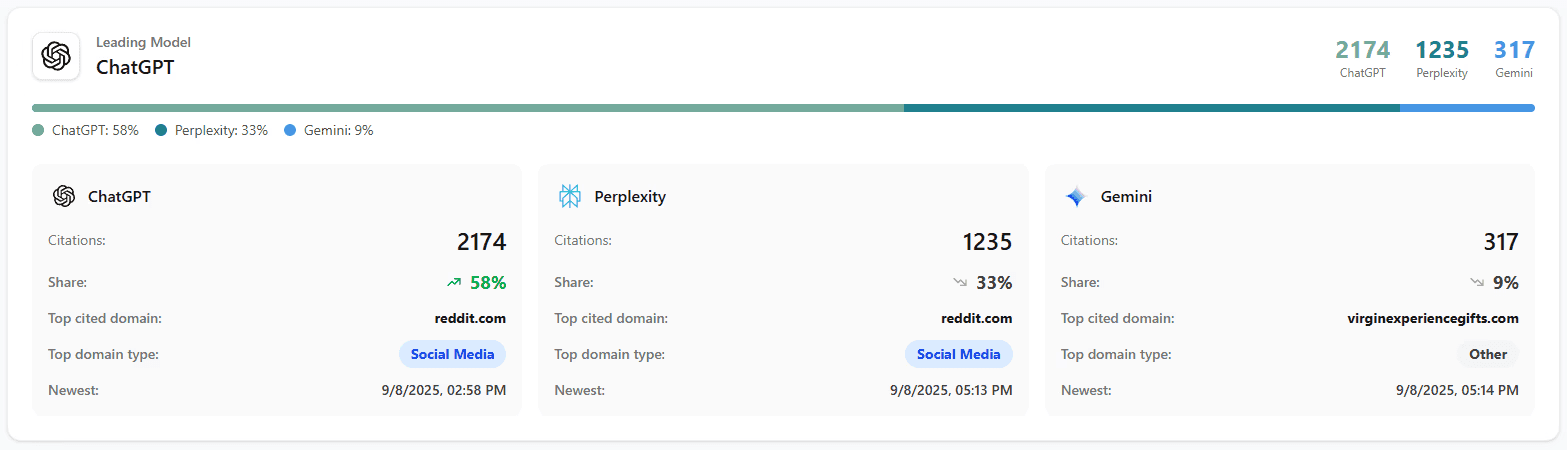
Custom Reporting: For agencies and big teams, exportable reports and dashboards are a must. They save hours every week, especially when blending AI metrics with traditional SEO metrics.
Competitor Comparison: If your tool doesn’t benchmark rivals, you’re missing what I consider half the story of AI search performance.
Alerting and Automation: Weekly changes, sudden drops, or spikes in mentions should trigger a review. No more “drive-by” tracking of AI-generated results.
Our clients frequently use AIclicks charts in team meetings, which saves the pain of patching together spreadsheets or BI dashboards from scratch.
Who Benefits from Using Copilot Rank Tracking Tools?
After working with hundreds of brands, I can tell you where these tools really shine:
Marketing Agencies: Especially those promising AI SEO or local SEO gains for clients, and agencies managing multiple clients at once. Dashboards make reporting painless.
E-commerce & SaaS Teams: Monitoring how often (and why) products are recommended in Copilot or “best of” lists, and where your brand appears alongside competitors, leads directly to more sales.
Enterprises: Integrated reporting across markets and regions, plus the compliance features big teams need, often blending Google Analytics, Google Search Console data, and traditional SEO metrics with newer AI-first dashboards.
Content/SEO Specialists: For those tasked with maintaining “liftable” answer-first content, detailed prompt analytics mean lower guesswork and higher ROI on your target keywords.
Lately, I’ve seen startups discover huge gaps in their AI presence, with no mentions for their key prompts, then double traffic just by following the optimization workflow inside AIclicks. Check out this video, where we discuss these case studies in detail:

Product-Led Measurement & Iteration: Our Weekly Playbook
Having the right tool is step one, but what you do with it matters even more. Here’s the same workflow we use (and recommend) for brands focused on Copilot and LLM visibility:
Instrument Traffic: Segment AI referrers in GA4 (think Copilot, Perplexity, ChatGPT links; for detailed setup, see our guide to tracking AI traffic in Google Analytics (GA4)). It’s a living regex list; update it weekly as new platforms pop up.
Cluster Prompts to Revenue: Don’t just track single prompts. Build clusters from commercial keywords and target keywords, tie them to page groups, and map conversions or leads.
Audit External Sources: Use your tracker’s citation reports. If Copilot keeps pulling G2, Trustpilot, or Reddit, target those placements for outreach and monitor brand mentions there.
Technical Hygiene: Ensure Copilot and other bots can crawl your top pages. Use server-side rendering (SSR) for critical content and submit fresh XML sitemaps to both Google Search Console and IndexNow (for Bing/Copilot).
Continuous Optimization: Every week, review your AI visibility charts. Ship micro-fixes: rewrite an intro, update a table, refresh directory listings. Repeat. Continuous work here helps your team overcome the steep learning curve and work around limited historical data in AI analytics.
For us, this routine has uncovered entire content clusters that barely registered in Copilot until we changed the headline, added FAQ schema, or secured a “best of” placement.
Technical Tips for Winning in Copilot Search
Let’s get practical. This is what matters for showing up in AI answers, especially for Copilot:
Allow AI Bots: Don’t block GPTBot, OAI-SearchBot, or PerplexityBot. Rate-limit if necessary, but don’t slam the door. These AI crawlers are how AI-powered search discovers and understands your site.
Use SSR/Static: If your key content needs JS to render, many bots will never see it. Stick to HTML for headings, lists, tables, and FAQs.
XML Sitemaps & IndexNow: Maintain clear sitemaps and submit through both Google Search Console and IndexNow so both engines pick up changes fast.
No Orphan Pages: Keep everything within a three-click path from your home or category pages, and check regularly for crawl issues.
Mistakes here can tank your AI visibility, even if your content is spot-on.
How to Get Started with Copilot Rank Tracking Tools
Getting visibility data used to take ages. Now, setup usually looks like this:
Step 1: Create an account (AIclicks offers easy onboarding).
Share your brand, site, and main keywords.
Step 2: Define primary prompts and competitors.
Most platforms offer starter libraries or import features to speed up keyword tracking.
Step 3: Run your first AI visibility audit.
See actual mention/citation rates, not just rankings.
Step 4: Review, customize, and export reports.
Share findings with your team and prioritize your next actions.
Step 5: (If available) Try free trials.
Several tools, like Otterly AI and AWR, offer these so you can see real data before you commit.
It’s fast. I’ve seen teams, particularly agencies, onboarding and pulling competitive insights the same afternoon. The best AI setups blend simple onboarding with rich reporting, so you can focus on strategy instead of configuration.
Winning External Corroboration: Directory, Forum & Review Strategy
Visibility in Copilot (and most large language models) depends on what other platforms say about you. We see this every week: AI answers cite G2, Trustpilot, Reddit, Capterra, and strong “best of” roundups, right alongside outputs from traditional search engines and modern AI search results. To move your brand up:
Regularly refresh the directory/review profiles and supply updated data.
Monitor which third-party domains AI engines cite and prioritize “must-win” placements.
Join relevant forum threads (without spamming); these get scraped, and an authentic presence matters more than one-off link drops.
Track placement changes. If a rival suddenly outpaces your mentions, check which sources Copilot recently started citing.
I’ve personally watched a brand jump from “invisible” to a top-3 Copilot recommendation within weeks, just by optimizing these external signals.
The Essential Role of AIclicks in Mastering AI-Driven Brand Visibility
AI-driven search is now the key to brand visibility, with Microsoft Copilot leading the way in how customers find and trust businesses. To stay ahead, tracking your brand’s presence across AI search engines is essential.
Among the top tools available, AIclicks stands out for its comprehensive coverage, deep Copilot-specific insights, and powerful prompt management features, making it the best choice for brands serious about winning in AI search.
Embracing these tools and strategies will ensure your brand doesn’t just appear but thrives in the AI-first search landscape. Now is the time to take control of your AI visibility and secure your place in the future of search.
FAQs
How to rank in Bing Copilot search?
To appear in Copilot's answers, focus on being cited by sources it already trusts like directories, review platforms, and authoritative roundups. On-site, use answer-first content structures, clean headings, and structured data. Ensure your robots.txt allows Copilot's crawler, and keep XML sitemaps current so Bing indexes your content promptly.
How to track brand visibility in Microsoft Copilot?
Use a dedicated AI visibility tool like AIclicks, Otterly AI, or AWR. Set up prompt clusters around your core commercial topics, run them against Copilot, and monitor mention frequency, citation sources, and share of voice weekly. Connect GA4 to tie Copilot referral traffic to actual site visits and conversions.
How do brands track mentions and sentiment on Microsoft Copilot?
Most dedicated Copilot rank tracking tools track both mention frequency and sentiment automatically. They run tracked prompts through Copilot, capture the full response, analyze how your brand is framed, and flag shifts in tone over time so you can respond before negative sentiment compounds.
Which is better, ChatGPT or Microsoft Copilot?
It depends. ChatGPT is best for creative and versatile tasks, while Microsoft Copilot excels in productivity and integrates tightly with Microsoft 365 apps. For ranking and brand presence, both are important. Track visibility across both, where possible, in your AI rank tracking setup.
What is the difference between Copilot and Copilot+?
Copilot is the AI assistant (software), while Copilot+ describes a new class of Windows PCs that do AI processing locally for faster, more powerful features.
Our Content:




Any questions left?
Book a call here: