" width="14px"><path d="M 13.864 5.629 L 13.3 5.629 L 13.3 5.6 L 7 5.6 L 7 8.4 L 10.956 8.4 C 10.379 10.03 8.828 11.2 7 11.2 C 4.681 11.2 2.8 9.319 2.8 7 C 2.8 4.681 4.681 2.8 7 2.8 C 8.071 2.8 9.045 3.204 9.786 3.864 L 11.766 1.884 C 10.516 0.719 8.844 0 7 0 C 3.134 0 0 3.134 0 7 C 0 10.866 3.134 14 7 14 C 10.866 14 14 10.866 14 7 C 14 6.531 13.952 6.073 13.864 5.629 Z" fill="rgb(255, 193, 7)" height="14px" id="H_YjfTNpn" width="14px"/><path d="M 0 3.742 L 2.3 5.429 C 2.922 3.888 4.429 2.8 6.193 2.8 C 7.264 2.8 8.238 3.204 8.979 3.864 L 10.959 1.884 C 9.709 0.719 8.037 0 6.193 0 C 3.504 0 1.172 1.518 0 3.742 Z" fill="rgb(255, 61, 0)" height="5.428500000000002px" id="PlkthQDhg" transform="translate(0.875 0)" width="10.959199999999996px"/><path d="M 6.232 5.581 C 8.04 5.581 9.683 4.889 10.925 3.764 L 8.758 1.931 C 8.032 2.483 7.144 2.782 6.232 2.781 C 4.411 2.781 2.865 1.62 2.283 0 L 0 1.759 C 1.159 4.026 3.511 5.581 6.232 5.581 Z" fill="rgb(76, 175, 80)" height="5.581099999999999px" id="WlnJ5gngE" transform="translate(0.7 8.4)" width="10.924899999999994px"/><path d="M 6.864 0.029 L 6.3 0.029 L 6.3 0 L 0 0 L 0 2.8 L 3.956 2.8 C 3.68 3.576 3.183 4.254 2.526 4.75 L 2.527 4.749 L 4.693 6.582 C 4.54 6.722 7 4.9 7 1.4 C 7 0.931 6.952 0.473 6.864 0.029 Z" fill="rgb(25, 118, 210)" height="6.589883930775992px" id="x_rSW275p" transform="translate(7 5.6)" width="7px"/></g></svg>)



Reviewed by:
Rokas Stankevicius

Founder @ aiclicks.io
Last updated:
Expert Verified

TL;DR
AI marketing tools are now essential for standing out in 2026, offering automation, analytics, and AI-optimized content to help brands stay visible in search and reach their target audiences. The best results come from choosing tools that match your team's needs, testing free trials, and focusing on features that help measure, automate, and personalize your marketing.
Key Points:
Pick AI tools based on your goals, such as content creation, automation, or analytics, and always test free trials before committing.
AI platforms now offer search visibility tracking, content optimization, campaign automation, and integrations with your existing workflow.
Personalization, prompt management, and analytics are now must-have features, making brand voice and data-driven decisions key for success.
Don't over-rely on automation; keep your content strategy strong and make sure your marketing still feels human.
Stay aware of trends, such as AI-powered search and content authenticity, which shape how brands get found and trusted online.
Quick Comparison: Best AI Marketing Tools at a Glance
Tool | Best For | Key Feature | Starting Price |
AIclicks | AI visibility and AEO tracking | Real-time citation tracking across 10+ LLMs | $59/mo |
Jasper | Branded content at scale | Brand Voice consistency across teams | $69/mo/seat |
Writer | Enterprise-grade generative AI | Knowledge Graph grounding, SOC 2 compliance | Price not published (Starter, free trial) |
Copy.ai | Marketing workflow automation | GTM workflows and bulk generation | $29/mo |
Surfer SEO | On-page SEO optimization | Content Editor with bundled AI prompt tracking | $59/mo |
Semrush | All-in-one marketing suite | Content Toolkit article generation | SEO Classic starts from $139.95/mo, AI Visibility $99/mo, Content Toolkit $60/mo |
Ahrefs | Backlink and keyword intelligence | Site Audit and Brand Radar | $29/mo |
MarketMuse | Content authority and strategy | Topic modeling and content briefs | Free (10 queries/mo) |
Averi | Creative campaign production | AI content and image generation | $99/mo |
HubSpot Marketing Hub | CRM-driven marketing | Content Remix and campaign reporting | $10/mo/seat |
DFIRST AI | Rapid campaign experimentation | AI marketing agents | Free |
Klaviyo | E-commerce email and SMS | Predictive LTV and churn modeling | Free (≤250 profiles) |
Omnisend | SMB e-commerce marketing | AI subject lines and RFM analysis | $16/mo |
ActiveCampaign | B2B lifecycle automation | Predictive sending and deal scoring | $15/mo |
AdCreative.ai | Paid ad creative generation | AI banner generation at scale | $39/mo |
Synthesia | AI video creation | 125+ AI avatars, 140+ languages | $18/mo |
Otterly AI | Budget AI visibility tracking | Brand Visibility Index | $29/mo |
Indexly | AI citation and sentiment tracking | Unlimited websites on entry plan | $99/mo |
Ocoya | AI social media scheduling | AI Agents for auto-posting | $19/mo |
Predis | AI social visuals and video | AI-generated social video and images | $39/mo |
Klap | Long-form to short-form video clipping | Automatic clip generation | $29/mo |
Descript | Transcript-based editing | Filler-word removal, AI Overdub | $24/mo |
Gumloop | AI marketing automation | 100+ integrations, credit-based agents | $37/mo |
What Is an AI Marketing Tool?
An AI marketing tool is software that uses machine learning or generative AI to handle a marketing task that used to require a person doing it manually, from writing content to tracking whether AI search engines mention your brand.
In practice, that covers a wide range of jobs: tracking whether ChatGPT, Gemini, or Perplexity cite your brand in an answer, building an email campaign from a single prompt instead of a template, generating a content brief from live SERP data instead of a keyword spreadsheet, and scoring which leads are most likely to convert before a sales rep ever calls them.
The tools in this guide split across those jobs. Some track visibility, some generate content, some automate workflows, and a growing number now do more than one of those at once.
Free AI Assistants to Start With: ChatGPT, Claude, and Gemini
Before paying for a specialized tool, most marketers start with a general-purpose AI assistant for brainstorming, drafting, and research. ChatGPT, Claude, and Google's Gemini all now have paid consumer tiers with expanded limits: ChatGPT Plus runs $20/month, Claude Pro runs $20/month (or $17/month billed annually at $200/year), and Google AI Pro, the paid tier that gives Gemini expanded limits across Google's apps, runs $20/month.
These assistants are a reasonable place to start a first draft, outline a campaign, or research a competitor. What they don't do is anything covered by the rest of this guide: they can't track whether your brand is actually being cited in someone else's ChatGPT answer, they don't score content against live SERP data, and they don't automate a workflow across your CRM and ad platforms. Treat them as the starting point, not the stack.
23 Best AI Marketing Tools for 2026
How did I choose these? Simple. By talking to marketing teams, analyzing real workflows, reading trusted reviews, and monitoring citations and tracking AI search results with tools across platforms and engines.
There is no single "best" tool for everyone, but this list covers every core marketing task, from content creation and automation to advanced analytics, AI visibility tracking, and video editing.
1. AIclicks
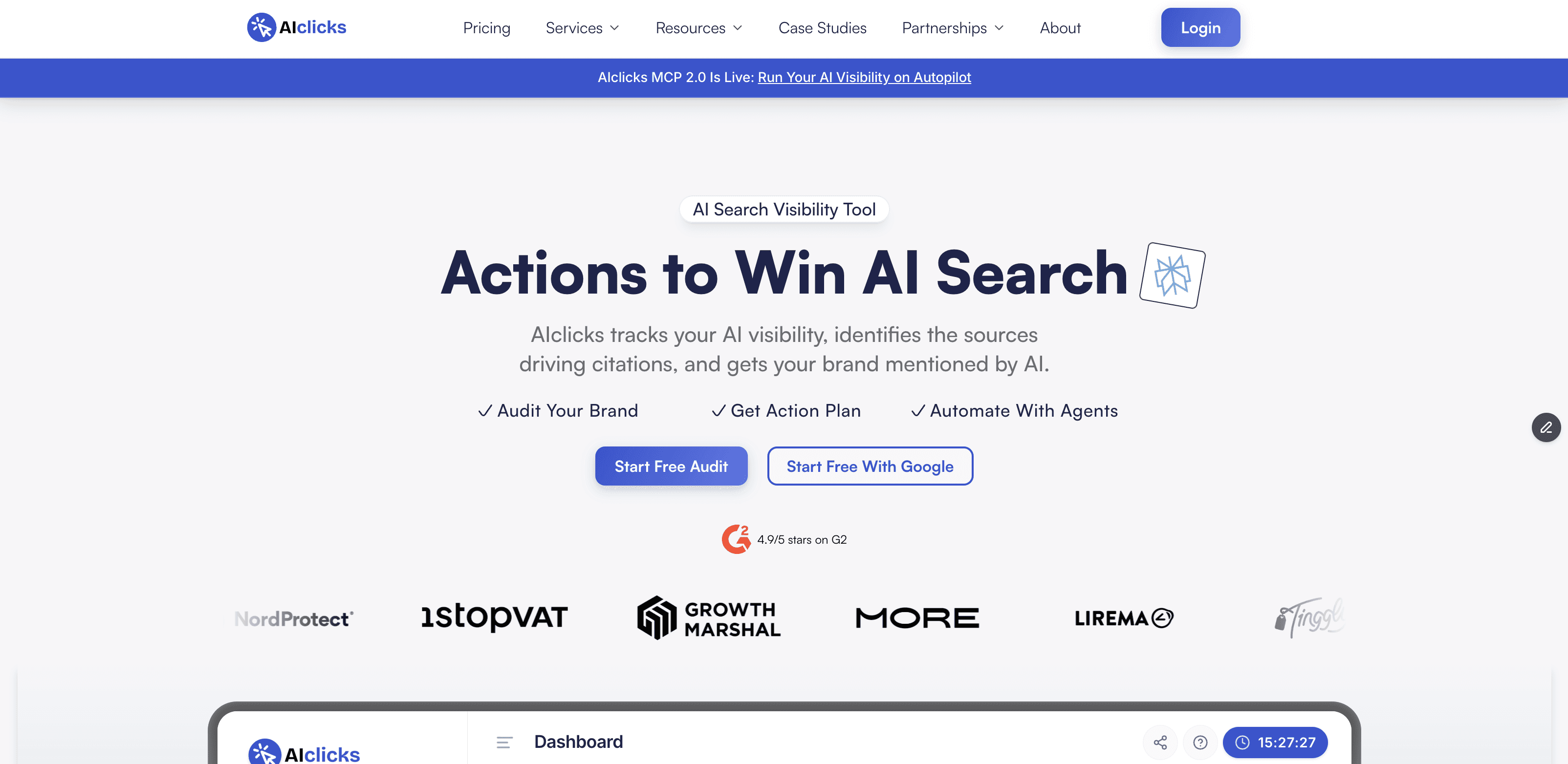
AIclicks is the powerhouse of 2026 marketing because it is the only platform that prioritizes "AI Visibility" alongside traditional metrics. While other tools focus on writing or SEO, AIclicks AI visibility tool gives you the "AEO" (Answer Engine Optimization) edge, ensuring your brand is the primary source cited by ChatGPT, Perplexity, and Gemini. It effectively bridges the gap between content creation and AI search dominance.
Key Features: Real-time AI visibility tracking, citation-level sentiment analysis, and the unique AI Lift actions engine for AEO.
Strengths: Best-in-class accuracy for LLM monitoring; provides specific "prompts" to test your brand's authority in generative search.
Limitation: Primarily focused on AI ecosystems; traditional social media scheduling requires external integration.
Pricing: Starter $59/mo (30 prompts, 1 website, 3 LLMs), Pro $189/mo, Business $499/mo.
2. Jasper
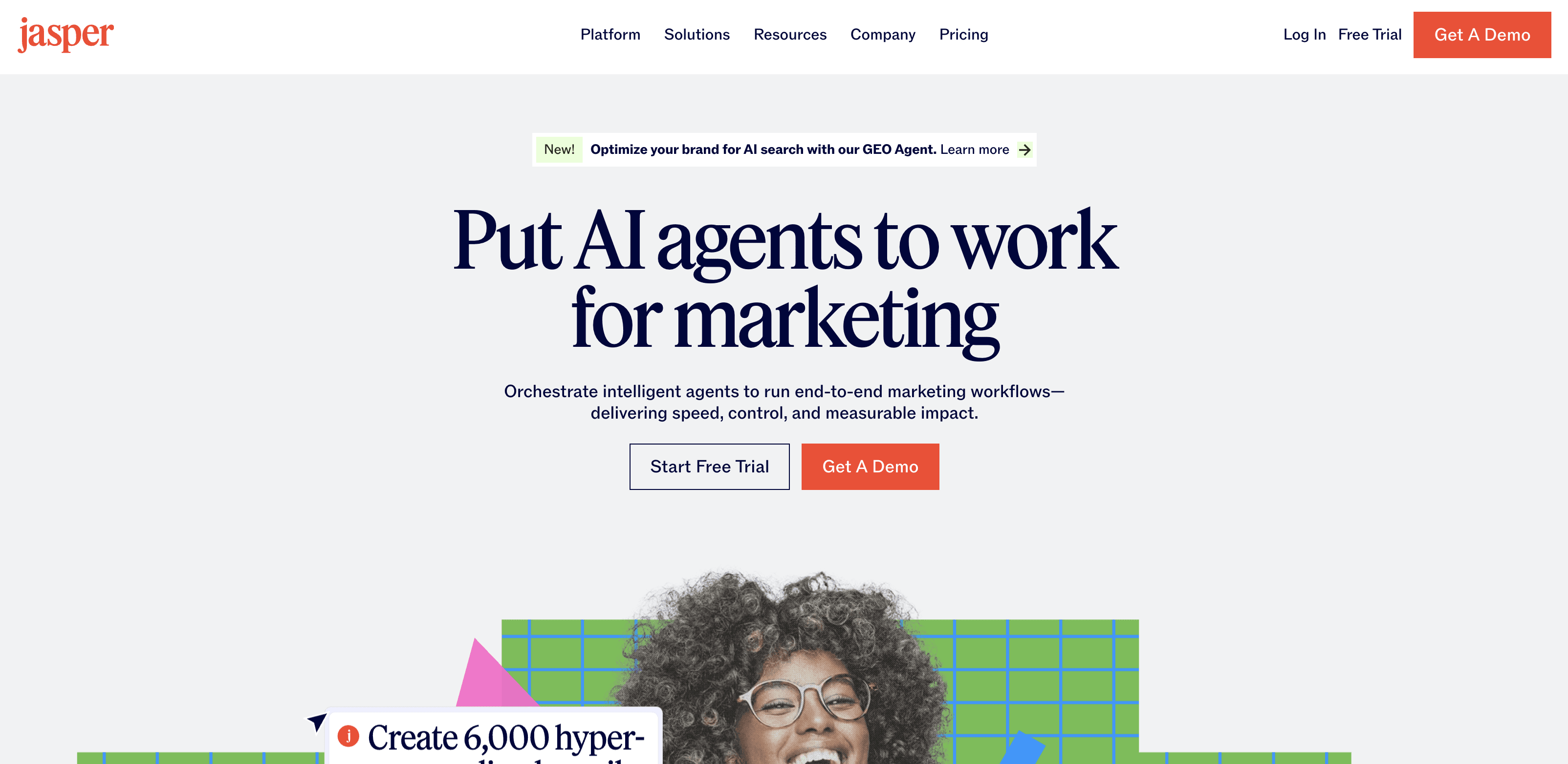
Jasper remains a favorite for creative teams needing high-volume content. It is strong for maintaining brand voice, but it is a writing tool first. It helps you create content, without tracking whether that content actually makes you visible in AI search results.
Key Features: Brand Voice, Canvas, 100+ built-in marketing agents, browser extension.
Strengths: Consistent tone across large marketing teams.
Limitation: Focused on generation rather than visibility or citation tracking.
Pricing: Pro $69/mo per seat ($59/mo per seat billed annually); Business is custom-priced.
3. Writer
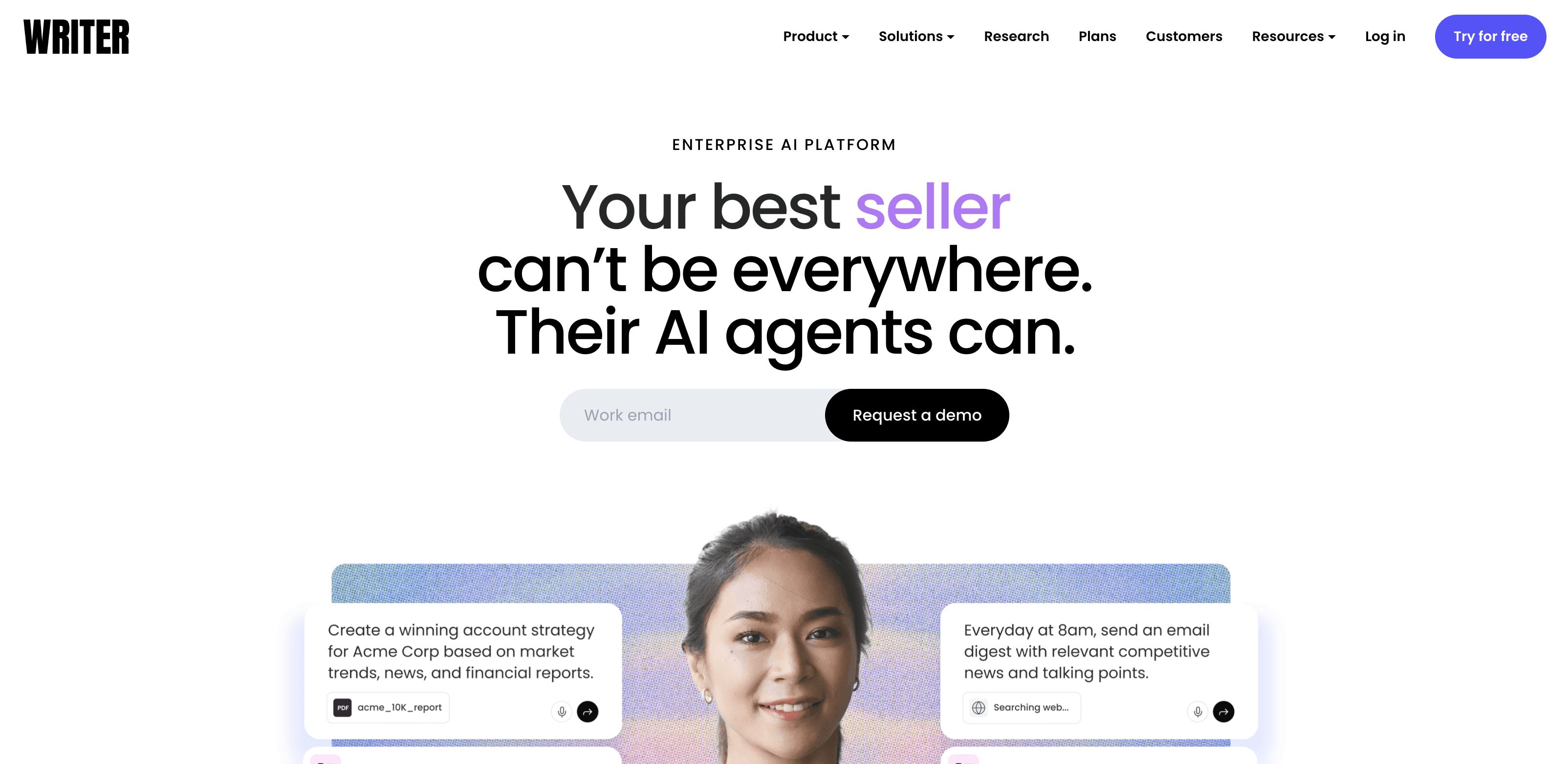
Writer is an enterprise-grade generative AI platform built around compliance and security, with Knowledge Graph grounding and SOC 2 compliance. It now offers a self-serve Starter tier with a 14-day free trial, though Writer doesn't publish a price for it.
Key Features: Knowledge Graph for data grounding, SOC 2 compliance, self-serve Starter tier.
Strengths: Strong data security and the ability to train on proprietary data without exposing it.
Limitation: No public pricing for either tier; Enterprise requires a sales conversation.
Pricing: Starter: 14-day free trial, price not published. Enterprise: custom.
4. Copy.ai
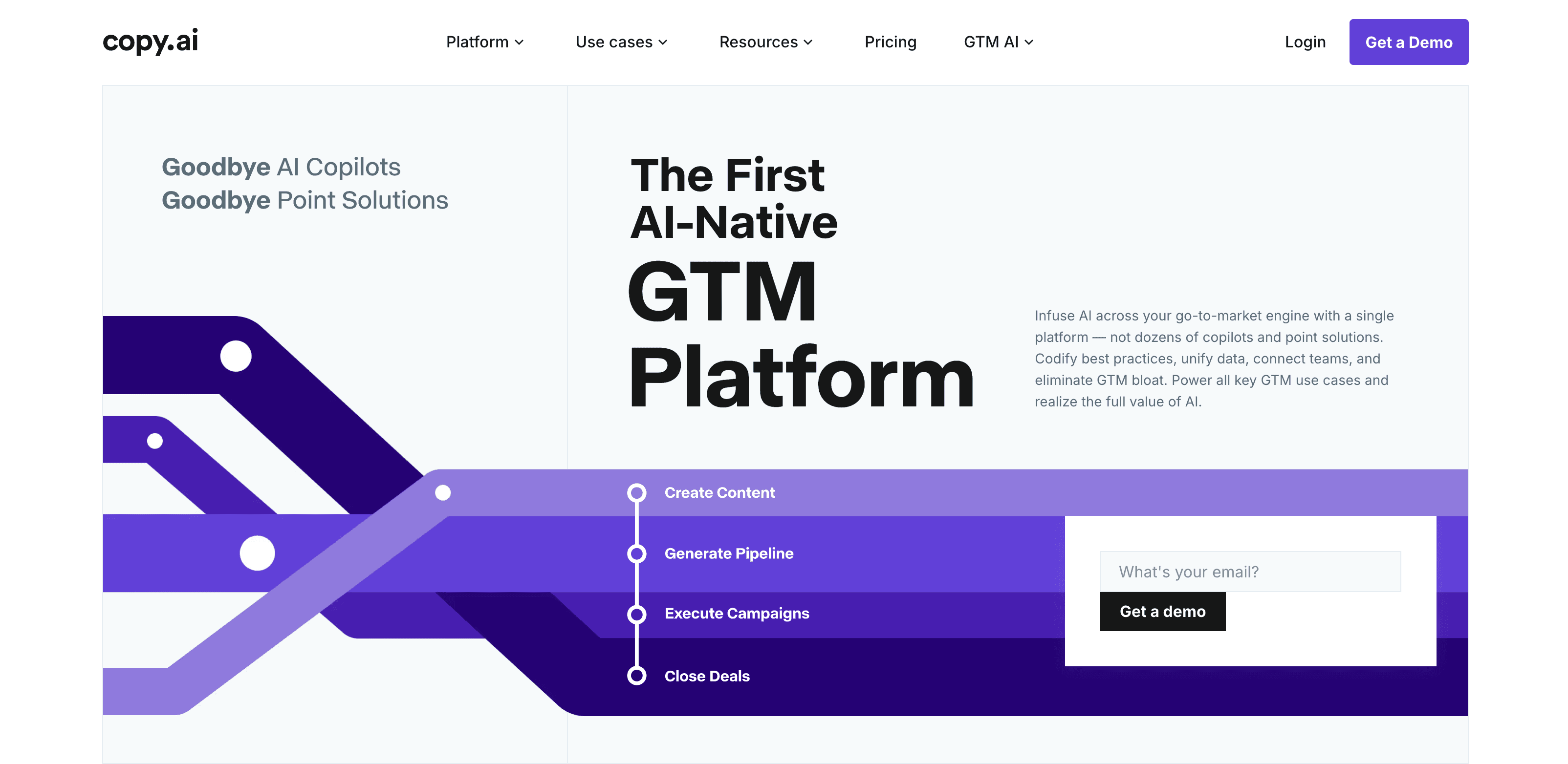
Copy.ai has evolved into a workflow automation platform for marketing teams. Its automation is strong, and it is built for doing the repetitive work rather than measuring how that work performs in AI search results.
Key Features: GTM workflows, bulk content generation, 20+ integrations.
Strengths: Automating repetitive marketing tasks like product descriptions or email nurtures.
Limitation: Credit-based pricing can add up faster than expected on high-volume workflows.
Pricing: Chat $29/mo (5 seats); Enterprise custom.
5. Surfer SEO
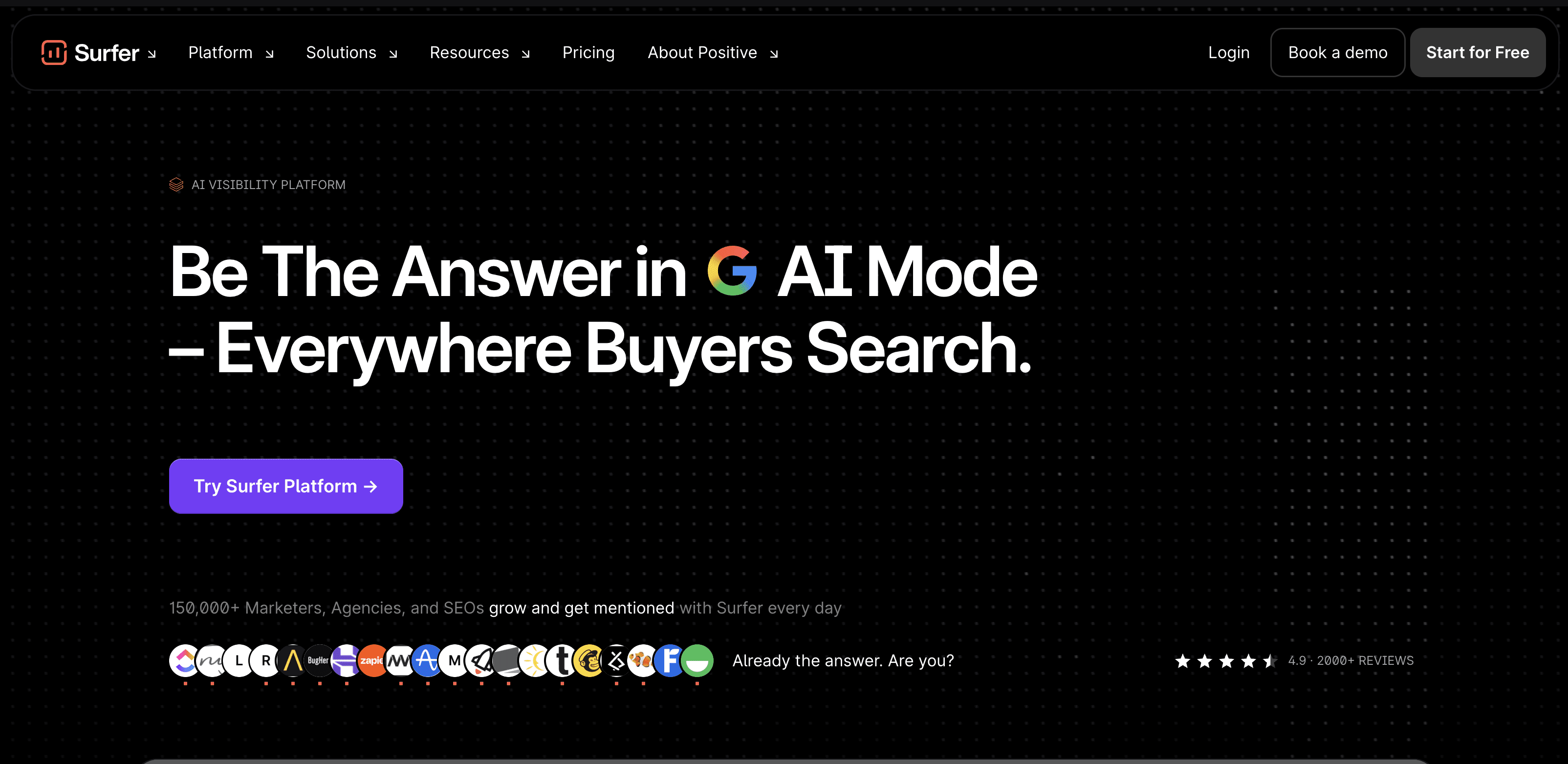
Surfer SEO is the industry standard for on-page optimization. It's built for Google SEO rather than AI search visibility specifically, though AI prompt tracking is now bundled into its Standard tier and up rather than sold as a flat add-on.
Key Features: Content Editor with real-time scoring, keyword research, AI article generation, bundled AI prompt tracking from Standard tier up.
Strengths: Strong semantic optimization for ranking on traditional SERPs.
Limitation: Deeper AI visibility tracking (competitor and mention-gap analysis) requires the separate AI Search Analytics product, starting at $158/mo.
Pricing: Discovery $59/mo, Standard $119/mo, Pro $219/mo, Peace of Mind $359/mo
6. Semrush
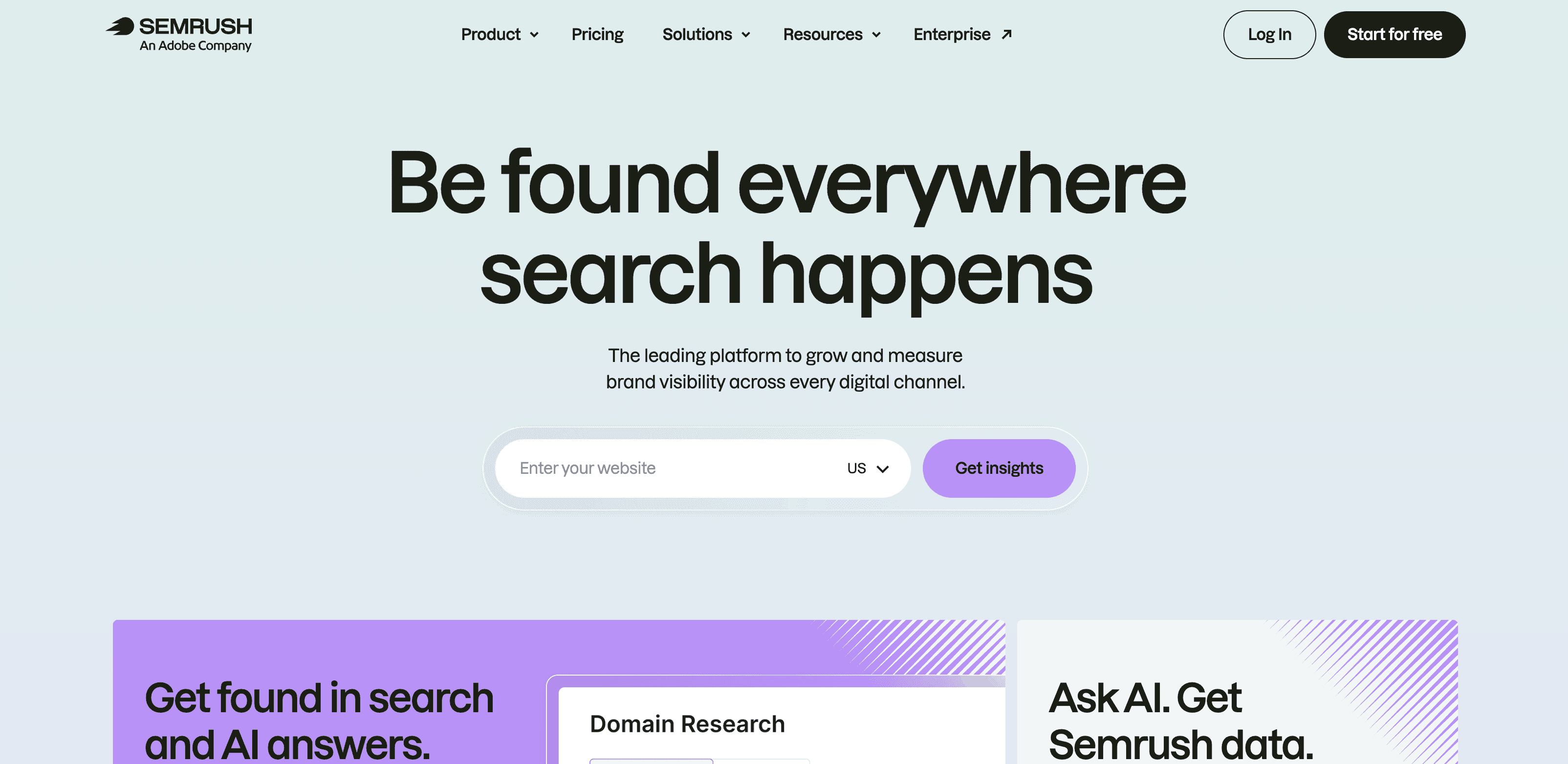
Semrush is a broad marketing suite that has built out content generation through its Content Toolkit. Its core remains built around keywords and backlinks, while its content generation tools now run as a separate product from the main SEO plans.
Key Features: Content Toolkit (AI Article Generator, Content Optimizer, Converter to SMM or Email), traditional backlink analysis.
Strengths: Comprehensive data across PPC, SEO, and social in one platform.
Limitation: Content Toolkit is priced and purchased separately from the core SEO plans.
Pricing: Content Toolkit $60/mo (7-day free trial); SEO Toolkit Pro $139.95/mo, Guru $249.95/mo, Business $499.95/mo
7. Ahrefs
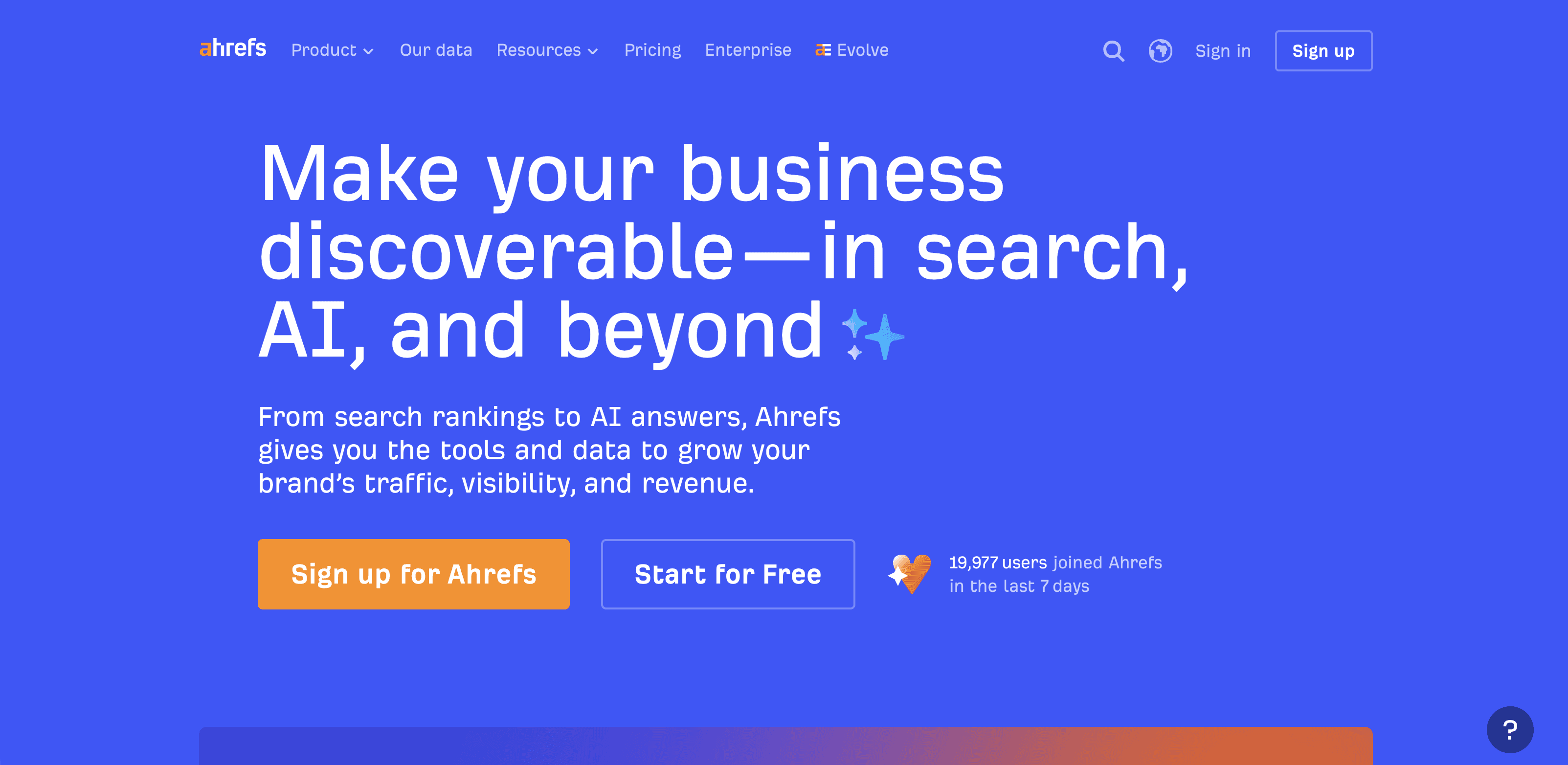
Ahrefs is the standard for backlink data and keyword research, with Brand Radar as its AI visibility offering. Brand Radar is a genuinely separate paid product, not a bundled feature.
Key Features: Site Audit, Keyword Explorer, Brand Radar for AI visibility.
Strengths: Unrivaled backlink database and historical search demand data.
Limitation: Brand Radar starts at $199/mo billed annually ($398/mo billed monthly) for its entry tier, on top of the core SEO plan.
Pricing: Starter $29/mo, Lite $129/mo, Standard $249/mo, Advanced $449/mo; Brand Radar from $199/mo
8. MarketMuse
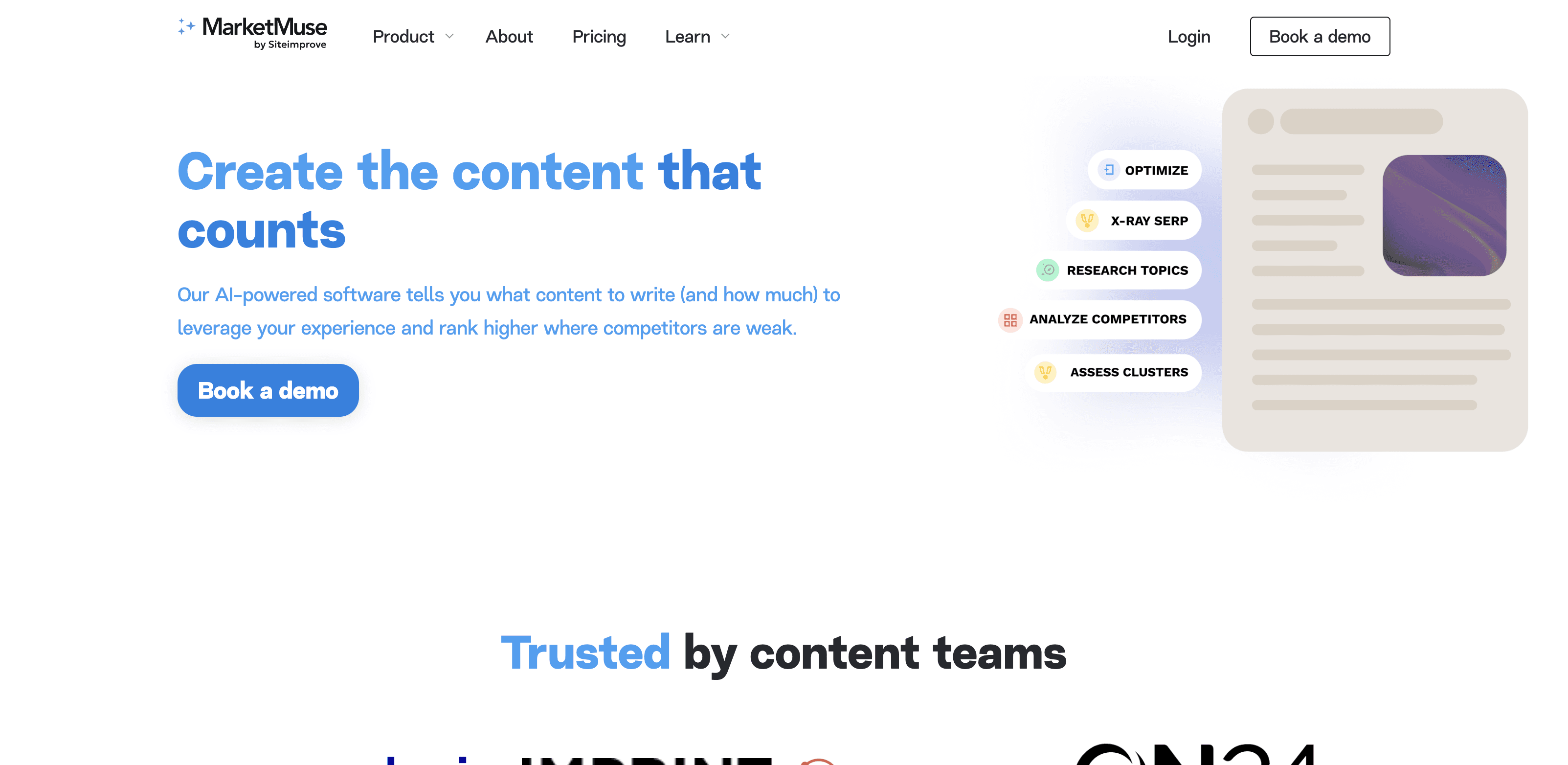
MarketMuse uses proprietary AI to audit content for topical authority. It's strong for content strategy, though every paid tier now requires a sales demo rather than self-serve checkout.
Key Features: Content inventory and audit, content briefs, topic heatmaps.
Strengths: Topic modeling that goes beyond keyword research to build topical authority.
Limitation: No public pricing for any paid tier; every tier above Free requires booking a demo.
Pricing: Free (10 queries/mo, 1 user); Optimize, Research, and Strategy tiers, demo required for pricing.
9. Averi
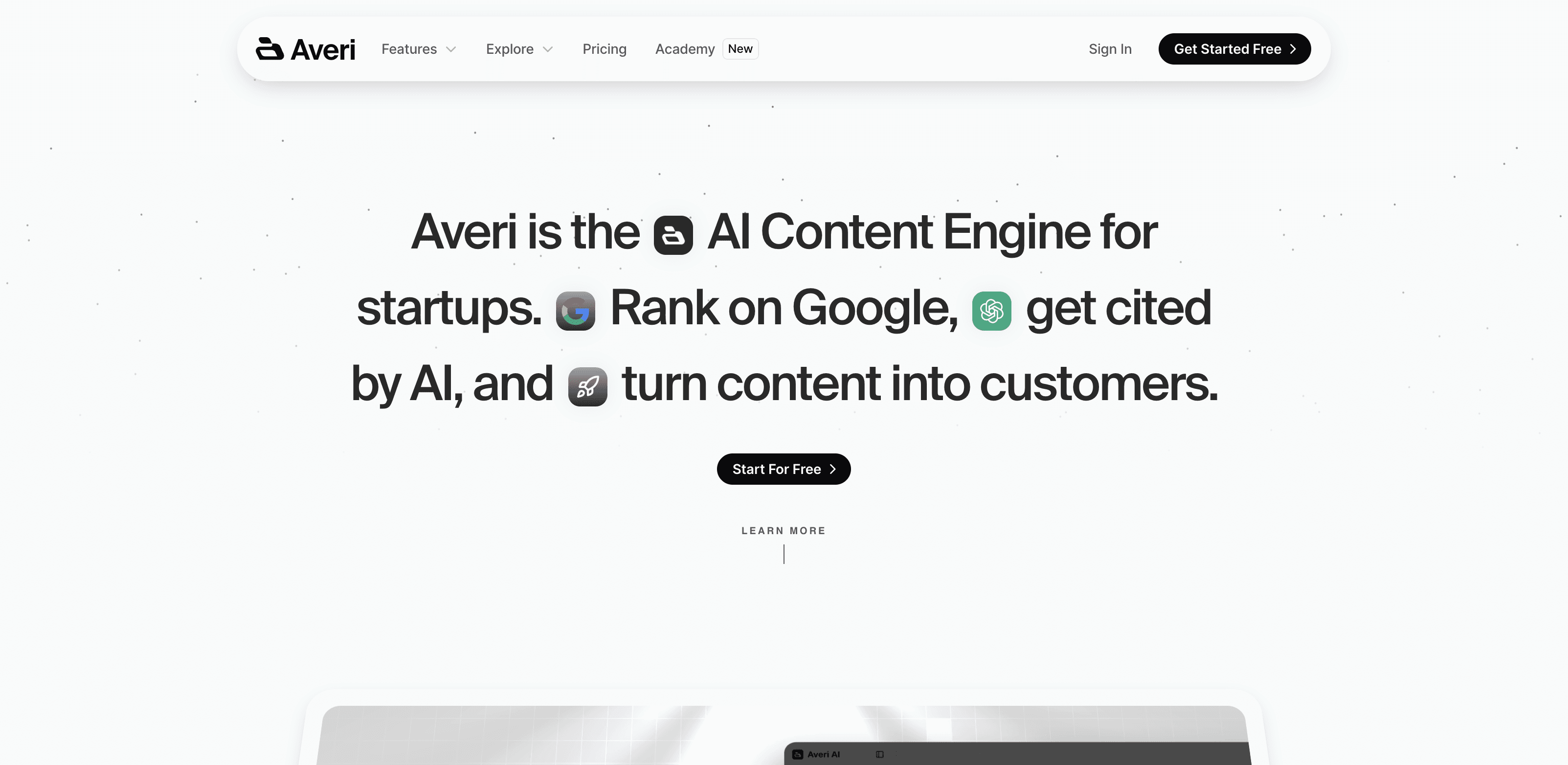
Averi pairs image generation with text for campaign creation. It's a strong creative tool for small teams, though it no longer offers a free plan.
Key Features: AI content and image generation, custom brand library training.
Strengths: User-friendly for small teams needing a single creative workspace.
Limitation: No competitive or citation tracking; strictly a creation platform, and pricing has moved upmarket.
Pricing: Solo $99/mo, Team $199/mo (14-day free trial).
10. HubSpot Marketing Hub
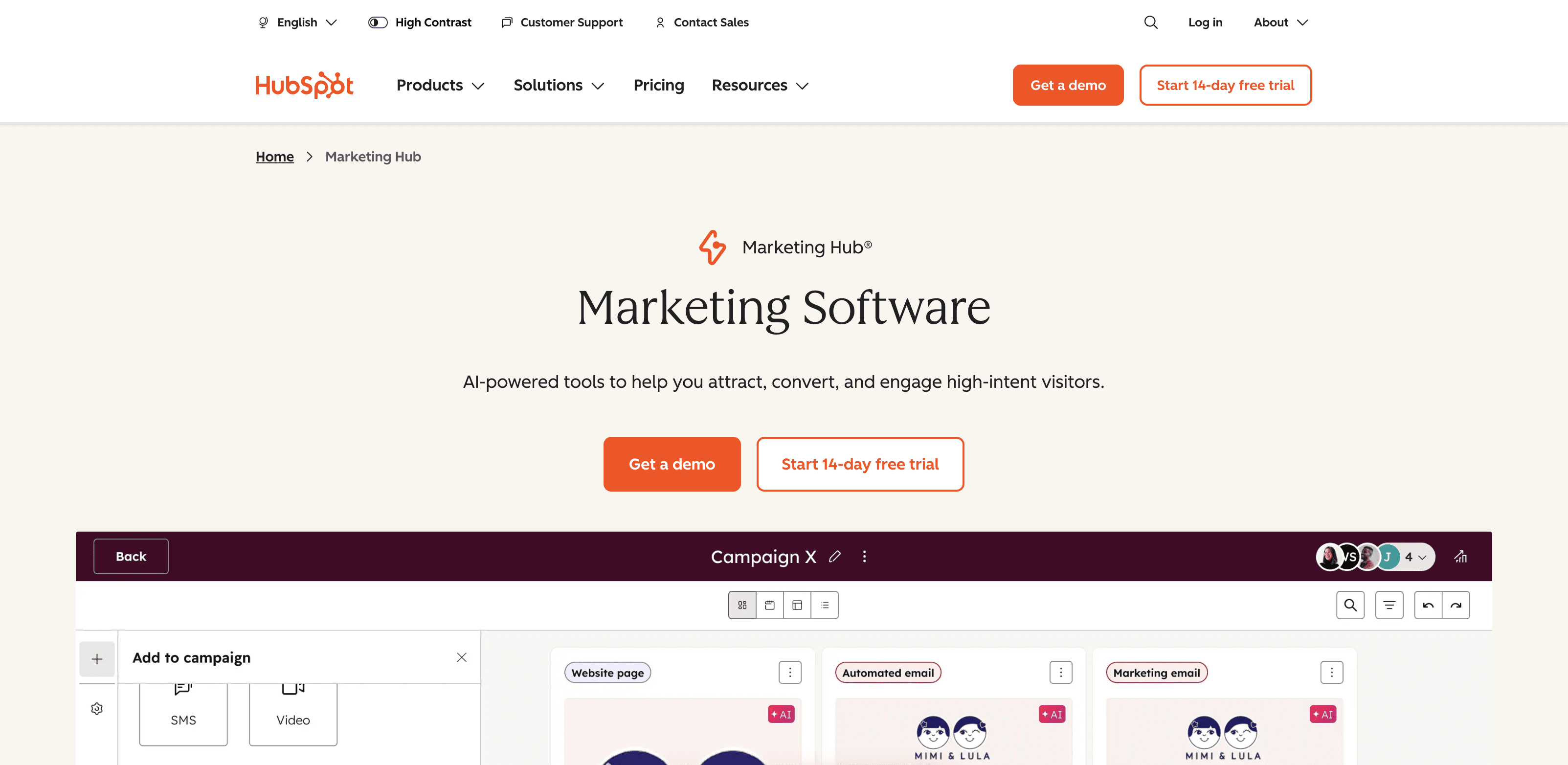
HubSpot is the CRM leader with AI features built into content and campaign tools. It's strongest for lead management, tracking what happens after a user finds you, rather than the AI answers that help them find you.
Key Features: AI-powered Content Remix, campaign reporting, automated lead nurturing.
Strengths: Tightly integrates marketing with sales and service data.
Limitation: Meaningful marketing features and most advanced AI tools sit behind the Professional tier.
Pricing: Starter $10/mo/seat; Professional $890/mo (3 seats, plus a $3,600 one-time onboarding fee); Enterprise $3,600/mo.
11. DFIRST AI
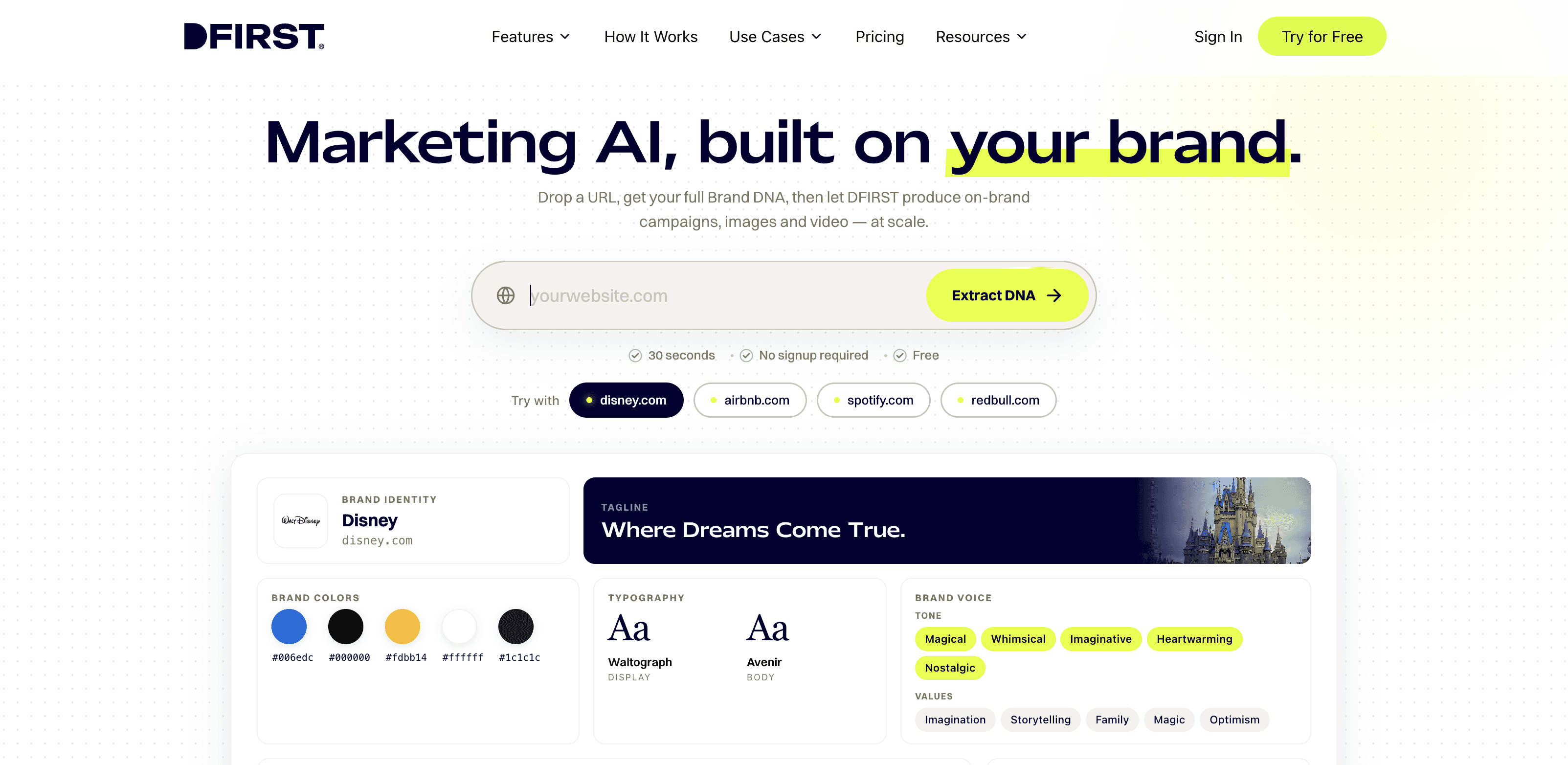
DFIRST AI is an AI marketing agent platform built for rapid campaign testing. It's strong for agencies running many campaign variations quickly.
Key Features: AI marketing agents, drag-and-drop campaign builder.
Strengths: Testing dozens of campaign variations quickly instead of over weeks.
Limitation: Its free-trial token allowance and tactics-library size are cited in some marketing material but couldn't be independently confirmed from an official source, worth verifying directly before quoting exact figures.
Pricing: Free tier available; Starter $39/user/mo, Advanced $99/user/mo, Teams $199/user/mo.
12. Klaviyo
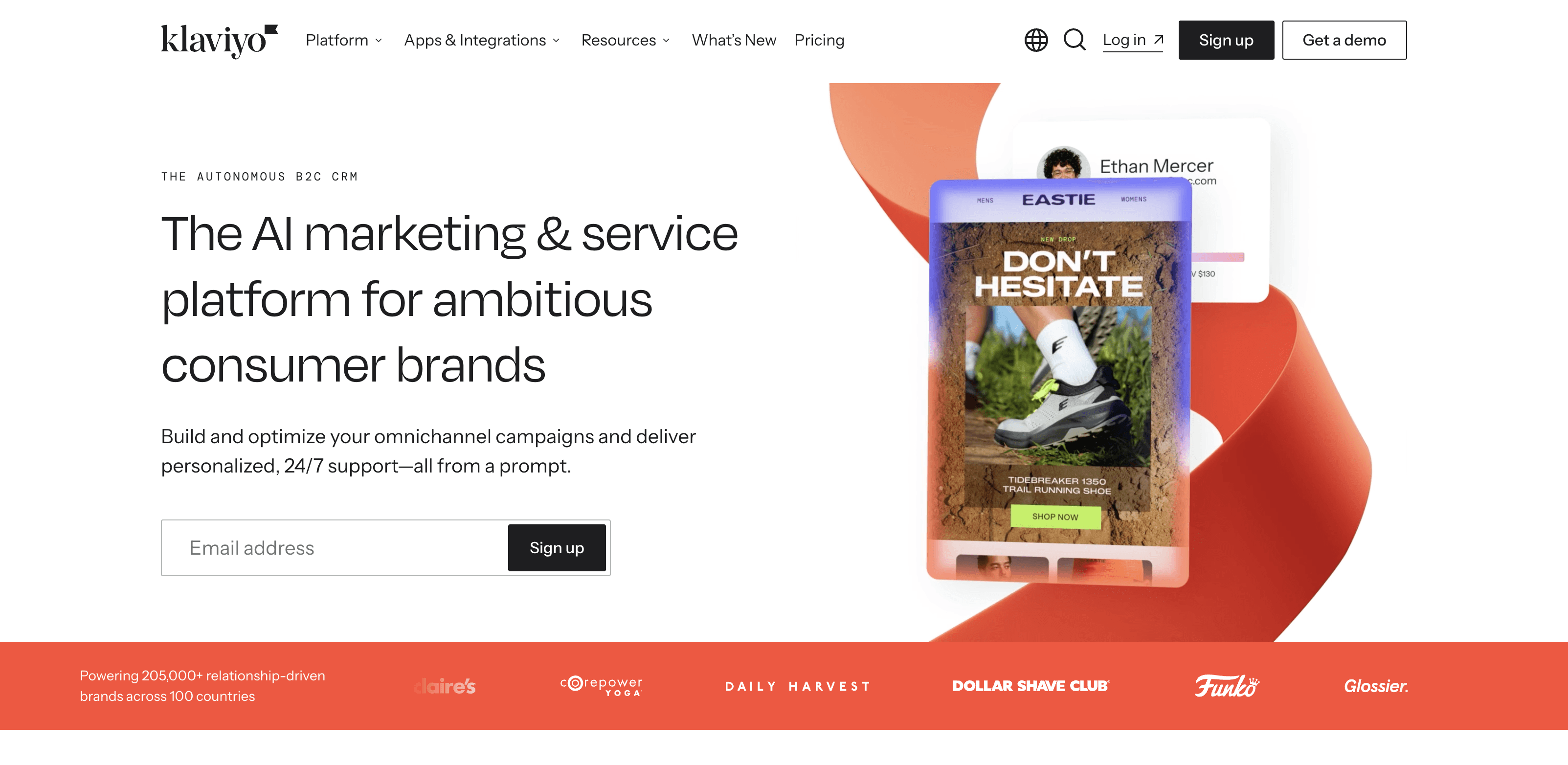
Klaviyo is the dominant AI platform for e-commerce email and SMS, with strong predictive analytics for purchase timing.
Key Features: Predictive analytics (churn, LTV), automated email flows, segment builder.
Strengths: Deep integration with Shopify and WooCommerce; highly targeted automation.
Limitation: Costs scale with contact list size; limited to email and SMS channels.
Pricing: Free for up to 250 profiles; paid plans from $20/mo for 251–500 profiles, scaling with list size.
13. Omnisend

Omnisend is a more approachable AI marketing tool for smaller e-commerce stores, with an AI subject line generator and RFM analysis.
Key Features: AI subject line generator, RFM (recency, frequency, monetary) analysis, automated resends.
Strengths: Easier to use than Klaviyo for small teams; includes SMS credits on the Pro plan.
Limitation: Advanced AI features are gated to the Pro tier.
Pricing: Standard from $16/mo, Pro $59/mo (for a 250 people list)
14. ActiveCampaign
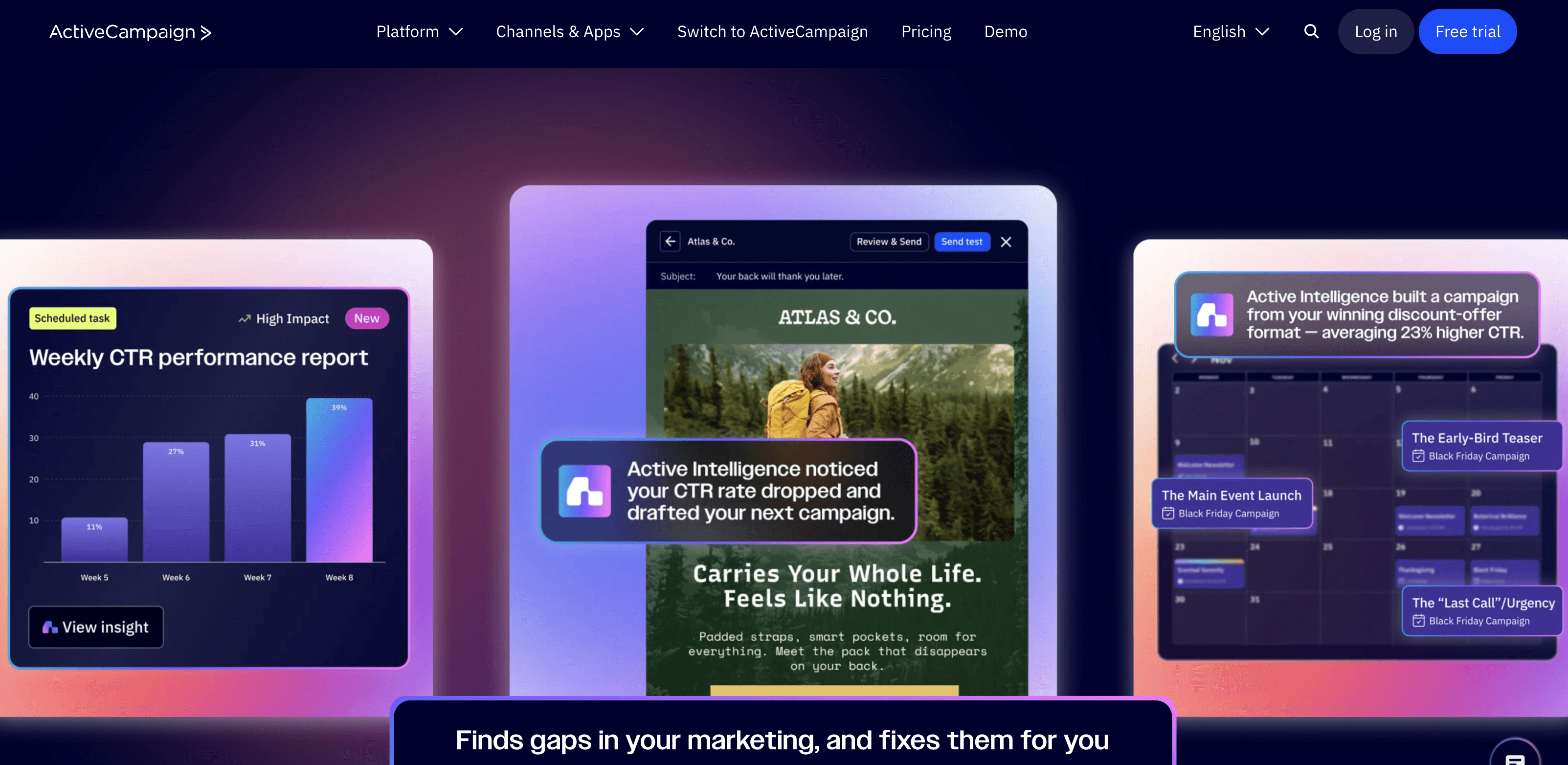
ActiveCampaign is a customer experience automation tool built for complex B2B sales cycles.
Key Features: Predictive sending, AI content generation for emails, automated deal scoring.
Strengths: Strong automation "recipes" for multi-stage marketing funnels.
Limitation: The entry tier was renamed from Lite to Starter and repriced; AI content tools feel secondary to the core automation engine.
Pricing: Starter $15/mo billed monthly for 1,000 contacts. Plus $49/mo, Pro $79/mo, Enterprise $145/mo.
15. AdCreative.ai
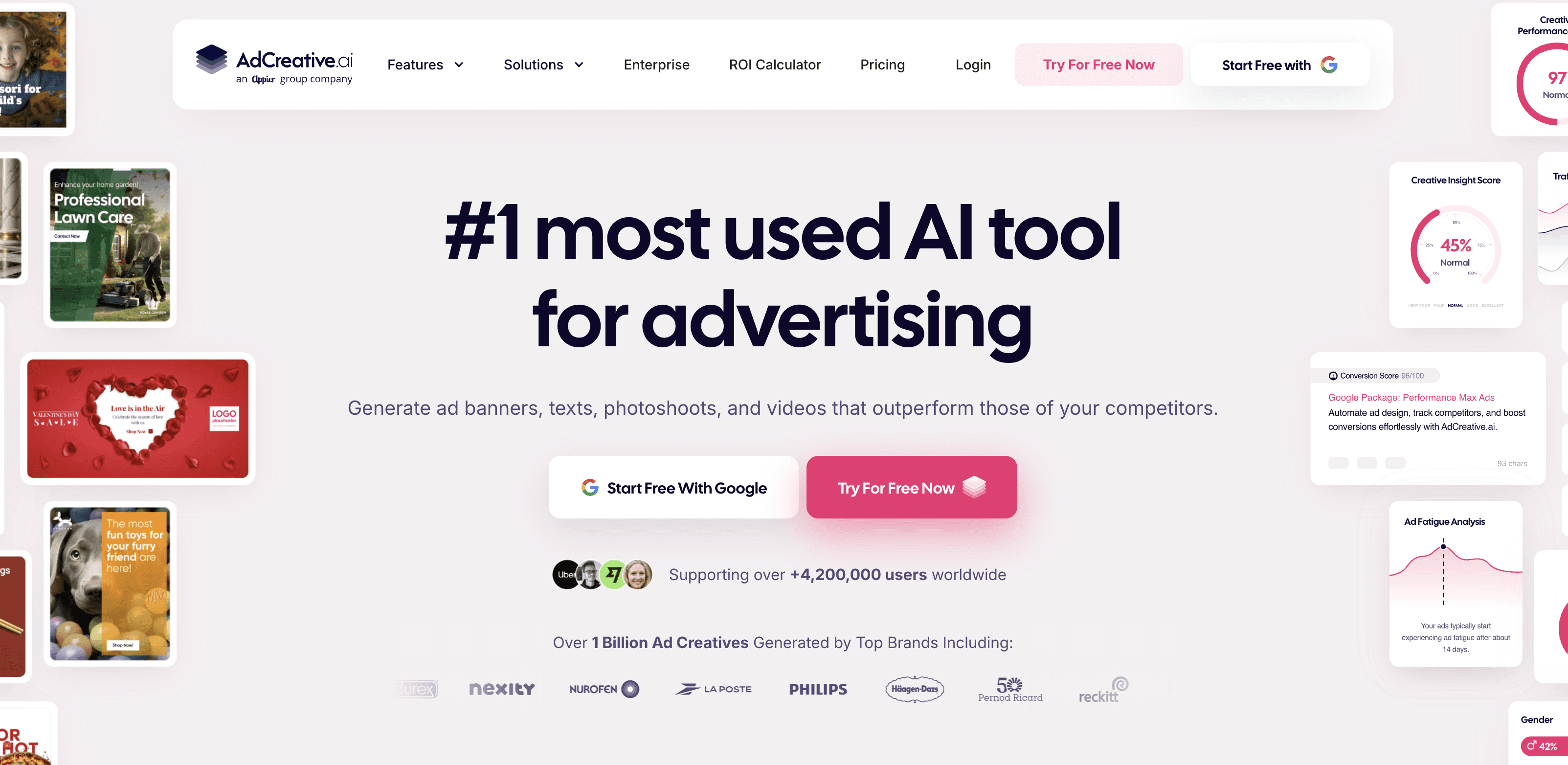
AdCreative.ai uses AI to generate ad banners and social posts at scale, aimed at performance marketers buying visibility rather than earning it organically.
Key Features: AI banner generator, ad performance prediction, competitor ad insights.
Strengths: Generates many ad variations quickly; integrates directly with Google and Meta Ads.
Limitation: Strictly focused on ad creatives; no broader content or visibility tools; entry price has risen since earlier reviews of this tool.
Pricing: Starter $39/mo for 10 credits, Professional $249/mo, Ultimate $999/mo.
16. Synthesia
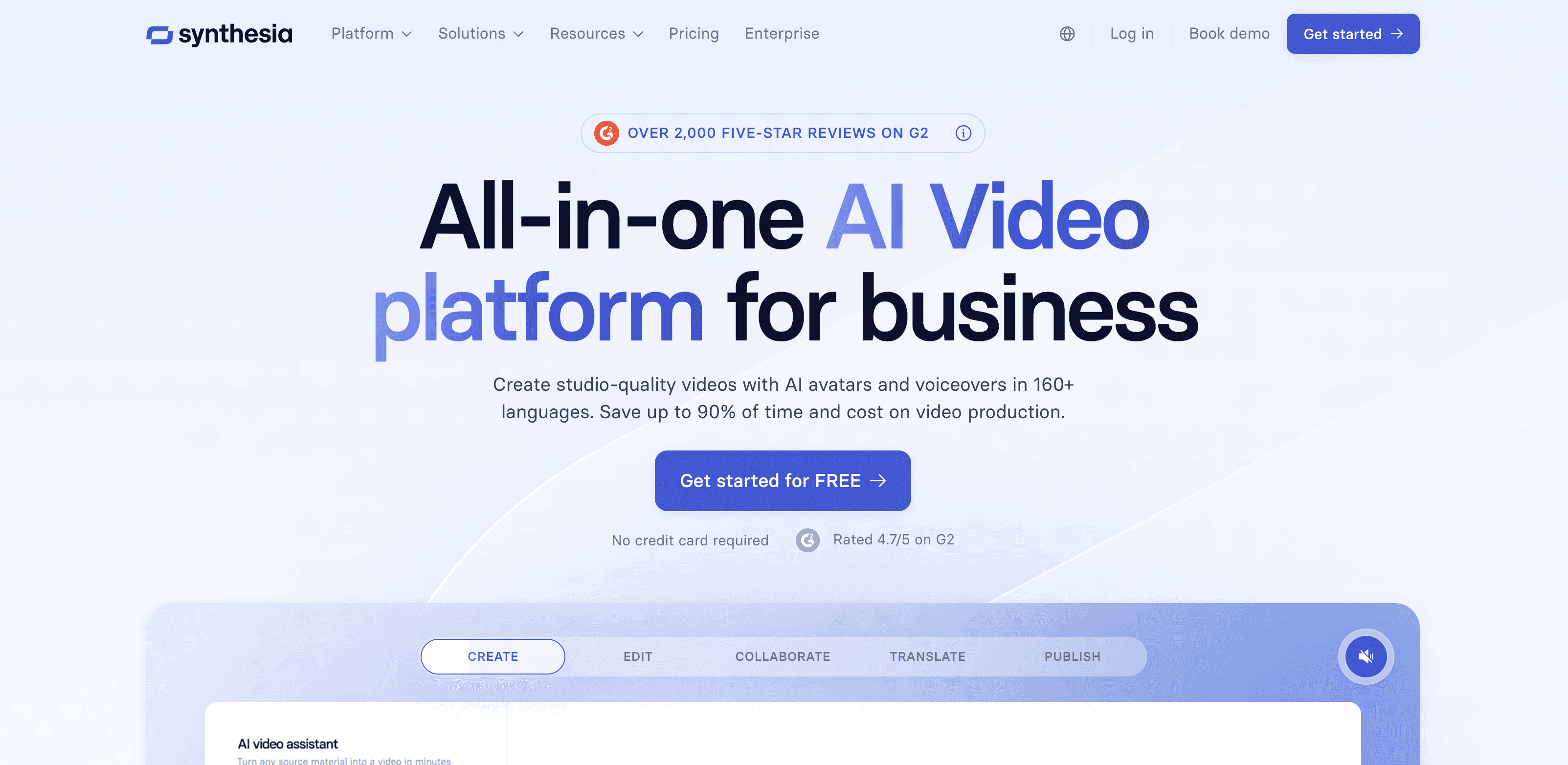
Synthesia leads in AI video generation using digital avatars, removing the need for cameras or a studio.
Key Features: 125+ AI avatars on the Starter tier, up to 240+ on Enterprise, 140+ languages, Dialogue mode for multi-avatar scenes.
Strengths: Produces professional-looking video without filming equipment.
Limitation: Personal avatar creation is a $1,000/year add-on available only on annual plans.
Pricing: Starter $29/mo; Creator $89/mo; Enterprise custom.
17. Otterly AI and Indexly (AI Visibility Trackers)
Otterly AI and Indexly are both dedicated AI visibility trackers and sit as lower-cost or differently-scoped alternatives to AIclicks for teams specifically comparing AEO monitoring tools.
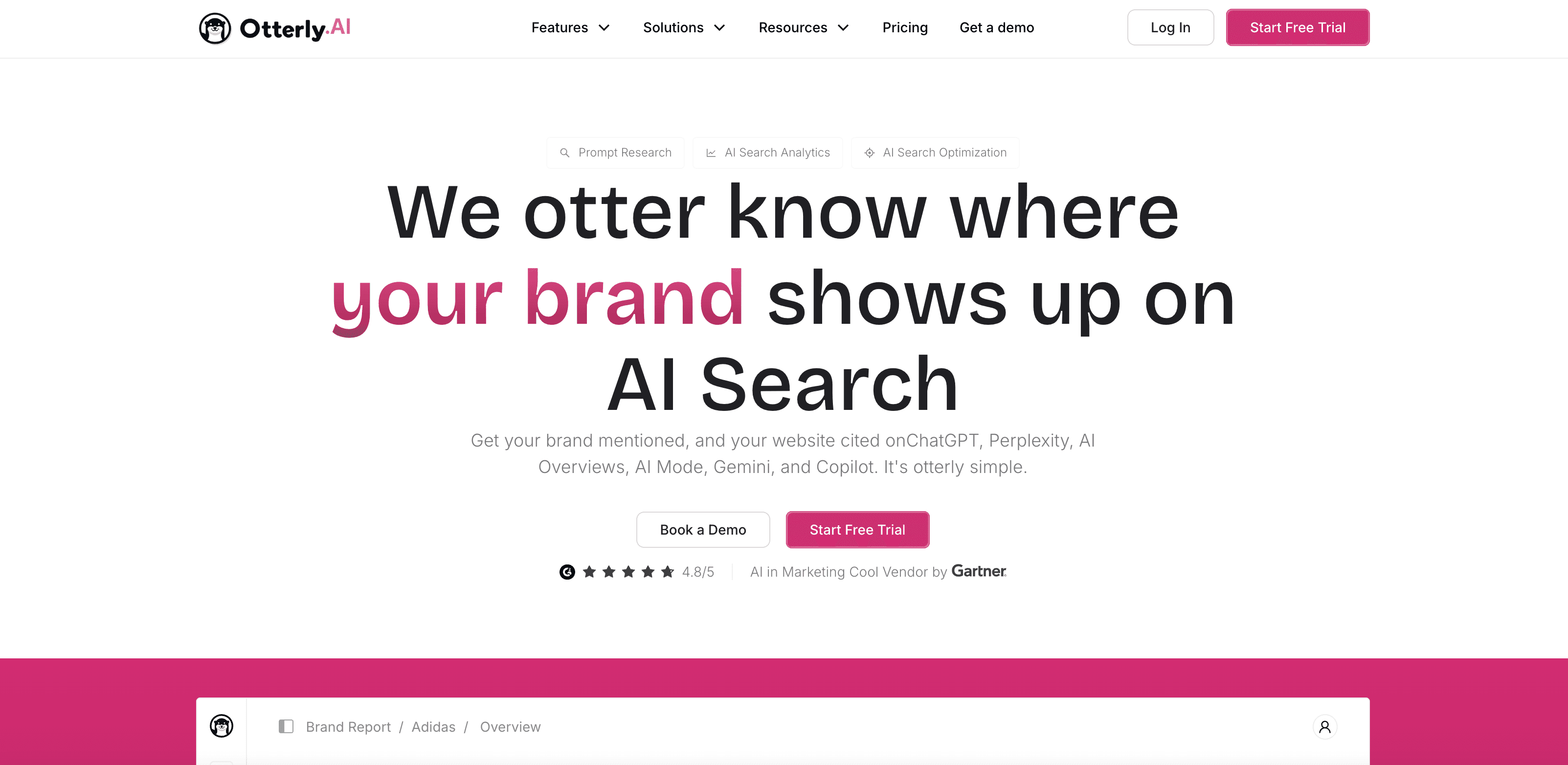
Otterly AI's entry plan, Lite at $29/mo, tracks four engines (ChatGPT, Google AI Overviews, Perplexity, and Microsoft Copilot) across 15 prompts a month, with a Brand Visibility Index and a Share of AI Voice metric. Gemini and Claude tracking are paid add-ons even at this tier, so teams that specifically need those two engines should confirm coverage before buying.
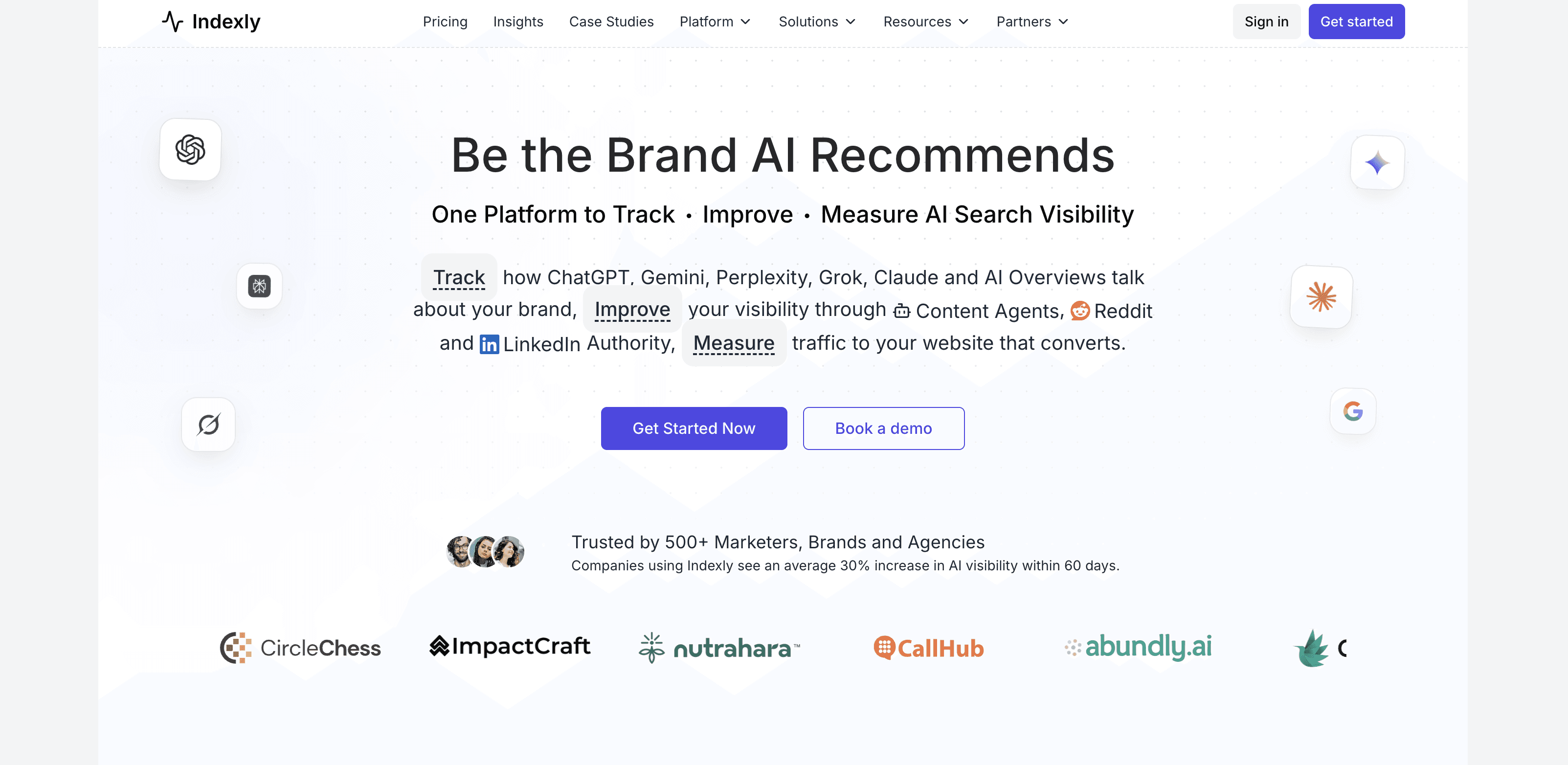
Indexly's Starter plan runs $99/mo for 50 prompts a month, with unlimited websites on the account, citation gap analysis, and competitor analysis. Indexly supports six AI engines overall (ChatGPT, Gemini, Claude, Perplexity, Grok, and Google AI Overviews), but the Starter tier only tracks three of them; full six-engine coverage requires a higher tier.
Strengths: Otterly AI is the cheapest self-serve AI visibility tracker on this list; Indexly's unlimited-website allowance is unusual at its price point.
Limitation: Both gate full engine coverage behind add-ons or higher tiers at their entry price.
Pricing: Otterly AI Lite $29/mo; Indexly Starter $99/mo.
18. Ocoya and Predis (AI Social Media Marketing Tools)
Social scheduling is the gap several tools on this list flag as something needing external integration. Ocoya and Predis fill that gap directly.
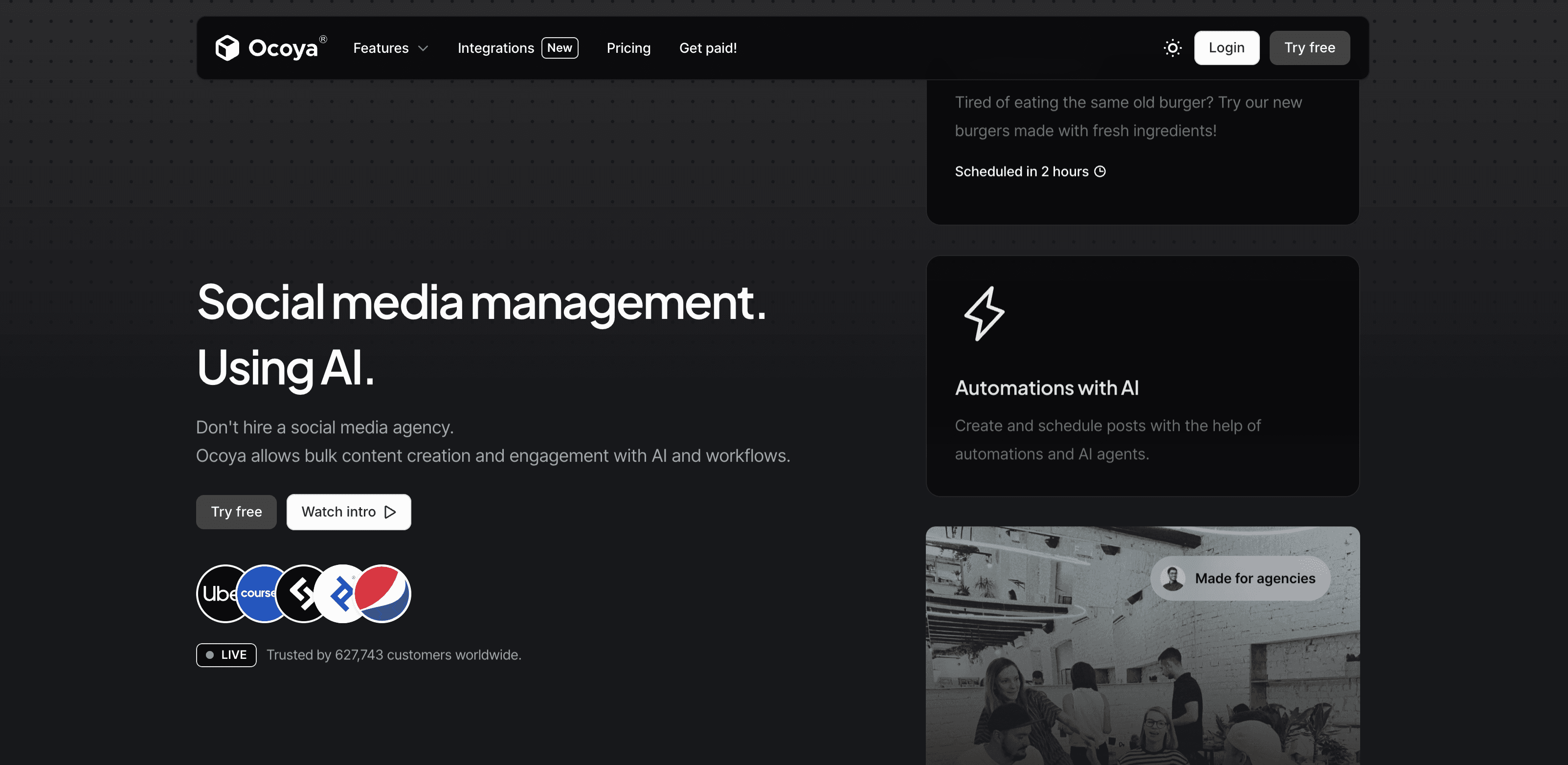
Ocoya's Bronze plan runs $19/mo for one workspace, one user, five social profiles, and 100 credits, with AI agents that handle auto-posting, DM automation, and comment-to-DM workflows across Facebook, Instagram, X, LinkedIn, Pinterest, TikTok, and YouTube, plus more than 30 other integrations.
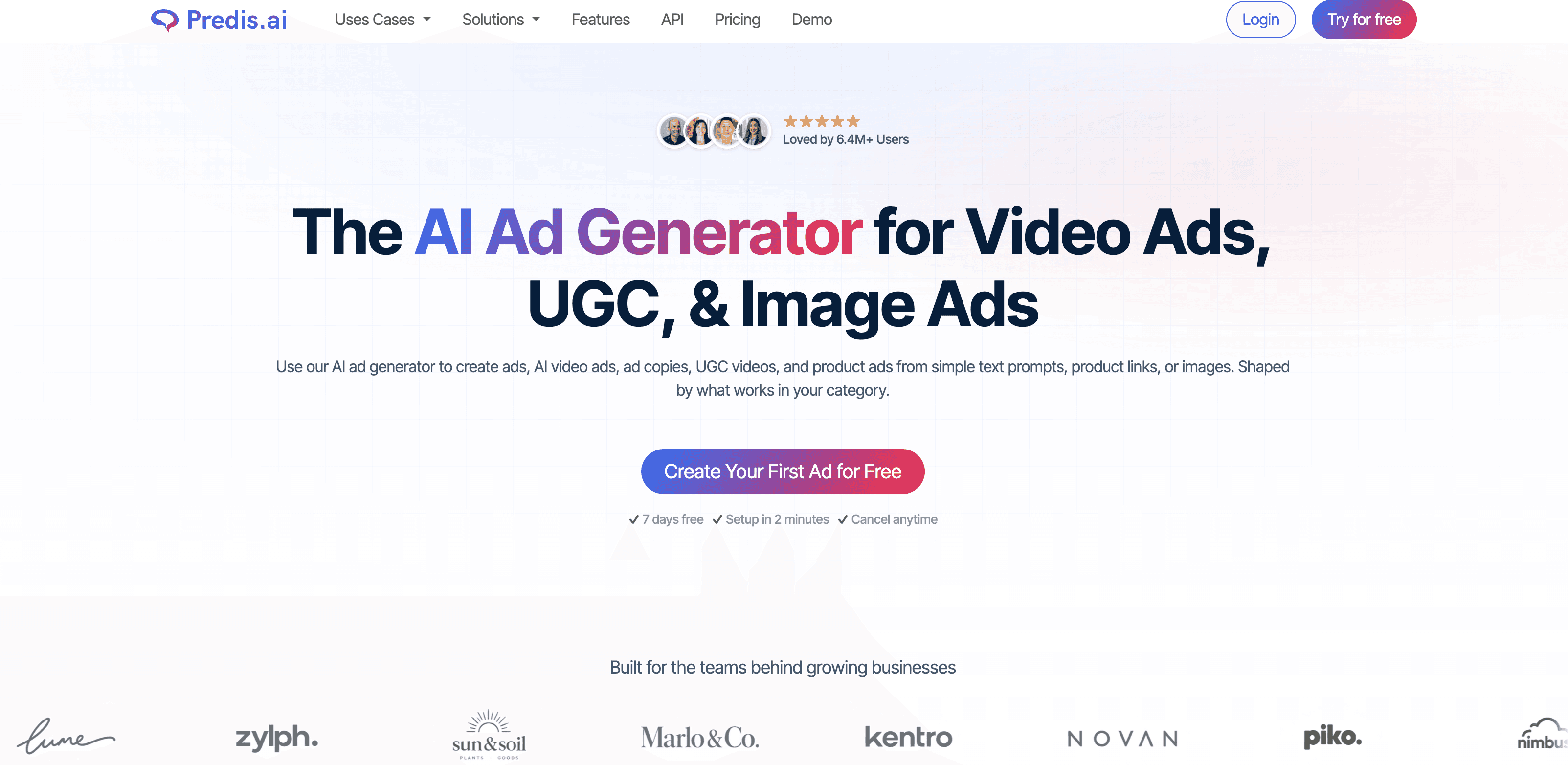
Predis's Core plan is listed at $32/mo, including 1,300 monthly credits, roughly 86 images or 9 videos, one brand, ten social channels, and competitor content analysis.
Strengths: Ocoya covers more platforms at a lower entry price; Predis includes API access even at its entry tier.
Limitation: Ocoya's entry tier caps out at five social profiles; Predis's advertised price is promotional, not a stable list price.
Pricing: Ocoya Bronze $19/mo; Predis Core from $32/mo.
19. Klap and Descript (AI Video Repurposing Tools)
Where Synthesia generates video from avatars, Klap and Descript repurpose video you've already filmed.
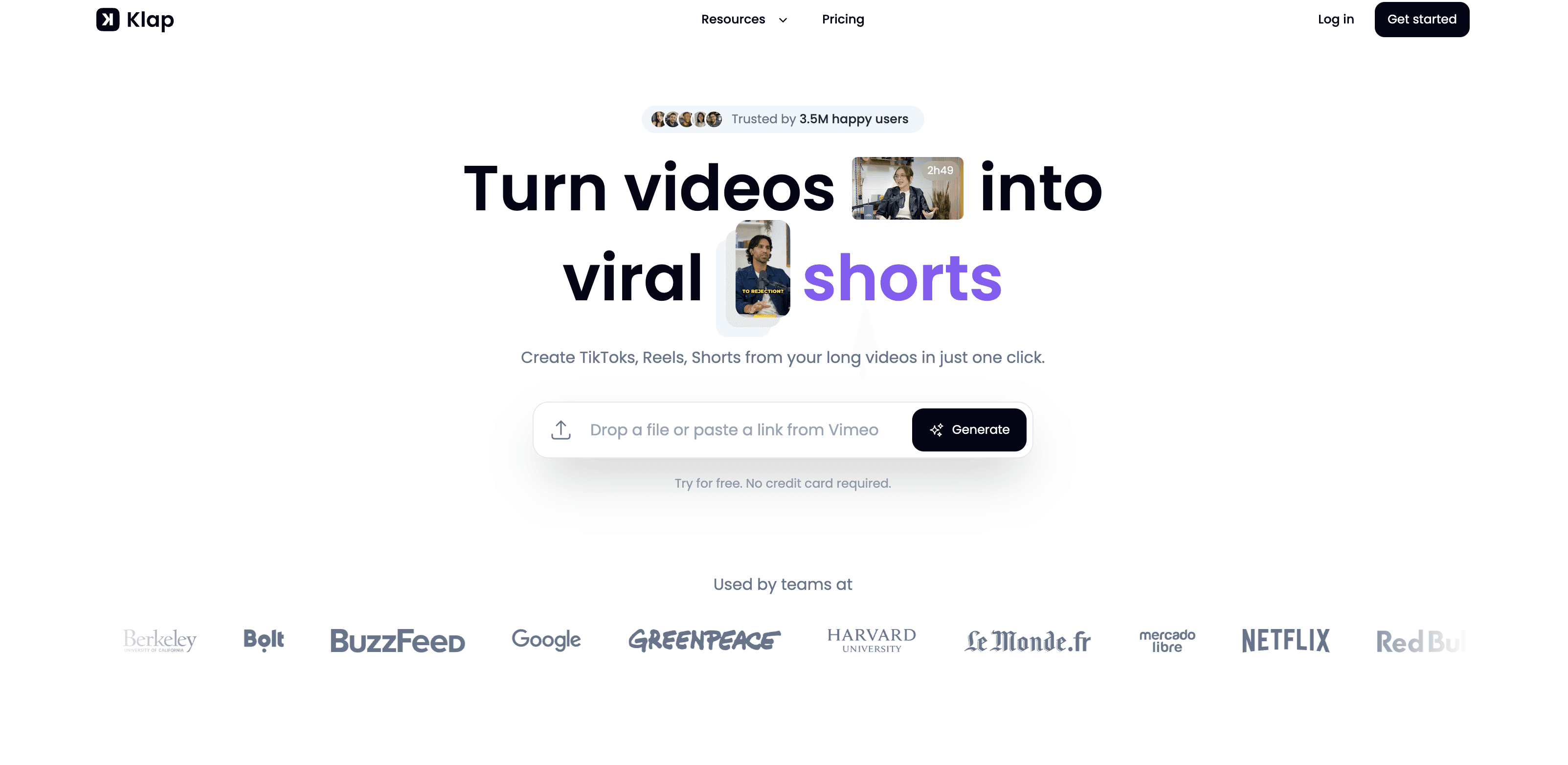
Klap converts long-form video into short clips for TikTok, Reels, and Shorts, and prices by clips generated rather than by input video length. Its Basic plan runs $29/mo for 100 clips a month; Pro ($79/mo) generates 300 clips, and Pro+ ($189/mo) generates 1,000. The free trial covers one video, not a batch.
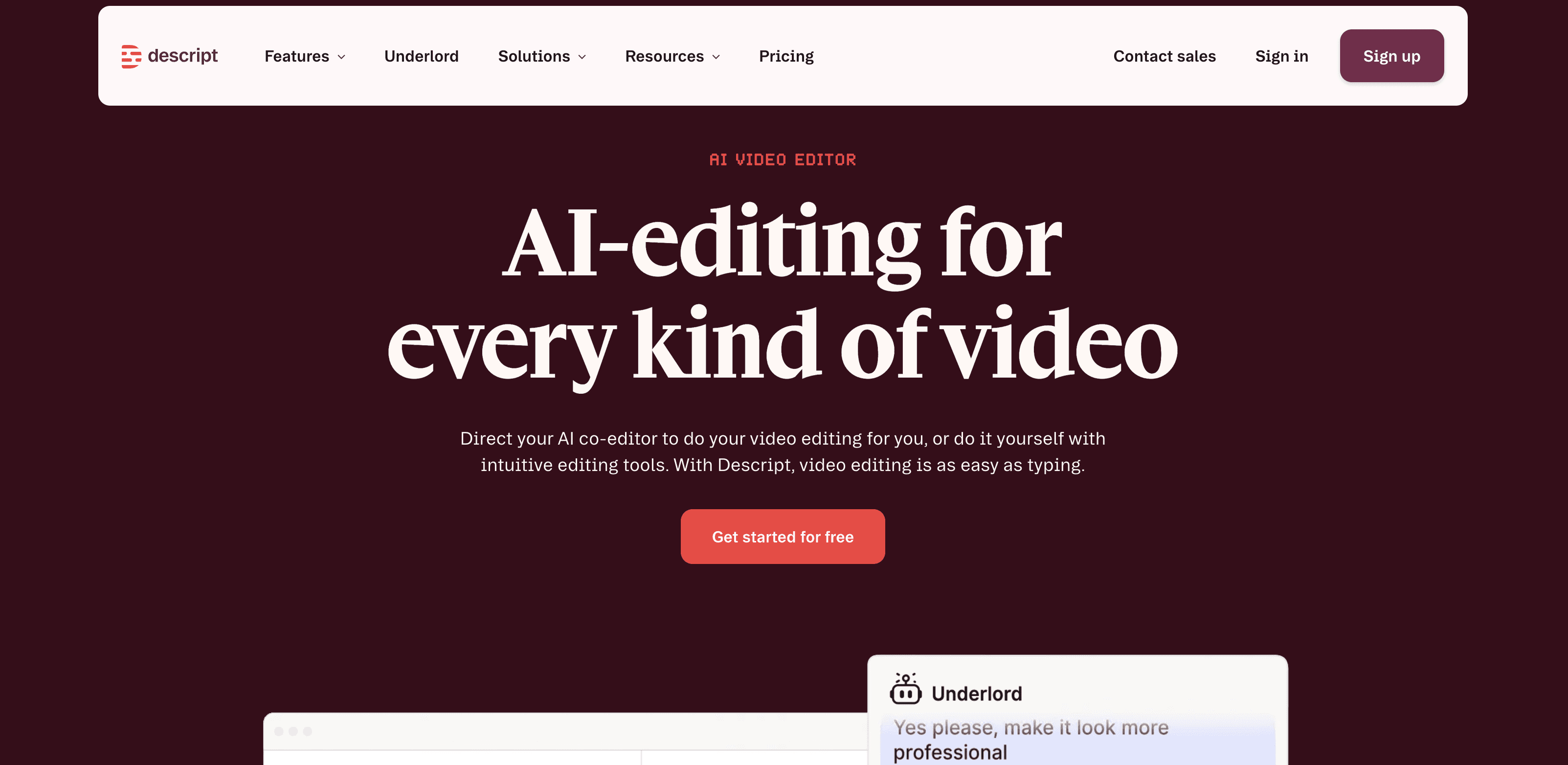
Descript is transcript-based video and audio editing: you edit the text, and the video follows. Its cheapest paid tier, Hobbyist, runs $24/mo for 10 hours of media a month, with filler-word removal, Studio Sound noise cleanup, and AI Overdub voice cloning.
Strengths: Klap's clip-based pricing scales with output rather than input; Descript's transcript editing is faster than timeline scrubbing for talking-head content.
Limitation: Klap's free trial is limited to a single video; Descript's entry paid tier costs more than some competing tools in this category.
Pricing: Klap Basic $29/mo; Descript Hobbyist $24/mo.
20. Gumloop (AI Marketing Automation Platform)
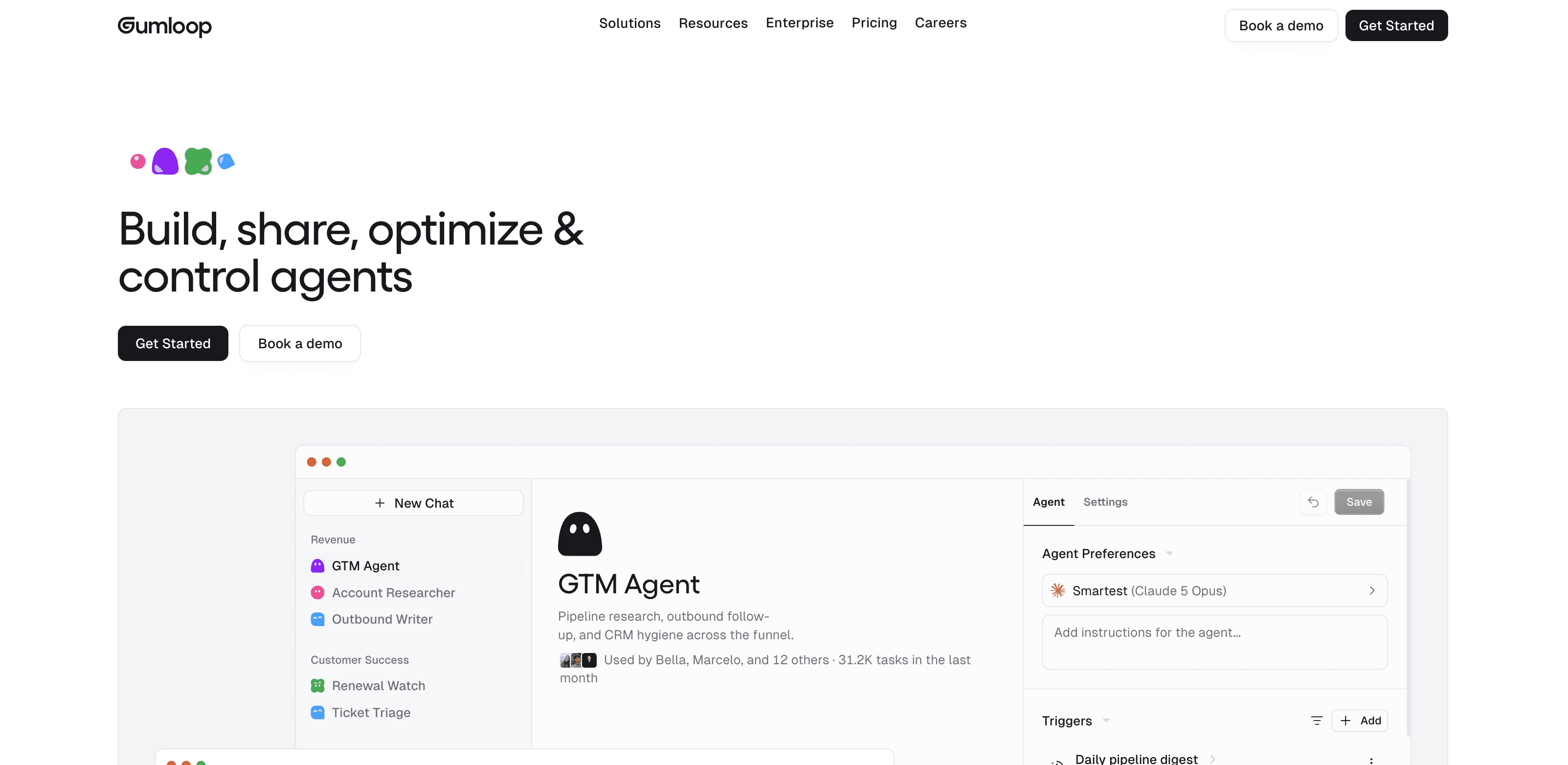
Gumloop is an AI automation and agent builder positioned against Zapier for teams evaluating their automation stack. Where Zapier runs deterministic workflows with AI added afterward, Gumloop describes itself as built for AI agents from the start, bundling model costs into a single credit system rather than separate task and agent add-ons.
Strengths: One credit system covers both automation and AI model costs; strong for reporting, lead generation, and content repurposing without juggling separate AI billing.
Limitation: No free plan, and Zapier's integration count (8,000+) still dwarfs Gumloop's 100+ for teams that need long-tail app coverage.
Pricing: Pro $37/mo, 20,000 credits/mo. Enterprise custom pricing.
Why AI Marketing Tools Matter in 2026
Back when we built the first version of AIclicks, most businesses equated AI with chatbots or a blog post generator. Fast forward to now: artificial intelligence powers everything from audience segmentation and content creation to video editing, advanced analytics, email marketing campaigns, and even full marketing automation. Tools using machine learning now predict what your buyers want, spot gaps in your content strategy, detect AI-generated content, and respond instantly to social media posts.
The best part is that AI marketing platforms are accessible to teams of all sizes. Solo creators, marketing teams, and large enterprises now have access to the same AI tools. However, what counts as "best" depends on the following factors:
What you need (content, automation, SEO, analytics, etc.)
Your size, industry, and marketing tasks
Premium features versus a simple free plan
I always remind clients: focus on what the tool helps you measure and improve. For example, does it help you understand your customer data, user behavior, and actual ROI? Or does it just create content you'll never read?
If your main concern is that your brand doesn’t appear in AI search, you might find answers here:
What to Look For in an AI Marketing Platform
Here is my founder's checklist, outlining the features and capabilities that matter most when evaluating AI-powered tools in 2026.
Automation: Can the platform automate repetitive tasks (like social posts, emails, or reporting) and save human hours?
Smart content generation: High-quality blogs, landing pages, or subject lines that are customized for your brand voice rather than generic text.
Campaign and Brand Tracking: Integration with Google Analytics, Google Search Console, and social platforms for real insights.
AI-Powered Features: Advanced analytics, AI content detectors, video editing, and audience segmentation.
Personalization: Ability to tailor messaging, content, and offers to target audiences using customer data.
Support for Brand Guidelines: Ensures content generation upholds your brand standards.
Integrations: Does it play nicely with your tech stack? Look for native links to CRM, Google Docs/Sheets, automation tools, marketing strategy dashboards, and email.
Pricing Clarity: Free version, free trials, and transparent monthly plan costs. Watch out for extras (like paid plans for premium features).
Making this checklist actionable: don't just check a feature exists, test it. Validate any tool's output against your own GA4 and Google Search Console data for the first two to three weeks before trusting its recommendations. Check integration depth with the platforms you actually run, HubSpot, Shopify, and WordPress cover most teams, rather than assuming a listed integration means full functionality. Treat any AI visibility report older than 30 days as unreliable; AI answer engines change what they cite often enough that a month-old citation snapshot can already be wrong. And for any tool billing by credits or tokens, project your cost at three times your expected usage before committing, since overage costs on those plans are where the real bill shows up.
Key Trends in AI Marketing (2026 and Beyond)
AI-Optimized Search: The biggest shift is visibility in AI-generated answers. You need to show up when users ask LLMs, not just in regular Google search.
Machine Learning for Personalization: Expect smarter predictive analytics and hyper-personalized content everywhere.
Prompt-Driven Marketing: Managing the prompts users feed into LLMs is now as important as monitoring keywords.
AI content detectors and authenticity: New tools help ensure your content remains real, original, and human.
Conclusion: Scaling Your Impact with the Right AI Stack
The shift toward AI-integrated marketing isn't just about speed; it's about depth. Whether you are using a personal assistant like ChatGPT to brainstorm better subject lines or deploying an automated system for social media marketing, the goal is to create more relevant conversations with your audience.
In 2026, the content creation process must be data-driven. By leveraging different AI tools for competitor analysis and auditing your existing content, you can build a more resilient SEO strategy. Tools that allow you to export data directly to Google Sheets or sync with your Google Business Profile ensure that your article or written content remains accessible and visible where it matters most.
Your 2026 AI action plan:
For Content Marketers: Focus on building keyword clusters and optimizing long-form content to ensure your brand becomes a trusted source for AI engines.
For Growth Leads: Use a tool like AIclicks to track your audience growth and ensure your branded visuals and messaging are being cited accurately by AI search agents.
For Small Businesses: Don't overlook the power of a virtual assistant or content writers that can use an AI-driven website builder to handle the heavy lifting of content marketing while you focus on high-level strategy.
The future belongs to those who view AI not as a replacement, but as a specialized automation partner. If you're ready to move beyond generic outputs and start owning your brand's narrative in AI search, start by auditing your current visibility.
Frequently Asked Questions
Does AI marketing actually work?
Yes, AI marketing works exceptionally well for boosting efficiency, personalization, and data-driven decision-making. Strategic implementation is essential, and AI should be used to enhance human creativity rather than replace it.
What's the best AI for marketing?
The "best" AI depends on your needs. Jasper for content, ChatGPT for brainstorming, Surfer SEO for optimization, and HubSpot for automation. Use multi-tool workflows for the best results.
How do you use AI for marketing?
Leverage AI for content ideas, automation, analysis, and audience segmentation. Start with specific tasks like drafting or reporting and build up to full-stack automation.
What is the 30% rule in AI?
AI should handle about 30 percent of predictable, repetitive tasks, allowing marketers to focus on the remaining 70 percent that require judgment and creativity.
How do you start with AI digital marketing?
Learn the top use cases, pick the right tools for your needs, and start with a free plan. Ensure data is clean and results are measured. Over time, integrate tools and refine your brand guidelines.



Any questions left?
Book a call here: