" width="14px"><path d="M 13.864 5.629 L 13.3 5.629 L 13.3 5.6 L 7 5.6 L 7 8.4 L 10.956 8.4 C 10.379 10.03 8.828 11.2 7 11.2 C 4.681 11.2 2.8 9.319 2.8 7 C 2.8 4.681 4.681 2.8 7 2.8 C 8.071 2.8 9.045 3.204 9.786 3.864 L 11.766 1.884 C 10.516 0.719 8.844 0 7 0 C 3.134 0 0 3.134 0 7 C 0 10.866 3.134 14 7 14 C 10.866 14 14 10.866 14 7 C 14 6.531 13.952 6.073 13.864 5.629 Z" fill="rgb(255, 193, 7)" height="14px" id="H_YjfTNpn" width="14px"/><path d="M 0 3.742 L 2.3 5.429 C 2.922 3.888 4.429 2.8 6.193 2.8 C 7.264 2.8 8.238 3.204 8.979 3.864 L 10.959 1.884 C 9.709 0.719 8.037 0 6.193 0 C 3.504 0 1.172 1.518 0 3.742 Z" fill="rgb(255, 61, 0)" height="5.428500000000002px" id="PlkthQDhg" transform="translate(0.875 0)" width="10.959199999999996px"/><path d="M 6.232 5.581 C 8.04 5.581 9.683 4.889 10.925 3.764 L 8.758 1.931 C 8.032 2.483 7.144 2.782 6.232 2.781 C 4.411 2.781 2.865 1.62 2.283 0 L 0 1.759 C 1.159 4.026 3.511 5.581 6.232 5.581 Z" fill="rgb(76, 175, 80)" height="5.581099999999999px" id="WlnJ5gngE" transform="translate(0.7 8.4)" width="10.924899999999994px"/><path d="M 6.864 0.029 L 6.3 0.029 L 6.3 0 L 0 0 L 0 2.8 L 3.956 2.8 C 3.68 3.576 3.183 4.254 2.526 4.75 L 2.527 4.749 L 4.693 6.582 C 4.54 6.722 7 4.9 7 1.4 C 7 0.931 6.952 0.473 6.864 0.029 Z" fill="rgb(25, 118, 210)" height="6.589883930775992px" id="x_rSW275p" transform="translate(7 5.6)" width="7px"/></g></svg>)


Reviewed by:
Rokas Stankevicius

Founder @ aiclicks.io
Last updated:
Expert Verified

As the founder of AIclicks.io, I spend my days talking to brands and agencies who all want the same thing: to be visible when people search with AI, especially Grok. The short answer? You need the right Grok tracking tools in your stack. And honestly, the landscape is evolving faster than anyone expected.
Just last year, almost every SEO conversation centered on Google. Now, Grok and other large language models (LLMs) are the first place people ask for product recommendations or even do research, especially on X (formerly Twitter). Instead of clicking through ten blue links, users ask a question and trust a single AI-generated answer or a short list of recommended brands.
That means your visibility lives or dies in those few lines of output, and unlike Google, Grok doesn't rank pages, it decides which brands to mention and cite for a given prompt. So it pays to know how your brand shows up in Grok answers, not just Google results, and to treat AI search visibility as a channel you actively manage, not a black box you hope will work itself out.
In this guide, I'll walk you through the best Grok rank tracker tools 2026, explain the critical features to look for, and share practical tips that I've seen work for our users and partners.
5 Best Grok Tracking Tools 2026
AIclicks.io - best Grok rank tracker tool in 2026
AI Rank Checker - best pay-as-you-go option for Grok visibility audits
Rankability - best for enterprises focused on Grok citation and competitor tracking
AthenaHQ - best for large brands needing multi-LLM Grok tracking with action center
Rankscale AI - best affordable Grok SEO rank tracker for growing teams
Other Grok Tracking Tools Worth Knowing
The five above cover most agencies and growing brands, but they're not the only options. If your budget, platform, or feature needs don't quite match the top five, one of these five is worth a look.
Cairrot is an AEO platform with a WordPress plugin for AI-bot crawl tracking, free API access on all plans, and an AI Readiness Audit that scores how well your pages are structured for AI retrieval. Grok tracking isn't in Cairrot's base tiers; it's a $25/month add-on you can attach to any plan. The Starter plan runs $39/month, so Grok coverage on Cairrot totals $64/month.
Mangools AI Search Watcher tracks Grok alongside ChatGPT, Gemini, Claude, Mistral, and Llama, starting from $18.85/month on annual billing. If you want a genuinely free way to check Grok visibility before committing to a subscription, Mangools' companion tool, AI Search Grader, is a permanently free one-time snapshot checker, worth using as your answer to "best free Grok rank tracker" searches, though it's a snapshot tool rather than ongoing monitoring like Watcher itself.
Peec AI starts at roughly $80/month for its Starter plan. Grok isn't one of the models featured on Peec's pricing page by default, but Peec's own published GEO statistics confirm they do collect data across Grok as well, so it's worth confirming with their team whether Grok is included at your tier before signing up.
Orchly bundles ChatGPT, Google AI Overview, and Perplexity into its $125/month Pro plan by default. Grok tracking is not included at that price, it's one of several on-demand paid add-ons, which matters if you're evaluating Orchly specifically for Grok coverage. Pro also includes AI content generation features like article writing and refresh agents.
Profound is built for enterprise budgets: its Growth plan runs $332.50/month billed yearly and actively tracks ChatGPT, Perplexity, and Google AI Overviews by default. Grok sits in Profound's broader platform capability list, but reaching it typically means moving up to Profound's custom Enterprise tier rather than Growth.
Best Grok SEO Rank Trackers for 2026 - Practical Reviews
With so many Grok-focused rank tracking tools emerging at once, it's easy to get lost in marketing claims. Here are reviews of the most notable tools for tracking brand presence.
1. AIclicks.io - best Grok rank tracker overall
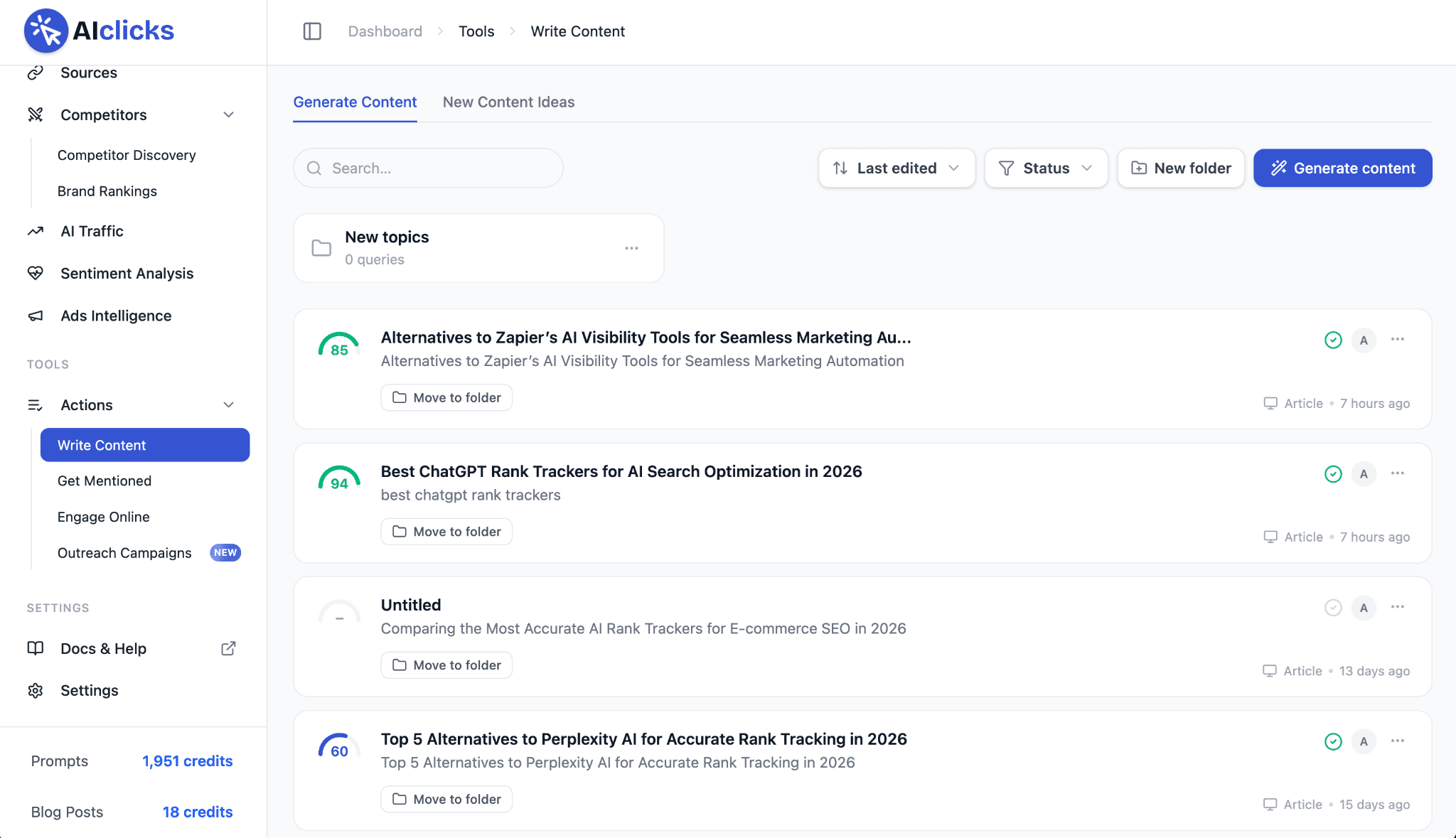
About: AIclicks.io is an AI search visibility tool built specifically for Grok and large language model search realities. It offers prompt-level monitoring, multi-engine dashboards, and citation intelligence, giving you unparalleled insight into where and how your brand appears in Grok's AI-generated answers.
For Grok specifically, AIclicks tracks which prompts trigger your brand inside Grok responses, which external sources Grok cites when it mentions you, and how your visibility compares to competitors across the same prompt sets.
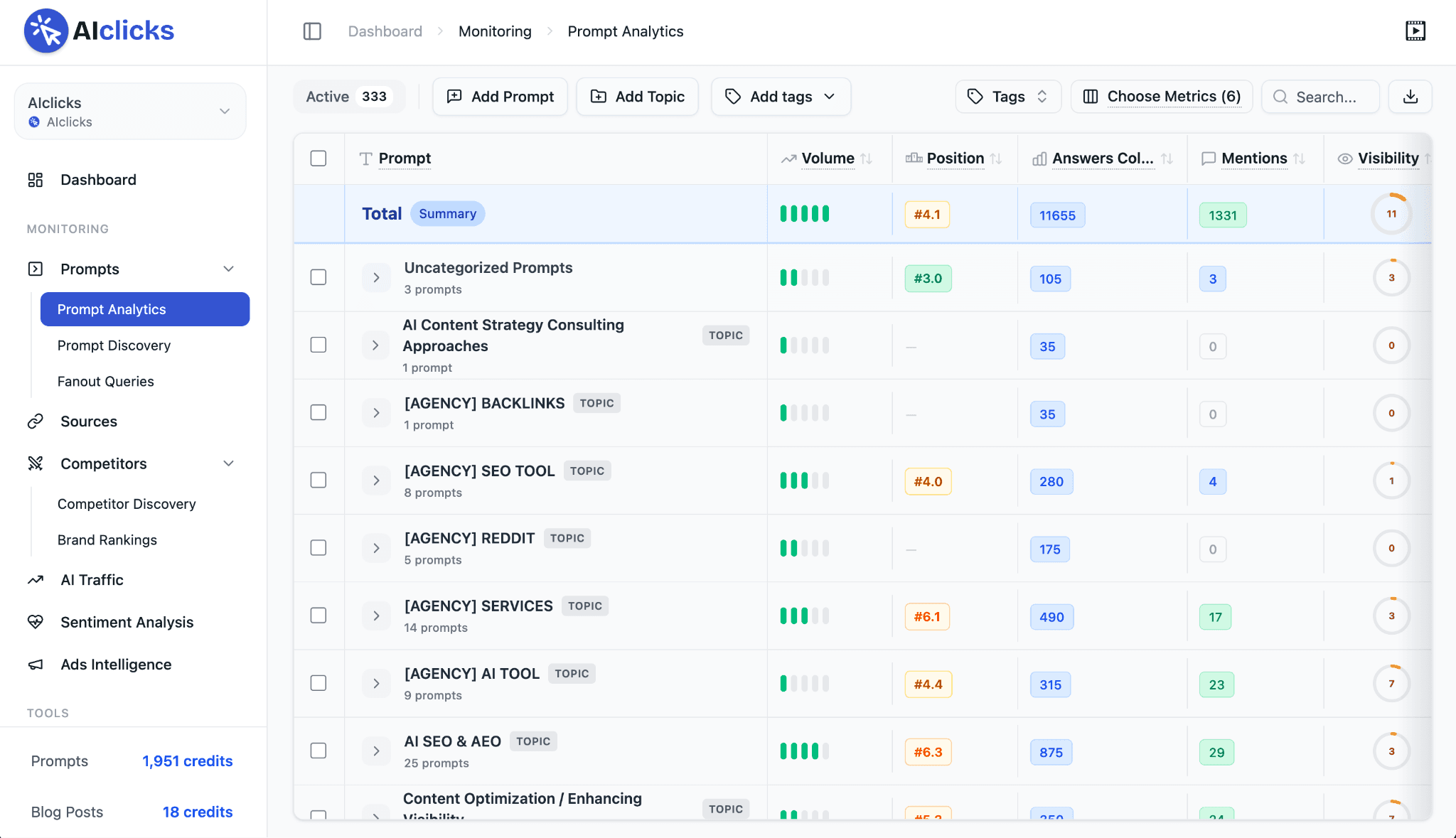
The Citation Intelligence feature surfaces every domain Grok references for your target prompts, so you can see why competitors get cited and build a strategy around earning those same placements. The GEO Audit lets you check how Grok responds to your prompts differently across regions and languages, which matters given how Grok's answers can shift by geography and context.
What sets AIclicks apart from other best Grok rank tracker tools on this list is the combination of prompt-level diagnostics, GA4 integration (connecting Grok referral traffic to real site visits), and built-in actionable recommendations rather than just raw visibility data you have to interpret yourself.
Pros:
Tracks exact prompts and brand mentions across Grok, ChatGPT, Gemini, Perplexity, Copilot, and more
Citation intelligence highlights top domains citing your brand
Actionable next steps baked into the dashboard for quick fixes
Geo and language audits for comprehensive visibility
Integrates with Slack and other automation tools for real-time alerts
Cons:
May require some onboarding to leverage all features fully
Suitable Use Cases:
Agencies managing multiple brands' Grok and AI presence
Power users tracking brand presence and prompt-level visibility
Teams needing to follow AI search changes without manual digging
Pricing: AIclicks offers tiered monthly pricing starting at $59/month for Starter with 30 tracked prompts and basic AI tools like ChatGPT/Perplexity monitoring, scaling to $189 Pro and $499 Business for more prompts, LLMs, unlimited seats, and agency features. There is also custom pricing available for enterprise level.
2. AI Rank Checker
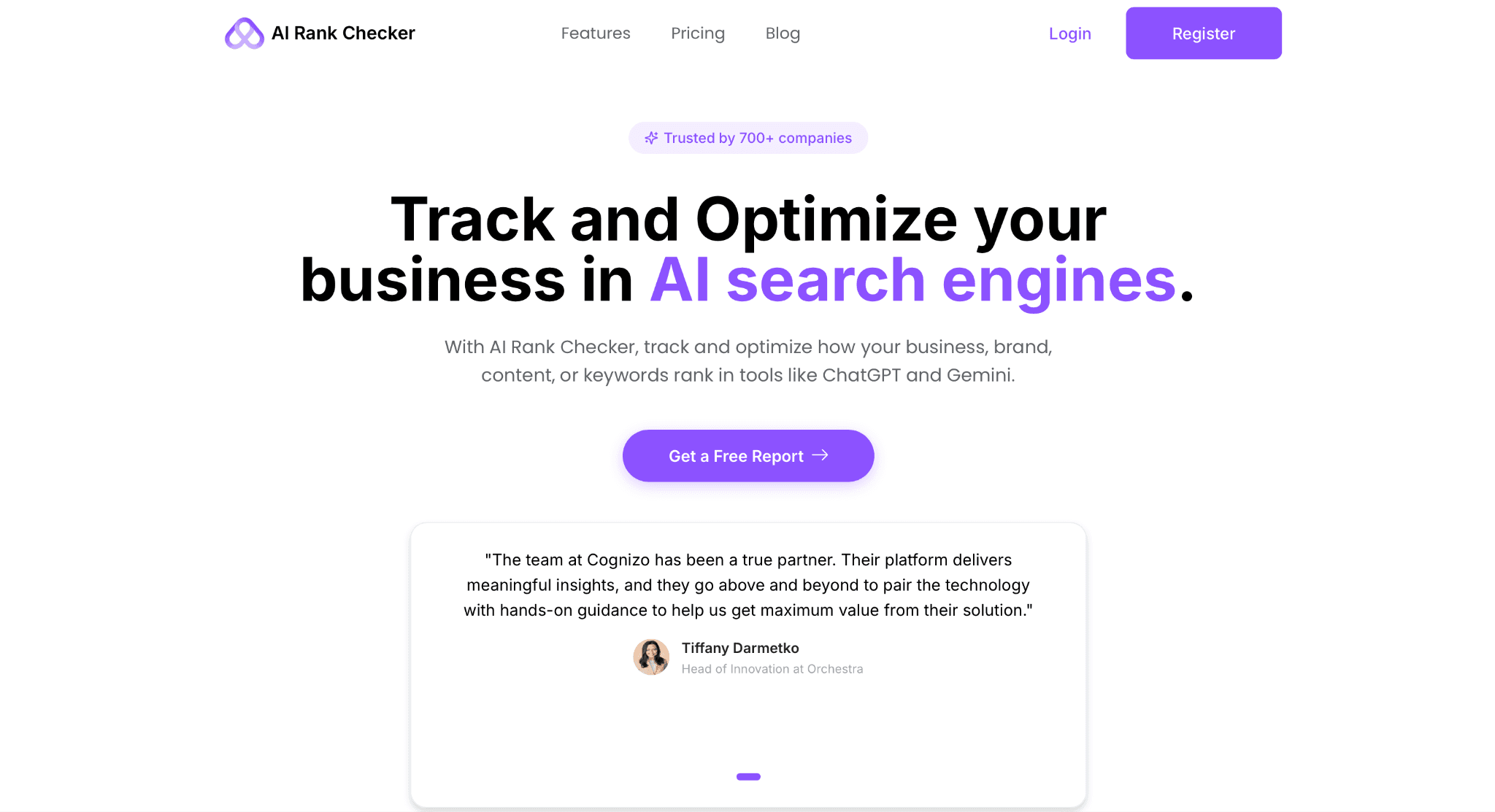
About: AI Rank Checker offers instant visibility checking in Grok and six other major LLM engines without locking you into a monthly subscription. Its wallet-based pay-to-go model means you top up a balance and only pay per keyword check, making it the most cost-efficient option for teams that need occasional Grok visibility audits rather than continuous monitoring.
Pros:
Unlimited keyword checks without subscription
Easy onboarding and straightforward interface
Supports multiple AI engines beyond Grok
Cons:
Limited to audit-style use rather than ongoing monitoring
Fewer advanced features compared to AIclicks.io
Suitable Use Cases:
Startups experimenting with AI search
Businesses needing one-off visibility reports
Users wanting a simple, pay-as-you-go option
Pricing: AI Rank Checker starts from $499/mo, scaling to $899/mo. Custom pricing is available.
3. Rankability
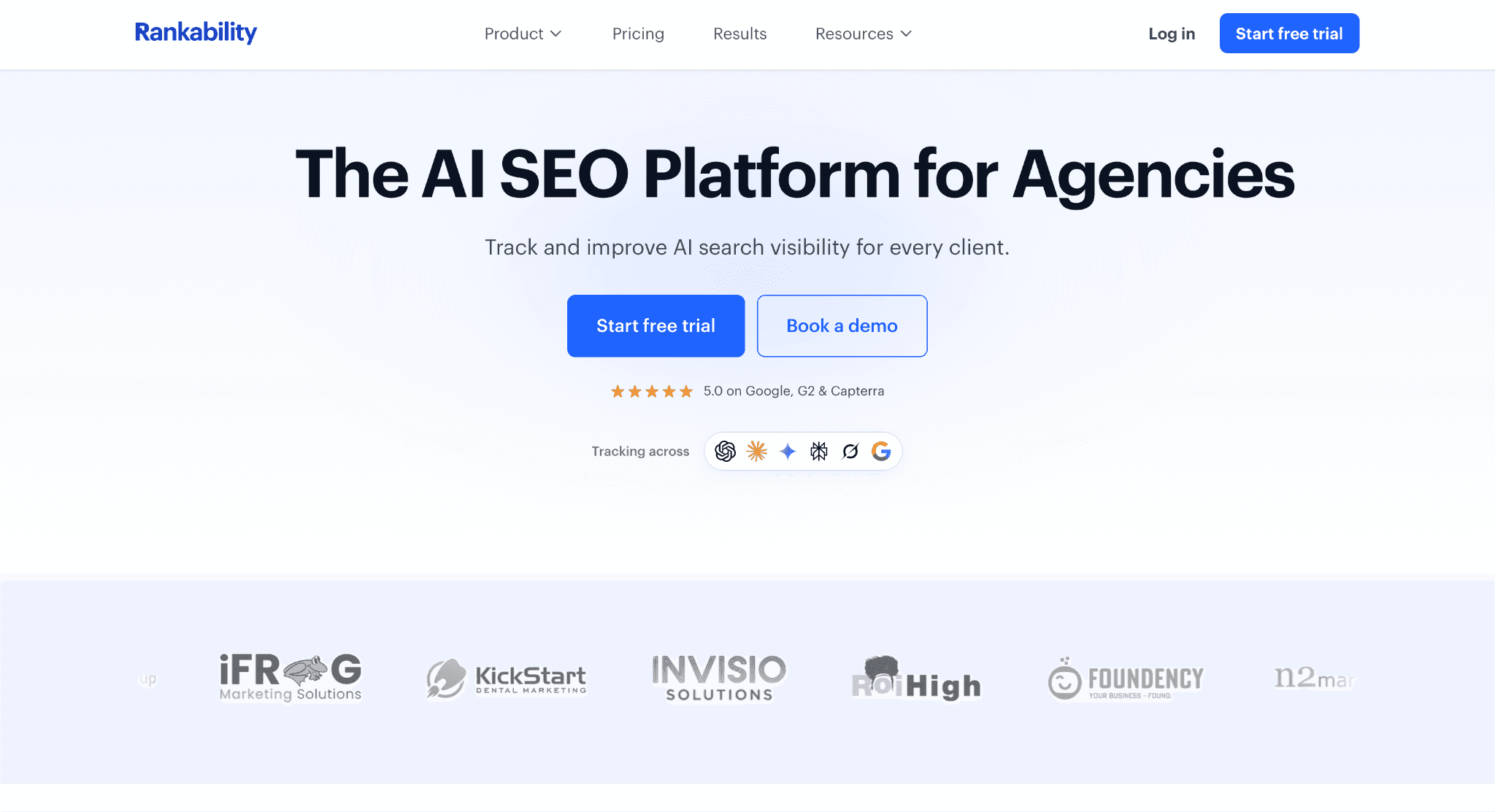
About: Rankability approaches Grok rank tracking with a focus on citation pattern analysis, specifically how Grok references your brand, whether it links directly, cites you as an official source, or mentions you in passing. It also tracks visibility shifts after follow-up queries ("risks?", "alternatives?"), which catches edge cases most Grok tracking tools miss entirely.
Pros:
Deep integration with Grok and xAI social signals
Freshness tracking to spot ranking changes
Actionable playbooks for quick optimization
Cons:
Subscription-based, primarily targeting enterprise users
More complex than simpler audit tools
Suitable Use Cases:
Enterprises needing detailed brand and competitor monitoring
Teams focused on social signal impact on Grok rankings
Users wanting guided optimization strategies
Pricing: Rankability pricing starts at $99/month for Starter (1 brand workspace), $199/month for Core (3 brand workspaces), and $399/month for Team (10 brand workspaces), with custom pricing above that.
4. AthenaHQ
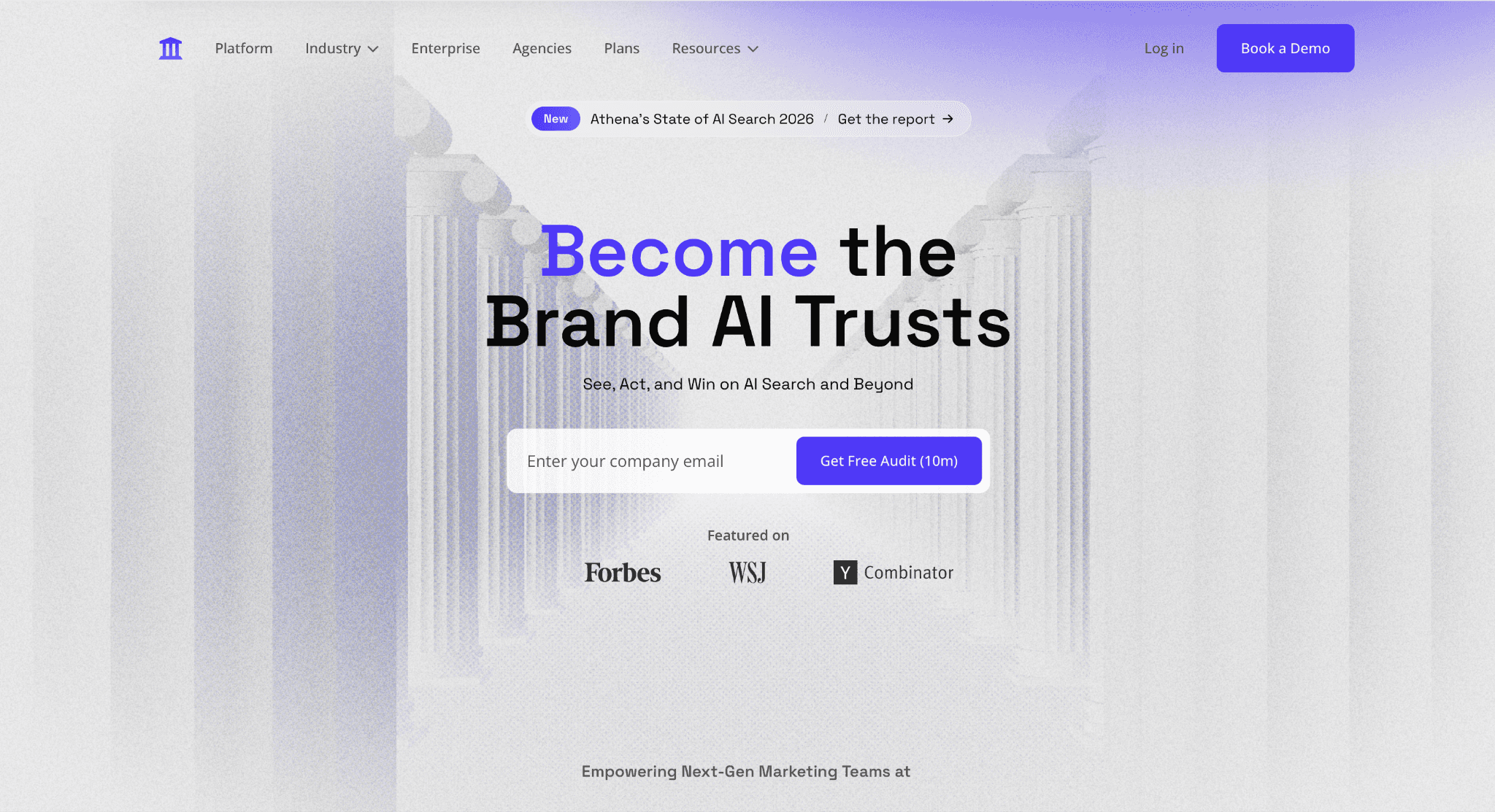
About: For Grok rank tracking, AthenaHQ's Athena Citation Engine (ACE) is its standout feature, proprietary technology that optimizes for and tracks citations specifically within LLM responses including Grok. The Action Center provides automated recommendations to improve Grok visibility, moving beyond passive monitoring toward actual optimization steps. GA4 integration ties Grok visibility to real traffic data, and unlimited competitor monitoring lets you track rivals' Grok share of voice at scale.
Pros:
Multi-LLM coverage tracks Grok alongside ChatGPT, Gemini, and others, with prompt volume intelligence and AI-generated optimization actions
GA4 integration ties Grok visibility to traffic data, while unlimited competitor monitoring reveals share-of-voice gaps
Cons:
Single-region limits initially; enterprise tiers add multi-language support and dedicated specialists
No built-in content implementation, users handle fixes manually
Suitable Use Cases:
Enterprise GEO for Grok dominance in tech queries
Competitive analysis in multi-turn conversations
Content strategy via high-volume prompt insights like "best project management tools"
Pricing: AthenaHQ offers a free Essential plan ($25 free credit, 300 credits, covering 5 engines: ChatGPT, Perplexity, Google AI Overviews, Gemini, and Copilot), with paid plans starting at $295/month for Starter (3,600 credits across 10+ AI engines including Grok), and custom Enterprise pricing above that.
5. Rankscale AI
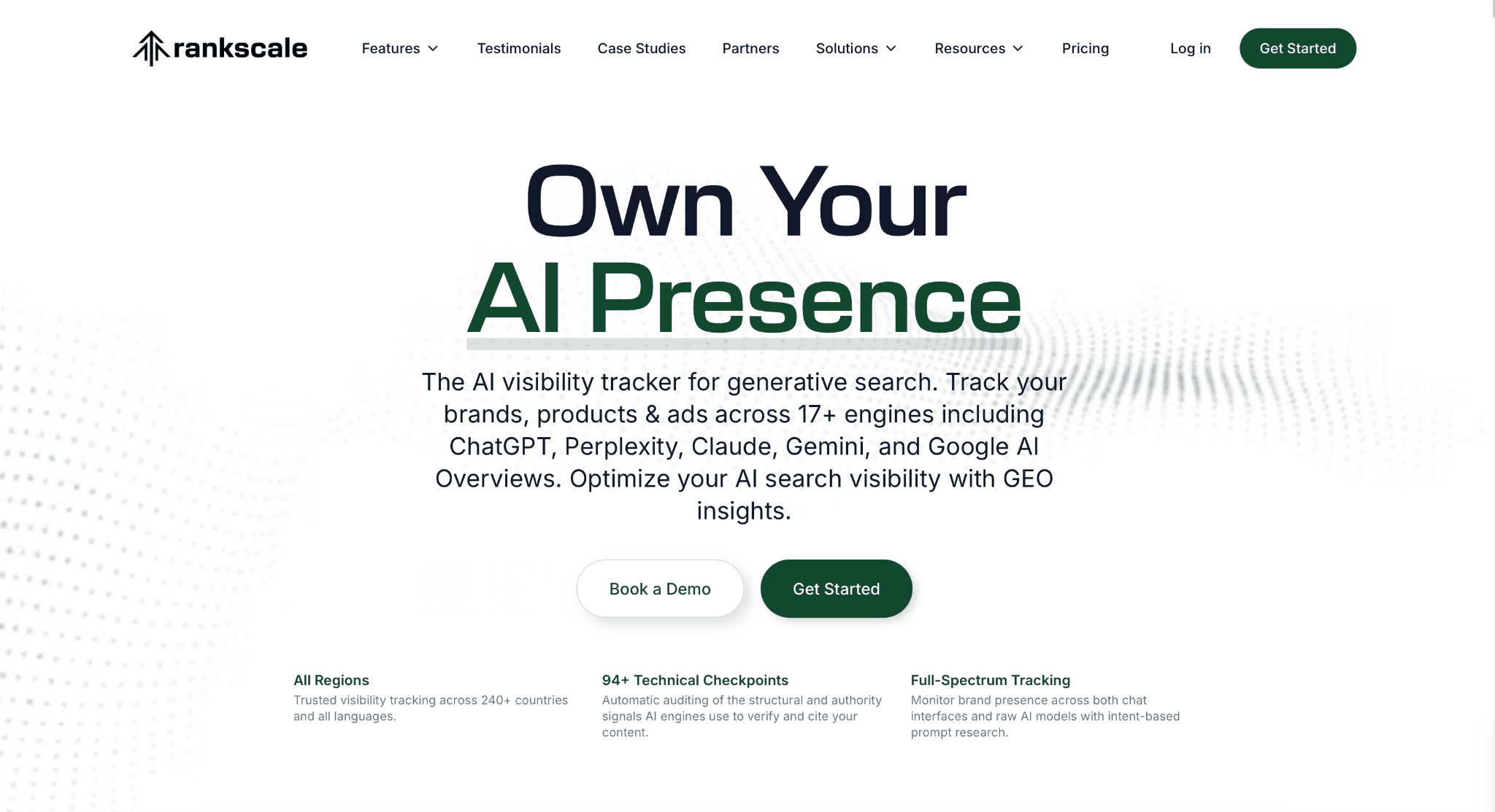
About: Rankscale AI is a credit-based AI visibility tracker that covers Grok, ChatGPT, Claude, Perplexity, and Google AI Overviews, with a dashboard built for teams that want detailed visibility data without enterprise pricing. Rather than a fixed daily check, you choose how often your prompts get monitored, hourly, daily, weekly, or monthly, so the cadence scales with your budget and how fast your category moves. Its AI Search Readiness Score is a practical diagnostic feature, it analyzes your site and flags specific content and technical issues affecting your Grok visibility, giving you a prioritized list of fixes rather than just raw mention data.
Pros:
Grok tracking with selectable monitoring frequency and regional filtering
AI Search Readiness Score giving actionable site-level diagnostics for Grok optimization
Most affordable entry point on this list that includes real Grok tracking
Credit-based model, only pay for the volume you actually use
Competitor benchmarking and citation analysis included
Cons:
Technical interface can be overwhelming for teams new to AI visibility tracking
Credit limits can constrain usage for teams tracking many prompts daily
Less polished than enterprise-focused tools like AthenaHQ
Suitable Use Cases:
Growing brands wanting affordable, flexible-cadence Grok tracking with actionable diagnostics
SEO professionals comfortable with data-heavy interfaces
Teams that want credit-based flexibility rather than fixed subscription tiers
Pricing: Essentials €20/month (credit top-up, no bundled monthly credits); Pro €99/month (includes a 7-day free trial); Growth €385/month; Enterprise €780/month.
Why Grok Rank Tracking Really Matters in 2026
Visibility in Grok isn't hype; it's the start of the new "AI search" era, the next frontier in how people discover products and services.
Grok aggregates, interprets, and answers user prompts, often faster than Google and with very different ranking signals. If you want your brand, product, or site cited as a trusted source, you need specialized tools that treat Grok as a first-class platform.
The numbers back up why this matters right now. Grok's US share of AI-chatbot website traffic reached 3.4% in May 2026, up 122% year-over-year, according to Similarweb data cited in Momentic Marketing's August 2026 chatbot market-share report. Globally, Grok pulled in 244.9 million monthly web visits that same month, and a SpaceX IPO registration filing (xAI merged into SpaceX earlier in 2026) disclosed roughly 117 million monthly active users for Grok specifically, as TechCrunch reported in May 2026.
That footprint moves fast because of how Grok is actually built. Per xAI's own developer documentation, Grok pairs its trained knowledge with a live web search tool and a dedicated X search tool that pulls real-time posts, threads, and trending conversations straight from X. A brand mention that looks steady on Monday can shift within hours of a viral X post in a way a chatbot without live social access can't replicate. Grok's own usage swings show how quickly this moves: global mobile app DAU fell from 13.9 million in March 2026 to 12.2 million in April, a 12.5% change in a single month, per Forbes reporting on Similarweb data. That kind of month-to-month swing is exactly why weekly or monthly Grok checks miss real shifts, and why more frequent tracking pays off.
For a broader overview of AI-powered search tools and how they compare, check out our complete guide to AI search tools for 2026.
Compare the best Grok rank trackers
Tool | Best For | Coverage | Key Features | Update Frequency | Free Trial | Pricing |
AIclicks.io | Agencies, power users | Grok, ChatGPT, Gemini, Perplexity, Copilot, others | Prompt-level monitoring, citation intelligence, geo & language audits, actionable recommendations | Daily prompt refresh | Yes, 3-day trial on Starter and Pro (no card required) | From $59/mo |
AI Rank Checker | Startups, quick audits | Grok + 5 major LLMs | Unlimited keywords, instant results, pay-per-check | On-demand, per keyword check | No subscription required | From $499 |
Rankability | Enterprises | Grok, xAI social signals | Brand/link presence, freshness tracking, playbooks | Daily prompts (60-250/day depending on tier) | Yes, 7-day trial on monthly Starter, Core, and Team plans | From $99/mo |
AthenaHQ | Agencies & enterprises needing structured AI insights | Grok + major AI engines | Prompt-level insights, competitive benchmarking, citation tracking, agency support | Not publicly specified | Yes, free Essential tier ($25 credit, 300 credits, 5 engines; Grok requires Starter) | From $295/mo |
Rankscale AI | Growing teams, budget-conscious | Grok + major AI engines | AI Search Readiness Score, selectable tracking frequency, regional filtering, citation analysis | Selectable: hourly, daily, weekly, or monthly | Yes, 7-day trial on Pro only | From €20/mo |
What Makes a Grok Rank Tracking Tool Stand Out?
Not every tool gets the job done. If you're evaluating options, focus on these features:
Accuracy: Real Grok results, not just "simulated" LLM output.
Granularity: Tracks not only keyword rankings, but prompt positions, citation sources, and visibility percentage tied to specific queries.
Multi-engine support: You'll want to see Grok, but also ChatGPT, Gemini, Copilot, Perplexity, Claude, and other AI engines your audience actually uses.
Update frequency: How often the tool actually refreshes your Grok data, hourly, daily, or weekly, matters more here than it does for most SEO tools. Because Grok layers real-time X activity on top of its trained knowledge, a weekly snapshot can miss a visibility swing that started and ended between checks. Tech, media, and finance brands riding fast-moving news cycles should weight daily or hourly refresh higher than they would for a slower-moving traditional SEO tool.
Scalability: Handles thousands of keywords or prompts without slowdowns, even as your usage grows.
Clear reporting dashboards: Visualize mentions, positions, external citations, history, and ranking performance over time.
Pricing flexibility: Fits both testing-phase startups and larger enterprises going all-in, with transparent pricing that's easy to forecast.
Integration options: Can link to existing workflows, plugins, or WordPress setups and connect to your other analytics systems.
Actionable insights: not just numbers, but recommendations such as "Add reviews from G2," "Update schema," and "Refresh FAQ," all tailored for Grok, so even busy builders and marketers know exactly what to do next.
I saw this firsthand with one client who moved up in Grok's recommendations for "best cashback apps" by tweaking technical access and adding fresh external reviews, and their traffic doubled in two months. That kind of result makes it clear why treating Grok as its own channel, rather than an SEO side project, matters.
Tool Selection: Who Should Choose What?
Budget-conscious teams: AI Rank Checker fits if you want to pay only when you check, with no subscription. Rankscale AI is the other budget option, starting at €20/month with a selectable tracking cadence, so you can dial spend up or down as your needs change. If you want something free before committing to either, see Mangools' AI Search Grader in the alternative tools section above.
Mid-market, growing brands: AIclicks.io offers all-in-one dashboarding, multi-market insights, and direct suggestions for boosting Grok visibility. AthenaHQ sits in a similar range starting at $295/month, with a free Essential tier to test the platform first, and adds the Athena Citation Engine and unlimited competitor monitoring for teams that want more structured, agency-grade insight.
Enterprise: Rankability pulls in competitor data, social signals, and playbooks to get ahead, making it easier to operationalize Grok across multi-team, end-to-end programs, with pricing running from $99 to $399/month before custom enterprise deals. Profound is worth a look here too if your stack already leans enterprise, though its Grok coverage mainly lives behind its custom Enterprise tier rather than its standard plans.
My personal example: One e-commerce client used AIclicks.io to monitor their Grok exposure across "best gifts," "holiday deals," and "trusted stores" prompts. By adding reviews, updating their schema, and refreshing comparison tables, they increased their visibility rate from 22% to 64% in six weeks. Those gains were directly tied to revenue improvements they could see in their analytics.
How to Amplify Your Grok Rankings (From What I See Working)
Most teams don't struggle with ideas; they struggle with knowing which levers actually move the needle in Grok. The good news is that patterns are already emerging. The steps below aren't theory; they're the practical playbook I've watched real companies use to climb into (and stay in) Grok's top recommendations.
Technical Setup
Make sure Grok bots (and other major AI crawlers) can reach your site. By default, avoid blocking critical paths that contain product or review pages.
Use server-side rendering (SSR) or pre-render critical pages, as Grok lifts pages with clean HTML.
Keep XML sitemaps accurate and fresh for landing, blogs, and collection pages, and keep an eye on site security basics (HTTPS, canonicalization) to avoid confusing signals.
Content Strategy
Answer-first sections: The intro should answer a prompt directly so Grok can lift a paragraph as-is when responding to questions.
Use lists, tables, and one idea per section, as Grok prefers "liftable" blocks that look like ready-made snippets.
Include clear headings and embedded comparison features where needed so Grok can understand relationships between products, use cases, and usage scenarios.
External Corroboration
Earn citations from major directories (G2, Capterra, Trustpilot) and refresh placements often.
Build an authentic presence in active forums, especially Reddit/X threads, ranking for your space; this is where the shift toward conversational discovery is most obvious.
Ask partners to refresh affiliate "Best X" lists with updated specs or reviews, and make sure your positioning stays consistent across channels so Grok's AI engines don't get conflicting signals.
AIclicks Tips
Use recommendations in your dashboard. If you're missing from prompt responses, we'll tell you exactly where and why.
Geo audit to see if you're lagging in certain markets or languages; prioritize accordingly.
For teams with more complex stacks, combine AIclicks.io insights with light workflow automation (e.g., opening tickets when visibility drops) so fixes actually get shipped.
You can find more strategies and tactics in this video:
Best Practices for Measuring and Improving Grok visibility
Measuring Grok visibility isn't just about collecting reports; it's about knowing which signals to watch and how quickly you act on them. The brands that win in AI search treat Grok tracking as an ongoing feedback loop: monitor, adjust, and ship improvements regularly.
Use the practices below as a simple operating system for turning raw AI search data into concrete growth.
Set KPIs: track prompt positions, total mentions, citation counts, and your overall visibility rate, not just classic SEO metrics. You can also track how well Grok's prompt-level results match your ideal messaging.
Review dashboards weekly, ship quick fixes, refresh content, and add tables or FAQs. This run-and-iterate rhythm is far more effective than quarterly overhauls.
Monthly: Publish new pillar content for your top clusters and update external placements.
Quarterly: Audit traffic, conversions, and revenue mapped directly to your tracked prompts, and look at how often your brand is visible next to key competitors.
One brand doubled its prompt visibility just by updating its FAQs and fixing SSR issues flagged in an AIclicks audit. For them, Grok became a clear frontier channel rather than a side experiment.
Conclusion & My Recommendation
If you care about where your brand appears in Grok and other LLM answers, proactive rank tracking is essential. In my honest opinion, AIClicks is the best Grok rank tracker as of 2026. So start with AIclicks.io for prompt-level monitoring, actionable next steps, and comprehensive AI search coverage without setup hassles.
For budget-conscious teams or those focused on quick audits, AI Rank Checker offers a cost-effective solution, while Rankability provides enterprise-grade insights with actionable playbooks for rapid optimization. WordPress users needing AI-bot crawl tracking, a free advanced API, and an AI Readiness Audit will find Cairrot worth a look too, at $64/month total ($39 Starter plan plus a $25/month Grok add-on).
If you want to compare trackers across every major AI engine, not just Grok, our roundup of the best LLM visibility tools goes deeper on the multi-engine options.
As AI search continues to evolve, regular monitoring and swift iteration will keep you ahead of competitors and give you greater control over how AI systems represent your brand. Don't wait for "organic AI traffic" to happen by chance. Instead, measure your Grok visibility, address gaps, and claim the answers you want to own in 2026 and beyond.
FAQs
How to track brand mentions on Grok?
Use a dedicated Grok visibility tool like AIclicks, AthenaHQ, or Rankscale AI. Set up prompt clusters around your key commercial topics, run them against Grok, and monitor which prompts surface your brand, which pages Grok cites, and how your share of voice shifts week over week.
How to set up alerts for competitor brand mentions in Grok's real-time responses?
AIclicks and AthenaHQ both support competitor monitoring with alerts. Set up your rivals as tracked brands, define the prompt clusters where you compete, and configure notifications for changes in their Grok share of voice. Most platforms update daily, so you'll catch competitor movements quickly.
How can I track how much traffic my website gets from Grok?
The most direct way is GA4. Google Search Console can't help here; it only reports Google's own search surfaces, so it has no way to isolate referral traffic coming from an AI assistant like Grok. In GA4, build a custom segment or exploration that filters session source/medium for Grok's referral domain, then compare sessions, conversions, and revenue against your other traffic sources the same way you would for any other channel. AIclicks is currently the only dedicated Grok tracking tool that integrates directly with GA4, connecting prompt-level Grok visibility to actual site sessions and conversions in one view, so you can see which specific prompts are driving the traffic GA4 shows you, not just that the traffic exists.
How to rank on Grok?
Grok doesn't rank pages, it decides which brands to mention and cite based on prompt context. To improve your Grok visibility, focus on getting cited by sources Grok trusts: authoritative directories, review platforms, and active X/Reddit threads. On-site, use answer-first content, clear headings, and structured data that Grok can easily lift into its responses.
Does Grok need a separate tracking tool from ChatGPT?
Often, yes. Grok layers real-time X content on top of its trained knowledge and live web search, a combination ChatGPT and most other chatbots don't have. A generic tracker built primarily around polling ChatGPT or Perplexity can miss Grok-specific citation and sentiment shifts that come from that live X layer. Before picking a tool, confirm it explicitly documents Grok support rather than assuming coverage just because it tracks "AI search" broadly. AIclicks, Rankscale AI, and AthenaHQ all document Grok tracking directly; some tools on the market either gate Grok behind a paid add-on or a higher enterprise tier, so check before you commit a budget to it.
Our Content:




Any questions left?
Book a call here: