

Reviewed by:
Rokas Stankevicius

Founder @ aiclicks.io
Last updated:
Expert Verified

Free AI visibility audit
As the founder of AIclicks, an AI visibility tracker, I have seen the SEO world shift dramatically with the rise of AI answer engines and AI-powered search engines. Claude now stands alongside platforms like ChatGPT and Google as a major player in how brands are discovered online through modern AI.
In this blog post, we’ll look at how AI-driven search and new AI search engines sit on top of traditional SEO and classic search engine optimization: instead of ten blue links in a search engine, users increasingly see conversational summaries and overviews powered by advanced AI tools. Even if your Google search metrics and traditional search results look strong, you can still be invisible inside Claude’s experience.
But here’s the hard truth: if you aren’t tracking your mentions or citations in Claude’s responses, you’re missing an entire wave of new traffic and leads, and the right AI search optimization tools can change that fast. I built AIclicks for this exact reason. And in this article, I’ll walk you through the best Claude tracking tools available in 2026 and show you how to build the ideal Claude SEO tracking stack for your brand.
The 8 Best Claude SEO Tracking Tools for 2026
AIclicks.io - Best Claude SEO tracking tool in 2026
XSeek - Best for real-time AI visibility monitoring and content strategy
LPagery - Best for small brands and beginners
LLMrefs - Best for multi-LLM tracking across major AI platforms
Orchly.ai - Best for combining Claude tracking with AI-driven content agents
Rankability - Best for agencies focused on citation tracking and competitor reporting
AI Rank Lab - Best for startups and small projects needing a free entry point
Keyword.com - Best for traditional SEO professionals expanding into AI tracking
Top Claude SEO Tracking and Analysis Tools 2026 - Practical Review
I’ve tested and reviewed the most popular options available. Here is a list of the best Claude SEO tracking tools to consider in 2026, with a focus on features, pricing, and practical use. These platforms effectively plug a Claude-centric layer into your AI search and search engine optimization workflow.
1. AIclicks
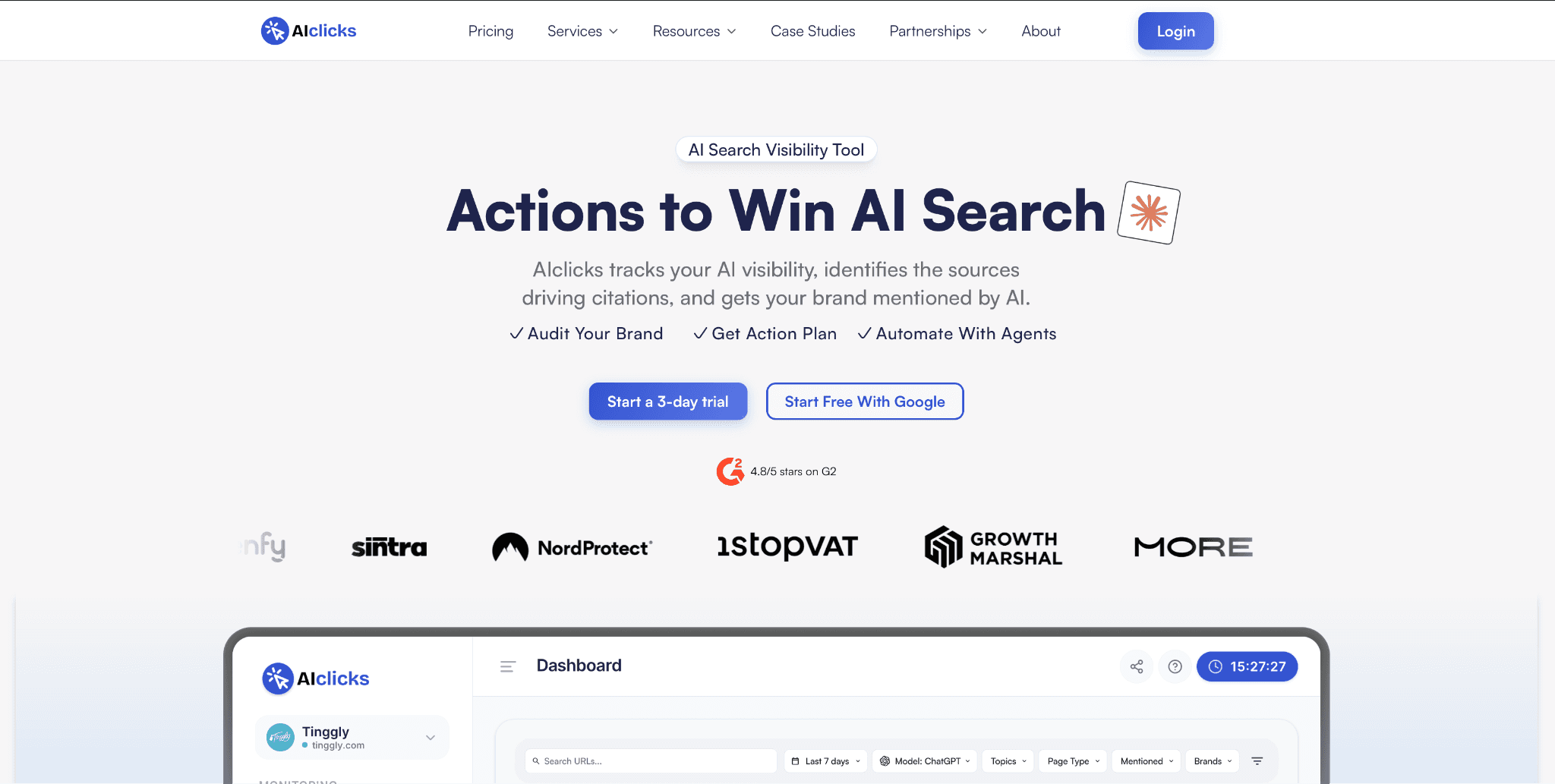
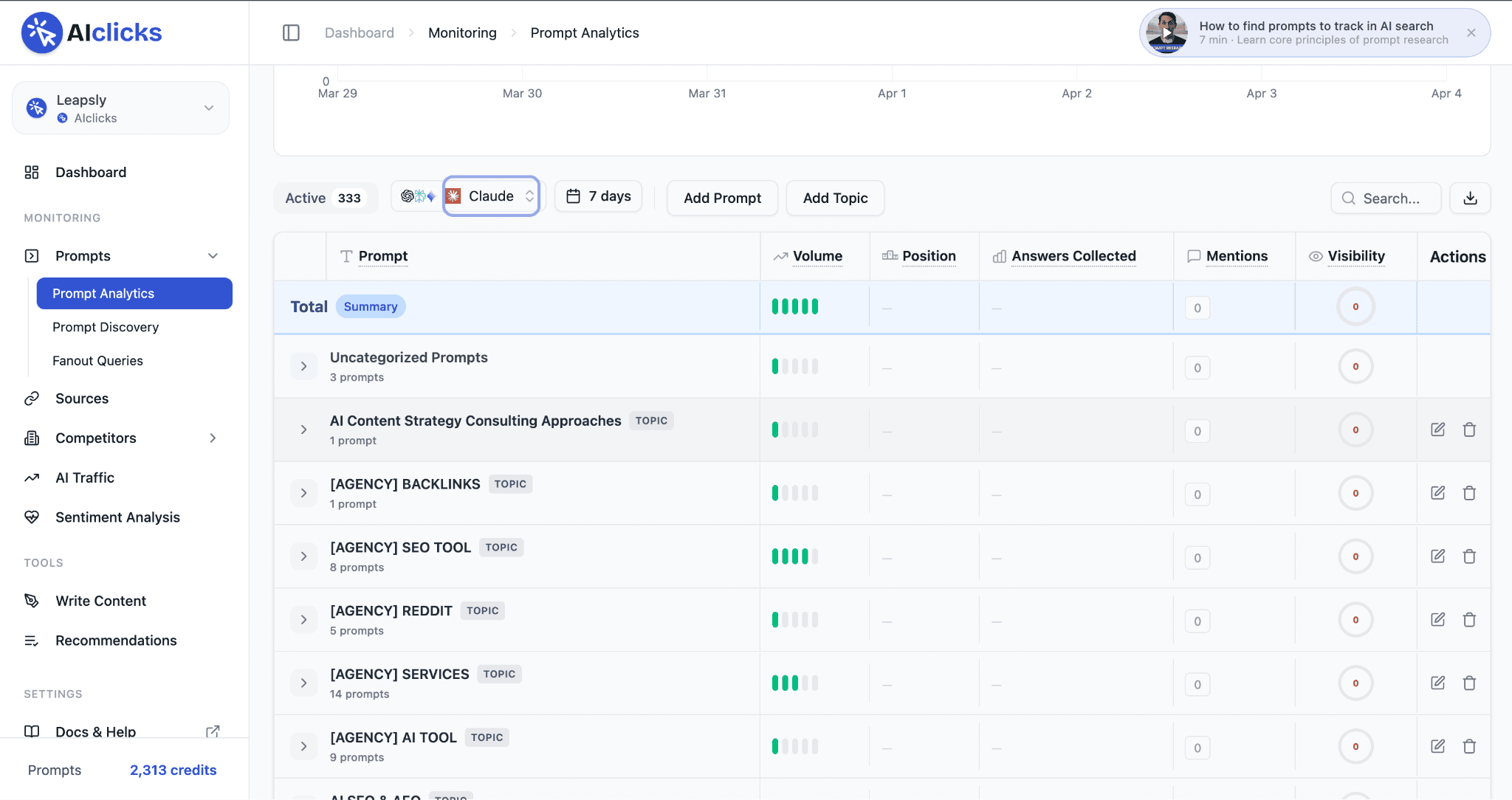
The AIclicks Claude SEO tracker is built from the ground up for AI-first visibility, and Claude tracking is a core part of what it does. Unlike legacy SEO tools that bolt on AI features as an afterthought, AIclicks specializes in prompt-level monitoring and citation intelligence across Claude, ChatGPT, Gemini, Perplexity, and more, giving you a granular view of exactly when, where, and how your brand appears in Claude's AI-generated answers.
For Claude SEO tracking specifically, the Citation Intelligence feature is where AIclicks stands out. It identifies every URL and domain Claude cites when your target prompts are triggered, so you can see not just whether you appear, but which sources are getting cited instead of you, and why.
The Prompt-Level Visibility layer lets you build and test prompt clusters around real commercial topics, then audit performance per prompt.
The GEO Audit goes a step further, letting you check how Claude responds to your prompts differently by region, something most tools on this list don't support at that level of depth. It's also the only tool here with GA4 integration, connecting Claude referral traffic directly to real site visits.
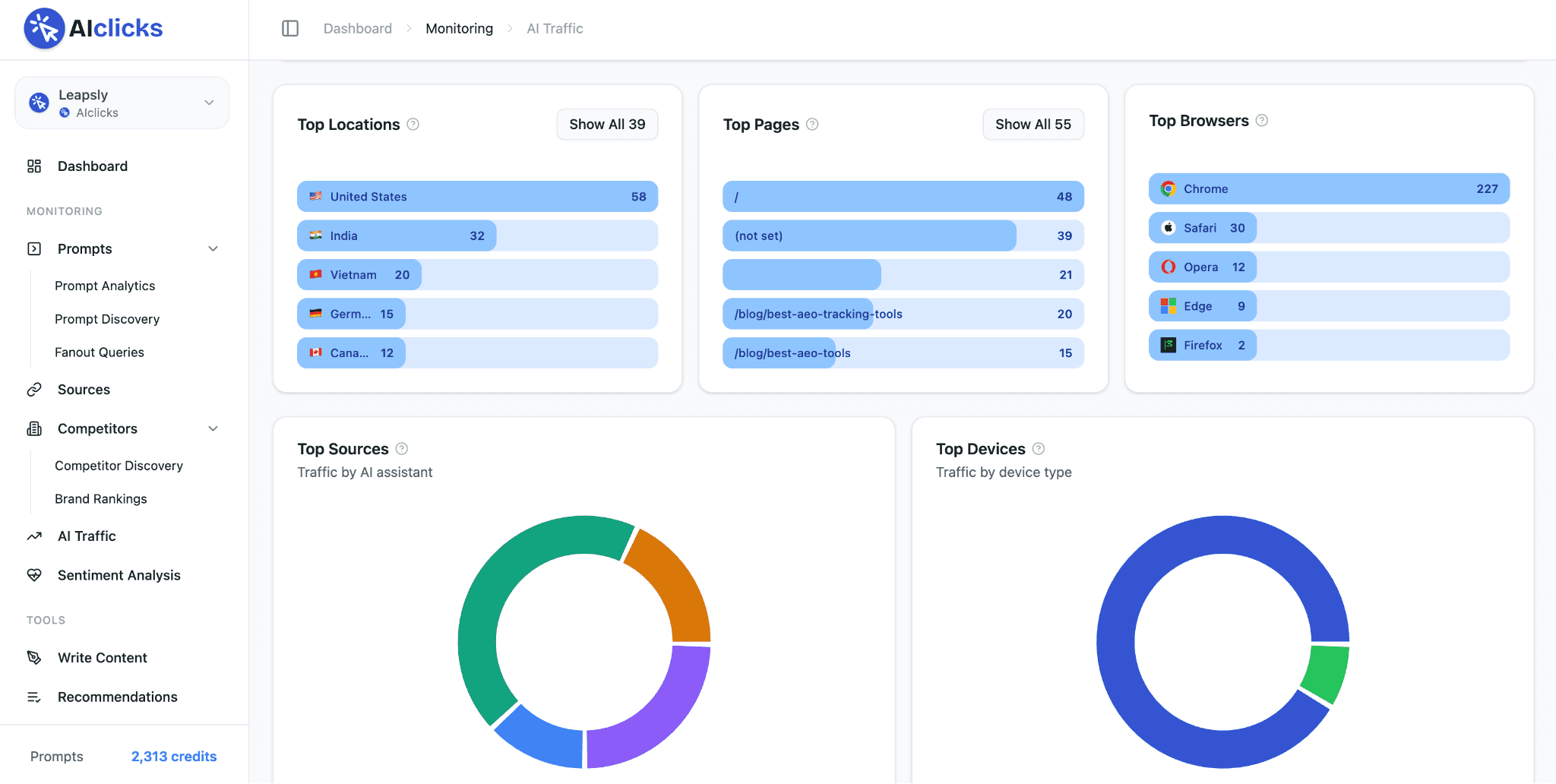
If you're looking for the best LLM visibility optimization tools that go beyond passive monitoring and actually tell you what to fix, AIclicks is the strongest option on this list.
Key features for Claude SEO tracking:
Prompt-Level Visibility: Monitor exactly which prompts trigger your brand in Claude's answers, grouped by topic cluster for strategic analysis.
Citation Intelligence: Track every URL and domain Claude cites for your target prompts, identify which competitors earn citations you don't, and why.
GEO Auditing: Test how Claude responds to your prompts across different regions and languages to spot geographic gaps in your AI visibility.
Competitor Benchmarking: Track rival brands' citation rates and share of voice inside Claude's answers side by side with yours.
Actionable Recommendations: Step-by-step guidance on what to fix, from adding an LLMs.txt file to restructuring FAQs, with impact tags for prioritization.
GA4 Integration: The only tool on this list that ties Claude referral traffic back to actual website visits and conversions.
AI-Optimized Content Creation: Built-in content module to generate answer-friendly drafts designed to be lifted by Claude and other LLMs.
Pricing: From $59/month, scaling to $189 Pro and $499 Business for more prompts, multiple LLMs, unlimited seats, and agency features. Free trial available.
2. XSeek
XSeek is an AI visibility platform that tracks brand performance across major LLMs including Claude, ChatGPT, and Perplexity. For Claude SEO tracking, it monitors how often your brand is cited in Claude's answers, which pages Claude is pulling from, and which prompts trigger your brand, all surfaced through a clean dashboard with instant alerts when your visibility shifts.
A notable differentiator is that XSeek pairs its tracking data with an AI content studio, letting you act on Claude visibility gaps by generating optimized content directly within the platform. It also integrates with Cloudflare, Wix, and Next.js for real-time data syncing, making it practical for technical teams who want visibility tracking built into their existing infrastructure.
Key Features:
Claude Visibility Monitoring: Track brand mentions and citations in Claude responses with automated alerts on changes.
Page-Level Insights: See exactly which pages Claude is referencing when it mentions your brand.
Competitive Intelligence: Compare your Claude share of voice against rivals.
Content Studio: Generate AI-optimized content to close the gaps identified in your Claude tracking data.
Pricing: Visibility plan $99.99/month (3 engines, 1 website, 10 prompts); Growth plan $249.99/month (6 engines, 3 websites, 30 prompts); Enterprise custom pricing with dedicated AEO strategist.
3. LPagery Claude AI Rank Tracker
LPagery is best suited for small brands or those new to Claude-specific SEO, offering simple dashboards that clearly show brand visibility within Claude’s ecosystem.
Key Features:
Claude-Specific Tracking: Prompts are sent directly to Claude to check whether your brand appears and how prominently.
Actionable Optimization Steps: Specific content and on-page suggestions tied to each prompt gap, not just raw data.
Local SEO Focus: Generates location-based prompt variations to track Claude visibility across service areas.
Weekly Reports: Ongoing visibility monitoring with progress tracking across your target keywords.
Pricing: From $59/month (includes a 7-day free trial); Pro $89/month; Agency $139/month.
4. LLMrefs
LLMrefs tracks how often AI models including Claude mention or cite your brand, providing a cross-platform view that helps you compare your AI presence across Claude, ChatGPT, Gemini, and others simultaneously. Its LLMrefs Score (LS) gives you a single metric for AI visibility that makes it easy to track progress over time and benchmark against competitors.
For brands managing multiple clients or wanting to understand how Claude's citation behavior differs from other LLMs, LLMrefs' comparative reporting is genuinely useful. It's less focused on deep prompt-level diagnostics but provides solid coverage for teams that want a unified view of AI visibility across platforms.
Key Features:
Multi-LLM Brand Tracking: Monitor how Claude, ChatGPT, Gemini, and others mention your brand in a single dashboard.
LLMrefs Score: A unified AI visibility metric for tracking progress and benchmarking competitors.
Citation and Mention Reports: Brand and keyword-level reports comparing AI citation behavior across platforms.
CSV Exports: Weekly trends and data exports for reporting and analysis.
Pricing: Free plan (1 keyword, limited models, monthly reports); Pro $79/month (500 prompts, major AI engines, weekly trends, CSV exports)
5. Orchly.ai
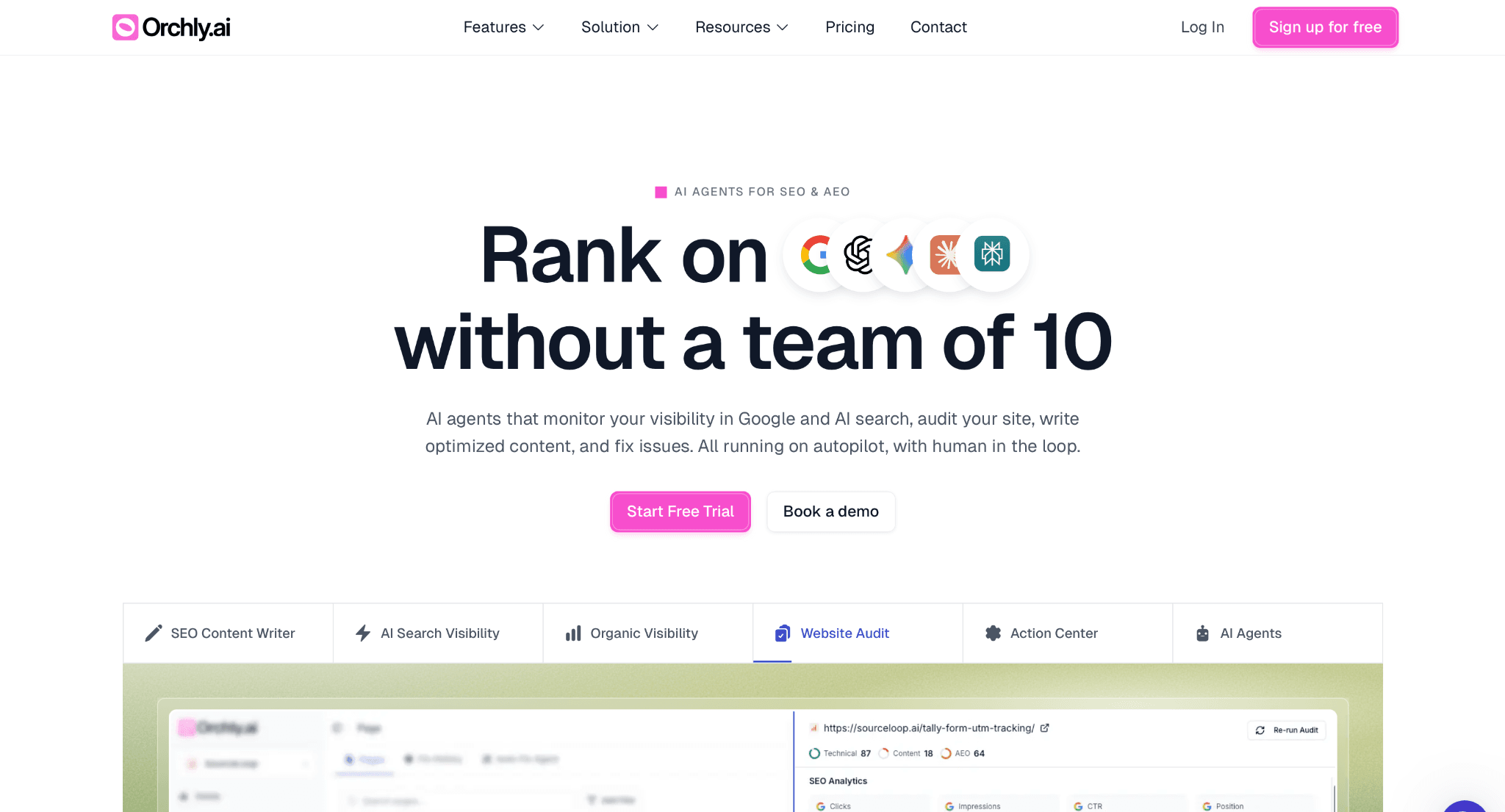
Orchly.ai integrates Claude AI brand mentions with backlink and ranking data, making it a powerful tool for large brands and agencies managing multiple websites.
It combines legacy SEO tools with AI platform insights, providing advanced reporting that compares AI visibility to traditional search engine rankings.
This makes it especially useful for teams wanting to layer AI-generated responses data over their existing SEO analytics while maintaining full Claude coverage.
Key Features:
250M+ Prompt Database: Research-scale visibility data across all major models (Claude, GPT, Gemini).
Share of Voice Tracking: See what percentage of AI conversations mention your brand versus competitors.
Enterprise Reporting: Historical AI visibility data that layers over traditional SERP performance.
Ecosystem Integration: AI citation data appears alongside backlink and keyword data in a unified interface.
Pricing: Essential $49/month, Standard $125/month, Enterprise is custom pricing.
6. Rankability
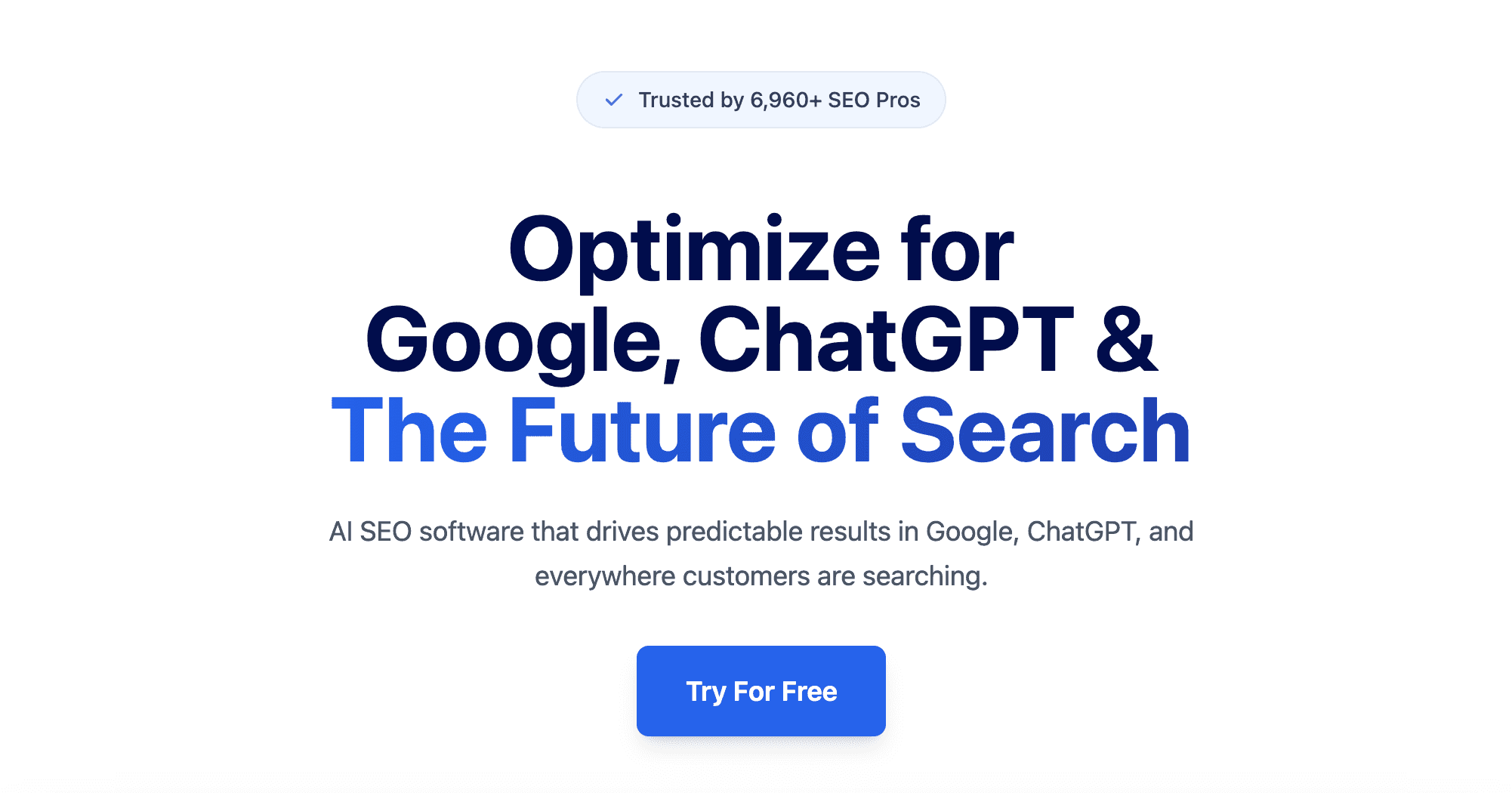
Rankability approaches Claude SEO tracking with a focus on citation pattern analysis; it doesn't just tell you whether you appear, it maps how you're referenced. Whether Claude links directly, describes you as an "official source," or mentions you as a vendor, Rankability captures that citation context, which is genuinely useful for diagnosing why visibility shifts happen after follow-up queries. Its white-label reporting makes it a practical choice for agencies managing multiple clients' Claude visibility.
Key Features:
Citation Pattern Tracking: Understand not just if but how Claude references your brand in different contexts.
White-Label Reporting: Clean, branded dashboards for agency use.
Share-of-Voice Visualization: Track how much of the Claude conversation your brand is winning over time.
Competitor Reporting: Side-by-side Claude citation comparison against key rivals.
Pricing: Core $199/month, Team $399/month, Agency $799/month.
7. AI Rank Lab
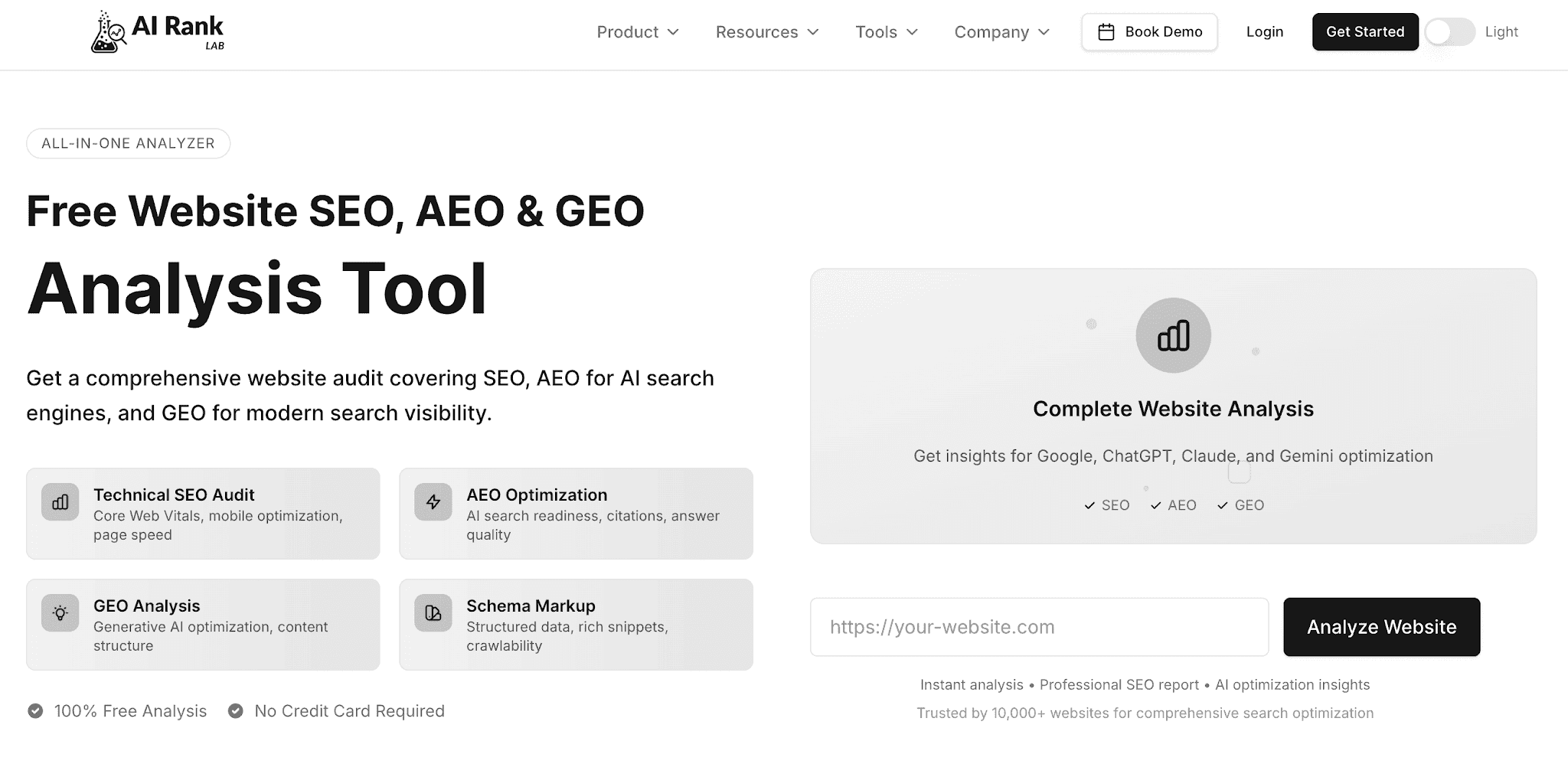
AI Rank Lab offers one of the more accessible entry points for Claude SEO tracking, with a solid free plan that covers Claude, ChatGPT, and Gemini. Real-time alerts for keyword and brand shifts make it useful for startups and small teams who need to stay on top of Claude visibility changes without a large budget commitment. Setup is straightforward and connects to existing analytics for context alongside traditional SEO data.
Key Features:
Claude Tracking with Free Tier: Monitor brand mentions in Claude responses without an upfront cost.
Real-Time Alerts: Instant notifications for keyword and brand visibility shifts across Claude and other engines.
Quick Setup: Start with a handful of prompts and scale from there.
White-Label Reports: Available on higher plans for agency use.
Pricing: Starter $69/month, Professional $149/month, Enterprise $499/month.
8. Keyword.com
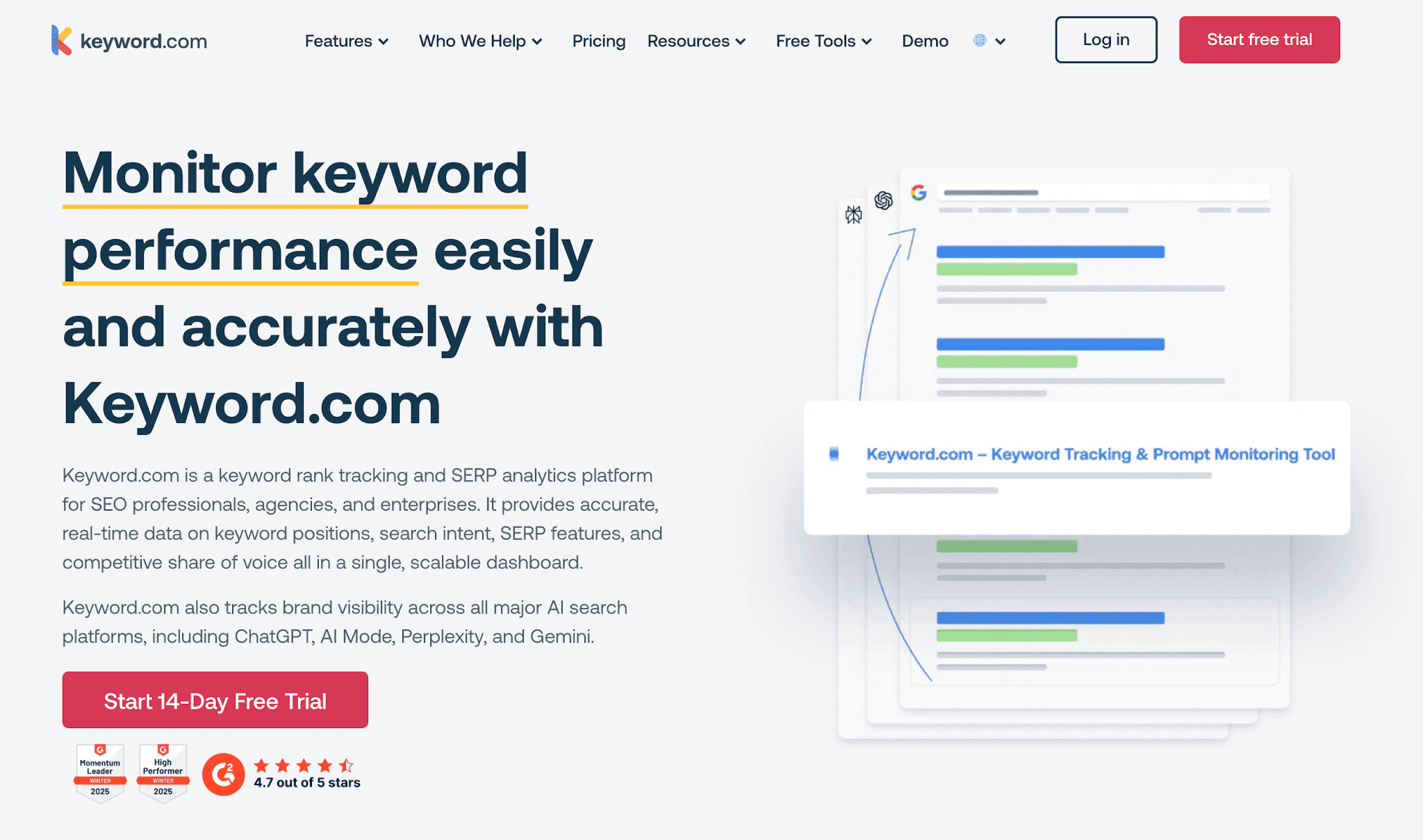
Keyword.com is primarily a traditional SERP rank tracker that has added AI visibility features including Claude tracking. It shows how your brand and pages are mentioned in Claude, ChatGPT, Gemini, Perplexity, and Google AI Overviews, not just link-based citations but unlinked mentions too. The familiar interface and unlimited domain support make it a practical consolidation option for teams already using it for traditional rank tracking.
The honest tradeoff: AI features are an add-on layer, not the core focus. Prompt-level workflows and citation diagnostics are shallower than dedicated Claude trackers like AIclicks or Rankability. It's a sensible bridge tool for traditional SEO teams expanding into AI visibility, rather than a specialist Claude SEO solution.
Key Features:
Claude Citation Tracking: Monitor how your brand appears in Claude responses alongside traditional rank data.
Mention + Link Tracking: Captures both linked citations and unlinked mentions in Claude's answers.
Competitor Sheets: Side-by-side comparison of Claude visibility against rivals.
API and Looker Studio Integration: Advanced reporting and workflow integration for data-heavy teams.
Pricing: Starts from $24.5/month for 50 credits. 14-days free trial available.
Compare the Best Claude SEO Tracking Tools
Tool | Best For | Coverage | Key Features | Pricing |
AIclicks | Deep Claude integration | Claude, ChatGPT, Gemini, Google Overview, Grok, DeepSeek, Copilot, Meta, Mistral | Prompt-level visibility, citation intelligence, GEO auditing, GA4 integration, content creation | From $59/mo (Free trial available) |
XSeek | Real-time Claude monitoring | Claude, ChatGPT, Meta AI, Gemini, DeepSeek, Llama, Cohere, Perplexity, xAI | Brand monitoring, page-level insights, content studio | From $99.99/mo |
LPagery Claude AI | Small brands, beginners | Claude, ChatGPT, Gemini | Simple dashboards, actionable steps, weekly reports | From $59/mo |
LLMrefs | Multi-AI platform tracking | Claude, ChatGPT, Gemini, Copilot, DeepSeek, Perplexity, xAI, Meta AI | LLMrefs Score, citation reports, CSV exports | From $79/mo |
Orchly.ai | Large brands, agencies | Claude, ChatGPT, Gemini, Google AI Overviews, Perplexity, Copilot | Share of Voice Tracking, Historical Data, Ecosystem Integration | From $49/mo |
Rankability | Agencies, competitor tracking | Claude, ChatGPT, Perplexity, Google AIO, Google AI Mode, xAI, Brave Search, DeepSeek | Citation pattern analysis, white-label reporting, share-of-voice | From $199/mo |
AI Rank Lab | Startups, small projects | Claude, ChatGPT, Gemini, Perplexity | Real-time alerts, quick setup | From $69/mo |
Keyword.com | Traditional SEO users | Claude, ChatGPT, Gemini, Google AIO, Perplexity, DeepSeek, Copilot | Citation context analysis, competitor sheets | From $24.5/month |
Other Notable Claude SEO Tracking Tools
AthenaHQ, Promptwatch, Scrunch AI, HallAI, Peec AI: These tools offer combinations of mention tracking, competitor analysis, and geo-based reporting tailored for Claude and other large language models. Many position themselves as AI-first trackers that complement your existing SEO stack.
If you want coverage beyond Claude, we've also rounded up the best LLM visibility tools across every major model.
Why Claude SEO Tracking Matters
Claude is different from traditional SEO tools that focus only on classic SERPs. Instead of just showing blue links, it crafts synthesized answers to questions, pulling content from trusted sources, brands, reviews, and topical authorities. These AI-generated results surfaced as rich AI responses at the top of the experience. If your brand gets cited, you can capture users right at the moment of decision, often before they click through to any site.
But without proper tracking, you’re flying blind. You won’t know how often Claude mentions your brand, which pages are being cited, what sentiment it’s expressing, or how you stack up to your competitors.
Why does this matter more than ever in 2026?
AI is driving product discovery: 39% consumers now rely on AI experiences for early-stage product research before they even visit a brand’s website, so understanding how you show up in AI search and AI-powered search is critical.
Answer engine optimization (AEO) is now essential: Brands that focus only on classic SEO will lose ground to those actively optimizing for AI answer engines, folding AEO into broader ai seo programs.
Invisible gaps exist: If you’re not “lifted” by Claude, users may never find you, even if you rank highly on Google. Claude’s AI search features can surface different winners from the traditional best seo tools' view of the SERP.
I’ve learned in our audits that even well-known brands can be invisible on Claude. The upside? With the right tools, it’s fixable, especially when you combine AI visibility insights with SEO tools for technical SEO, keyword research, and on-page improvements.
And if you'd rather have specialists handle it, our Claude SEO agency runs this exact process for client brands.
Check out this video, where we unpack specific case studies to see how the right tools can help you scoop up AI traffic:
What to Look For in a Claude SEO Tracking Tool
Before the checklist, think about who will use it: in-house marketing teams' SEO professionals, agency-side SEO experts, and SEO teams at marketing agencies managing multiple websites and clients. For these groups, you want an AI tracker that provides serious AI tracking, not just another checkbox in your analytics stack.
The best Claude tracking platforms connect to many AI models and keep pace with rapidly evolving AI-powered search engines, so your AI SEO tools don’t fall behind.
Here’s what I recommend looking for, based on running hundreds of brand audits:
Brand Mention & Citation Tracking: Can you see every time your brand, product, or key page appears in Claude’s answers, alongside traditional rank tracking and search rankings data?
Citation Frequency and Quality: Does the tool show not just “if” but “how often” you’re cited, and whether those citations are authoritative or influential, including which top-ranking pages get picked up?
Sentiment Analysis: It’s not just about being named. Is the mention positive, negative, or neutral?
Competitor Benchmarking: How do your mentions, citations, and sentiment compare to your main rivals, and can you plug that into deeper competitor analysis?
Real-Time Alerts: Can you spot new mentions or shifts in your visibility before your competitors do?
AEO-Specific Insights: Does it recommend concrete steps to improve your chances of being cited by Claude? Not just what’s wrong, but what to do next for both AEO and local SEO opportunities.
API & Integrations: Essential if you want automated reports or want to blend data into Google Analytics, Google Search Console, or your own dashboards, in addition to tools like SEO ranking.
White-Label Reporting: Critical for agencies needing to deliver clean, branded reports to clients.
Data Privacy: Make sure reporting is secure and doesn’t expose your data to unnecessary risks.
A tool that offers all of the above is like hiring an extra team member, minus the overhead. And unlike tools that only scrape SERPs, Claude trackers illuminate how you show up inside conversational flows.
Real-World Use Cases & Benefits
Every week, brands approach me frustrated by missing from Claude’s answers, even when their Google SEO looks fine. Here’s how top organizations are making Claude SEO tracking tools work for them:
Prompt Library Management: Marketers build prompt-based content clusters, then use AIclicks to track which assets get cited in Claude’s answers. This pinpoints not just “what” to optimize, but “where,” and complements seo audits and on-site content optimization work.
Content Gap Discovery: Agencies compare citation rates for key content types and get step-by-step recommendations. With this, one SaaS startup filled three gaps and doubled its brand mentions in Claude over two months.
Competitor Monitoring: Brands stay ahead by receiving alerts any time their major rivals move up or down in Claude’s results, then matching that against search engine rankings and off-site competitor analysis data.
Executive Reporting: Teams now have direct, branded dashboards showing current visibility and progress over time, making it easy to prove ROI to leadership, and to connect AI visibility to traditional search engine optimization KPIs.
Claude is rapidly reshaping buyer journeys. With the right tool, you turn invisible mentions into tangible conversions and understand exactly how AI is influencing the moment where intent and decision intersect.
Claude SEO Tracker Best Practices
How can you make the most out of any Claude tracking solution? Here’s what works for us, and for our clients:
Build a Prompt Library: List out every question your audience could ask Claude about you or your products. Track performance by clusters, not just single prompts, and relate it back to keyword research and your core target keywords.
Structure Content Answer-First: AI engines prefer clear, direct answers. Start sections with the key fact or claim, and keep each section focused on one idea so Claude can easily lift AI-generated snippets.
Monitor and Act Weekly: Track not only brand mentions but also where you’re underperforming. Small fixes to structure, headlines, or schema can make a real difference when they’re combined with traditional fixes like repairing broken links or tightening internal linking.
Ensure Site Crawlability: Many sites block AI bots by mistake. Make sure your robots.txt allows Claude and other major crawlers, and use server-side rendering or pre-rendering for key content. This increases the likelihood that AI engines will include you in their search results.
Keep External Profiles Current: If directories or reviews are out of date, Claude may cite outdated information or skip you. Strong profiles help AI engines connect the dots between your on-site and off-site signals.
Aim for External Corroboration: Make sure your brand is listed in trusted directories, listicles, and forums. The more external confirmation Claude finds, the higher your citation chances and the more consistent your AI and SERP presence across multiple websites and properties.
Remember: Claude’s engine favors content it can “lift” easily, so aim for well-structured HTML and clear headings. Over time, that structure helps unify your presence across AI experiences, classic SERPs, and AI-powered search surfaces.
Final Thoughts
Claude SEO tracking isn’t a fad. It’s a must for any brand serious about winning in AI-driven discovery and product research. By focusing on prompt-level visibility, citation tracking, and actionable recommendations, you not only boost traffic but also help future-proof your business as AI reshapes how people search and evaluate options.
After testing and working with the tools on this list, AIclicks.io is the best Claude SEO tracking tool in 2026 for most teams. My parting advice: Don’t wait for your main competitor to own the conversation on Claude. Set up a free trial with AIclicks, benchmark your current standing, and start turning AI-driven answers into reliable traffic and leads. The brands that move first and track smart will set the new standard in 2026 and beyond, combining Claude data with your broader search engine optimization and AI SEO programs.
FAQs
How to rank in Claude (optimize for Claude visibility)?
To rank in Claude, structure your content with answer-first intros, clear headings, and structured data so Claude can easily cite it. Build authority through trusted directories, review platforms, and Reddit. Use a tool like AIclicks to identify which prompts you're missing and get specific recommendations to close those gaps.
How can I track if ChatGPT and Claude are mentioning my competitors more than my brand?
Yes, tools like AIclicks let you add competitors directly to your tracking setup and compare share of voice, citation frequency, and prompt-level performance side by side. You'll see exactly which prompts trigger competitors instead of you and which sources they're being cited from.
Are there tools to track how often my brand appears in Gemini or Claude?
Yes, several tools on this list cover both, including AIclicks, LLMrefs, XSeek, and AI Rank Lab. AIclicks provides the deepest prompt-level and citation-level data for Claude specifically, while LLMrefs is a good option if you want a unified cross-platform visibility score across Claude, Gemini, and others.
Does Claude have real-time search?
Claude does have web search capabilities in some configurations, but it doesn't operate like a real-time search engine. Its responses draw from training data and, where enabled, live web retrieval. This means your brand's presence in trusted external sources directly influences how Claude mentions or cites you.




Any questions left?
Book a call here: